
Rome Tickets


How Headout makes choosing experiences effortless

We curate the best ways to experience

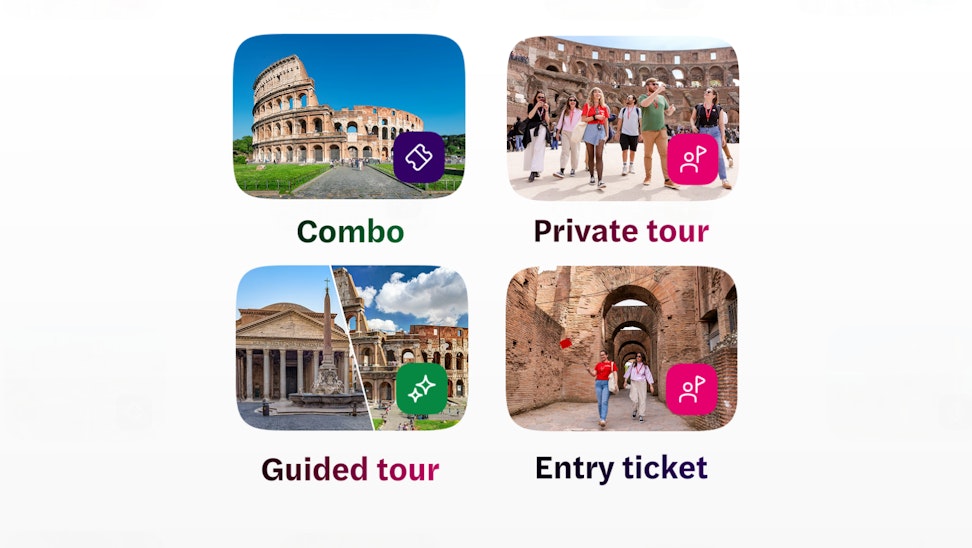
We research and organise all unique experiences - from tickets to tours to special combos - so you get all the choices without the clutter.

1/4

Slide 1 of 4
We curate the best ways to experience
We partner with the best
All the best options, in one place
Book with complete peace of mind

How to visit the Capitoline Museums

  • Ways to explore: Choose timed entry, hosted entry, self-guided audio or multimedia options, or an English-language guided tour.
  • Standard access: Entry covers the museum’s principal collections across Palazzo dei Conservatori, Palazzo Nuovo, and the connecting galleries.
  • Optional additions: Selected tickets include temporary exhibitions, an audio guide, a multimedia video, or a complimentary drink.
  • Hosted entry: A host assists at the meeting point and helps you navigate the entry process before you explore independently.
  • Multi-museum option: The Capitolini Card is valid for seven days and suits visitors planning several municipal museum visits.
  • When to book: Reserve weekend, holiday, and major-exhibition slots early, as preferred timed entries may become unavailable.
  • Best upgrade: Choose the guided tour for a structured route and expert context on the museum’s Roman collections.

Compare Capitoline Museums ticket options

Ticket optionIncludesWhy pick thisCancellation policy
Reserved Entry

Reserved museum entry and access to the permanent collections

Secure your chosen time slot and explore the collection independently.

Free cancellation up to 24 hours before the experience

Timed Entry with Optional Upgrades

Timed or direct entry, with hosted assistance, audio guide, multimedia video, temporary exhibitions, or a drink (as per option selected)

Choose only the upgrades you value for a more flexible visit.

Non-cancellable

7-Day Capitolini Card

Seven-day access to participating municipal museums; temporary exhibitions are excluded

Visit several civic museums over seven days with one pass.

Non-cancellable

Guided Tour with Multimedia Experience

Museum entry, a 25-minute multimedia video, and an English guided tour focused on Roman history

Follow a structured highlights route with expert context on key works.

Free cancellation up to 24 hours before the experience

What to expect at the Capitoline Museums

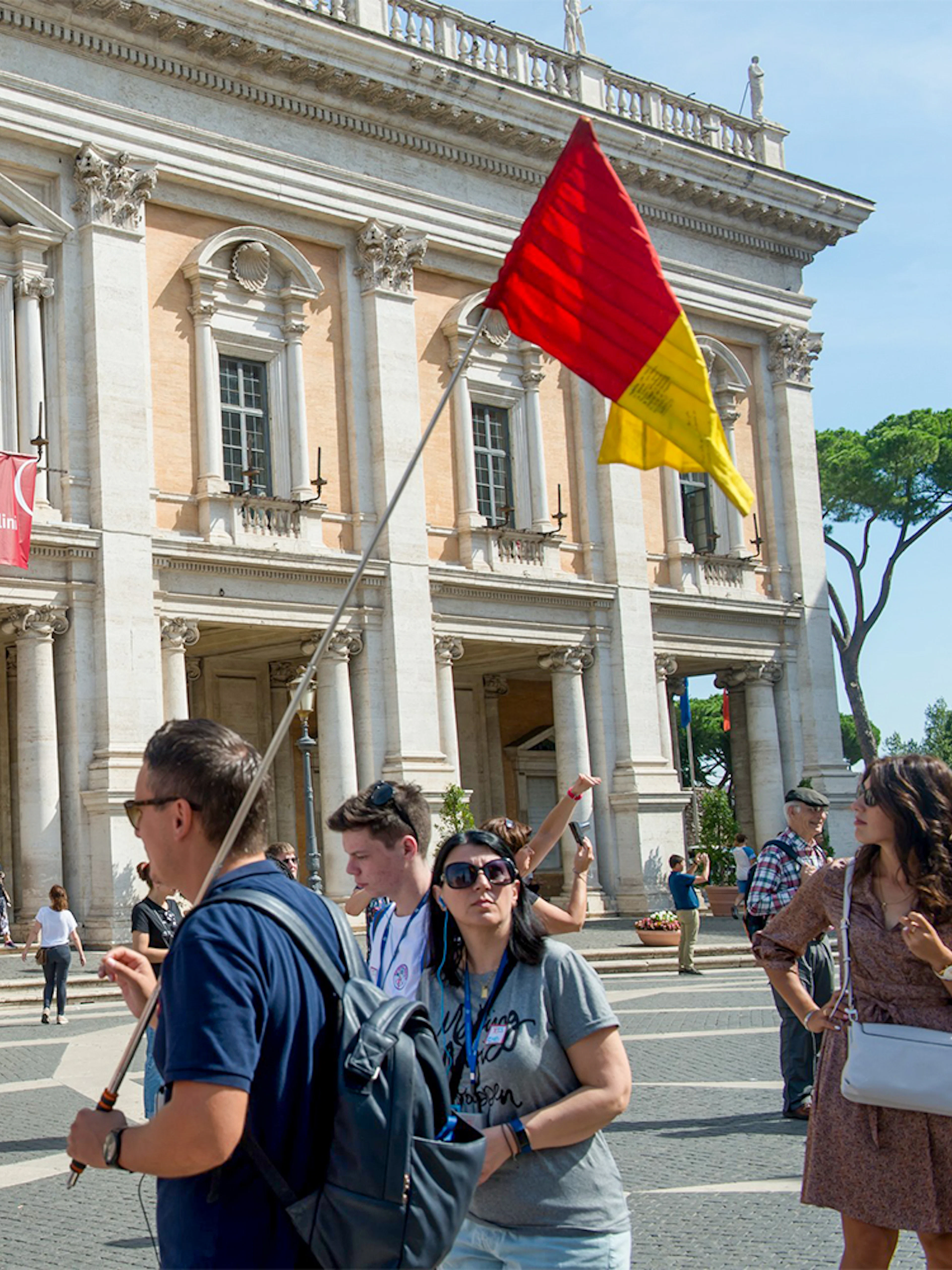
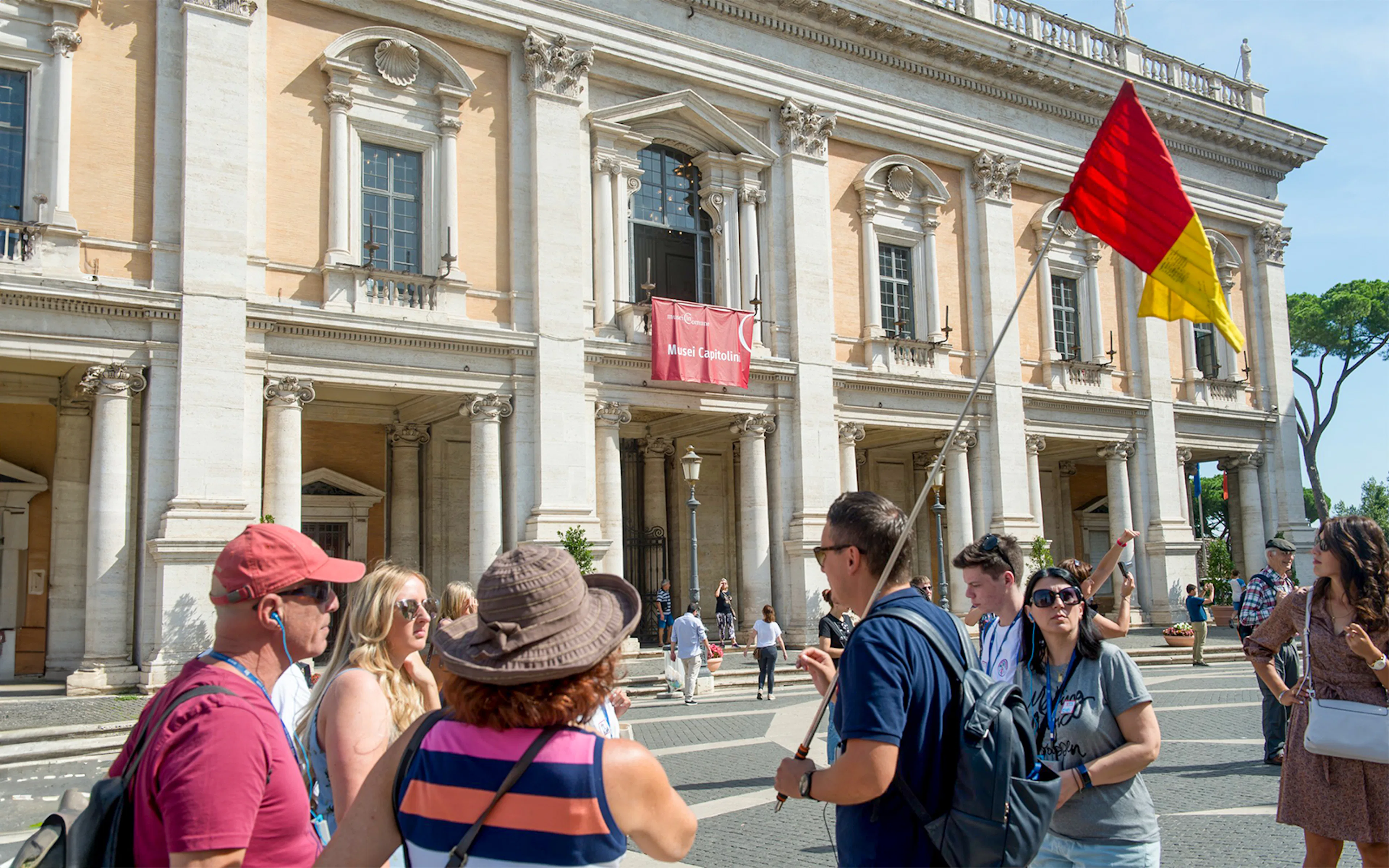
Tour group outside Capitoline Museums in Rome with guide holding flag.
1/5

Enter through Palazzo dei Conservatori

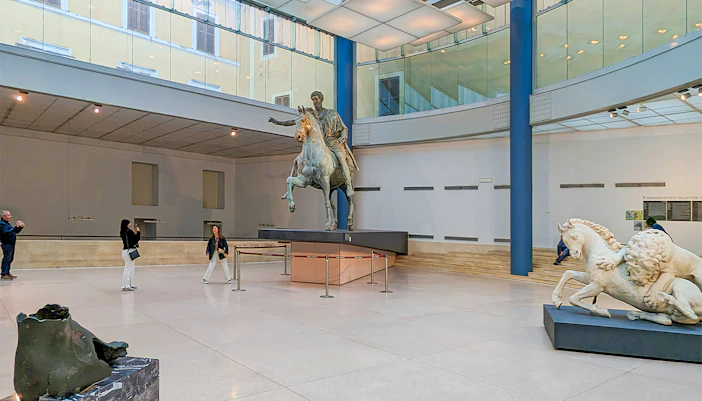
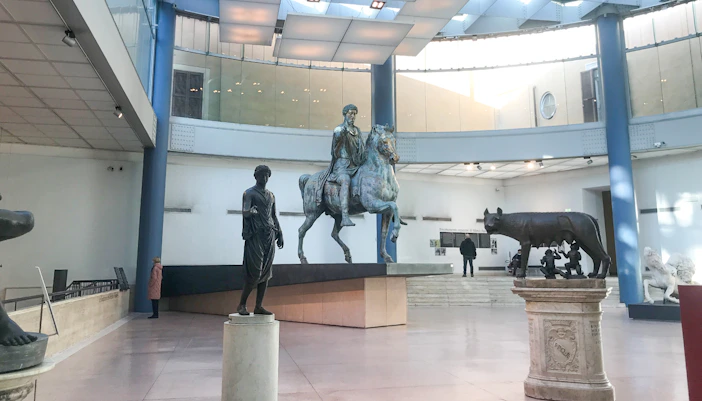
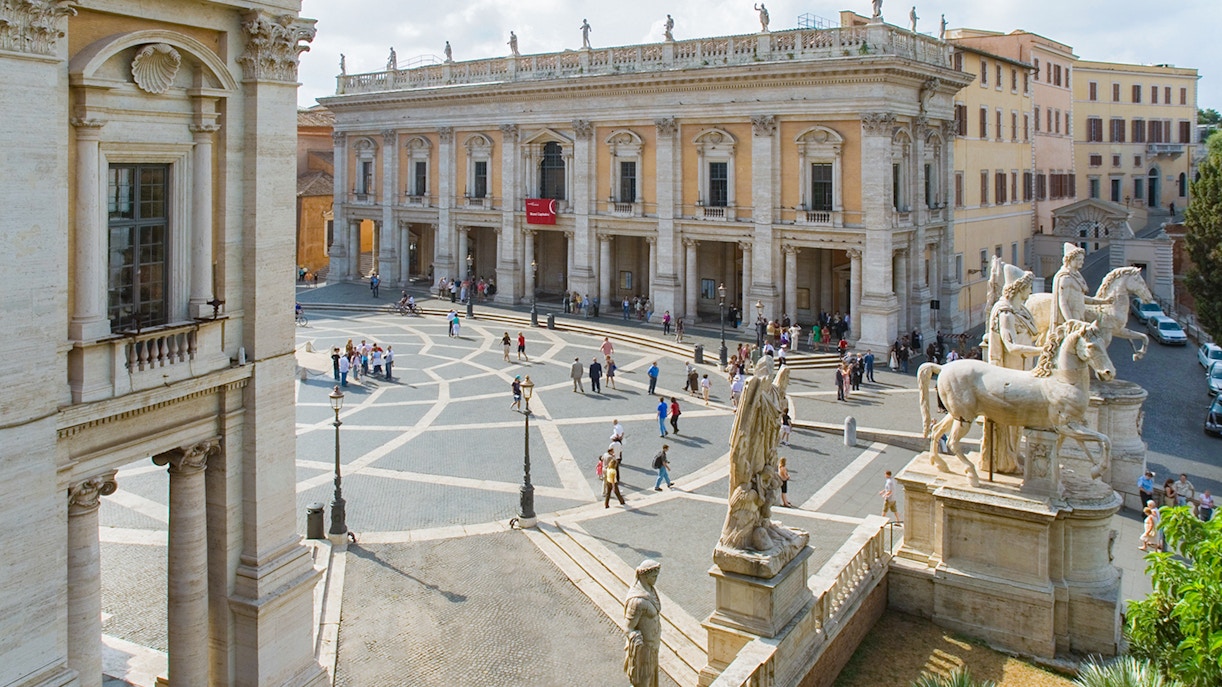
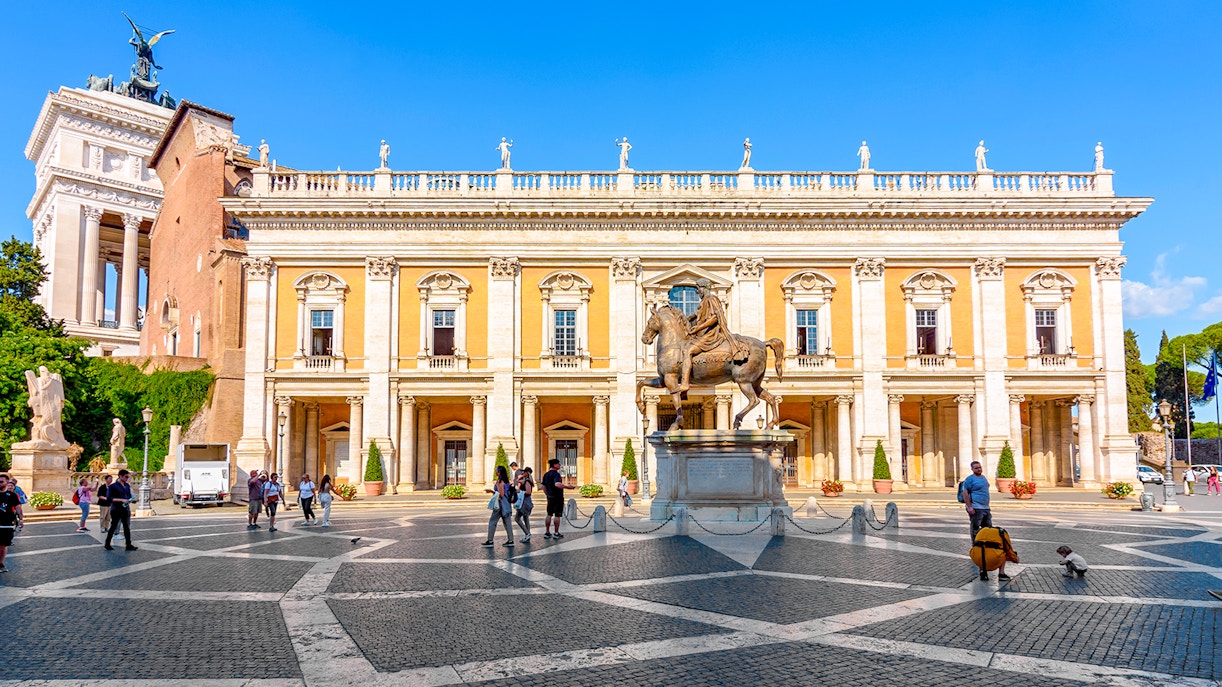
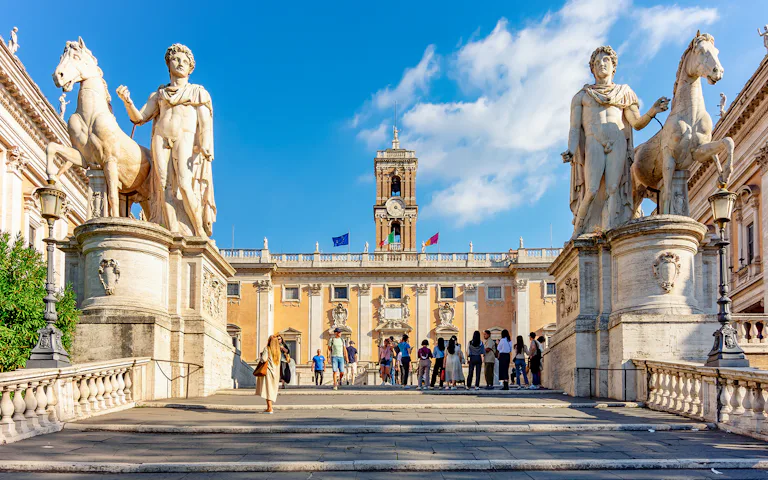
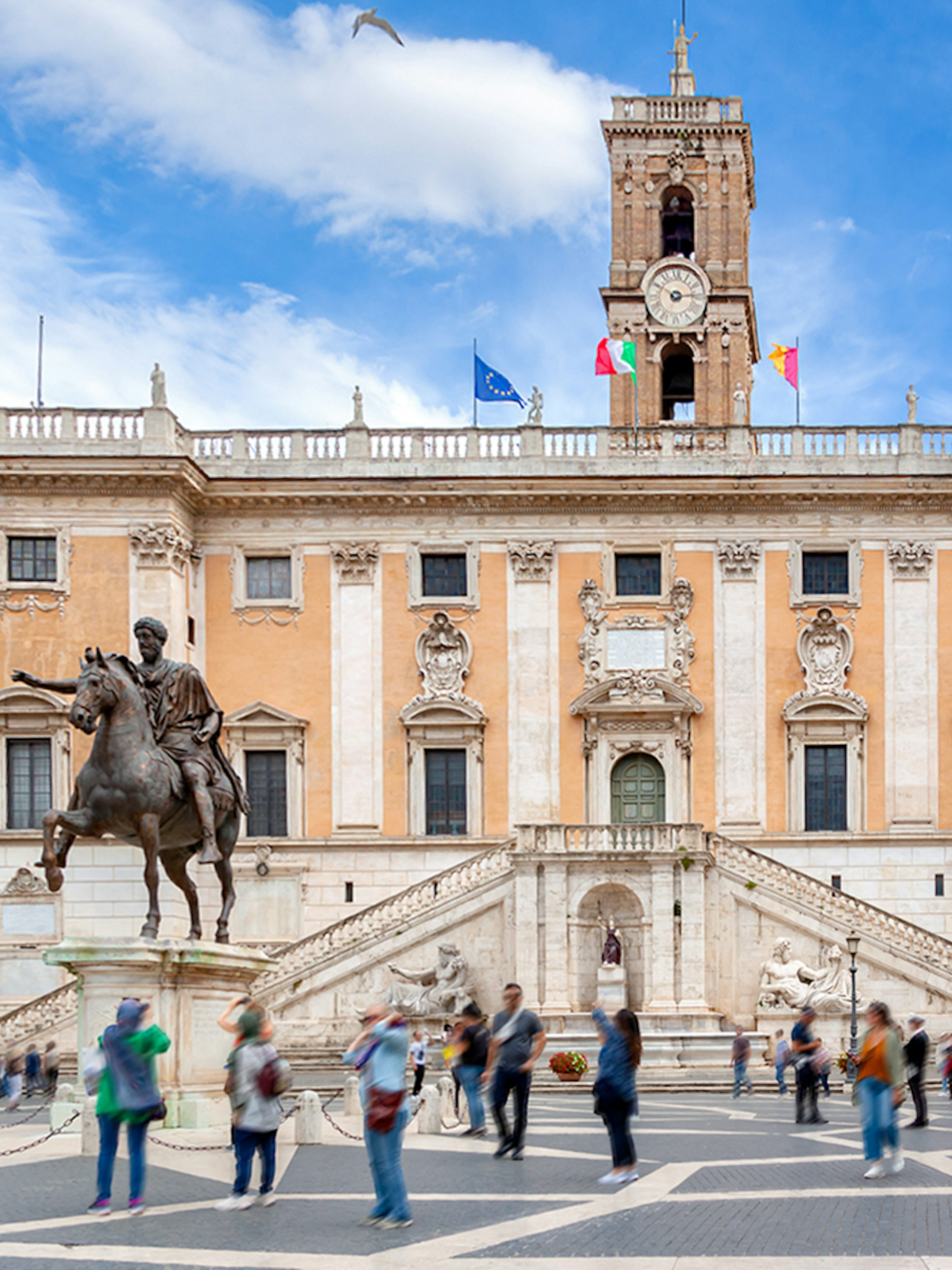
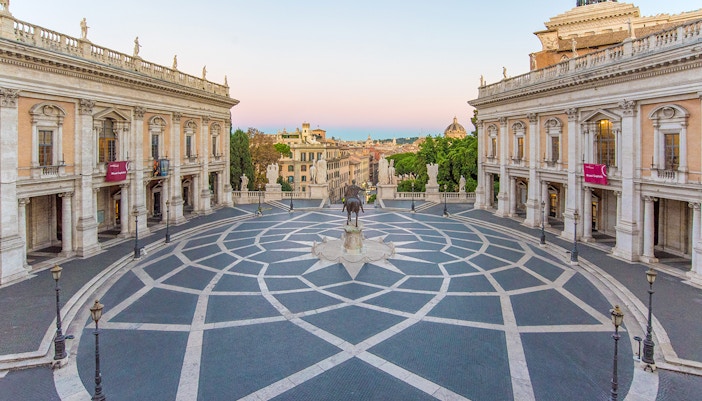
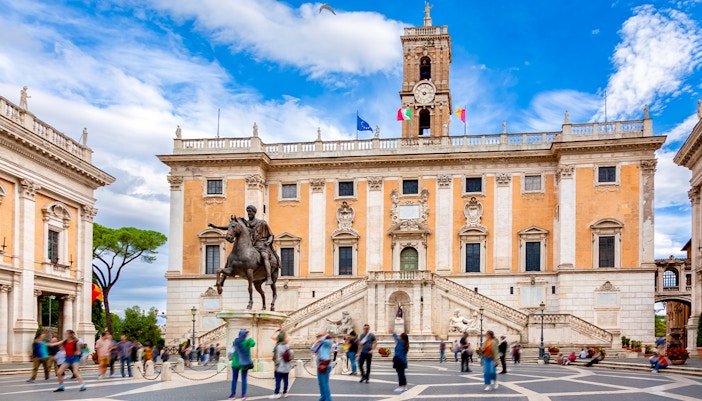
Begin at the main entrance on Piazza del Campidoglio and step into Palazzo dei Conservatori. The route opens with decorated halls, ancient bronzes, and monumental sculptures, including the Capitoline Wolf and the original equestrian statue of Marcus Aurelius.

Cross beneath Capitoline Hill

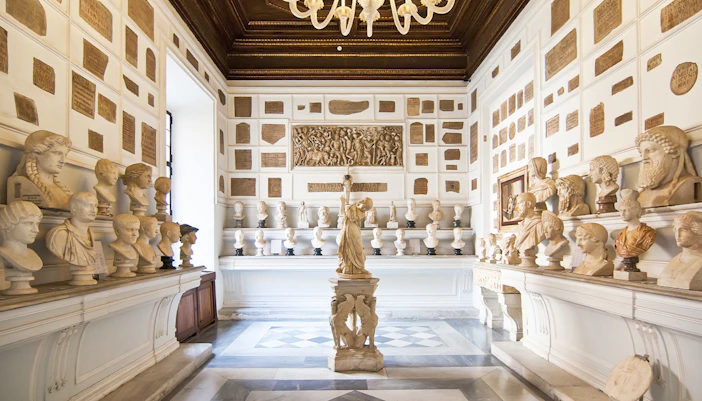
Continue through the underground Galleria Lapidaria, where ancient inscriptions trace Roman public and private life. This passage links Palazzo dei Conservatori with Palazzo Nuovo and leads toward the Tabularium’s dramatic viewpoint over the Roman Forum.

Meet Rome’s ancient masterpieces

Inside Palazzo Nuovo, move through sculpture-filled halls to see the Dying Gaul, Capitoline Venus, Marforio, and portraits of Roman emperors. Allow time to study the works closely, as this part contains many of the museum’s best-known antiquities.

Finish with art and city views

End in the Capitoline Picture Gallery or continue to Terrazza Caffarelli for views across Rome. Most visits take around 2–3 hours, while audio or guided options add context and help you follow the main highlights efficiently.

Choose how you explore

Timed-entry tickets suit independent visits, while hosted options add assistance before entry. A guided tour follows a structured route through the collection, and the Capitolini Card extends access across seven days for visitors exploring more civic museums.

Things to know before booking your Capitoline Museums tickets

Booking and availability

  • Timed-entry tickets let you choose a preferred entry slot. Weekend, holiday, and major-exhibition slots may become limited, so booking online in advance is recommended.

What’s included

  • Standard entry covers Palazzo dei Conservatori, Palazzo Nuovo, the Galleria Lapidaria, and the permanent collections. Temporary exhibitions and additional benefits depend on the ticket selected.

Ways to explore

  • Reserved or timed-entry tickets let you explore independently. Selected options add hosted assistance, an audio guide, a multimedia video, temporary-exhibition access, or a drink.
  • Hosted entry means a representative assists you at the meeting point and through the entry process. Once inside, you continue exploring independently.

Guided experience

  • The English guided tour includes a structured route through Roman sculptures, imperial portraits, archaeological finds, and key artworks, preceded by a 25-minute multimedia experience.

Multi-museum access

  • The Capitolini Card is valid for seven days and covers participating municipal museums, making it useful when visiting more than one civic museum. Temporary exhibitions are excluded.

Admission policies

  • General admission is free on the first Sunday of each month, when the museum may be busier. Cancellation terms vary: some tickets allow cancellation up to 24 hours before the experience, while others are non-cancellable.

Explore the Capitoline Museums

Galleries at the Capitoline Museums

Capitoline Museums must-see artworks

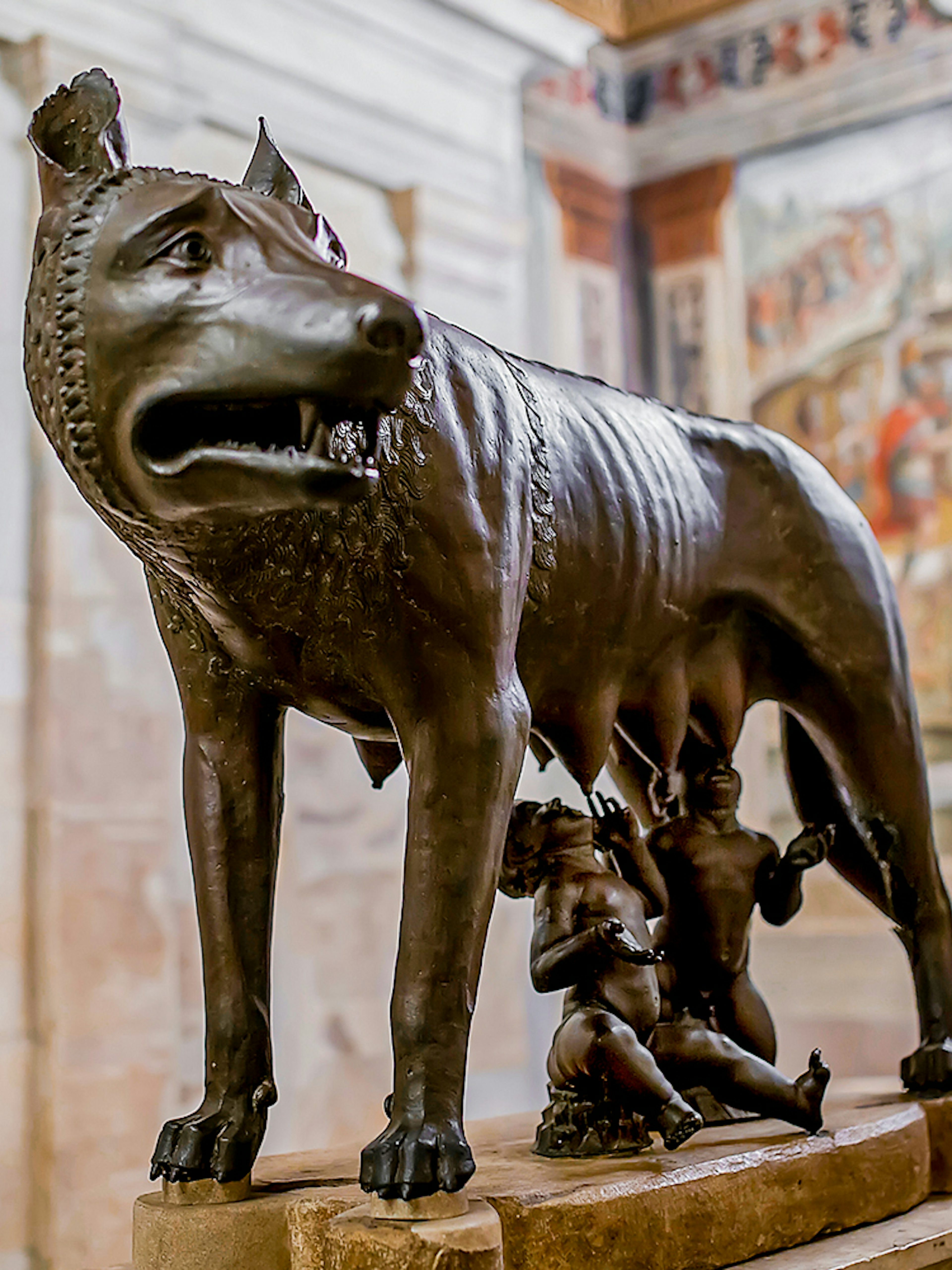
Capitoline She-Wolf statue with Romulus and Remus in Rome museum.
1/8

Capitoline Wolf | Unknown artist (traditionally 5th century BC)

Location: Hall of the She-Wolf, first floor of Palazzo dei Conservatori

Rome’s legendary she-wolf stands over Romulus and Remus, turning the city’s foundation story into an enduring bronze emblem.

  • Notice the posture: Stiff legs, alert ears, and a raised head give the wolf a watchful, almost protective presence.
  • Look at the twins: The figures of Romulus and Remus were added during the Renaissance, centuries after the wolf was created.
  • See the setting: The surrounding walls preserve fragments of ancient Roman calendars recording magistrates and military triumphs.
Read more

Equestrian Statue of Marcus Aurelius | Unknown artist (c. 176 AD)

Location: Marcus Aurelius Exedra, Palazzo dei Conservatori

The emperor sits calmly on horseback, projecting authority through balance and restraint rather than weapons, armour, or dramatic movement.

  • Study the gesture: His raised hand suggests command, reassurance, or clemency rather than aggression.
  • Walk around it: The horse’s muscular form and the emperor’s controlled posture reveal new details from every angle.
  • Know what you are seeing: This is the ancient original; the statue in Piazza del Campidoglio is a replica.

Dying Gaul | Unknown sculptor (c. 60–40 BC)

Location: Hall of the Galatian, Palazzo Nuovo

A wounded warrior struggles to remain upright, transforming military defeat into a deeply human study of exhaustion and dignity.

  • Look at the body: Tense muscles, a lowered head, and the wound beneath his chest make his fading strength visible.
  • Notice his identity: Thick hair, a moustache, and a neck ornament distinguish him as a Gallic warrior.
  • Why it stays with you: The sculpture honours the defeated man rather than celebrating the victor.

Capitoline Venus | Unknown sculptor (2nd century AD)

Location: Cabinet of Venus, Palazzo Nuovo

Displayed almost alone, the goddess turns as though caught by surprise, creating an intimate encounter within the small octagonal room.

  • Circle the sculpture: Her twisting pose was designed to be viewed from several angles rather than only from the front.
  • Notice the contrast: Smooth marble stands out against the room’s darker walls and patterned floor.
  • Take your time: The quiet setting makes this one of the museum’s most contemplative sculpture displays.

The Fortune Teller | Caravaggio (1596–1597)

Location: Hall of Saint Petronilla, Capitoline Picture Gallery

A seemingly playful palm reading hides a theft, with the fortune teller quietly removing a ring from her distracted customer.

  • Follow the hands: The entire story unfolds through the delicate exchange between the two figures.
  • Watch their expressions: Warm eye contact masks the deception taking place below.
  • Notice Caravaggio’s approach: He replaces grand historical subjects with recognisable people and an ordinary street encounter.

Saint John the Baptist | Caravaggio (1602)

Location: Hall of Saint Petronilla, Capitoline Picture Gallery

Caravaggio presents the young saint without traditional grandeur, surrounding his relaxed figure with deep shadow and restrained symbolism.

  • Notice the pose: The informal posture makes the saint appear human rather than distant or ceremonial.
  • Follow the light: Illumination moves across the figure while the background remains largely hidden.
  • Read the mood: His expression feels playful, thoughtful, and slightly mysterious at the same time.

Bust of Medusa | Gian Lorenzo Bernini (1644–1648)

Location: Hall of the Geese, Palazzo dei Conservatori

Bernini captures Medusa at the instant of transformation, replacing the familiar monster with a figure overwhelmed by shock and fear.

  • Study the expression: Her parted lips and tense gaze make the marble appear caught in a living moment.
  • Look at the carving: Smooth facial features contrast with the deeply cut snakes twisting through her hair.
  • Why it stands apart: Bernini turns a mythological subject into an intensely psychological portrait.

Colossus of Constantine | Unknown sculptors (c. 312–315 AD)

Location: Courtyard and Marcus Aurelius Exedra, Palazzo dei Conservatori
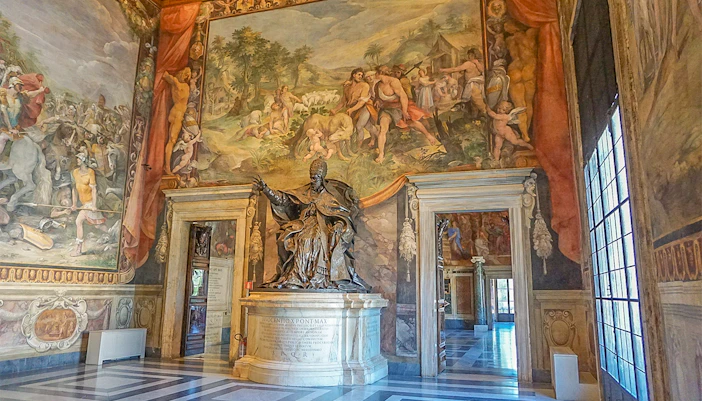
Enormous marble fragments reveal the staggering scale of a seated statue once created to dominate an ancient Roman public space.

  • Look for the surviving pieces: The colossal head, hands, and feet are displayed separately across the museum.
  • Imagine the original: Together, the fragments belonged to a statue several metres high.
  • Understand the scale: Its size was designed to make imperial authority feel overwhelming and almost superhuman.

Plan your visit to Capitoline Museums

Visitor tips

  • Follow the natural route from Palazzo dei Conservatori through the Galleria Lapidaria to Palazzo Nuovo to avoid unnecessary backtracking.
  • Visit on Wednesday during the final two opening hours for 50% reduced admission if you are a non-resident.
  • Leave time for the Tabularium viewpoint, which looks directly over the Roman Forum and is easy to rush past.
  • Stop at the Terrazza Caffarelli café near the end of your visit for refreshments and panoramic city views.
  • Choose the seven-day Capitolini Card when you also plan to visit Centrale Montemartini. Exhibition supplements may still apply.

Frequently asked questions about Capitoline Museums tickets

Online booking secures your preferred date and lets you show a digital ticket at access control. It is recommended when timed slots are limited.

More reads