Rome Tickets

Plan your visit to the Capitoline Museums

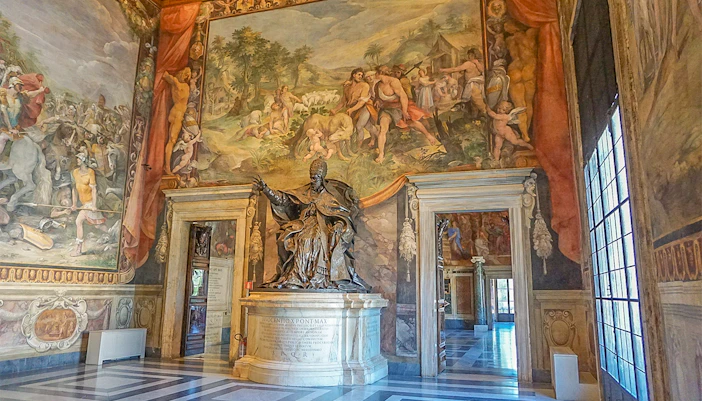
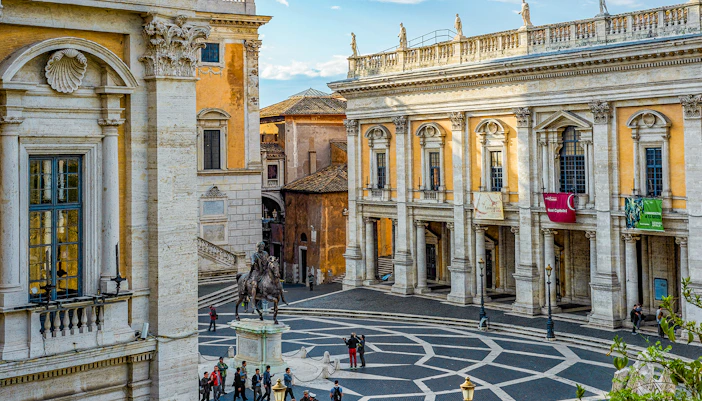
The Capitoline Museums are Rome’s municipal museums, known for ancient sculptures such as the Capitoline Wolf, Marcus Aurelius, and the Dying Gaul. Spread across two palaces linked by an underground passage, the museum is manageable but requires a clear route to avoid backtracking. Most visits take 2–3 hours, and the biggest difference is knowing which building to begin with. This guide covers tickets, directions, timings, highlights, and practical tips for your visit.

Quick overview: Capitoline Museums at a glance

  • When to visit: Open daily from 9:30am to 7:30pm, with last admission one hour before closing. Weekday mornings are usually calmer than weekends and public holidays, especially around the Capitoline Wolf and Marcus Aurelius displays.
  • Getting in: Timed-entry tickets currently start from about €32 on Headout. Advance booking is useful on weekends, holidays, and during major temporary exhibitions, though same-day entry may be possible in quieter periods.
  • How long to allow: Plan 2–3 hours for both palaces, the Picture Gallery, and the Tabularium. Allow longer if you are visiting a temporary exhibition or exploring the painting collection in depth.
  • What most people miss: Pause at the Tabularium for elevated Roman Forum views, and look beyond the headline sculptures to the Picture Gallery’s works by Caravaggio, Titian, and Rubens.

🎟️ Popular time slots can become limited during weekends and peak travel periods. See Capitoline Museums ticket options →

Jump to what you need

Where and when to go

💡 Pro tip for visiting the Capitoline Museums

The first Sunday of every month offers free admission to all visitors, but it is typically busier than a regular weekday. Visit near opening time if saving on admission matters; otherwise, choose a weekday morning for a quieter experience.

How much time do you need?

Visit typeRouteDurationWalking distanceWhat you get

Highlights only

Palazzo dei Conservatori → Capitoline Wolf → Marcus Aurelius → Tabularium → Dying Gaul

1–2 hours

Approx. 1 km

Covers the defining sculptures and Roman Forum viewpoint, but leaves little time for the Picture Gallery, smaller archaeological rooms, or temporary exhibitions.

Balanced visit

Palazzo dei Conservatori → Picture Gallery → Galleria Lapidaria → Tabularium → Palazzo Nuovo

2–3 hours

Approx. 1.5 km

The best option for most visitors, combining ancient sculpture, paintings, architecture, and city views without trying to see every display.

Full exploration

Complete Palazzo dei Conservatori route → Picture Gallery → temporary exhibition → Tabularium → all major rooms in Palazzo Nuovo

3–4 hours

Approx. 2 km

Adds quieter galleries, temporary exhibitions, and more time with the painting collection. Expect prolonged standing and several stair or lift transitions.

Which ticket does your route need?

A standard entry ticket covers every visitor route, including both palaces, the underground Galleria Lapidaria, and the Tabularium. A guided tour does not unlock extra areas, but it helps you navigate the museum’s complex layout and understand the stories behind its most important works.

Which ticket is right for you?

Ticket typeWhat’s includedBest forPrice

Timed entry

Timed entry to the Capitoline Museums, with hosted entry, multimedia video, audio guide, temporary exhibition access, or a rooftop drink.

A flexible, self-paced visit where you want reserved entry and can choose the add-ons that suit your plans.

From €32

Entry + multimedia experience

Timed museum entry with a multimedia introduction to ancient Rome and access to the museum’s permanent collection.

Understanding the historical background before exploring the museum independently.

From €36

Capitolini Card

One-time entry to the Capitoline Museums and Centrale Montemartini, with seven days to visit the second museum after the first entry.

Exploring independently while still getting explanations of the Capitoline Wolf, Marcus Aurelius, Dying Gaul, and other major works.

From €19.90

Guided tour + multimedia experience

Timed museum entry, a 25-minute multimedia video, an English-speaking guide, and temporary exhibition access when available.

Visiting both branches of the Capitoline collection without squeezing everything into one day.

From €80

How do you get around the Capitoline Museums?

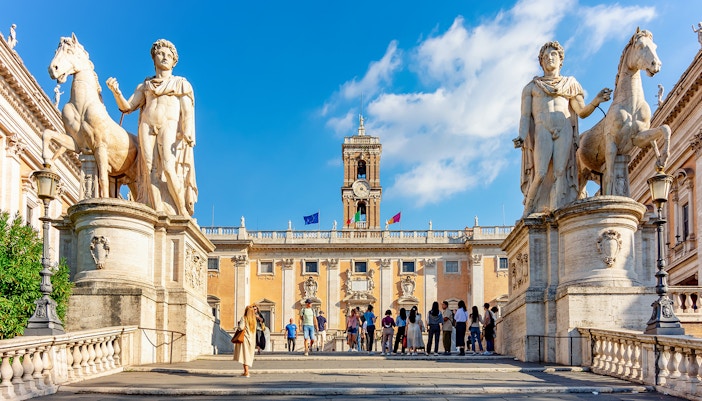
The Capitoline Museums have a multi-building layout rather than a simple floor-by-floor route. The visit begins in Palazzo dei Conservatori, continues through the underground Galleria Lapidaria and Tabularium, and then reaches Palazzo Nuovo. The route is manageable, but it is easy to miss the Picture Gallery or Roman Forum viewpoint without planning the order in advance.

💡 Pro tip: Do not leave Palazzo dei Conservatori before visiting the Picture Gallery. Once you cross through the underground passage, returning adds unnecessary backtracking.

Get the Capitoline Museums map →

Where are the masterpieces inside the Capitoline Museums?

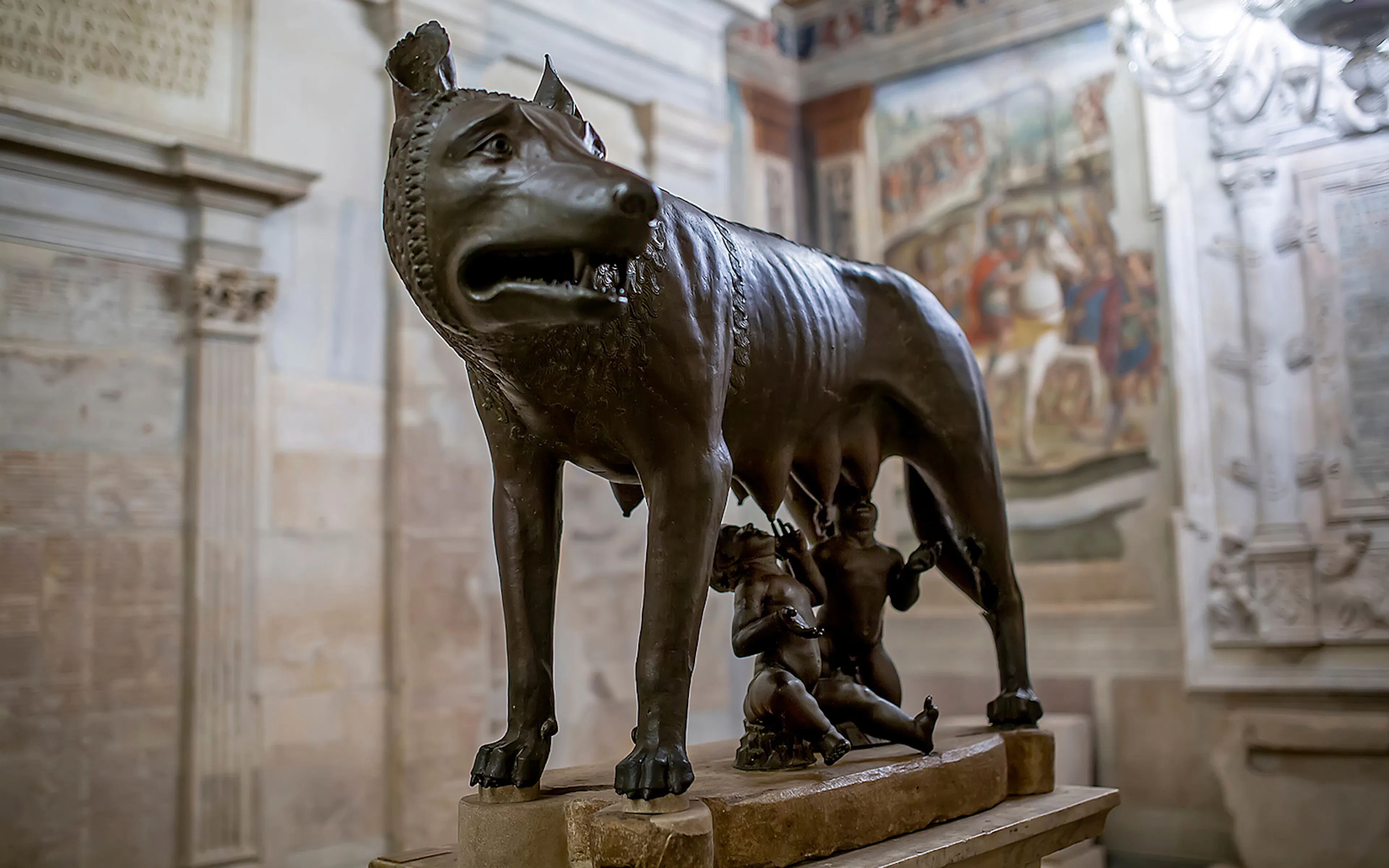
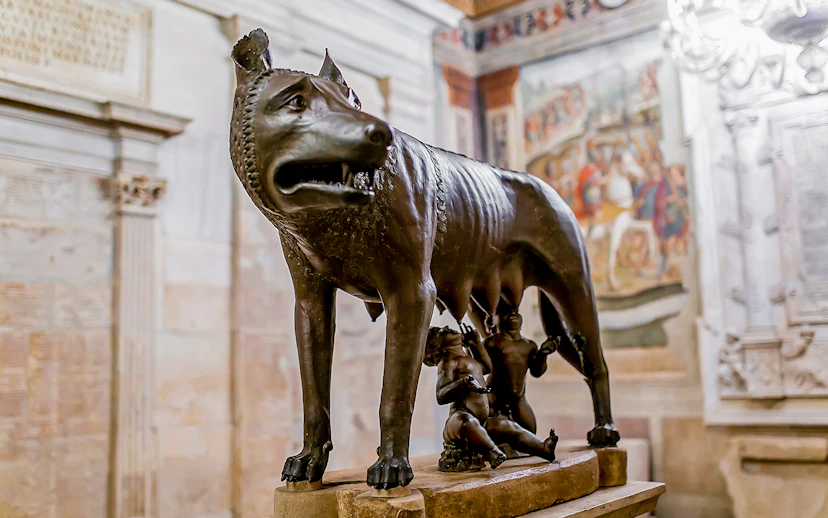
Capitoline Museum statue of the she-wolf with Romulus and Remus in Rome.
1/6

Capitoline Wolf

Era: Traditionally dated to antiquity, with Renaissance twins added later

Rome’s most recognisable symbol deserves more than a quick photograph. Look closely at the she-wolf’s tense stance and sharply defined ribs, then compare her style with the softer figures of Romulus and Remus added centuries later. The contrast reveals that the sculpture is not a single-period work.

Where to find it: Hall of the She-Wolf, Conservators’ Apartment, Palazzo dei Conservatori.

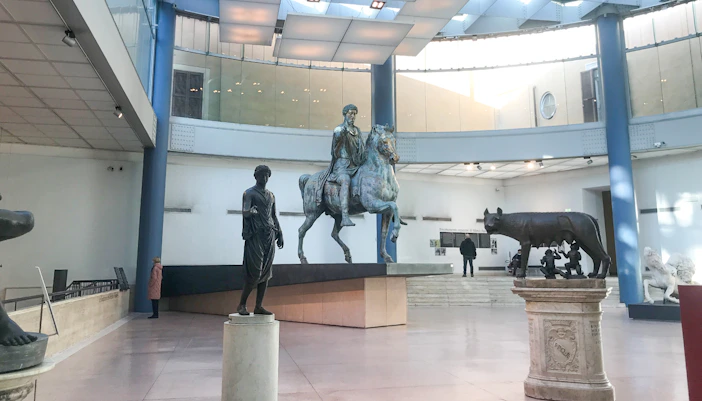
Equestrian statue of Marcus Aurelius

Era: Roman imperial period

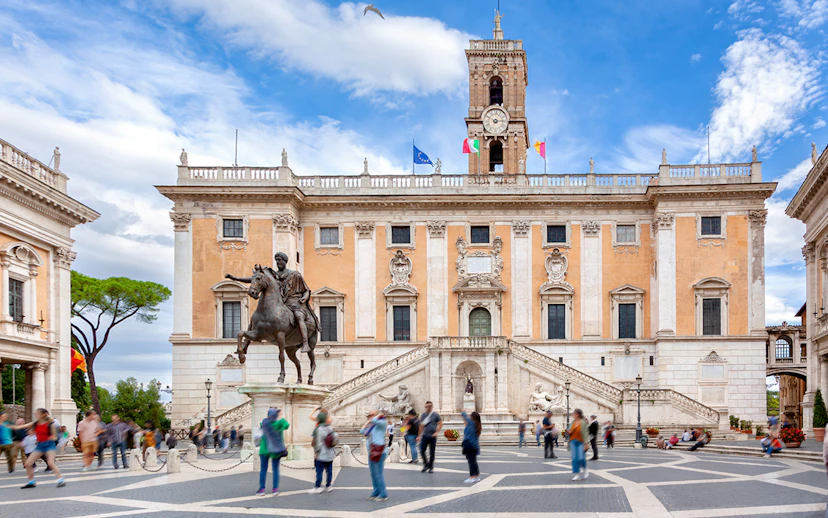
This is the original bronze statue; the figure in Piazza del Campidoglio is a copy. Walk around it to notice the emperor’s raised hand, the scale of the horse, and traces of the gilded surface. Its survival is remarkable because many ancient bronzes were later melted down.

Where to find it: Marcus Aurelius Exedra, Palazzo dei Conservatori.

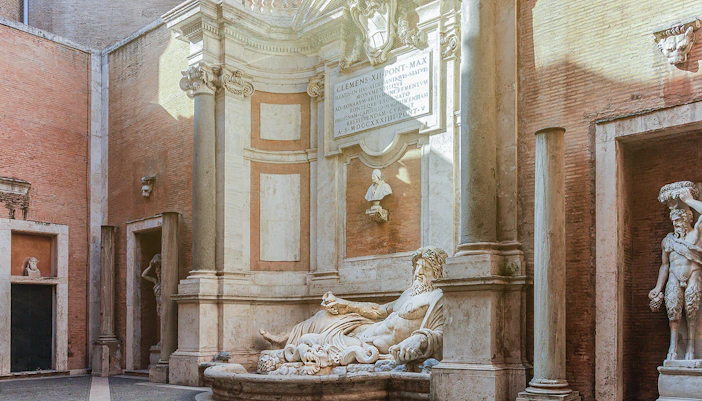
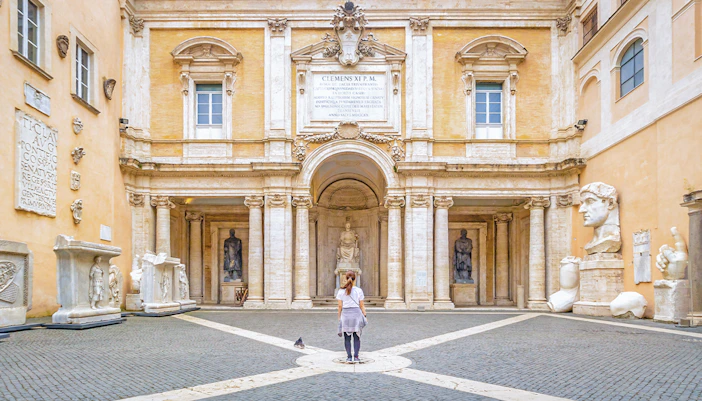
Remains of the Colossus of Constantine

Era: 4th century CE

The colossal head, hand, and other fragments convey the scale of an emperor’s image more effectively than a complete small statue could. Pause beside the hand to understand how enormous the original seated figure was. Many visitors focus on Marcus Aurelius and rush past these monumental remains.

Where to find it: Courtyard and Marcus Aurelius Exedra, Palazzo dei Conservatori.

Dying Gaul

Era: Roman copy of a Hellenistic Greek work

Rather than presenting a triumphant Roman soldier, this sculpture shows a defeated Galatian warrior with dignity and physical vulnerability. Walk around the figure to see the wound, shield, torque necklace, and carefully observed posture. Its emotional restraint is easier to appreciate away from the room’s entrance.

Where to find it: Hall of the Galatian, Palazzo Nuovo.

Capitoline Venus

Era: Roman imperial copy of a Greek model

Displayed alone in an intimate room, the slightly larger-than-life marble depicts Venus emerging from her bath. Slow down to notice the subtle turn of the head and the way the arms follow rather than interrupt the body’s curves. The secluded setting is part of the viewing experience.

Where to find it: Cabinet of Venus, Palazzo Nuovo.

St John the Baptist

Artist: Caravaggio

The Capitoline collection is not limited to ancient sculpture. Caravaggio’s painting uses a dark, restrained setting and an unconventional youthful figure rather than a formal religious composition. Look for the contrast between the illuminated body and the shadowed background before moving through the rest of the Picture Gallery.

Where to find it: Capitoline Picture Gallery, Palazzo dei Conservatori.

Capitoline Museums highlights you might miss

💡 Don’t leave without seeing: The Tabularium viewpoint overlooking the Roman Forum and the Capitoline Picture Gallery inside Palazzo dei Conservatori. Both sit slightly outside the most direct sculpture route and are easy to miss when moving between the two palaces.

Facilities and accessibility

Rules and restrictions

Practical tips

  • Book ahead for busy dates: Reserve a timed slot for weekends, public holidays, and the first Sunday of the month. Arrive around 15 minutes early so ticket checks do not cut into your visit.
  • Follow the building order: Start in Palazzo dei Conservatori, continue through the underground passage and Tabularium, and finish in Palazzo Nuovo. Reversing the route usually means more stairs and unnecessary backtracking.
  • Do not rush the connecting passage: Visitors often move quickly through the Galleria Lapidaria, but the nearby Tabularium viewpoint is one of the museum’s best views over the Roman Forum. Allow at least 20–30 minutes here.
  • Visit on a weekday morning: The museum is generally easier to navigate soon after opening, before groups and day visitors arrive around Piazza Venezia. Free-entry days save money but usually bring larger crowds.
  • Carry a small bag: Bulky backpacks and umbrellas may need to be stored in the cloakroom. Keeping essentials in a compact bag makes it easier to move through sculpture rooms and between buildings.
  • Plan refreshments around the route: The Caffarelli Terrace café is useful for drinks and a short break, but it sits outside the main gallery flow. Visit after completing the museum rather than interrupting the route midway.

What else is worth visiting nearby?

Eat, shop and stay near the Capitoline Museums

Frequently asked questions about visiting the Capitoline Museums

Most visitors need 2–3 hours to explore both main palaces, the underground Galleria Lapidaria, and the Tabularium viewpoint. A highlights-only visit can take around 90 minutes, while the Picture Gallery and temporary exhibitions can extend the visit beyond three hours.

More reads