The History of Baths of Caracalla from 206 AD to Modernity

The Historical Ruins of the Baths of Caracalla

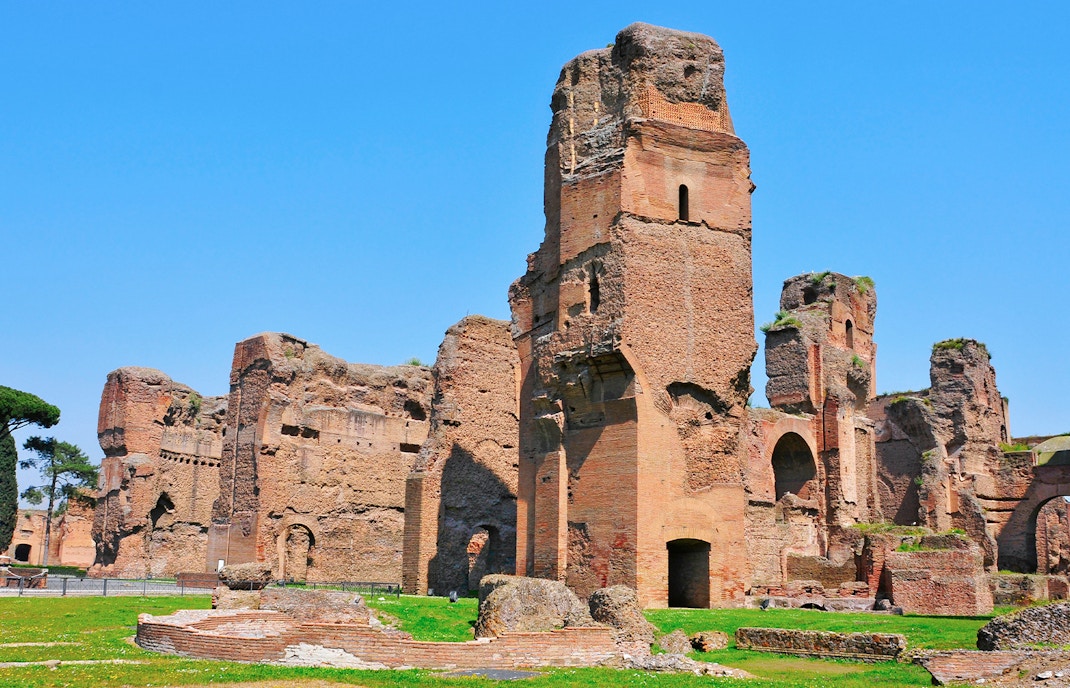
The Baths of Caracalla, also known as Thermae Antoninianae, is one of the most impressive and well-preserved examples of ancient Roman architecture. Built more than 1800 years ago during the reign of Emperor Caracalla, this public bathing complex was a pillar of Roman society offering a space of leisure, relaxation, and networking for its members. In this section, we will explore the history of the Baths of Caracalla, from its construction and eventual decline to its restoration.

A Timeline of the Baths of Caracalla

206 AD: Construction of the baths by Emperor Septimius Severus begins.

212-216 AD: Construction of the Roman Baths of Caracalla during the reign of Emperor Caracalla.

217 AD: Caracalla is assassinated and his successor, Emperor Macrinus, continues the construction of the baths.

235 AD: The Roman Baths of Caracalla are completed during the reign of Emperor Alexander Severus.

5th Century: With a capacity of 6000-8000 bathers, the Baths reaches its height of usage.

6th Century: The aqueduct that supplied the baths with water is destroyed during the Gothic Wars, are abandoned and fall into disrepair.

9th - 10th Centuries: The baths become dilapidated and suffer from earthquakes.

12th - 14 Centuries: Parts of the baths are salvaged and repurposed.

16th Century: Excavations begin and the ruins of the baths become a popular destination for architects.

18th - 19th Centuries: Excavations continue and many of the surviving structures are identified and partially restored.

20th Century: The site was opened to the public as a tourist attraction with musical concerts and operas.
Baths of Caracalla History Explained

206 AD

Conception and Completion of the Baths 

Emperor Septimius Severus began building the Baths of Caracalla in 206 AD. Thirteen thousand prisoners of war from the Scottish campaign of Septimius Severus were used in leveling the building site. The construction also involved six thousand tradesmen that were engaged every day. During the reign of Caracalla, the estate of Pollio was appropriated for the construction of the baths. The emperor Caracalla completed the basic structure of the Baths in 216 AD.

235 AD

Additions to the Bathing Complex

Work on additional buildings including the large rectangular structure around the main complex, libraries, and shops, continued during the reign of Elagabalus and Severus Alexander, the successors of Caracalla after his assassination in 217 AD. The baths were finished by 235. Renovations were later conducted under Aurelian and Diocletian. By this time, it was considered one of the most luxuriously designed baths in the empire that could accommodate 1,600 bathers.

4th - 6th Century

The Baths In Full Use

The baths were fully operational in the 5th century. The daily capacity around this time was thought to have been 6,000 to 8,000 bathers. The titulus Fasciolae, a Christian pilgrimage site close to the baths became very popular around this time. The baths became useful to pilgrims and the Church community as a place for bathing and a source of water.

6th - 9th Century

Destruction and Disuse

The baths are attacked in 537 AD by the Ostragoths during a siege of Rome. They destroyed the aqueduct leading to the structure, ending the water supply. The baths were rendered unusable and abandoned. It was later exploited for its marble and finery. Over the years, the structures of the baths were slowly destroyed by a series of earthquakes. The earthquake of 847 destroyed much of the building complex.

12th and 14th Century

Repurposing

The opulent decor of the Baths had been stripped long ago by thieves and invading groups. By the 12th century, the baths were used as a quarry for construction materials. Over several years, its decorative pieces were salvaged and reused in churches and palaces like the Pisa Cathedral, the Santa Maria in Trastevere, and the Loggia of the Benediction at St. Peter's Basilica. In the 14th century, it was even used as a vineyard.

16th Century

Early Excavations 

The excavations of Paul III between 1545 and 1547 uncovered many large statues made of marble and bronze, as well as other artifacts such as lamps and cameos, The collections were so impressive that a museum was created to house it, known as the Museo Farnese. In the 16th and 18th centuries, the structure rekindled the imaginations of famous architects like Andrea Palladio, Giovanni Battista Falda, and Giambattista Nolli who paid visits.

19th Century Onwards

Restoration

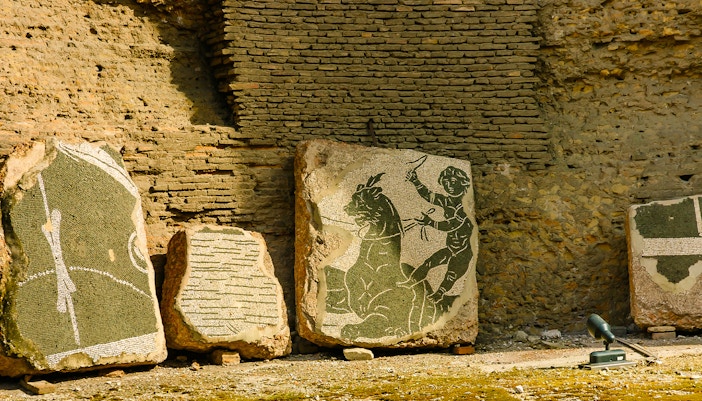
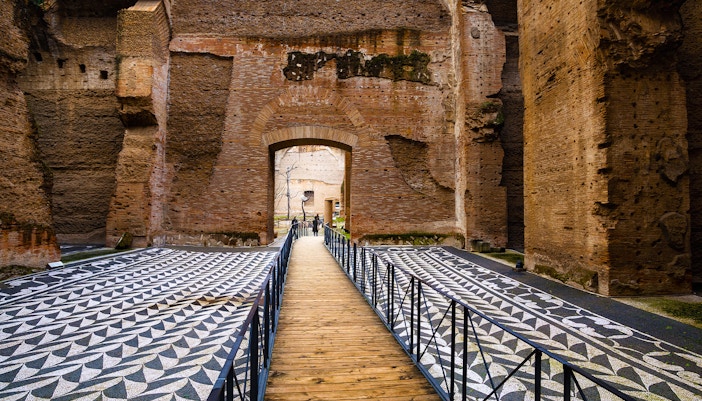
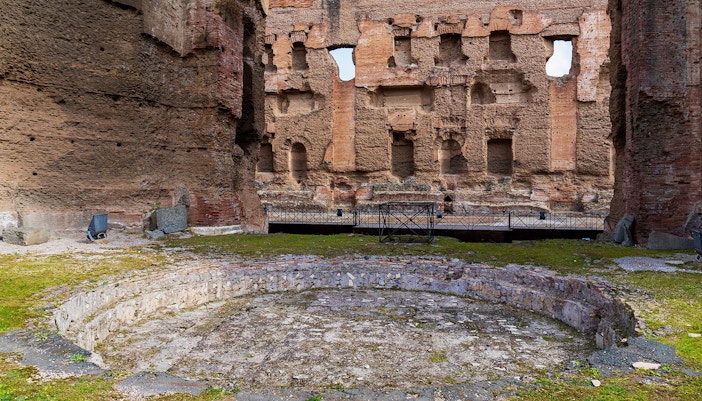
The excavations in the 19th century included the mosaics showing athletes, the frigidarium, and other key structures of the Roman Baths. From 1866 to 1869 restoration work in the central part of the complex began. It revealed several archaeological artifacts including sculptures and colossal columns. In the early 20th century, excavations revealed a complex underground passage and a Mithraic temple. In the late 1930s, an opera stage was installed in the caldarium chamber.

The Roman Baths of Caracalla Today

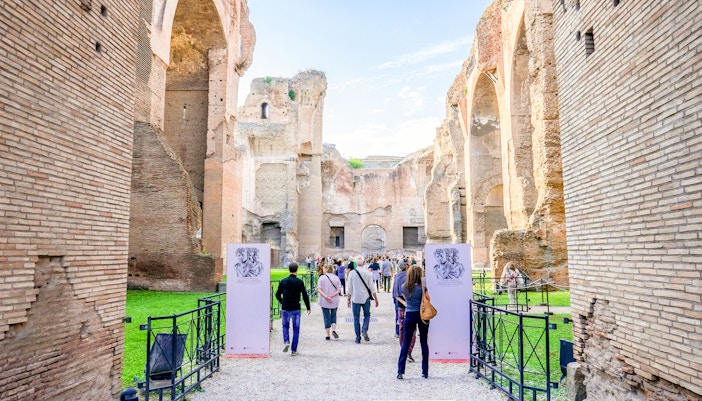
The archaeological site was opened to the public for an admission fee in the 20th century. In the 1930s, an opera stage was installed in the caldarium chamber owing to its large size. It is a regular venue for musical concerts and operas that are attended by many. The area was even used for the Rome Grand Prix between 1947 and 1951 and for the gymnastics events in the 1960 Summer Olympics. In spite of the passing of centuries, sieges, earthquakes, and the looting of the baths, the structures of the precinct largely remain intact even today. The ruins of the Baths of Caracalla still offer great insight into the ancient Roman world.

Visit the Baths of Caracalla

Frequently Asked Questions About the Baths of Caracalla

The Roman Baths of Caracalla were built in Rome, Italy, between 206 and 216 AD. Its surviving remains are intact even today, making the structure centuries old.

More Reads

Getting there, Baths of Caracalla

Getting There

Book Now

Opening Hours

Book Now