Why is the Santa Maria Maggiore Basilica a must-visit attraction?

Santa Maria Maggiore offers an unforgettable journey through early Christian art, sacred history, and living faith, making it one of Rome’s most essential landmarks. As one of the city’s four major papal basilicas, it preserves extraordinary 5th-century mosaics, richly decorated chapels, and revered relics linked to the origins of Christianity. Walking through the basilica, you’ll experience layers of history, from ancient Roman foundations to Renaissance and Baroque additions, woven into a single, harmonious space.

Beyond the main nave, the Liberian Museum, underground archaeological areas, and panoramic terraces reveal lesser-known perspectives of the basilica and the city itself. Whether you’re drawn by religious significance, artistic mastery, or Rome’s deep historical continuity, Santa Maria Maggiore delivers a powerful blend of spiritual atmosphere and cultural discovery in one immersive visit.

What to see at the Santa Maria Maggiore Basilica

Visitors at the altar of Basilica Santa Maria Maggiore, Rome, with ornate ceiling and columns.

Nave and Mosaics

Walk through the grand nave lined with marble columns and admire the glittering 5th-century mosaics that narrate biblical stories with vivid detail.

Dome and ceiling artwork of Basilica Santa Maria Maggiore in Rome.

Triumphal Arch & Apse Mosaics

Don’t miss the breathtaking mosaics above the arch and in the apse, considered among the finest early Christian artworks in Rome.

Sistine Chapel of Santa Maria Maggiore interior with ornate ceiling and frescoes, Rome, Italy.

Sistine Chapel (Chapel of the Blessed Sacrament)
Built by Pope Sixtus V, this lavish chapel holds his tomb and is adorned with stunning frescoes and marble inlays.

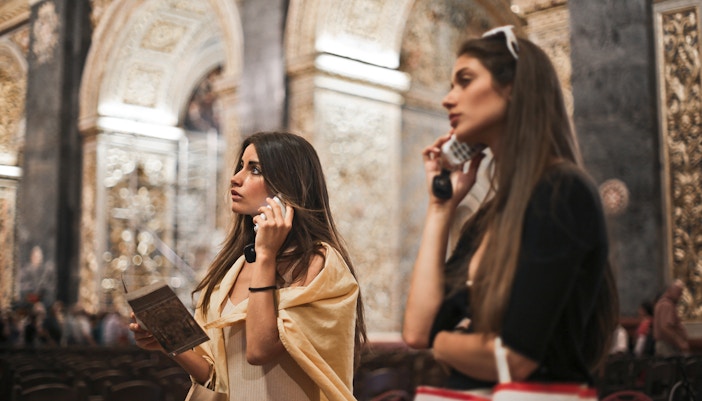
Tourists with audio guides exploring Vatican Museums' frescoes in Rome.

Paoline Chapel (Borghese Chapel)

Home to the revered icon Salus Populi Romani, this chapel is a deeply spiritual stop for pilgrims and art lovers alike.

Santa Maria Maggiore Basilica interior with ornate Holy Cradle display.

Crypt of the Nativity

The Crypt (also called the Bethlehem Crypt) is physically located beneath the basilica’s altar and said to house actual relics of the Holy Crib, the manger where Jesus was born.

Santa Maria Maggiore facade in Rome with bell tower and surrounding buildings.

Bell Tower & Exterior

The tallest bell tower in Rome (75 meters) rises proudly above the basilica, while the Baroque façade invites you into its timeless story.

Santa Maria Maggiore highlights

Basilica di Santa Maria Maggiore facade with bell tower in Rome, Italy.

Bell tower

See Rome’s tallest medieval bell tower rising above the basilica, a striking 14th-century landmark that defines Santa Maria Maggiore’s skyline.

Close-up of Holy Gates relief in Basilica of Santa Maria Maggiore, Rome, depicting religious figures.
Dormition of the Virgin Mary mosaic in Basilica Santa Maria Maggiore, Rome, depicting apostles and angels.
Interiors of the Basilica of Santa Maria Maggiore in Rome, showcasing ornate ceilings and detailed mosaics.
Basilica Santa Maria Maggiore interior with ornate altar and statues in Rome.

The Miracle of Our Lady of the Snows

One of the most cherished stories connected to Santa Maria Maggiore is the legend of the miraculous summer snowfall. According to tradition, in the 4th century, the Virgin Mary appeared in a dream to both Pope Liberius and a wealthy Roman nobleman, instructing them to build a church on the spot where snow would fall the following day. On August 4, 358 AD, at the height of Rome’s summer, snow is said to have covered the Esquiline Hill, clearly marking the chosen location for the basilica.

This extraordinary event is commemorated every year on August 5 with a special celebration inside Santa Maria Maggiore. During the liturgy, white flower petals cascade from the ceiling, symbolically recreating the miraculous snowfall and drawing visitors and pilgrims into one of Rome’s most evocative religious traditions. The annual ceremony keeps the legend alive, blending faith, history, and ritual in a way that makes Santa Maria Maggiore not just a historic monument, but a living place of devotion.

A brief history of Santa Maria Maggiore Basilica

  • 352–366 AD: According to tradition, a miraculous snowfall on August 5 marks the site for a new church during the papacy of Pope Liberius. An early basilica, known as the Liberian Basilica, is founded on the Esquiline Hill.
  • 432–440 AD: Following the Council of Ephesus (431), which affirmed Mary as Mother of God, Pope Sixtus III rebuilds and greatly expands the basilica. The nave plan is established, and the celebrated 5th-century mosaics of the nave and triumphal arch are commissioned.
  • 12th–13th centuries: Medieval restorations and additions strengthen the basilica’s role as a major pilgrimage church, while its artistic heritage continues to grow.
  • 1377: The bell tower (campanile) is completed under Pope Gregory XI, becoming the tallest medieval bell tower in Rome.
  • Late 15th century (c. 1493): The magnificent coffered ceiling is completed, traditionally gilded with gold brought from the Americas during the era of Pope Alexander VI.
  • 1585–1590: Under Pope Sixtus V, the Sistine Chapel of Santa Maria Maggiore is constructed, later becoming his burial place.
  • 1605–1611: The richly decorated Pauline (Borghese) Chapel is added during the reign of Pope Paul V, further enhancing the basilica’s Baroque character.
  • 1680: Baroque master Gian Lorenzo Bernini is buried in Santa Maria Maggiore, in a modest tomb reflecting his personal devotion to the basilica.
  • 19th–20th centuries: Archaeological excavations uncover Roman-era structures beneath the church, while restoration projects focus on preserving mosaics, chapels, and liturgical spaces.
  • 1950: The Holy Door is installed and opened for the Holy Year proclaimed by Pope Pius XII, reinforcing the basilica’s Jubilee significance.
  • Present day: Santa Maria Maggiore stands as one of Rome’s four major papal basilicas, remaining an active place of worship while welcoming visitors as a living monument to nearly 1,700 years of Christian history.

Who built the Santa Maria Maggiore Basilica?

Santa Maria Maggiore was founded in the 4th century during the pontificate of Pope Liberius, traditionally following the miraculous summer snowfall of August 5. Its most decisive rebuilding occurred between 432 and 440 AD under Pope Sixtus III, who established the basilica’s enduring structure and commissioned its famous early Christian mosaics.

In the 18th century, Pope Benedict XIV entrusted Ferdinando Fuga with redesigning the basilica’s main facade. Fuga’s work gave Santa Maria Maggiore its present Baroque exterior, carefully modernizing the building while preserving its ancient interior.

Architecture of the Santa Maria Maggiore Basilica

Santa Maria Maggiore is one of Rome’s finest examples of an early Christian basilica, notable for its clear basilican plan and exceptional preservation. The long nave is lined with ancient columns and illuminated by a sequence of 5th-century mosaics that rank among the earliest surviving Christian artworks in Rome. Above, the coffered ceiling, traditionally gilded with gold from the Americas, adds Renaissance grandeur to the interior.

Later architectural layers enrich the basilica without overwhelming its original form. The Sistine Chapel and Pauline (Borghese) Chapel introduce Renaissance and Baroque artistry through elaborate marble decoration and sculptural detail. Outside, the contrast between Fuga’s Baroque façade and the 14th-century bell tower, Rome’s tallest medieval campanile, visually reflects the basilica’s long and complex architectural history.

Frequently asked questions about Santa Maria Maggiore Basilica

Why is Santa Maria Maggiore significant?

Santa Maria Maggiore is one of Rome’s four major papal basilicas and one of the oldest churches dedicated to the Virgin Mary. It is renowned for its exceptionally well-preserved 5th-century mosaics, sacred relics, and its continued role as an active place of worship and pilgrimage.

How old is Santa Maria Maggiore?

The basilica dates back to the 4th century, with its main structure built between 432 and 440 AD under Pope Sixtus III. This makes Santa Maria Maggiore nearly 1,600 years old.

What are the must-see highlights inside Santa Maria Maggiore?

Key highlights include the 5th-century nave and triumphal arch mosaics, the richly decorated coffered ceiling, the High Altar, the Chapel of the Nativity, the Sistine Chapel, and the Pauline (Borghese) Chapel. Visitors can also explore the Liberian Museum and underground archaeological areas with select tickets.

Who built Santa Maria Maggiore?

Santa Maria Maggiore was founded during the papacy of Pope Liberius in the 4th century and significantly rebuilt under Pope Sixtus III in the 5th century. Over time, successive popes contributed to its expansion, including Ferdinando Fuga, who redesigned the main façade in the 18th century.

What architectural style is Santa Maria Maggiore known for?

The basilica is best known for its early Christian basilican architecture, enriched with Renaissance and Baroque additions. This layered design reflects nearly 17 centuries of architectural and artistic evolution.

Is Santa Maria Maggiore free to enter?

Entry to the main basilica is generally free, as it is an active church. However, access to areas such as the Liberian Museum, underground ruins, terraces, and guided tours requires a ticket.

What can I do during a visit to Santa Maria Maggiore?

Visitors can admire early Christian mosaics, explore chapels and sacred relics, attend Mass, visit museum and archaeological areas, and enjoy panoramic views from the terraces. Guided tours offer deeper insight into the basilica’s history and symbolism.

What is the Holy Door at Santa Maria Maggiore?

The Holy Door is opened only during Jubilee Years and represents spiritual renewal and pilgrimage. Passing through it during a Jubilee holds special religious significance for Catholic pilgrims.