St. John Lateran Complex visitor guide
The St. John Lateran Complex is Rome’s cathedral precinct, best known for the Archbasilica, the Holy Stairs, and the pope’s former private chapel. It doesn’t work like a single attraction: the visit is split across separate sacred spaces, and the best experience depends on doing them in the right order. Some areas are free, others are more restricted, and midday closures can interrupt a loose plan. This guide helps you time the visit, choose what is worth paying for, and move through the complex without backtracking.
Quick overview: St. John Lateran Complex at a glance
This is one of those Rome visits that works best when you decide in advance whether you want a quick basilica stop or the full pilgrimage route.
- When to visit: Daily. The first hour of the morning is noticeably calmer than late morning and midday, because tour groups, school groups, and pilgrims tend to arrive later and the nave feels much less crowded then.
- Getting in: From €14 for standard entry to the basilica, baptistery, and Holy Stairs. Guided tours generally start from about €30, and you only need to book ahead if you want the cloister, the Lateran Palace, or timed access to more restricted spaces.
- How long to allow: 1–2 hours for most visitors. It stretches toward 3 hours if you add the cloister, baptistery, Scala Santa, and quiet time inside the basilica.
- What most people miss: The octagonal Lateran Baptistery and the medieval cloister are easy to skip, even though both show the site’s oldest and most atmospheric layers.
- Is a guide worth it? Yes, if you want the basilica, Holy Stairs, and Sancta Sanctorum to make historical and devotional sense; if you only want to see the main spaces, a self-guided visit is enough.
Jump to what you need
🕒 Where and when to go
🗓️ How much time do you need?
🎟️ Which ticket is right for you?
🗺️ Getting around
⛪ What to see
♿ Facilities and accessibility
Where and when to go

How do you get to the St. John Lateran Complex?
The complex sits on the Caelian Hill beside Piazza San Giovanni in Laterano, just outside Rome’s ancient core and a short Metro ride from Termini.
Piazza San Giovanni in Laterano, Rome, Italy
- Metro: San Giovanni (Line A) → 5-min walk → the most straightforward stop if you want the basilica and Scala Santa together.
- Metro: Vittorio Emanuele (Line A) → 3-min walk → slightly quicker on foot if you’re already coming from central Rome.
- Bus: Piazza di San Giovanni stop → short walk → routes including 81, 85, 87, 714, and 792 serve the square directly.

Which entrance should you use?
The complex is spread across separate buildings, so the main mistake is assuming everything starts from the basilica doors.
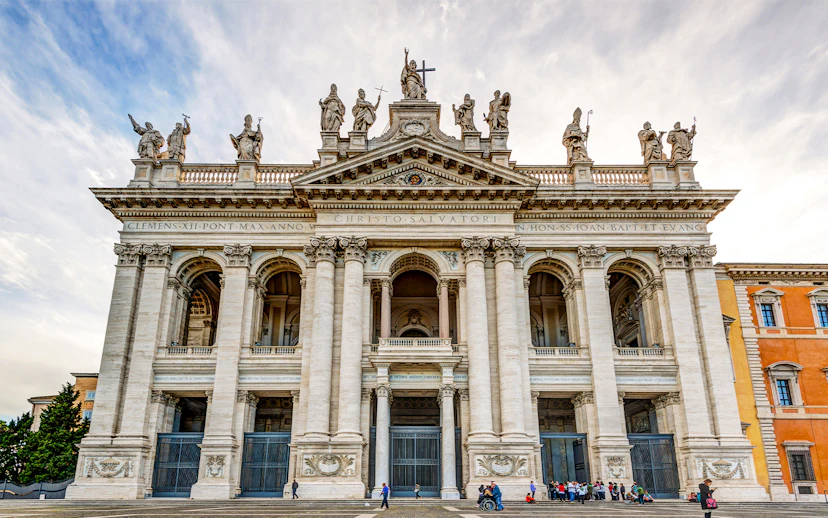
- Archbasilica entrance: Located on Piazza San Giovanni in Laterano. Best for the main basilica and baptistery. Expect minimal waits outside major holy days.
- Scala Santa entrance: Located in the separate building facing the basilica precinct. Best for the Holy Stairs and Sancta Sanctorum route. Expect short waits, but slower movement when pilgrims are ascending on their knees.
- Cloister and museum access: Located off the basilica complex interior route. Best for visitors with the combined ticket or guided visit. Expect brief ticket checks rather than a long queue.

When is St. John Lateran Complex open?
- Daily: The basilica, baptistery, and Holy Stairs are generally open every day.
- Midday break: Some parts of the complex may close around 1:30pm–3pm, so don’t leave the restricted-access spaces until last.
- Restricted areas: Sancta Sanctorum and the Lateran Palace follow more limited or guided-access schedules.
When is it busiest? Late morning, Easter week, Christmas, and major Jubilee or papal periods are the most crowded, when prayer traffic and guided groups overlap.
When should you actually go? Aim for the first part of the morning, when the basilica still feels contemplative and you can move between the basilica and Scala Santa before the square gets busy.
Which St. John Lateran Complex ticket is best for you
| Ticket type | What's included | Best for | Price range |
|---|---|---|---|
Self-guided basilica visit | Free entry to the Archbasilica + free access to the baptistery + free access to the Holy Stairs | A short visit where you mainly want to see the cathedral, absorb the space, and keep the day flexible | From €14 |
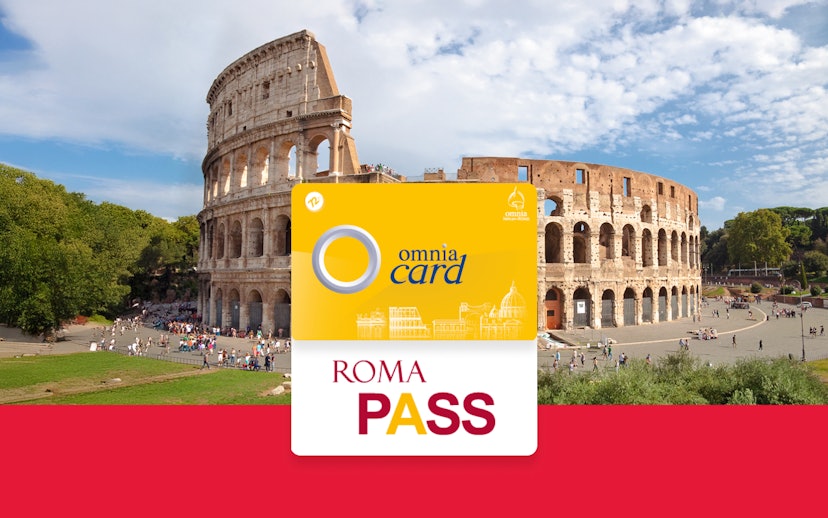
Omnia Card and Roma Pass | Access to 10+ top attractions in Rome & Vatican with unlimited public transport | Flexible, hassle-free pass for maximum exploration at a cost-effective rate | From €149 |
How do you get around St. John Lateran Complex?
The complex is best explored on foot, and most visitors can cover the main spaces in 1–2 hours if they follow a deliberate route instead of bouncing between buildings. The basilica is the visual anchor of the site, while the Holy Stairs building sits separately across the piazza, so orientation matters more than distance.

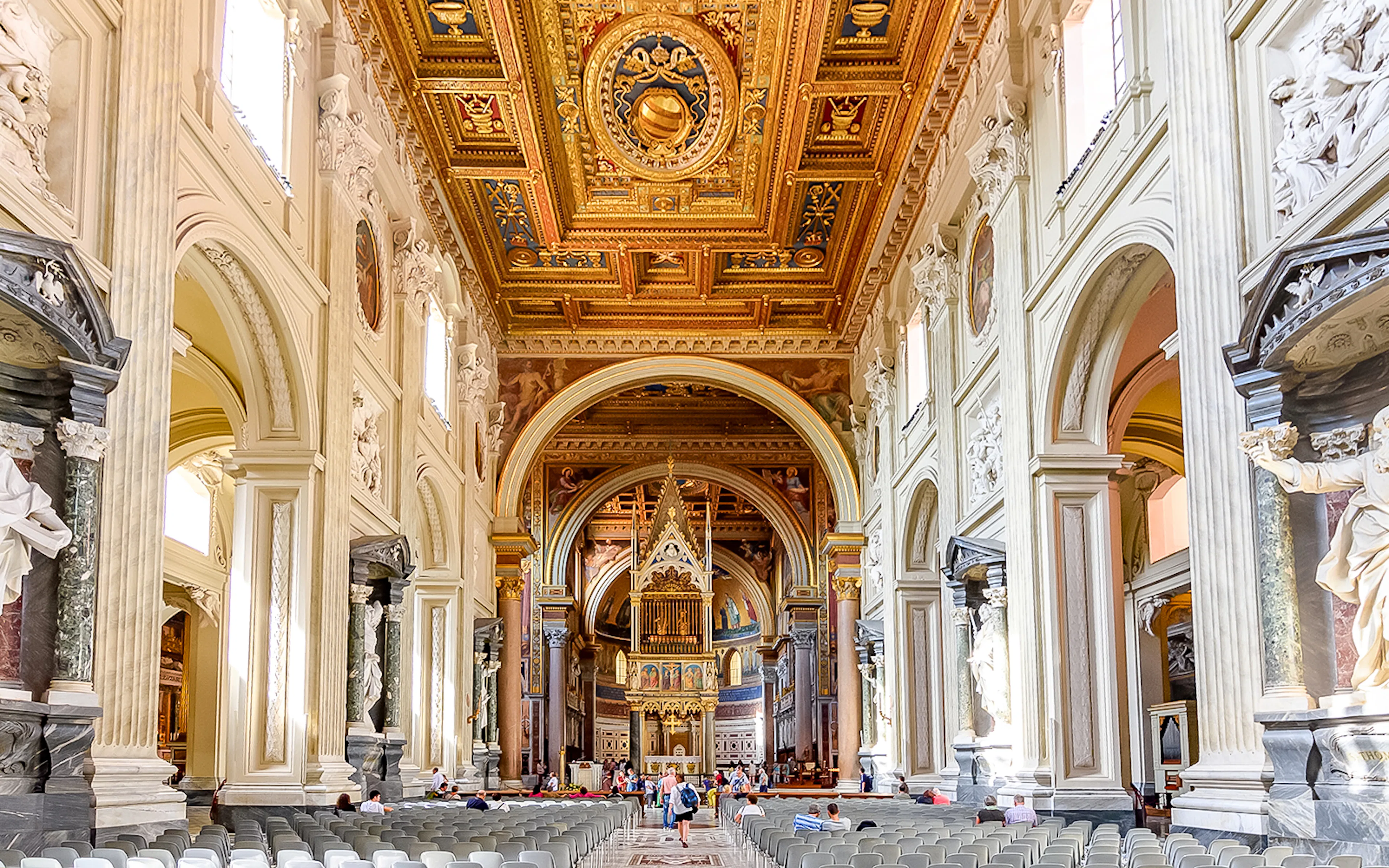
- Archbasilica nave and apse: The main cathedral interior with the apostle statues, papal altar, and apse mosaic → budget 30–45 minutes.
- Lateran Baptistery: The octagonal Constantinian baptistery beside the basilica → budget 10–15 minutes.
- Cloister: The quieter medieval section with Cosmatesque details and twisted columns → budget 10–15 minutes.
- Scala Santa and Sancta Sanctorum: The devotional route with the Holy Stairs and the former papal chapel → budget 15–25 minutes, longer if the stairs are busy.
Suggested route: Start in the basilica while it’s still quiet, continue to the baptistery and cloister while you’re already on that side of the complex, and finish at Scala Santa so you don’t have to cross the piazza twice. Most visitors miss the cloister because it sits behind the main flow, not because it takes long.

Maps and navigation tools
- Map: A simple site map or guide page works best → it helps you understand that the basilica, cloister, baptistery, and Holy Stairs are separate stops → download it before you arrive.
- Signage: Wayfinding is workable inside the basilica, but not strong enough to explain the full complex without a map or short guide.
- Audio guide / app: An audio guide adds real value here because the site is context-heavy, especially around relics, chapels, and the Sancta Sanctorum.
💡 Pro tip: Do the basilica first and the Holy Stairs last — that order keeps the visit from feeling fragmented and saves one unnecessary crossing of the square.
Get the St. John Lateran Complex map / audio guide
What are the most significant spaces in St. John Lateran Complex?
Archbasilica nave
Era: 4th-century foundation with later Baroque and Neoclassical rebuilding
This is the ceremonial heart of the complex, and it’s the space most visitors remember: a huge nave lined with colossal apostle statues, broad marble aisles, and one of the most imposing interiors in Christian Rome. What people rush past is the floor — the Cosmatesque marble work repays a slower walk, especially once you move away from the central axis and look down as often as up.
Where to find it: Through the main façade of the Archbasilica on Piazza San Giovanni in Laterano.
Papal altar and apse
Attribute: Sacred focal point and mosaic ensemble
The high altar area matters because this is the pope’s cathedral, not just another grand Roman church. The apse mosaic and the altar tradition tied to the Last Supper relic give the space a weight that’s easy to miss if you stop only for a photo from the center of the nave. Many visitors don’t linger long enough at the far end to notice how much of the basilica’s meaning is concentrated here.
Where to find it: At the far eastern end of the basilica, beyond the nave and transept.
Lateran Baptistery
Era: 4th century
The baptistery is one of the oldest Christian structures in Rome, and its octagonal plan, porphyry columns, and layered decoration feel very different from the basilica’s grand scale. What people often miss is how early this building is — it connects you more directly to Constantine’s Rome than most of the later ceremonial spaces do. It’s brief to visit, but it changes how you understand the whole complex.
Where to find it: Beside the basilica, reached from the main Lateran precinct.
Lateran cloister
Attribute: Medieval Cosmatesque art
The cloister is the calmest part of the complex, and it’s where the visit briefly shifts from monumental church space to something more intimate and crafted. The twisted marble columns and mosaic detailing are the reason to slow down here; most visitors either skip it or move too quickly through the arcades. If you need one quiet counterpoint to the basilica’s grandeur, this is it.
Where to find it: Behind the basilica, accessed through the complex’s ticketed interior route.
Scala Santa
Attribute: Pilgrimage and devotional staircase
The Holy Stairs are not just another historic staircase — they are still used devotionally, and that changes the mood completely. Many visitors focus only on the tradition of climbing on their knees, but the frescoed walls and the slower, prayer-led movement are what make the space memorable. If you’re not climbing the central steps, use the adjacent stairs and still take time to absorb the atmosphere.
Where to find it: In the separate Scala Santa building facing the Lateran complex.
Sancta Sanctorum
Era: Early medieval papal chapel
This small chapel is the most restricted and one of the most significant spaces on-site. It once served as the popes’ private chapel, and its relic tradition and acheiropoietic icon make it spiritually dense in a way the larger spaces are not. What people miss is how tiny it is — after the basilica, the power of this room comes from concentration, not scale.
Where to find it: At the top of the Scala Santa route.
Facilities and accessibility
- 🎒 Bag planning: Travel light, because this visit works best when you can move easily between the basilica, baptistery, cloister, and Scala Santa without stopping to reorganize your things.
- 🚻 Restroom planning: Plan restroom breaks before you arrive or between stops, because visitors regularly note that amenities around the complex are limited rather than plentiful.
- 🍽️ Food options: There is no strong reason to plan a meal inside the complex itself, so eat before your visit or save lunch for afterward in the surrounding streets.
- 🪑 Seating / rest areas: The basilica offers pews and places to sit quietly, but the Holy Stairs section is built for devotion and movement rather than comfort.
- 🩺 Pacing support: The complex is manageable in size, but it includes separate buildings and devotional spaces, so short pauses between stops make the visit much easier.
- ⛪ Worship setting: This is an active religious site, so practical facilities take second place to prayer spaces, silence, and liturgical use.
- ♿ Mobility: The basilica itself is the easiest part of the complex to access, but the Holy Stairs devotional route is not step-free and many visitors use the adjacent stairways instead.
- 👁️ Visual impairments: The site is visually rich but not especially interpretive on its own, so a guide or audio support helps far more here than at attractions with stronger in-room explanation.
- 🧠 Cognitive and sensory needs: Early morning is the calmest window, while late morning can feel busier and more fragmented because guided groups and pilgrims overlap across the precinct.
- 👨👩👧 Families and strollers: The basilica and open piazza are easier with a stroller than the Holy Stairs building, where the devotional setup naturally slows movement and limits flexibility.
- ⛪ Quiet needs: If you need a lower-stimulation part of the visit, the cloister is usually gentler than the nave or the more intense devotional flow around Scala Santa.
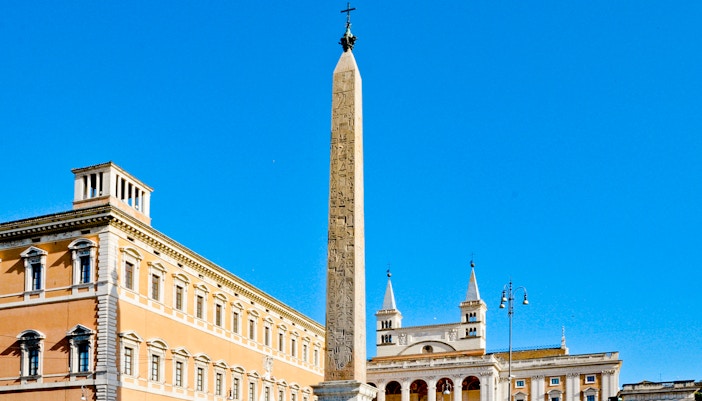
This visit works best with older children or younger ones who can handle a quiet, respectful setting, and they usually get the most out of the huge nave, the obelisk outside, and the unusual Holy Stairs tradition.
- 🕐 Time: Around 45–90 minutes is realistic with children if you focus on the basilica, the piazza, and one additional stop rather than trying to cover every building.
- 🏠 Facilities: Family-friendly amenities are limited, so this works better as a short cultural stop than a long linger-heavy visit with lots of snack and restroom breaks.
- 💡 Engagement: Give children one thing to spot in each space — the giant apostle statues, the octagonal baptistery, the obelisk, or the covered Holy Stairs — so the visit feels like discovery rather than silence.
- 🎒 Logistics: Bring water, keep bags compact, and aim for the morning, when the site is quieter and you’re less likely to lose momentum between buildings.
- 📍 After your visit: The open space around Piazza San Giovanni gives children a reset before you head on to another church, the Metro, or lunch.
Rules and restrictions
What you need to know before you go
- Entry requirement: The basilica, baptistery, and Holy Stairs are generally free to enter, but some areas such as the cloister, Lateran Palace, or Sancta Sanctorum may require a ticket or guided access.
- Bag policy: Keep bags small and easy to carry, because this visit involves multiple buildings and a religious setting where bulky luggage feels cumbersome.
- Re-entry policy: Re-entry is usually straightforward for the free-access spaces, but leaving during a split schedule can mean finding part of the complex temporarily closed when you return.

Not allowed
- 🚫 Food and drink: Eating inside the sacred spaces is not appropriate, so save snacks and drinks for outside the complex.
- 🚬 Smoking and vaping: Smoking and vaping are not appropriate inside the religious buildings and should be kept well away from entrances.
- 🐾 Pets: Pets are not suitable for the church complex, while service animals should follow standard religious-site etiquette.
- 🖐️ Behavior: Touching sacred furnishings, treating altars as photo backdrops, or disrupting prayer is not acceptable in an active basilica.

Photography
Photography is generally allowed in most parts of the basilica and cloister, but it is not a blanket yes everywhere. The stricter line is around devotional spaces: photos are not allowed on the Holy Stairs or inside the Sancta Sanctorum. Flash, tripods, and selfie-stick style setups are best avoided in the church interior, where they clash with both worship and the space’s quieter atmosphere.

Dress code
St. John Lateran Complex enforces a dress code for entry to its religious spaces. Entry may be refused if the requirements below are not met.
Required:
- Shoulders covered
- Knees covered
- Respectful clothing suitable for a functioning church
Good to know: Carrying a light scarf or extra layer is the easiest fix if you’re visiting Rome in warm weather and arrive underprepared.
⚠️ Dress code is enforced at the entrance with no exceptions. Shorts and bare shoulders are the most common reasons visitors get stopped, and a scarf or light overshirt usually solves the problem quickly.

Good to know
- Mass timings: Because this is an active basilica, parts of the visit may feel different or more restricted during services than they do on a standard sightseeing stop.
- Holy Stairs route: The central staircase is climbed devotionally on your knees, so use the side stairs if you want to continue the visit without that practice.
Practical tips
- Booking and arrival: You don’t need to pre-book the free basilica visit, but you should reserve ahead if the cloister, Lateran Palace, or a guided Holy Stairs experience matters to you, especially around Easter, Christmas, or Jubilee periods.
- Pacing: Do the main nave while your attention is fresh, because the scale is part of the experience; save the cloister for the middle of the visit, when you’ll appreciate the quieter change of pace.
- Crowd management: The best working slot here is the first part of the morning, not because Rome is always quieter then, but because this site gets busier once group tours and pilgrims start overlapping across the piazza.
- What to bring or leave behind: Pack a scarf or light layer even in warm weather, since modest dress is enforced and it’s easier to fix that on the spot than to lose time leaving and returning.
- Holy Stairs planning: If you want to climb the Scala Santa on your knees, budget about 15 minutes and don’t schedule it right before a tight lunch or transport connection.
- Food and drink: Eat before you start the route, because the visit is split across multiple sacred spaces and it’s awkward to break the flow halfway through just to find a café.
- Mind the midday split: The biggest planning mistake here is a loose midday visit, since closures around 1:30pm–3pm can leave the visit feeling incomplete even though there are rarely long queues.
What else is worth visiting nearby?
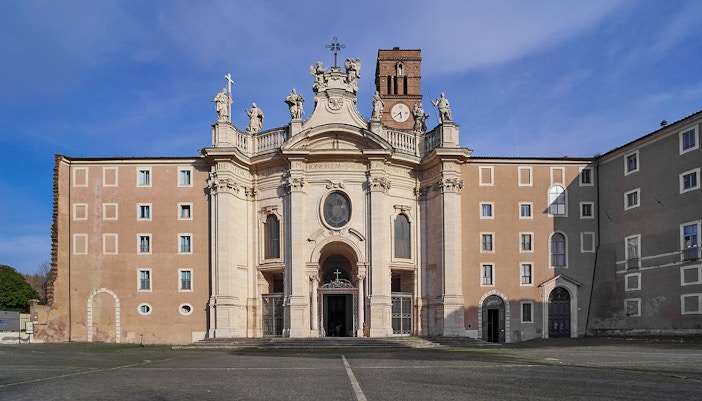
Commonly paired: Basilica of Santa Croce in Gerusalemme
Distance: ~800m — 10 min walk
Why people combine them: Both sites are deeply tied to Passion relics and pilgrimage traditions, so they make a natural same-morning religious route rather than two disconnected church visits.
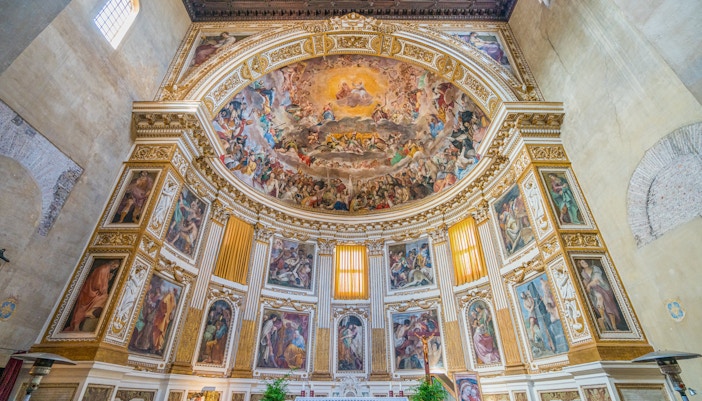
Commonly paired: Basilica of Santi Quattro Coronati
Distance: ~550m — 7 min walk
Why people combine them: It complements the grand Lateran spaces with a much more intimate medieval church and cloister, which makes the pair especially rewarding if you care about early Christian and medieval Rome.
Also nearby
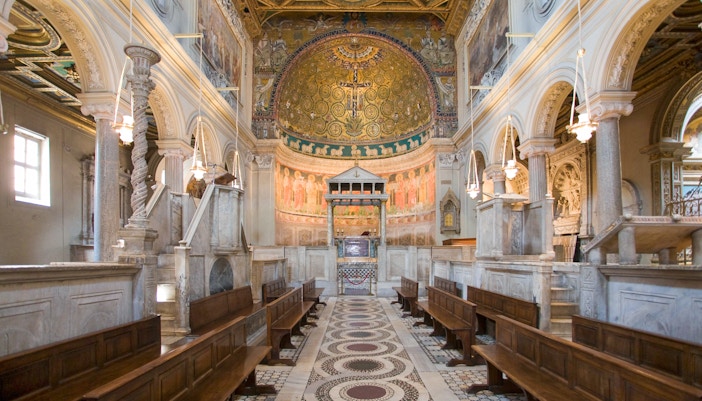
Basilica of San Clemente
Distance: ~2km — about 20 min by bus
Worth knowing: This is the best follow-up if you want to keep going deeper into layered Christian history, because the church sits above earlier levels and feels completely different from the Lateran complex.
Colosseum
Distance: ~2.5km — 20–25 min by Metro or bus
Worth knowing: It’s an easy same-day pivot if you want to balance sacred Rome with ancient imperial Rome, especially from nearby Metro Line A connections.
Eat, shop and stay near St. John Lateran Complex
- On-site: There is no meaningful on-site food stop that should shape your plan, so treat this as a visit to do before coffee or before lunch rather than during it.
- Piazza San Giovanni cafés: Good for espresso, pastries, and a quick reset before or after the basilica without adding a detour.
- San Giovanni neighborhood bars: Better for a casual drink or gelato once you’re done with the religious spaces and ready to relax.
- Via Merulana eateries: A better bet if you want a proper sit-down meal and you’re continuing toward other central landmarks afterward.
- Pro tip: Eat before you start if you want the full route — the basilica, cloister, and Holy Stairs flow much better as one continuous visit than as two short halves broken by lunch.
- Religious stores near the piazza: The area around the basilica is the best place for devotional souvenirs such as rosaries, medals, and small Catholic gifts tied to the pilgrimage setting.
- Via Appia Nuova shopping streets: If you want practical Rome shopping rather than church souvenirs, the nearby San Giovanni area is more useful than the immediate basilica frontage.
Yes, if you want good Metro access and a calmer base than the most crowded historic-center streets. The area works especially well for visitors planning several church or ancient Rome stops in one trip, because you’re well connected without staying right in the thick of the tourist core. It is less about atmosphere-heavy sightseeing outside your door and more about convenience.
- Price point: The area usually skews more practical than ultra-luxury, with better value than the most central postcard neighborhoods.
- Best for: Visitors on a short Rome trip who want fast transit, easy access to religious sites, and less pressure to stay beside the biggest tourist crowds.
- Consider instead: Stay closer to the historic center if you want to walk everywhere at night, or choose Vatican-side neighborhoods if your trip leans more heavily toward St. Peter’s and the Vatican Museums.
Frequently asked questions about visiting St. John Lateran Complex
Most visits take 1–2 hours. That is enough for the Archbasilica, the baptistery, and the Holy Stairs area without rushing. If you add the cloister, timed chapel access, or quiet time for prayer, plan closer to 2.5–3 hours.
No, not for the free parts of the complex such as the basilica, baptistery, and Holy Stairs. You only need to book ahead if you want the cloister, Lateran Palace, restricted-access spaces, or a guided visit during busy religious periods.
Arrive 15–20 minutes early if you have a timed or guided visit. The complex itself rarely has big entrance lines, but moving between separate buildings and navigating the piazza is slower than many first-time visitors expect.
Yes, but a small bag works much better than a large backpack. The route crosses multiple buildings, and the more devotional parts of the visit feel awkward with bulky luggage or shopping bags.
Yes, in much of the basilica and cloister, but not everywhere. Photography is not allowed on the Holy Stairs or inside the Sancta Sanctorum, so the rules are stricter once you move from sightseeing spaces into devotional ones.
Yes, and it works especially well with a guide if your group wants the symbolism and history explained clearly. Larger groups should still aim for the morning, when the basilica is easier to move through and the prayer atmosphere is less disrupted.
Yes, but it suits shorter, quieter family visits better than long, interactive ones. Children usually respond best to the scale of the basilica, the obelisk outside, and the unusual Holy Stairs tradition, while the full devotional route can feel long for very young kids.
Partly. The basilica itself is the easiest part to visit with mobility needs, but the Holy Stairs devotional route is not accessible in the same way and many visitors use the adjacent stairways instead of the central steps.
Yes, but nearby options are more useful than anything tied to the complex itself. It is easier to eat before or after your visit in the San Giovanni area than to plan for a mid-visit food break.
You do not usually need a ticket for the Holy Stairs themselves, but access works differently for the Sancta Sanctorum and other restricted spaces. That is why it helps to decide in advance whether you want only the free route or a fuller, ticketed visit.
You need to dress as you would for an active church, with shoulders and knees covered. This matters year-round, and visitors are most often caught out in summer when they arrive in shorts or sleeveless tops after walking around Rome.
Yes, non-Catholics can visit the Scala Santa, but the central staircase is treated as a devotional act rather than a tourist installation. If you do not want to climb on your knees, use the adjacent stairs and keep the atmosphere respectful.