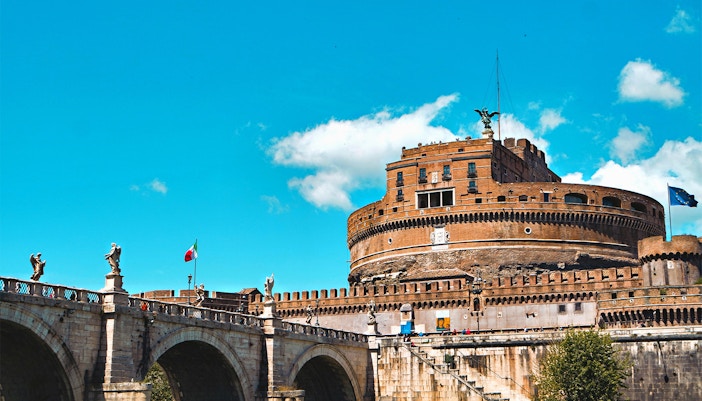
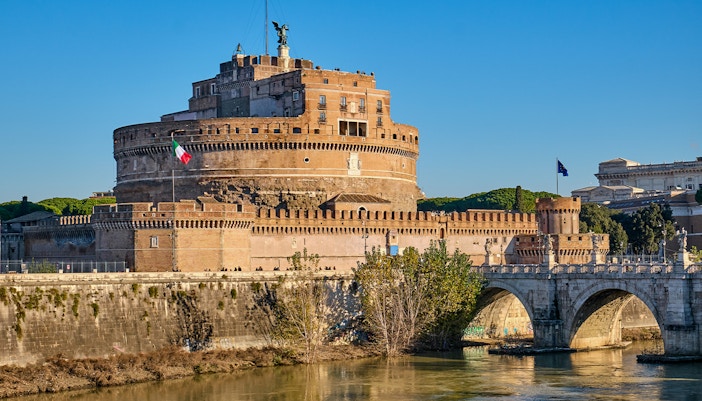
Originally known as the "Mausoleum of Hadrian," the castle acquired its current name in 590 AD when legend suggests that the Archangel Michael appeared atop the castle, ending a plague in Rome.
Castel Sant'Angelo is linked to the Vatican by a secret elevated passageway called the Passetto di Borgo. This 800-meter corridor served as an escape route for popes during times of danger—most notably used by Pope Clement VII during the Sack of Rome in 1527.
The statue of the angel atop the castle has faced misfortune throughout history, being destroyed multiple times by various calamities before the current bronze statue was installed in 1753.
At the heart of the structure lies the original Roman core—a massive circular chamber that once held the ashes of Emperor Hadrian and his successors. Though the urns are long gone, the sheer scale and architectural genius of the burial chamber remain awe-inspiring.
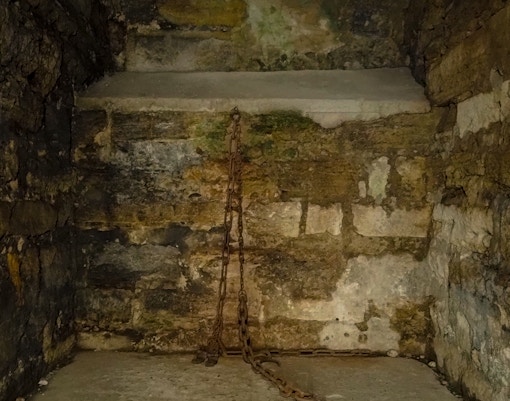
The prison cells
Dark, narrow, and unsettling, these stone rooms were once used to hold political enemies and heretics. Allegedly, figures like Giordano Bruno and Benvenuto Cellini were imprisoned here. Look out for graffiti and carvings left by former inmates.
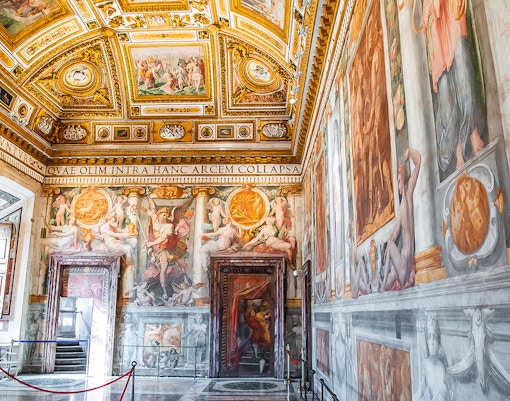
The papal apartments
High above the old tomb lie elegant rooms used by popes in times of crisis. These chambers, especially the Sala Paolina, are richly decorated with Renaissance frescoes, papal emblems, and ornate furniture. Don’t miss the library, papal bedroom, and the throne room.
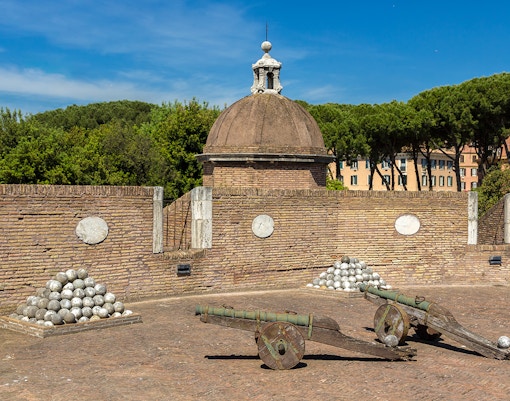
The military museum
Throughout the upper levels and hallways, you’ll find collections of armor, weapons, and cannons used in the castle’s defense. These exhibits highlight the building’s transformation into a military stronghold during the Middle Ages.
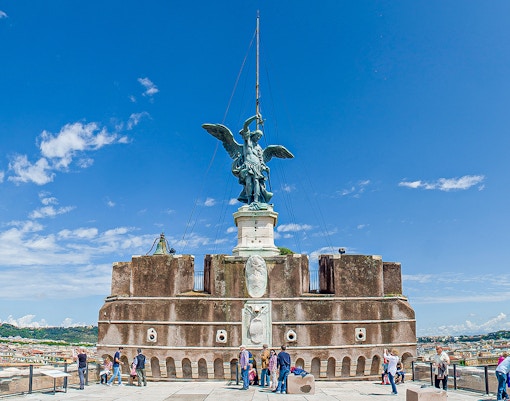
The Terrazza dell’Angelo
The crown jewel of your visit—the rooftop terrace offers 360° panoramic views of Rome, including a perfect view of St. Peter’s Basilica. It’s named after the towering bronze statue of Archangel Michael, said to have sheathed his sword here as a sign of the plague’s end in 590 AD.
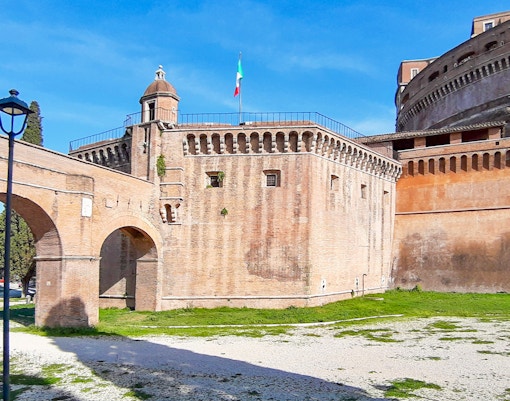
Passetto di Borgo
This secret elevated corridor connects the castle to the Vatican City. It was used by popes as an escape route during times of siege. While not always accessible, some guided tours include rare access to this historic passage.
Castel Sant’Angelo highlights
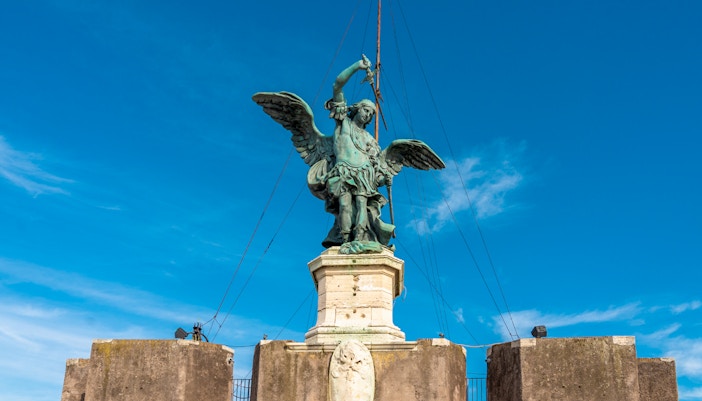
Archangel Michael statue
At the top of Castel Sant’Angelo stands the statue of Archangel Michael, marking a legendary moment in Roman history. According to tradition, Pope Gregory the Great saw a vision of Michael sheathing his sword here in 590 AD, signaling the end of a plague. The current bronze statue, made by Peter Anton von Verschaffelt in 1753, commemorates that vision. Today, it’s a key highlight of the castle and offers sweeping views of Rome.
Passetto di Borgo
The Passetto di Borgo is an 800-meter elevated corridor built in 1277 by Pope Nicholas III to connect Castel Sant'Angelo with the Vatican. It served as an escape route for Popes, notably used by Alexander VI in 1494 and Clement VII during the 1527 Sack of Rome. Visitors can view it from the castle, and it occasionally opens to the public in summer.
Ponte Sant’Angelo
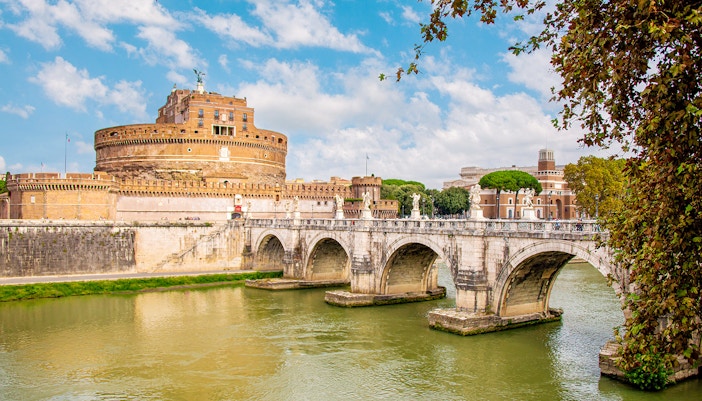
The Ponte Sant’Angelois a 135-meter bridge built by Emperor Hadrian to link Castel Sant’Angelo to the city. Once called the Aelian Bridge, it became a key route for pilgrims to St. Peter’s Basilica. Renamed in the 7th century after the Archangel Michael statue was added to the mausoleum, it was later adorned with 10 angel sculptures by Bernini during the Renaissance.
A fortress through the ages: The history of Castel Sant’Angelo
135 AD – Emperor Hadrian commissions the structure as his mausoleum, intended as a grand tomb for himself and his family. 271 AD – Incorporated into Aurelian’s Walls, the tomb becomes part of Rome’s city defenses. 590 AD – During a plague, Pope Gregory the Great sees a vision of Archangel Michael atop the mausoleum, sheathing his sword. The vision marks the plague’s end and gives the castle its name. 14th century – Linked to the Vatican by the Passetto di Borgo, it becomes a refuge for popes during sieges. Renaissance era – Popes transform it into a luxurious fortress-palace with apartments, frescoes, and chapels. 19th century – Used as a military barracks and prison before eventually becoming a museum.
From imperial tomb to papal stronghold, Castel Sant’Angelo has stood as a symbol of power, protection, and transformation for nearly 2,000 years.
Castel Sant’Angelo was commissioned by Emperor Hadrian in 135 AD as a grand mausoleum for himself and his family. The architect is believed to be Demetriano, a Greek engineer. Inspired by Roman imperial style, the design featured a circular drum atop a square base—an architectural form that symbolized eternity and imperial power.
Architecture of Castel Sant’Angelo
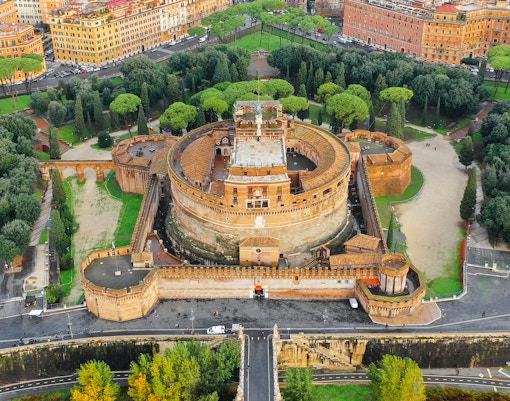
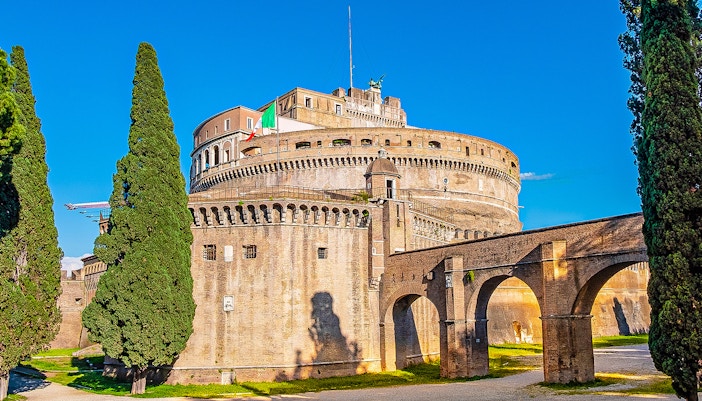
Castel Sant’Angelo is a striking blend of Roman imperial design and medieval military architecture, evolving dramatically over nearly two millennia. Originally constructed in 135–139 AD by order of Emperor Hadrian, the structure began as a mausoleum—featuring a massive cylindrical drum atop a square base, once crowned with a bronze statue and encircled by a garden and golden quadriga.
As Rome’s needs changed, so did the castle. By the 5th century, it was incorporated into the Aurelian Walls, and over time transformed into a fortified bastion. During the 14th–16th centuries, successive popes added battlements, drawbridges, spiral ramps, and luxurious Renaissance-style papal apartments, blending form with function.
Topped today by the imposing bronze statue of Archangel Michael, Castel Sant’Angelo is a rare example of a building that reflects layers of Roman, medieval, and Renaissance architecture—all coexisting in a single monumental structure.
All your questions answered about Castel Sant’Angelo
The Castel Sant’Angelo Rome is famous for being the tomb of Emperor Hadrian. It is also known serving as a fortress, prison, and Papal residence throughout history. Today, the museum is known for its cultural and historical value.
The name originates from a legend in 590 AD when Pope Gregory the Great saw a vision of the Archangel Michael sheathing his sword atop the mausoleum, signaling the end of a plague in Rome. To commemorate this event, a statue of the angel was placed on top, and the structure became known as Castel Sant'Angelo.
Not officially — it’s a separate monument. But it’s linked to the Vatican by the secret Passetto di Borgo passage, used by popes to escape danger.
Yes — and a feared one. High-profile prisoners, including artists and political rebels, were once locked inside its stone cells.
A typical visit lasts between 2 to 3 hours, allowing ample time to explore the various levels, exhibits, and enjoy panoramic views from the terrace.
Early mornings on weekdays are ideal for a quieter experience. Spring (April to June) and autumn (September to October) offer pleasant weather and fewer tourists.
Yes, restrooms are available, and there's a café on the upper levels where visitors can enjoy refreshments with a view.
Yes, photography is allowed. However, the use of flash or tripods may be restricted in certain areas.
The Passetto di Borgo, a secret passage connecting the Vatican to the castle, is a fascinating feature. Additionally, the terrace offers stunning views of Rome.