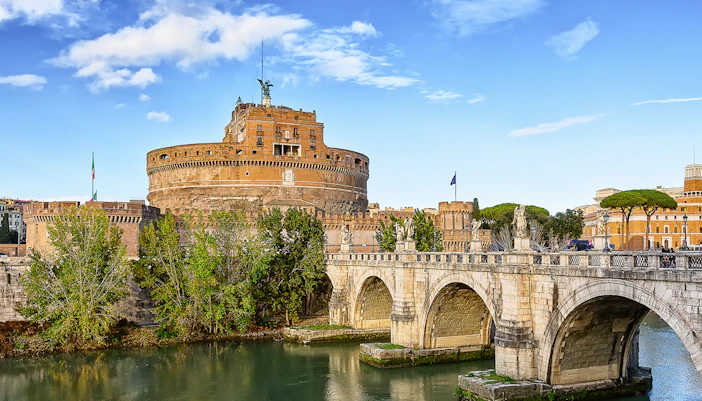
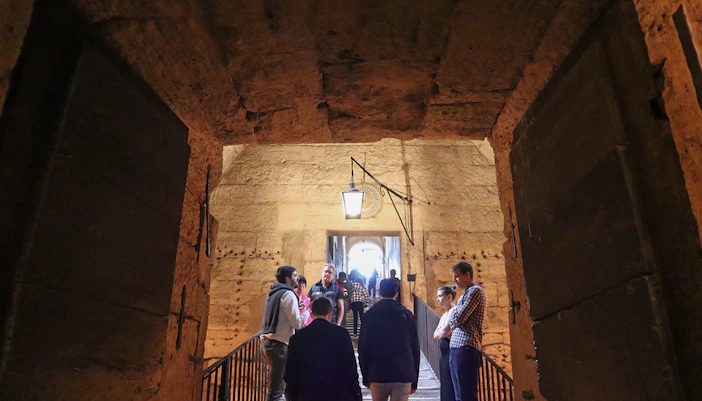
- Marvel at the core of ancient Roman engineering, where thick stone walls and the original spiral ramp still support the castle’s massive weight and structure.
- Trace the footsteps of fleeing popes, who used the castle as a sanctuary during invasions and political chaos—reaching it via the secret Passetto di Borgo.
- Step into frescoed chambers and ceremonial halls, once filled with the rituals of power, now echoing with stories of both papal opulence and political imprisonment.
Inside Castel Sant'Angelo: Unravel Mysteries and Masterpieces
Step inside Castel Sant’Angelo and journey through centuries of history—from imperial tomb to papal fortress, prison, and museum. As you explore its spiral ramp, lavish papal apartments, eerie dungeons, and panoramic terrace, you'll uncover secret passages, stunning Renaissance frescoes, and sweeping views over Rome and the Tiber. This is more than a monument—it's a time capsule of power, intrigue, and beauty. If you visit just one fortress in Rome, make it this one.
Why go inside?
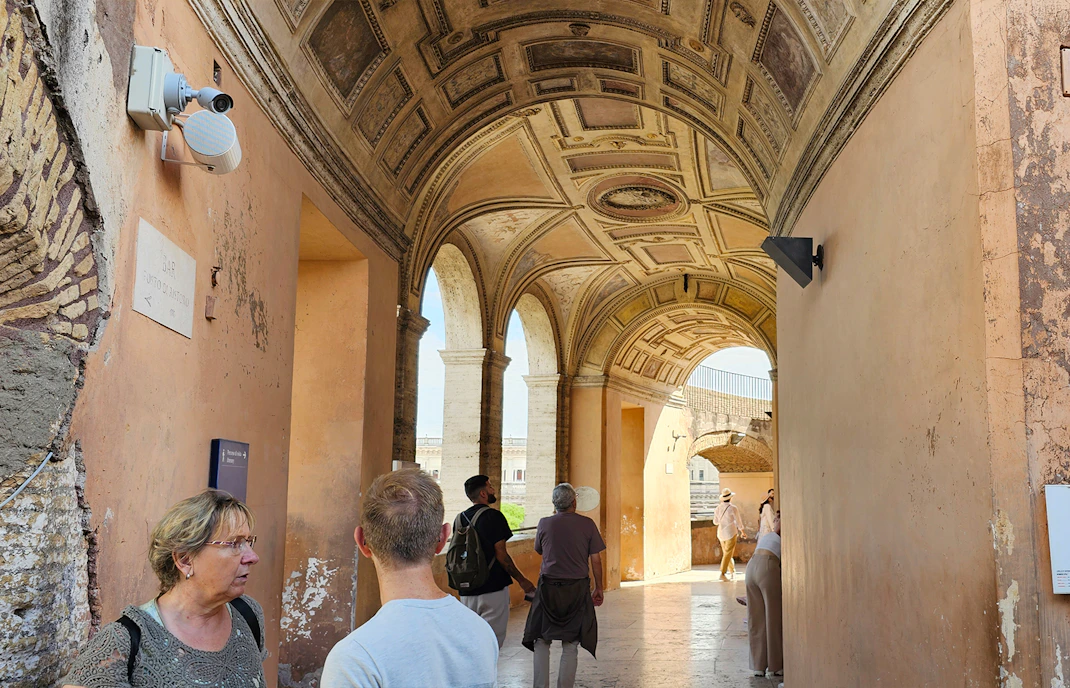
Melting pot of Roman history
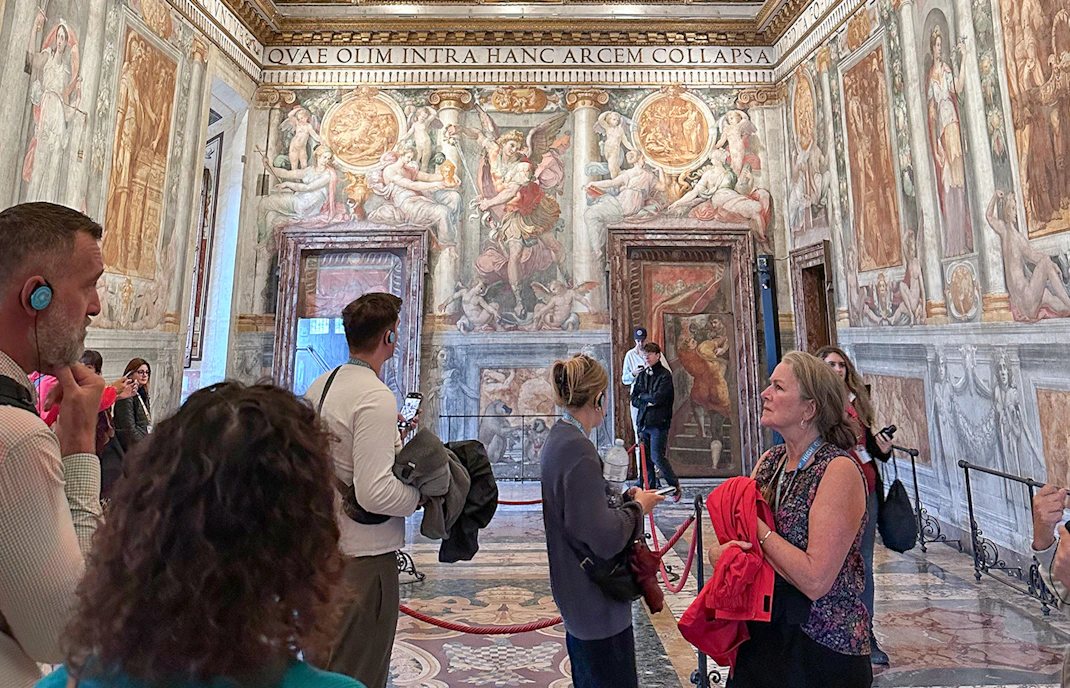
Iconic Renaissance architecture & artworks
- Admire the Renaissance frescoes in the Sala Paolina, commissioned by Pope Paul III, featuring dramatic scenes of St. Michael the Archangel, mythological heroes, and Roman triumphs—painted by Perin del Vaga.
- Wander through the Hall of Cupid and Psyche, where lavish frescoes and classical motifs reflect the opulence of papal tastes during the 16th century.
- Get up close with detailed marble sculptures, ceremonial armor, and centuries-old religious relics, all housed in rooms once guarded as state secrets.
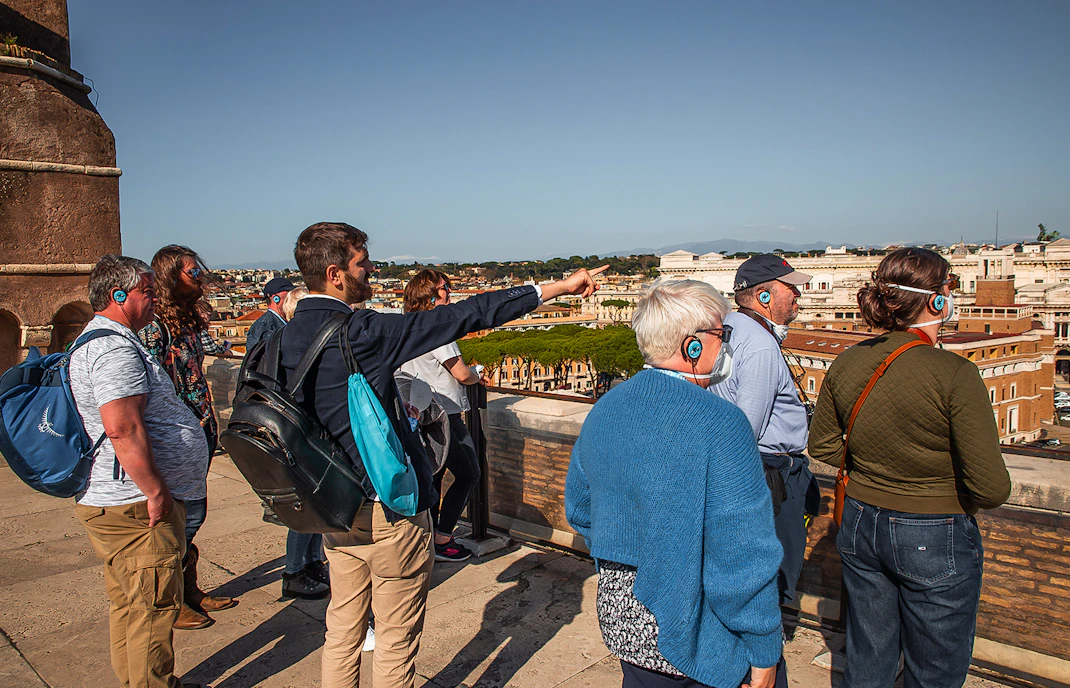
Must-see sections for first-timers
- The Passetto di Borgo: This elevated, fortified corridor connecting the Vatican and the castle—a secret escape route used by popes during times of danger, including the infamous Sack of Rome in 1527.
- The panoramic terrace: Climb to the rooftop for a breathtaking 360° view of Rome’s skyline—the dome of St. Peter’s, the curve of the Tiber, and terracotta rooftops stretching to the horizon.
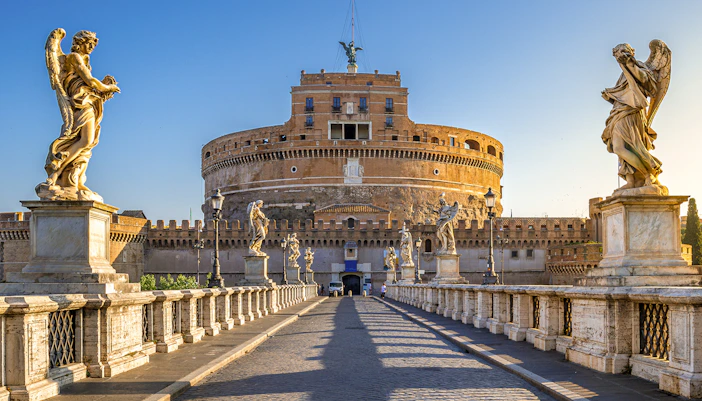
- The Angel statue: Towering above the castle, the bronze statue of Archangel Michael—sword drawn—commemorates the vision that signaled the end of the plague in 590 AD, earning the castle its name.
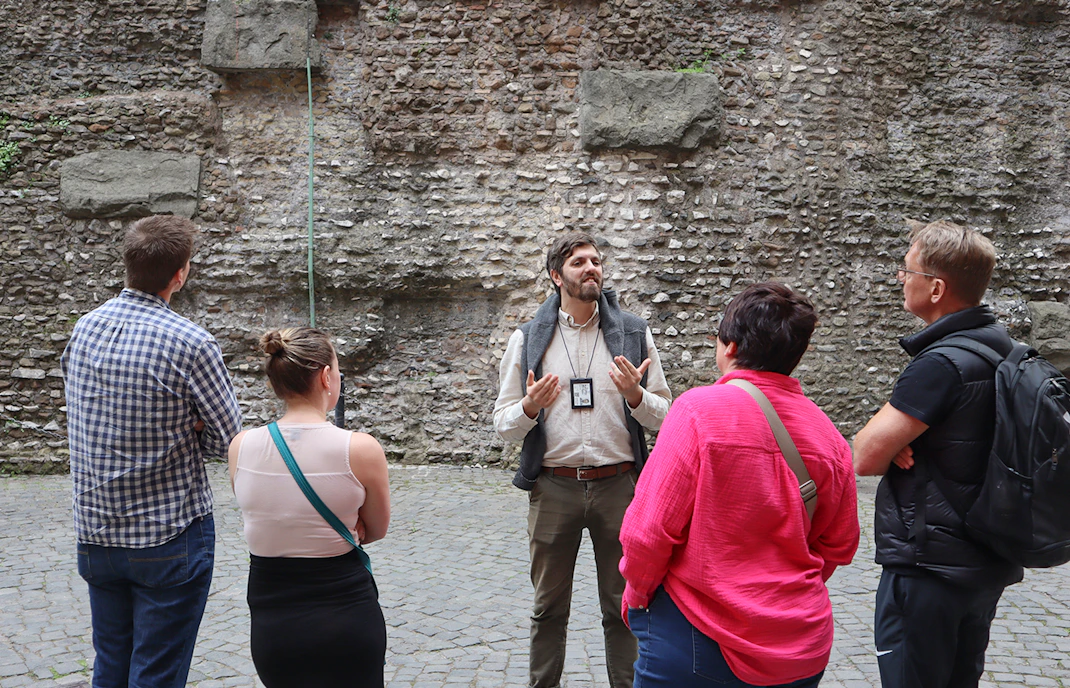
Essential stops: What to prioritize
With layers of history and countless rooms to explore, Castel Sant’Angelo can be a lot to take in. You can make the most of your visit by cruising through the most essential spots—each one holding signs of power, artistry, and intrigue that shaped Rome across the centuries.
Get a guided tour of the museum where an expert helps set context to these spots while unlocking crucial details and decoding hidden symbolism.
What's inside the castle?
1/7
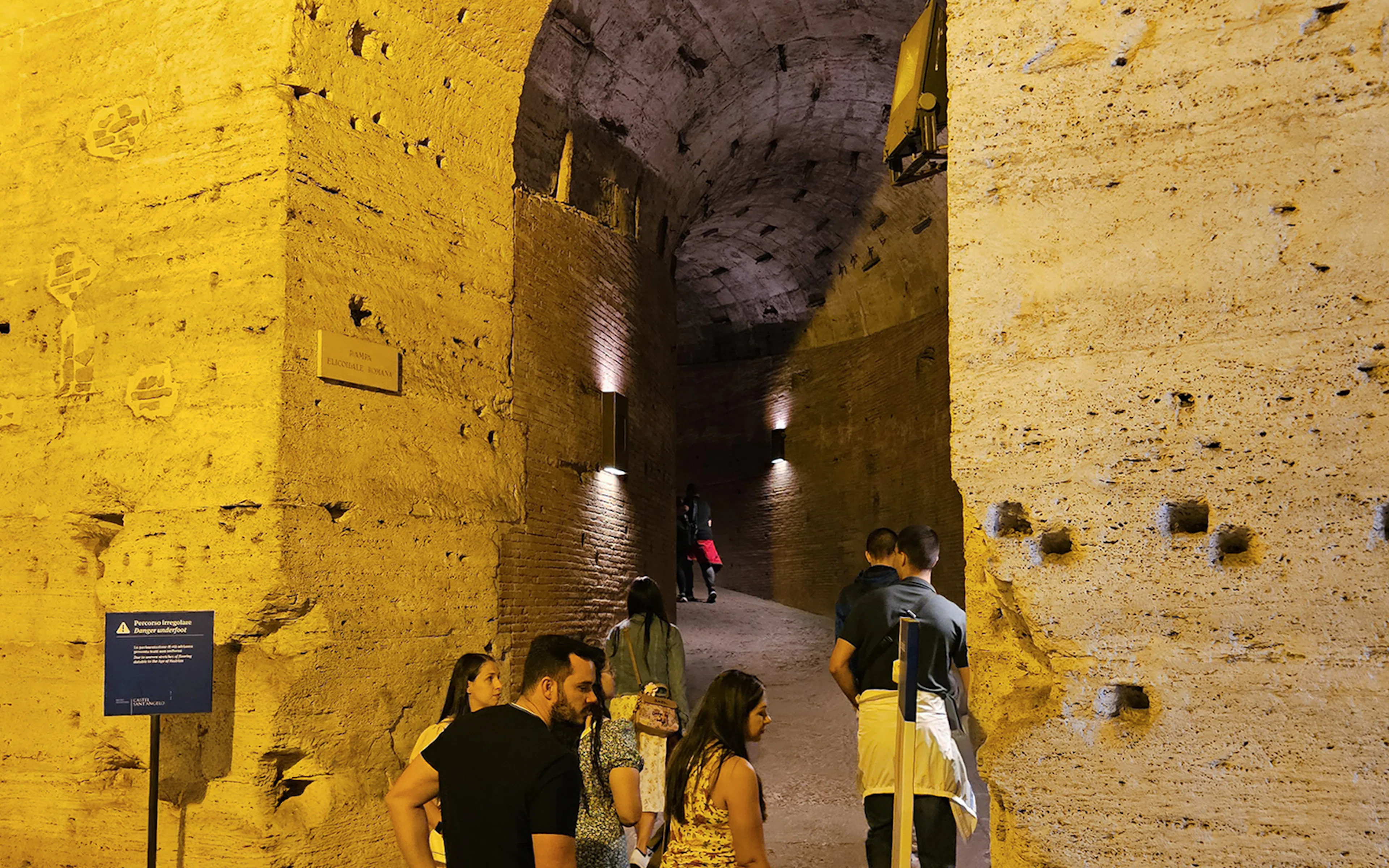
Spiral staircase
A wide, gently sloping spiral corridor that winds up from the mausoleum’s base.
Why it matters: Built for Emperor Hadrian’s funeral procession, it shows the original Roman engineering at work.
Pro tip: Look up as you ascend—the curve and symmetry make for a dramatic photo.
Mausoleum
The original core of the structure—Hadrian’s burial chamber, once lined with marble and filled with imperial ashes.
Why it matters: This was the final resting place of Emperor Hadrian and his successors, marking the transformation from imperial tomb to medieval fortress.
Pro tip: Pause in the central chamber and look up—its vast, echoing dome hints at the mausoleum’s former grandeur, now stripped but still powerful.
Prison cells & armory
Dark, chilling rooms beneath the fortress, used to detain enemies of the Church.
Why it matters: These cells once held figures like Giordano Bruno—grim reminders of the Inquisition’s power and reach.
Pro tip: Don’t rush through—look closely for prisoner carvings and etchings on the walls, some are still visible after centuries.
Papal apartments
Ornate Renaissance chambers once used by popes as refuge during times of siege.
Why it matters: The frescoed rooms reflect the Vatican’s reach and Renaissance artistry, especially the Sala Paolina.
Pro tip: Visit during midday light—sun filters beautifully through the narrow windows, illuminating the frescoes.
Gran Loggia
An open, arched balcony built under Pope Paul III, overlooking the Tiber.
Why it matters: It represents the papal shift from fortress to palace, blending military and aesthetic power.
Pro tip: A great photo spot at sunset—capture the bridge, river, and dome of St. Peter’s in one frame.
Terrazza dell’Angelo
The rooftop terrace crowned by the statue of Archangel Michael.
Why it matters: Symbol of Rome’s divine protection, the angel marks the site’s legendary turning point during the plague.
Pro tip: Time your visit just before dusk—the 360° city view is stunning, and crowds thin out too in this hour.
Passetto di Borgo
Hidden corridor used by popes to flee the Vatican during sieges.
Why it matters: Highlights the fortress’s defensive role in papal history.
Pro tip: If it’s open, book in advance—guided tours often reveal crucial hidden details.
How to explore Castel Sant’Angelo?
Don’t just admire Castel Sant’Angelo from the outside—step inside to uncover its many layers. With a fast-track entry or guided tour, you bypass long waits and get insider stories that bring each room to life.
Entry process & tickets
Book your ticket online to secure a timed entry slot—especially during peak seasons. Fast-track entry means you’ll skip the ticket queues, giving you more time inside. Make sure to arrive at least 15 minutes early and carry a valid photo ID, as it may be checked at the entrance.
Best time to visit
Aim for early morning (9–10 AM) to explore the prison cells and lower levels before they fill up, or late afternoon (after 4 PM) for golden hour views from the terrace. Midday is best for enjoying the sunlight inside the frescoed rooms.
Duration
Plan to spend around 1.5 to 2 hours to see all the main highlights at a comfortable pace, especially if you're stopping to enjoy the views or photography spots.
Accessibility
While much of the site includes ramps and broad corridors, full wheelchair access is limited due to steep stairs and historical architecture. There are some accessible areas, and staff are available to assist.
Rules to keep in mind
- No flash photography in frescoed rooms.
- Large bags or backpacks aren’t allowed—use the cloakroom if needed.
- Respect roped-off areas, especially around ancient masonry and artwork.
Pro tips
- Don’t miss the Gran Loggia at sunset—it’s a lesser-known but gorgeous spot for photos.
- Look for prisoner graffiti in the cells for an eerie, historic touch.
- The best views of St. Peter’s and the city are from the Terrazza dell’Angelo, so time your visit accordingly.
Water & snacks
There’s a small café on the upper levels where you can grab a drink or snack with a view. Water fountains are limited, so it’s wise to bring your own water bottle (no glass containers).
Frequently asked questions about what's inside Castel Sant'Angelo
Visiting the Castel Sant’Angelo is definitely worth it and not only because of the exterior beauty of the monument but also because of what it has to offer inside. When you enter inside Castel Sant’Angelo you will get an idea of how Rome has changed over a period of 2000 years.
Castel Sant’Angelo is a six storey building which is 10.2 meters high, and it has 58 rooms in total.
Some highlights inside the Castel Sant’Angelo in Rome include the Mausoleum of Hadrian, the Bastions, the Papal Quarters, and the Castel Sant'Angelo terrace.
Climbing the spiral staircase inside the Castel Sant’Angelo is one of the unique things that you will do here. As you make your way to the top, you will come across a cafe bar where you can grab a drink and enjoy the vistas of Rome.
Yes, you need to get tickets to go inside Castel Sant’Angelo, it is recommended that you buy the tickets online to avoid the never-ending queue.
You can take an expert guided tour inside the Castel Sant’Angelo. You could also take an audio-guided tour which will help you to explore the place at your own pace.
By booking fast-track tickets to the museum, you can escape the hurdle of standing in a long queue at the physical ticket booking counter.
The opening hours within which you can enter inside Castel Sant’Angelo is from 9 AM to 7.30 PM.
Yes, you are free to click pictures inside the castle.