History of the Colosseum | From gladiators to ruins

A spectacular example of ancient architecture, Rome's prestigious Colosseum is not unknown to the world. Every year, about 6 million people flock to Rome to witness this oval amphitheatre with their own eyes, and rightly so. The fact that it stands tall even after 1942 is not just commendable but astonishing and shows just how far the Romans were ahead of time. Here, we will take you through the history of the Colosseum, the various ages it has survived and why you should add it to your itinerary of must-visit places.

Detailed Timeline of the Rome Colosseum

72 AD: The foundation stones of the Colosseum under the reign of King Vespasian. The amphitheatre was a present by the King to his people.

80 AD: Titus, the successor of King Vespasian, opened the amphitheatre for the public with 100-day-long gladiator combat.

83 AD: Construction of the Colosseum is finally completed by Titus's younger brother and successor, Domitian.

110 AD: St. Ignatius of Antioch's martyrdom is built on the arena floor, which was now turned into a cemetery.

422 AD: A massive earthquake damaged the parts of the Colosseum under the reigns of Theodosius II and Valentinian III.

730 AD: The amphitheatre is called the Colosseum by Saint Bede, a renowned teacher and writer of the Early Middle Ages.

12th Century: The amphitheatre is converted into a castle by a Roman clan named the Frangipani family.

1349: The Colosseum is damaged on the outer side by a massive earthquake, leading to a collapse. Many palaces, hospitals and other architectural structures reused the stone during construction.

19th Century: Many restoration projects undertaken by the Roman Church, the city and the government are launched to preserve the monument.

2013: For the following three years, all the grime and dirt accumulated over the years is removed as a part of the government's restoration project.

Detailed Colosseum history

Site of construction

Pre 70 AD

The Colosseum stands tall on an artificial lake that originally had a statue of Nero built by the Roman Emperor Nero. Although the area was inhabited in the 2nd century, Nero had taken over the land after the Great Fire of Rome. He built many statues, pavilions, and gardens in the area called Domus Aurea. King Vespasius chose this site to construct the Flavian Amphitheatre to give back the land to the people of Rome, which Emperor Nero had utilized for his personal use. The artificial lake was filled, and Nero's statue was converted into another statue honoring the Roman Sun God, Sol. Another reason why this area was chosen to build the Colosseum was that it lies in the heart of the city.
When was the Colosseum built?

70-81 AD

The construction of the Colosseum began in 70 AD under the rule of King Vespasius. It was just after the Siege of Jerusalem, as the King funded its construction through the victories from war. Many prisoners of war were used as labour to build this massive monument. Three floors were completed by the time King Vespasius died (79 AD). It was built using travertine limestone, usually found deposited around hot springs, a volcanic rock called tuff, brick-faced Roman concrete used to build many structures in Ancient Rome, wood, tiles and cement. Highly skilled engineers, decorators, artists, architects, builders and painters designed the monument.

Inaugural games

80 AD

After King Vespasius died in 79 AD, his son and successor, Titus, took over the task of building the Colosseum. While his father had already completed three out of four storeys, Titus oversaw the construction of the fourth level. To commemorate the completion, he organised inaugural games inside the Colosseum that could seat over 65,000 people. These games included animal fights, gladiator combat, hunting, a recreation of criminal battles and criminal executions. According to Roman historian Dio Cassius, over 9000 animals were killed during the inaugural games. The games lasted for 100 days to please the people of Rome and the Roman Gods, as there were many mishaps during Titus's reign, including the volcanic eruption of Mount Vesuvius.

What was the Colosseum used for?

217- 6th century

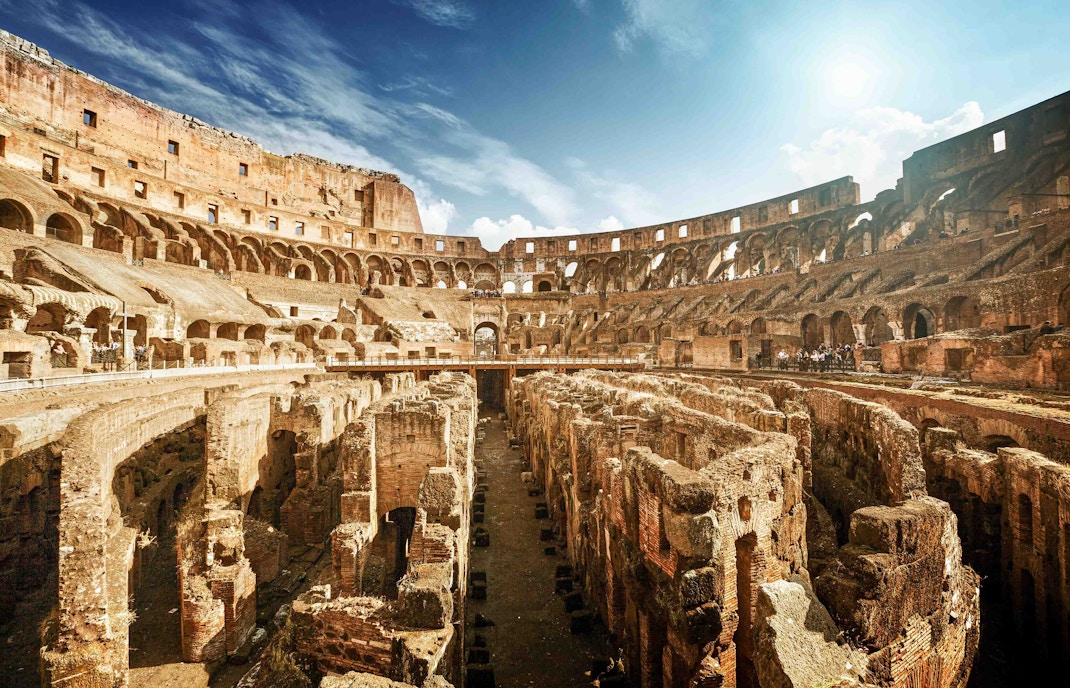
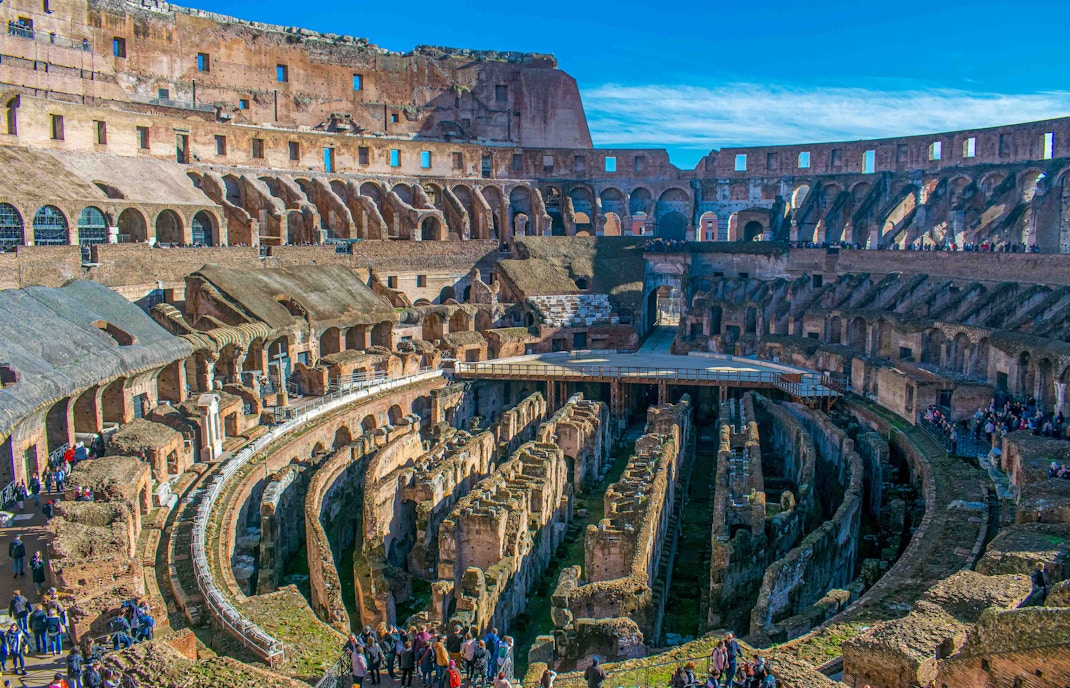
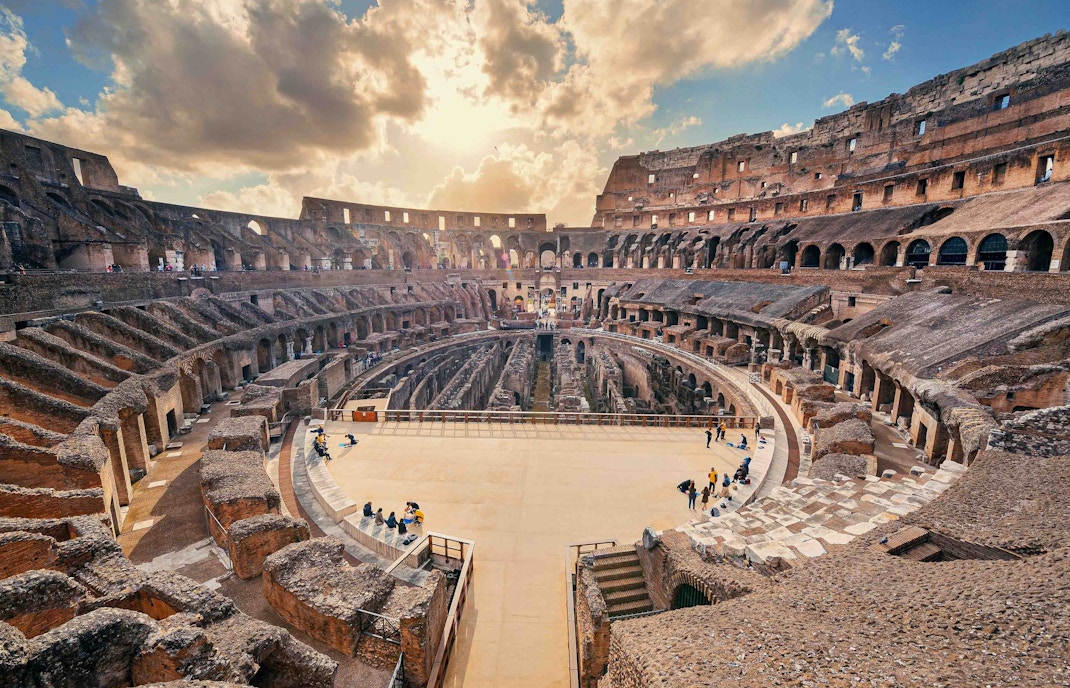
While Titus had completed most of the construction before launching inaugural games, Domitian, King Vespasius's younger son and Titus's successor, built underground tunnels for animals and slaves along with a gallery to increase the Colosseum's seating capacity. During the inaugural games, the Flavian Amphitheatre was used for various activities, including animal fights, the reenactment of epic battles and gladiator combats. Historians have also recorded simulated sea battles taking place in the Colosseum, where the battle between the Corcyrean Greeks and Corinthians was enacted. Simulated forests were also created by artists, painters and technicians to depict episodes from mythology or to use as a backdrop for hunting.

Colosseum during the medieval times

Late 6th century to 14th century

By this time, the role of the Colosseum had expanded. It was now being used as a cemetery where well-known Romans were cremated. A chapel was also built inside the Colosseum. The common people used vaults under the seating areas as houses and workshops. During the 12th century, the powerful Frangipani family took over the Colosseum and started using it as a castle. It was in the mediaeval era that the Colosseum was damaged the most. The earthquake in 1349 caused the collapse of the other side of the structure. Stones were stripped for use at other places, and marble was used to make quicklime.

Role in the Christian world

16th and 17th century

During the 14th century, a religious community moved into the amphitheatre, inhabiting the amphitheatre until the Roman Church got involved. There were many propositions about what should be done with the Colosseum. Pope Sixtus V wanted to turn it into a wool factory as a source of employment for the prostitutes of Rome, while Cardinal Altieri, Pope Clement X's nephew, suggested its use for bullfights. But nothing was executed to fruition. It was Pope Benedict XIV who wanted to turn the Colosseum into a sacred site as he believed many Christians were martyred there. He installed many Stations of the Cross. Later, there were many Church-sanctioned restoration projects to reverse the damage caused due to natural and man-made disasters.

Colosseum | History of the Name

Colosseum History

The Colosseum was not initially named so. During the reign of King Vespasian, who belonged to the Flavian Dynasty, the Colosseum was called the Flavian Amphitheatre. Over the years, it had started being referred to as the Colosseum, after the Colossus of Nero. Emperor Nero had chosen the site of the present-day Colosseum for himself after the Great Fire of Rome, which destroyed many houses in the area. He built gardens, pavilions, an artificial lake, and a statue of himself called Colossus of Nero. The giant statue was made of bronze that depicted Nero as the sun god. The statue was moved to a nearby area, the artificial lake was filled, and the whole area of Domus Aurea was chosen to build the Colosseum. In 730, Saint Bede referred to the amphitheatre as the Colosseum. Until the year 1000, it was referred to as the Flavian Amphitheatre. While locally, it was called the Colosseum from the 11th century, the earliest use in the English-speaking world was seen in a translated text of Urbis Romae Topographia.

Architecture of the Colosseum

Architecture of Colosseum

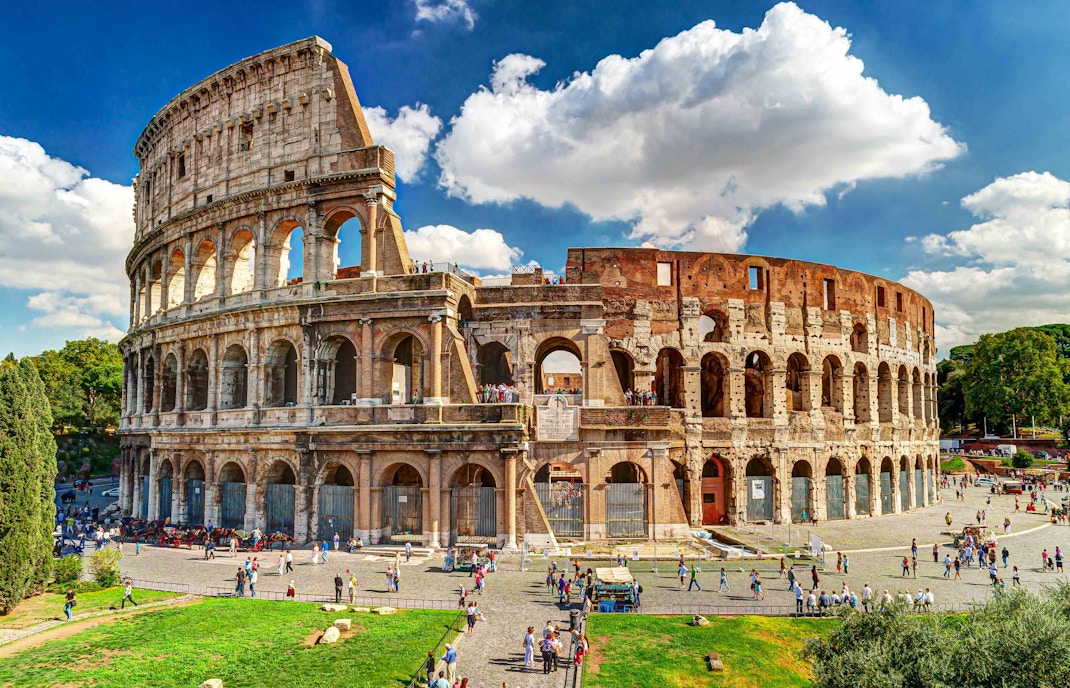
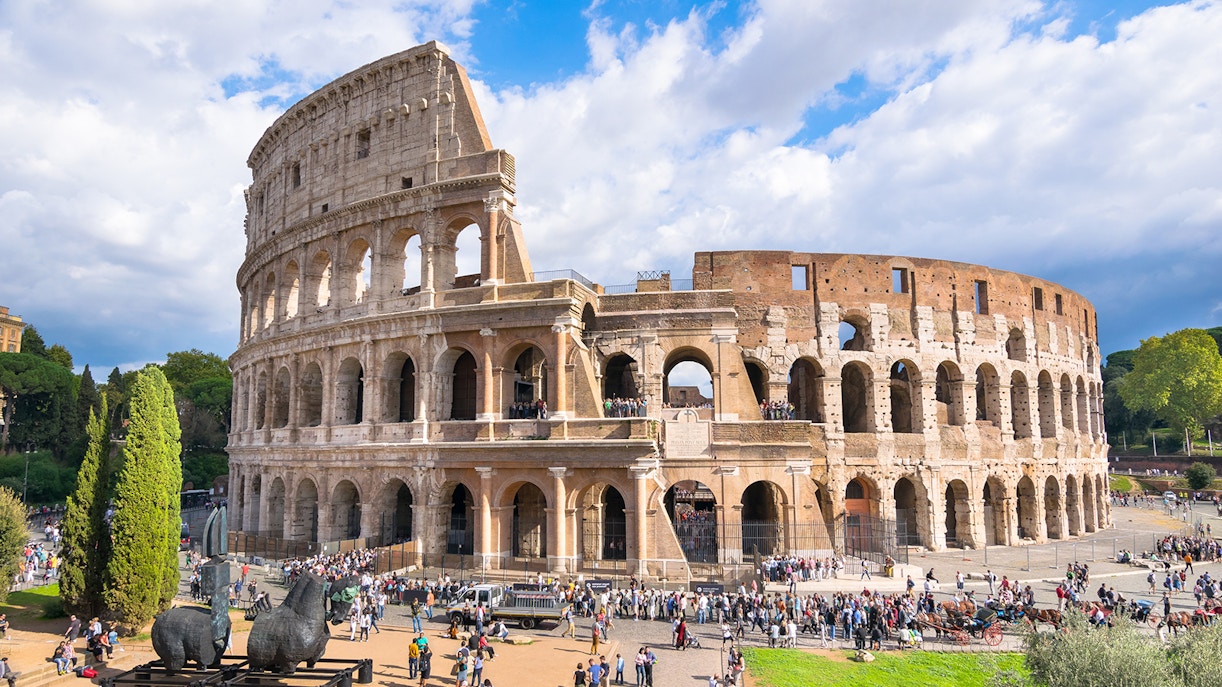
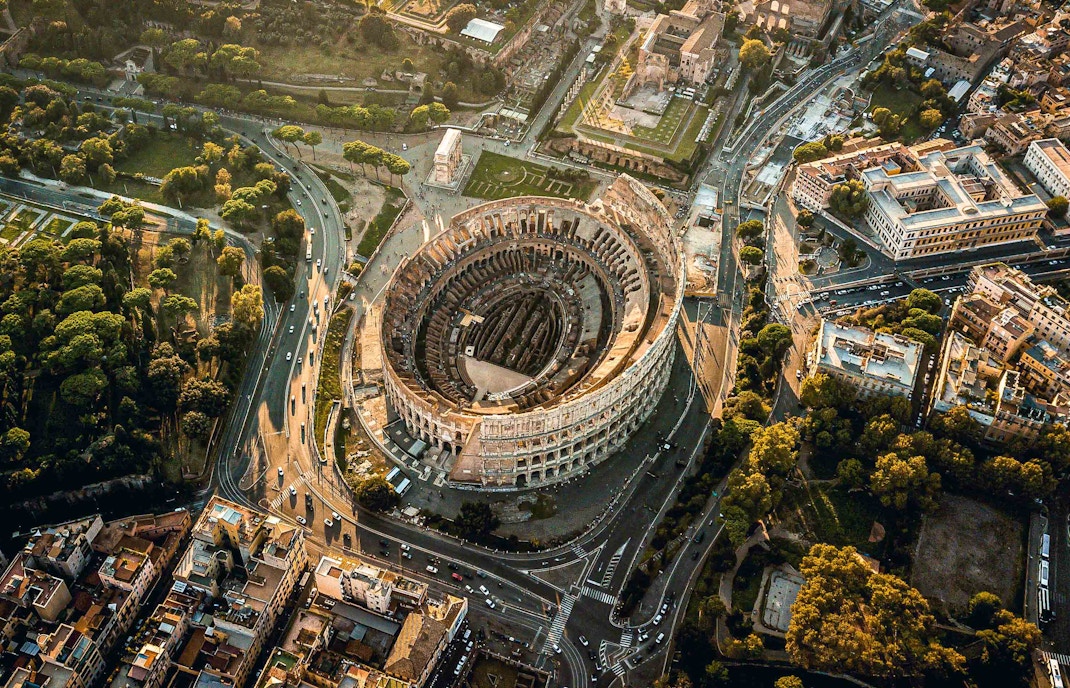
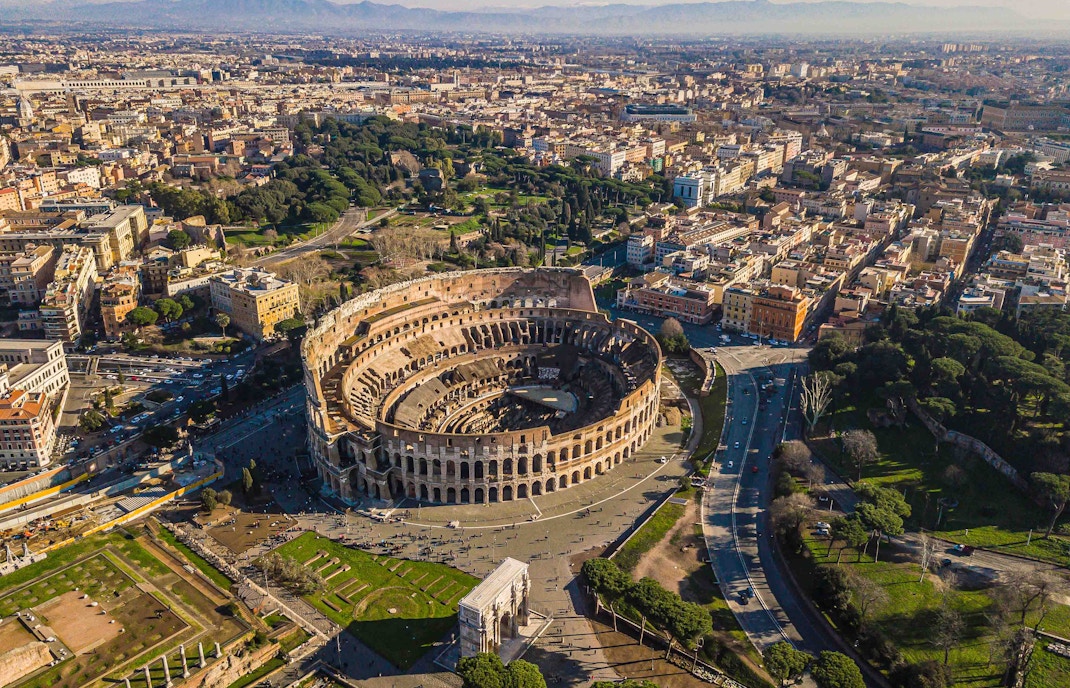
The Colosseum, as magnificent as it is today, was built with a vision in mind. Rome had its fair share of disasters and reigns that terrorised the people. As a way to give back to the people, King Vespasian began the construction of this monumental structure in 70 AD. While most buildings in Rome were built on the hillside, the Colosseum was built as a free-standing structure. It is 4-storey tall with a central oval arena. Under the central arena are underground tunnels made by Emperor Domitian, which housed animals and slaves. There are eighty entrances to the structure at the ground level to make entry and exit as quickly as possible. The Roman Emperor used the northern entrance, three entrances were reserved for the elite, and the common people used the other 76 entrances. Seating was also divided according to class at that time, along with a gallery built by King Domitian for slaves, women and poor people.

Colosseum Design & Architectural Features

Colosseum Today

The Colosseum is not just a symbol of the city of Rome but a proof of ancient human beings' unmatched skills. It has seen the world change and will continue to leave people amazed until the end of time.

Today, the Colosseum is the most visited monument of Rome, attracting over 6 million people every year. The upper floor has a museum dedicated to Eros, the god of love in Greek mythology. The underground tunnels are open to the public for viewing, along with guided tours of other areas inside the structure.

Since the Colosseum has a huge significance in Christianity, many ceremonies are held every now and then, especially the Scriptural Way of the Cross held on Good Fridays. Your trip to Rome must include a dedicated day of visit to the Colosseum to witness the achievements of ancient Romans through this monument's geriatric eyes.

Visit Colosseum

What did the Colosseum look like?

Placeholder Image Headout Blimp

Frequently asked questions about Colosseum history

The construction of the Colosseum began in 70 AD by King Vespasian. As of today, the Colosseum is 1950 years old, with most parts of the monument still intact.

More reads

Palatine Museum

Book Now

Directions

Book Now

Colosseum at Night

Book Now