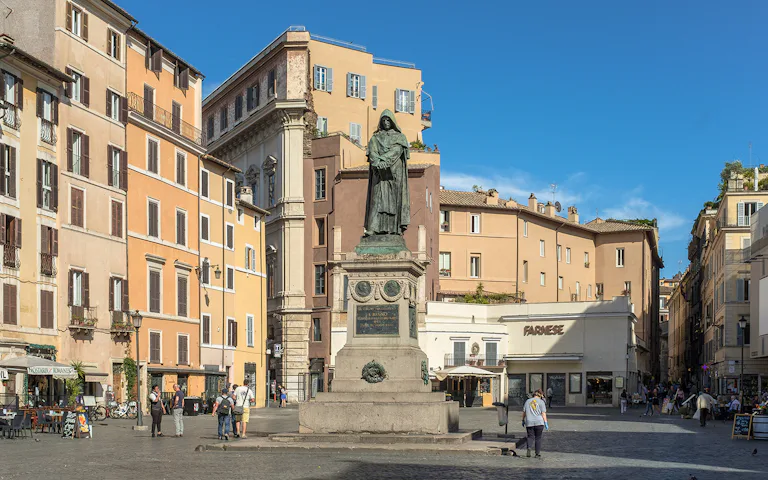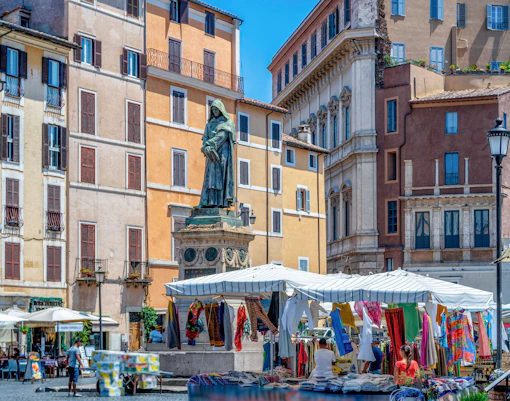
- The daily produce market in Campo de' Fiori has operated in this piazza since 1869 — vendors sell fruit, vegetables, spices, cheese, cured meats, and street food from stalls set up by 7am and packing down by around 1:30pm. The market occupies the full square around the central statue of Giordano Bruno, who was burned at the stake here in 1600 for heresy.
- Best for: Food lovers, market browsers, those wanting an early-morning Roman ritual
- Duration: 30–60 minutes
- Combine this with: A post-market breakfast at one of the bars on the piazza's south side, then a 10-minute walk to Largo di Torre Argentina to see the sacred area where Julius Caesar was assassinated — the ruins are visible from street level for free. The Jewish Ghetto is a further 8 minutes east and its food shops are open from mid-morning.
Neighborhood at a glance
- Why visit: Campo de' Fiori holds one of Rome's oldest daily produce markets and sits at the junction of the Jewish Ghetto, Palazzo Farnese, and Via Giulia — three distinct layers of Roman history within a 10-minute walk of each other.
- Atmosphere: Market-busy by morning, bar-busy by evening, cobblestoned, dense
- Top things to do: Browse the morning produce market at Campo de' Fiori, walk Via Giulia's Renaissance streetscape, explore Portico d'Ottavia in the Jewish Ghetto, eat fried artichokes (carciofi alla giudia) at a Ghetto restaurant
- Best for: Food lovers, history enthusiasts, market browsers, evening bar-goers
- Time needed: 3–5 hours
- Best time to visit: Weekday mornings for the market (before noon) and late afternoon into evening when the piazza shifts from market to bar scene
- Nearby: Piazza Navona, Pantheon, Trastevere, Largo di Torre Argentina, Piazza Farnese, Tiber Island
Top things to do in Campo de' Fiori
💡 Pro tip
The Campo de' Fiori market runs every day except Sunday, from approximately 7am to 1:30pm — arrive before 9am on weekdays for the fullest stalls and the best selection of seasonal produce. The square empties and transforms completely by 2pm when bar seating replaces market tables.
Quick navigation
🏛️ Why visit | 🎟️ Best ways to explore |🧭 Plan your visit | 🌟 Free things to do | 📋 Itinerary | 💡 Tips | 🍴 Dining
Why visit Campo de' Fiori
1/5
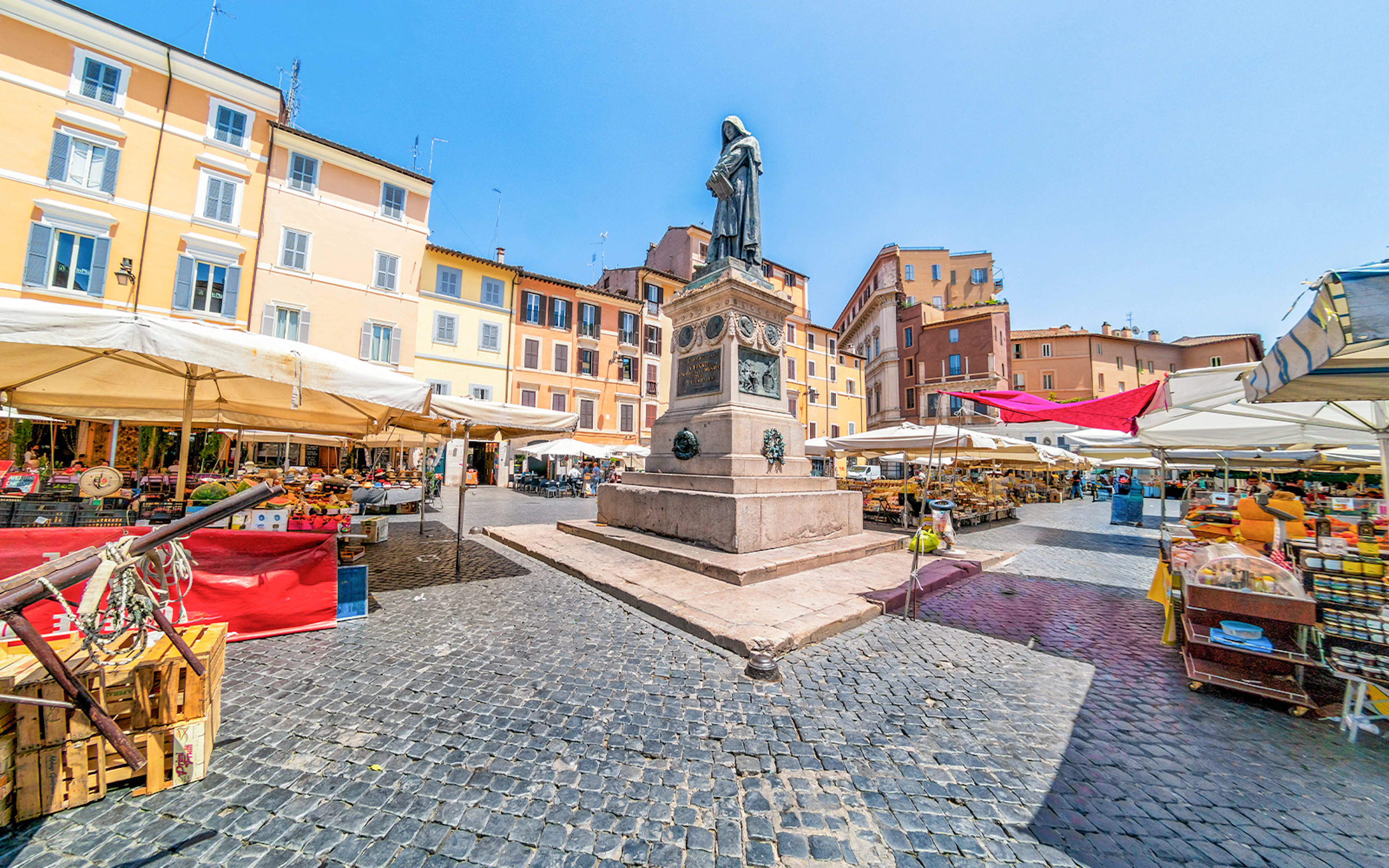
Campo de' Fiori has held a daily market since 1869 — and a place of public execution before that
The piazza's name means "field of flowers," a reference to its pre-urban character before the square was formalized in the 15th century. For most of its urban history it served as Rome's primary site of public execution — the bronze statue at the square's center commemorates Giordano Bruno, the philosopher burned here in 1600 for heresy on the orders of the Inquisition. Today the square holds a working produce and food market every morning of the week except Sunday, one of the few city-center markets in Rome that still primarily serves neighborhood residents alongside tourists.
The Jewish Ghetto preserves 2,000 years of continuous urban history in a few city blocks
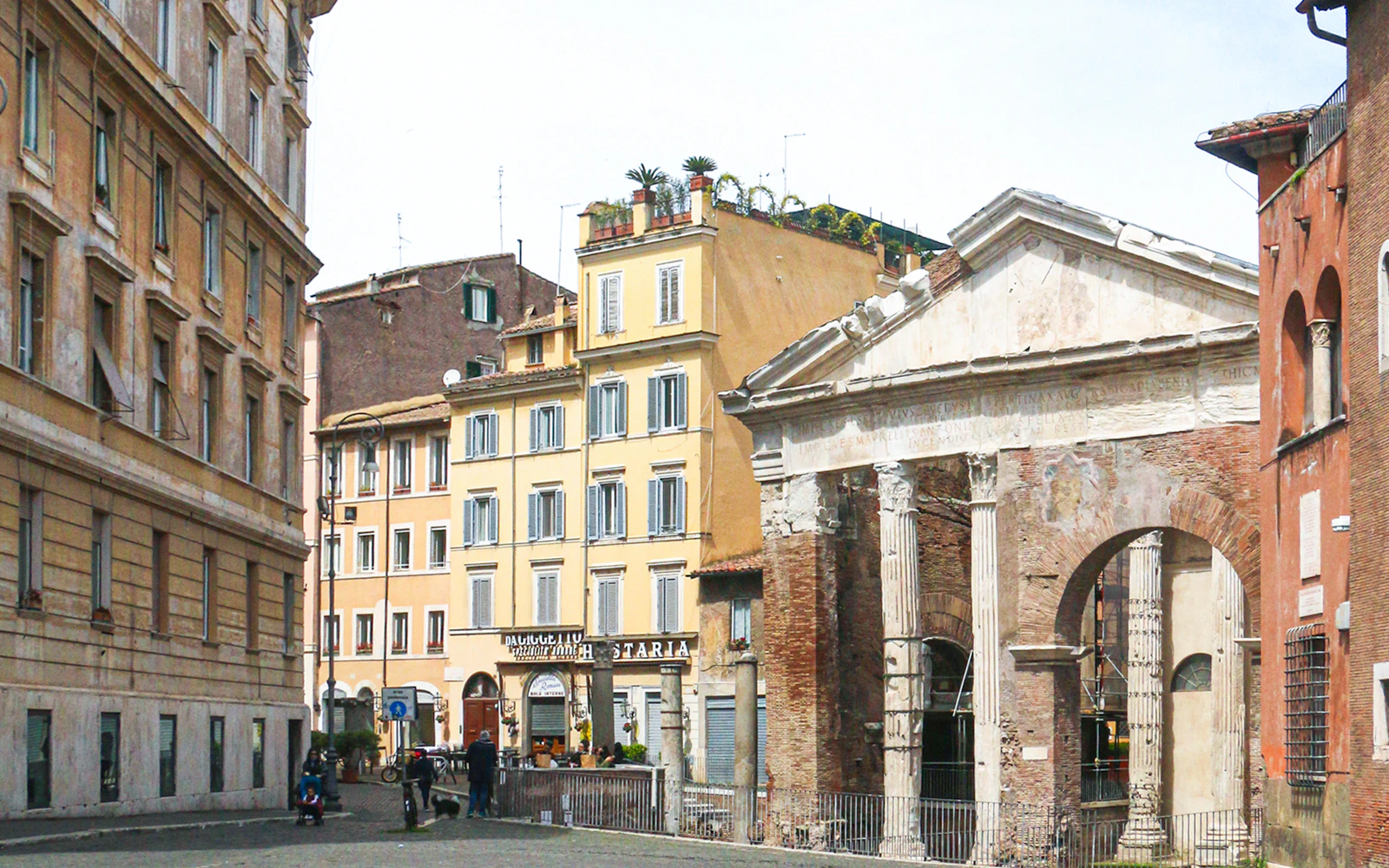
The area around Portico d'Ottavia has been associated with Rome's Jewish community since at least the 1st century BCE, when Julius Caesar granted Jews the right to practice their religion freely in Rome. The physical Ghetto — walls, locked gates, mandatory residence — existed from 1555 under Pope Paul IV until Italian unification in 1870. The Portico d'Ottavia, a 2nd-century BCE monumental gateway originally enclosing temples to Jupiter and Juno, still stands partially intact, its arches embedded in the medieval fabric of the neighborhood. The Roman-Jewish cuisine that developed within the Ghetto — carciofi alla giudia, filetti di baccalà, coda alla vaccinara — is among Rome's most distinctive culinary traditions.
Via Giulia was Rome's first planned straight street and remains largely intact
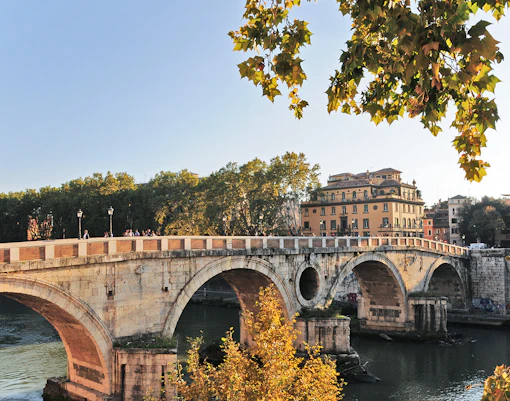
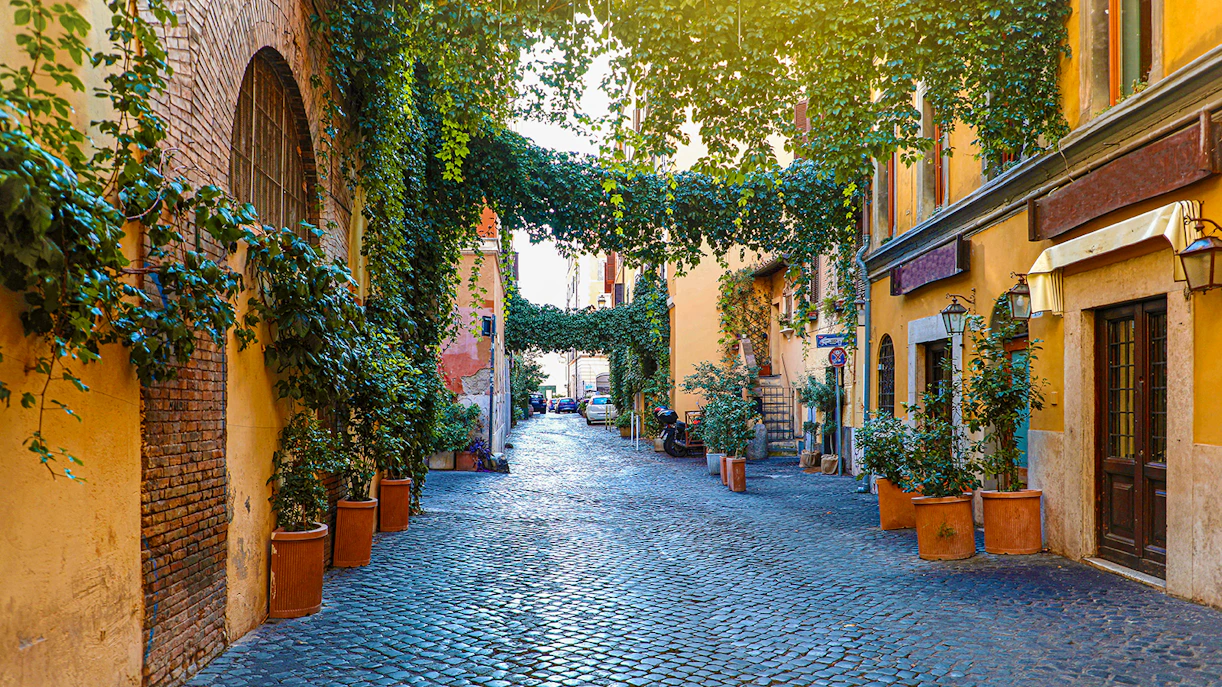
Commissioned by Pope Julius II in the early 16th century and designed by Bramante, Via Giulia was intended as the central axis of a new papal administrative district — a project that was largely abandoned after Julius's death in 1513. The street was nonetheless built and lined over the following century with the palaces and churches of Rome's legal and merchant class. At 500 meters, it is one of the longest continuous Renaissance streets in Rome, largely free of modern commercial signage, and best walked in the late afternoon when the light enters from the west end.
Palazzo Farnese is the most complete High Renaissance palace in Rome and it faces its own piazza
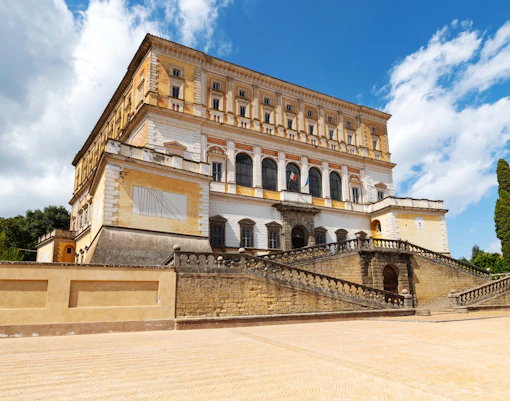
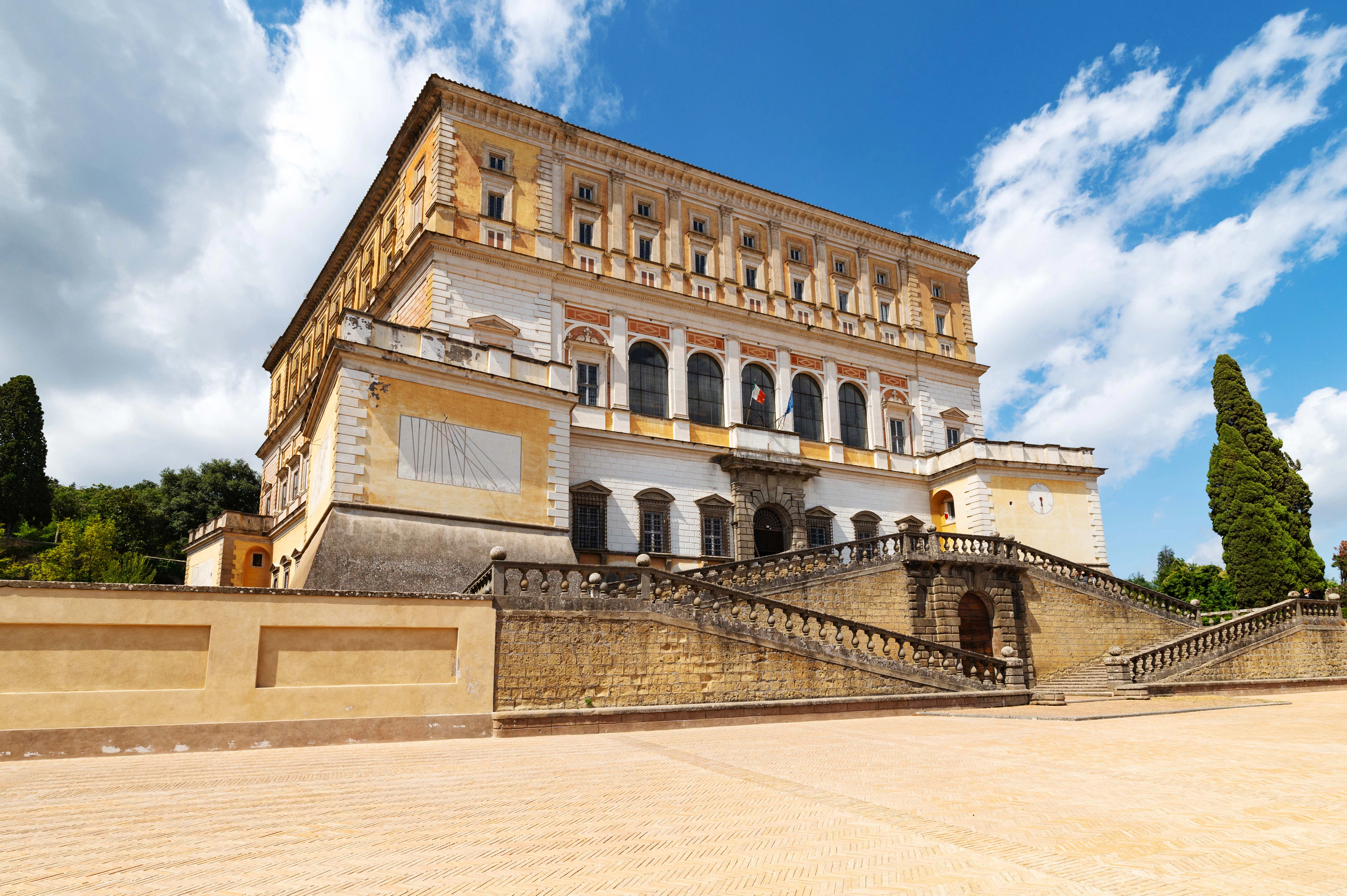
Three of the greatest architects of 16th-century Rome worked on the Palazzo Farnese — Antonio da Sangallo the Younger designed the overall structure, Michelangelo added the cornice and the third-floor window above the main entrance, and Giacomo della Porta completed the courtyard. The building faces Piazza Farnese, a square designed specifically to accommodate it, with the two ancient granite basins from the Baths of Caracalla functioning as the square's fountains. The combination of the palace facade, the empty piazza, and the baroque fountain basins makes Piazza Farnese one of the most architecturally coherent exterior spaces in central Rome.
Julius Caesar was assassinated at Largo di Torre Argentina, which is viewable for free
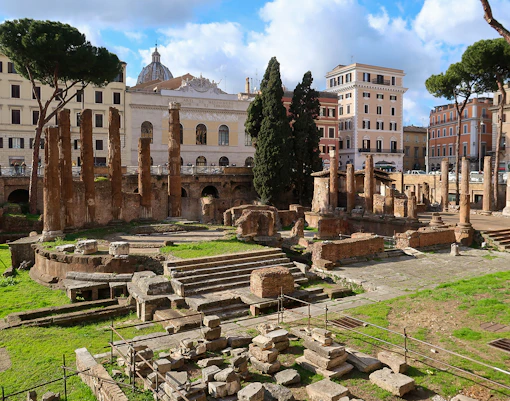
The Theatre of Pompey, where the Roman Senate was meeting on 15 March 44 BCE, stood at Largo di Torre Argentina — the sunken archaeological area contains four Republican-era temples and the base of the curved theatre wall. The site is visible from the street perimeter without a ticket and the scale of the ruins (four complete temple podiums in the center of a city block) gives a visceral sense of how densely layered Rome's urban archaeology is. The square sits 10 minutes from Campo de' Fiori and 10 minutes from the Pantheon.
Best ways to explore Campo de' Fiori
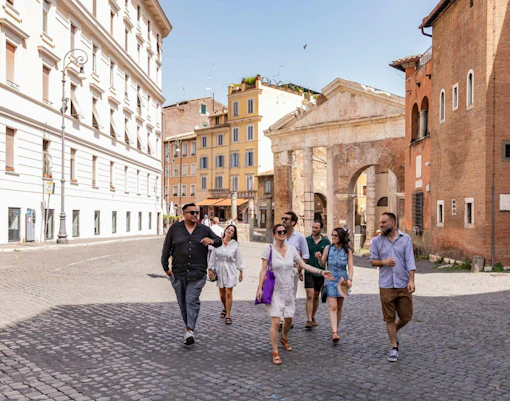
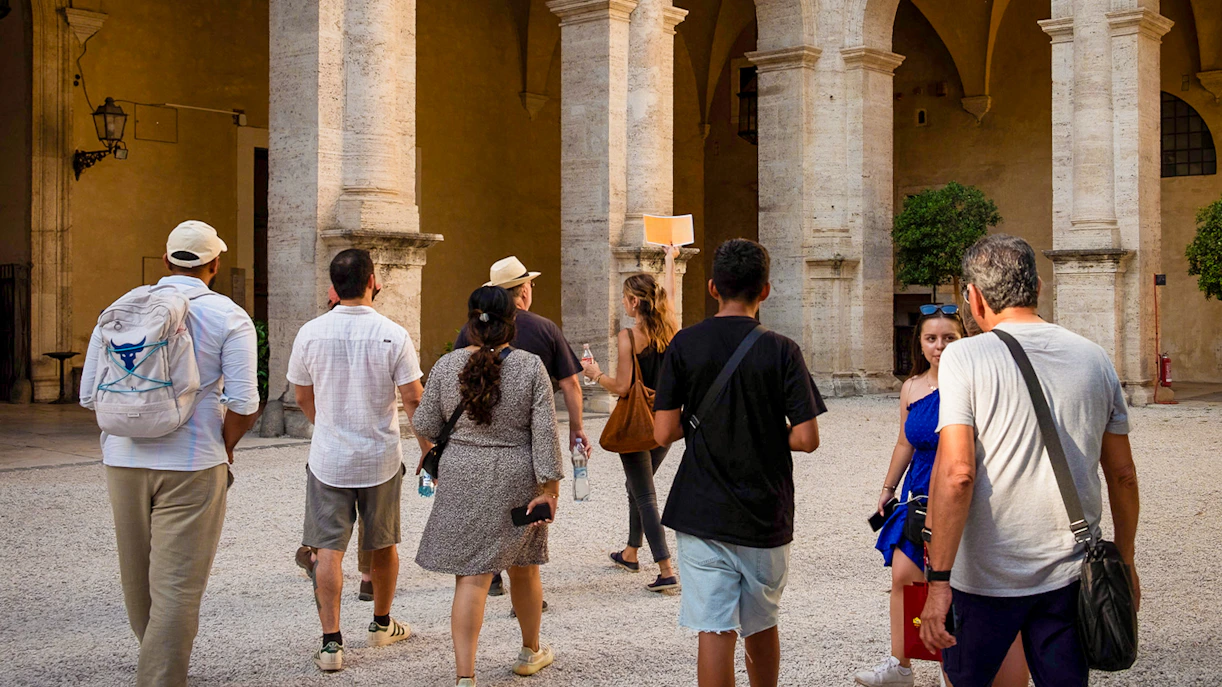
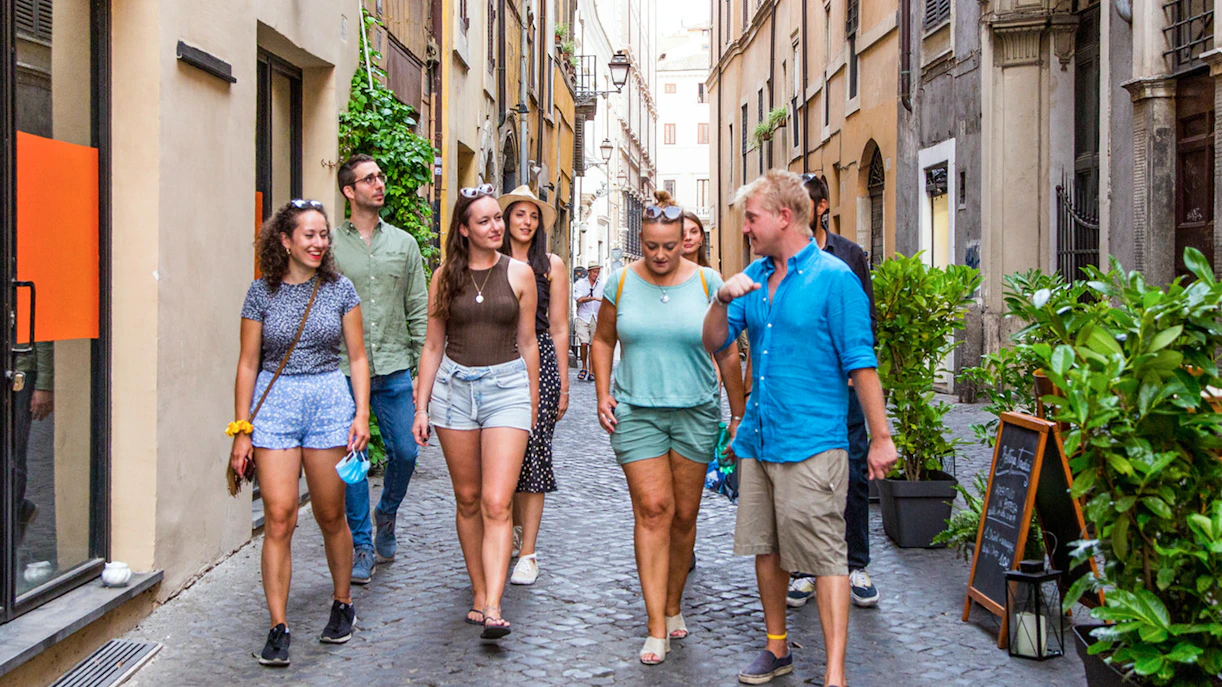
The Historic Center's walkable density makes it one of the best areas for self-guided exploration in Rome — a circuit from Campo de' Fiori through Via Giulia, Piazza Farnese, and the Jewish Ghetto covers the main architectural and historical sites in under 2 hours. Guided walking tours of the area typically add the Pantheon, Piazza Navona, and Largo di Torre Argentina, extending the route into a 3-hour itinerary that covers the full Historic Center.
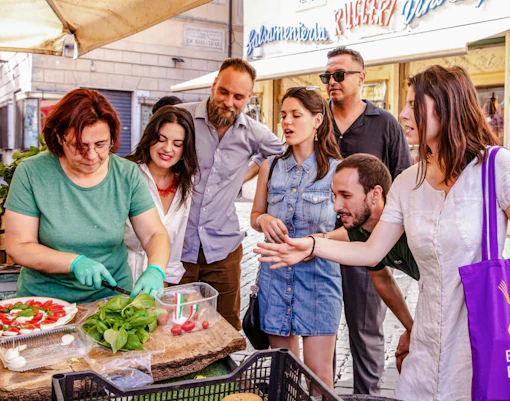
Campo de' Fiori and the Jewish Ghetto together form one of Rome's two primary food tour districts (the other being Trastevere). Tours in this area stop at the morning market, street food vendors specializing in Roman-Jewish dishes, wine bars on the side streets, and occasionally the bakeries and cheese shops on the Ghetto's main streets. The most comprehensive tours extend west into Trastevere, giving a single 3-hour walk through the full arc of Rome's historic food neighborhoods.
Pro tip
The Campo de' Fiori and Jewish Ghetto area is best understood on foot with a guide — the streets that look like ordinary alleys hold centuries of market, culinary, and community history that isn't visible from the outside. Guided food tours here cover the morning market, Roman-Jewish street food (carciofi alla giudia, filetti di baccalà, supplì), and the neighborhood wine bars, with options extending to Trastevere for a full multi-neighborhood Rome food walk.
Plan your visit
Pro tip
The Eternal Rome Food Tour covers the Jewish Ghetto, Campo de' Fiori, and Trastevere in a single 3-hour walk — the most comprehensive single-outing overview of Rome's three most historically significant food neighborhoods, combining Roman-Jewish cuisine, market culture, and Trastevere trattoria cooking.
Free things to do in Campo de' Fiori
Suggested itinerary for visiting Campo de' Fiori
The Historic Center around Campo de' Fiori is extremely compact — the distance from the piazza to the Jewish Ghetto is 8 minutes on foot, and Piazza Navona is 10 minutes north. All main points of interest are within a 15-minute walk of each other, making backtracking unnecessary if you plan the route in a rough arc.
Tips for visiting Campo de' Fiori
- Arrive at the market before 9am on weekdays — the stalls are at their fullest and most local before tourist groups arrive, and the best produce (seasonal fruit, fresh cheese, prepared antipasti) sells out early.
- The Campo de' Fiori market does not run on Sundays — the piazza is empty of stalls on Sunday mornings, which is useful to know if you're planning your week around market timing.
- Bars directly on the piazza charge a significant location premium — a spritz or coffee at a table facing the square costs roughly double what the same drink costs at a bar one street away on Via del Pellegrino or Via dei Cappellari. The food quality at these immediate-piazza bars is also generally lower.
- For carciofi alla giudia (fried whole artichokes) in the Jewish Ghetto, the artichoke season runs roughly October to April [VERIFY current seasonality] — outside these months, the dish may be unavailable or made from stored rather than fresh product.
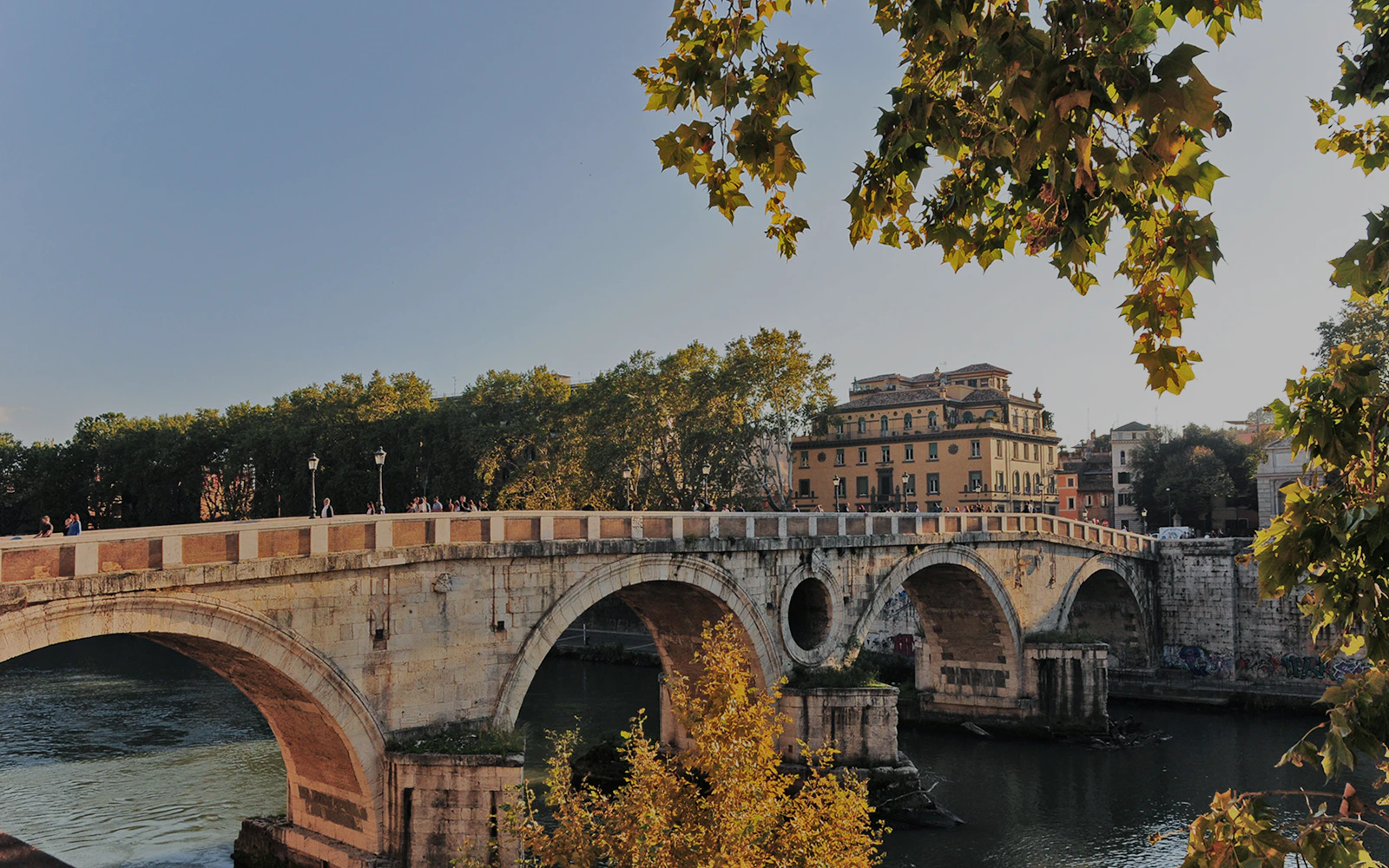
- Via Giulia is best walked from north to south in the late afternoon — starting from Piazza Farnese and walking toward Ponte Sisto puts the setting sun ahead and behind you in alternation, and ends at the bridge with a view back up the Tiber.
- Palazzo Farnese is the French Embassy and interior access is limited — check the current public access schedule in advance [VERIFY current opening conditions] rather than arriving and expecting to enter.
- The Portico d'Ottavia is most photogenic in morning light (east-facing) and in the hour before sunset (the western light catches the ancient stone columns from the side). Midday direct overhead light flattens the texture of the stone.
- Largo di Torre Argentina has a resident cat colony managed by volunteers — the cats live among the ruins and are visible from street level. The cat sanctuary has a small ground-level space open to visitors and accepts donations.
Best photo spots in Campo de' Fiori
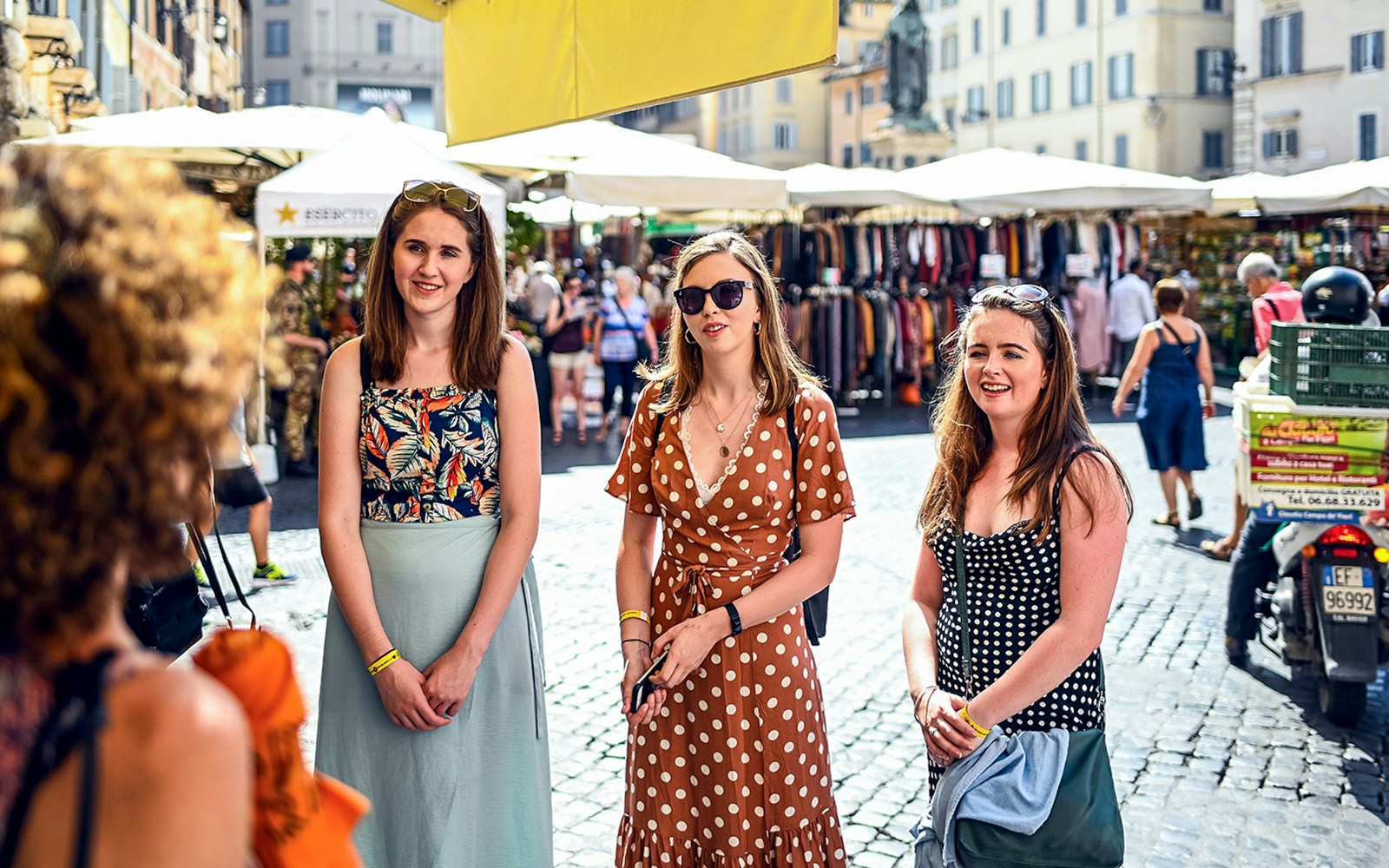
Campo de' Fiori market — early morning, facing west
Stand at the eastern edge of the piazza and face west at 8–9am — the market stalls fill the foreground with color (produce, flowers, spices) and the Palazzo Pio Righetti facade at the far end closes the composition. Morning light from the east catches the stall canopies and the building facades from the side. Before 9am the square is active without being overcrowded.

Dining in Campo de' Fiori
The Campo de' Fiori and Jewish Ghetto area holds one of Rome's most distinctive food cultures — Roman-Jewish cooking (carciofi alla giudia, filetti di baccalà), the morning produce market, and the neighborhood wine bars are best understood with a guide who knows which stalls and kitchens to stop at. The Trastevere and Campo De' Fiori Food Tour With Jewish Ghetto combines all three Historic Center food neighborhoods in a single outing.
Should you stay in Campo de' Fiori?
Short answer: Yes, if central location and neighborhood character matter more than quiet nights. The area is loud on weekend evenings.
- The vibe: Campo de' Fiori is one of Rome's busiest outdoor bar piazzas on Friday and Saturday nights — the square is active with bar crowds until midnight or later, and the surrounding streets carry significant foot traffic and noise until well past midnight. Weekday evenings are substantially quieter. Early mornings are very quiet; the market setup begins around 6:30am.
- The logistics: Accommodation around Campo de' Fiori is a mix of boutique hotels, apartment rentals, and small B&Bs in Renaissance and baroque-period buildings. Prices are mid-to-high for Rome's center — typically €100–€200 per night for a double [VERIFY current rates]. There is no metro nearby, which means relying on buses or taxis to reach the Vatican or the Colosseum.
- Who it's for: Travelers prioritizing the Historic Center, Trastevere, the Ghetto, and Piazza Navona within walking distance; those who want to be close to Rome's food and bar culture. Not ideal for early sleepers (weekend noise is significant), families with young children, or visitors whose itinerary is anchored in the Vatican or Colosseum (both require 25+ minutes to reach without a car).
- Top recommendation: Book accommodation on Via Giulia or the streets between Campo de' Fiori and Via Giulia (Via del Pellegrino, Via dei Cappellari) — these are in the Historic Center's character zone but removed from the piazza's Friday/Saturday noise. The closer to the piazza, the louder the evening; one block away is significantly different.
Explore other neighbourhoods
FAQs for Campo de' Fiori
The market runs Monday to Saturday, approximately 7am to 1:30pm. There is no market on Sundays — the piazza is clear on Sunday mornings and operates as a regular open square. The daily schedule is consistent year-round, though some stalls may reduce hours or not appear on public holidays.
The most reliable purchases are fresh seasonal produce (fruit, vegetables), olives and preserved vegetables from the deli stalls, and fresh flowers. The packaged goods (truffle oil, spice mixes, dried herbs in fancy packaging) are generally tourist-targeted and overpriced compared to supermarkets or specialist food shops elsewhere in Rome. The cheese and cured meat stalls sell quality product but at market prices — compare with Roscioli (Via dei Giubbonari) for a more serious selection at similar prices.
Carciofi alla giudia — literally "artichoke in the Jewish style" — is a whole artichoke deep-fried twice so the outer leaves become crispy while the heart remains tender, pressed flat like a flower. It's the signature dish of Rome's Jewish-Roman culinary tradition. The dish is seasonal (October–April [VERIFY]) and is best tried at the restaurants on Via del Portico d'Ottavia in the Jewish Ghetto — Ba'Ghetto and Nonna Betta are the most consistent addresses.
No — they are adjacent but distinct. Campo de' Fiori is a piazza with a daily market and evening bar scene, surrounded by Renaissance and medieval streets. The Jewish Ghetto is the historic neighborhood immediately east of Campo de' Fiori, centered on Via del Portico d'Ottavia and the ancient Portico d'Ottavia ruins. The two areas are an 8-minute walk apart via Via dei Giubbonari or Via Arenula, and most food tours and walking tours cover both in a single outing.
The Eternal Rome Food Tour covers the Jewish Ghetto, Campo de' Fiori, and Trastevere in a single 3-hour walk — the widest geographic range of the three available tours. The Guided Street Food Tour in Campo de' Fiori & Ghetto focuses specifically on the two neighborhoods without extending to Trastevere — better if you're keeping the afternoon free for Trastevere independently. The Trastevere and Campo De' Fiori Food Tour With Jewish Ghetto covers the same three neighborhoods as the Eternal Rome tour with a different emphasis — check the current tour descriptions for exact stop counts and menu differences.
Yes in general — the area is busy on weekend evenings and the foot traffic itself provides a degree of safety in numbers. The main risks are pickpocketing in dense crowds around the piazza and the typical noise and minor disorder associated with busy outdoor bar areas late at night. The streets between Campo de' Fiori and Via Giulia (toward the Tiber) are quieter and less lit at night — exercise standard caution in those alleys after midnight.
There is no metro nearby. To the Vatican: take bus 40 or 64 from Corso Vittorio Emanuele II (3-minute walk from the Campo) westward — journey time is approximately 20 minutes depending on traffic [VERIFY current routes]. To the Colosseum: take bus H from Via Arenula to Termini, then Line B metro to Colosseo (total approximately 30–35 minutes), or take a taxi (approximately €10–€15).
The Palazzo Farnese is the most architecturally significant Renaissance palace in Rome, built between 1517 and 1589 for the Farnese family, with contributions from Sangallo the Younger, Michelangelo, and della Porta. It has been the French Embassy since 1874 and is not open for general public access — guided visits to the interior (including the Carracci frescoes in the main gallery) are available on specific days via pre-arranged tour booking [VERIFY current access program and booking requirements].
The piazza, market browsing, Via Giulia walk, Portico d'Ottavia, and Largo di Torre Argentina are all free. Lunch at a Roman-Jewish trattoria in the Ghetto runs €20–€35 per person including wine. A food tour costs approximately €45–€75 per person [VERIFY current prices]. Coffee and snacks add €5–€10. A typical half-day without a tour costs €25–€40 per person; a full day with a food tour runs €70–€110.