Why visit: Monti — Rome's oldest rione — puts you within a 10-minute walk of the Colosseum, Roman Forum, and Basilica di San Clemente, while its own streets hold Michelangelo's Moses at San Pietro in Vincoli, independent boutiques on Via dei Serpenti, and one of Rome's most genuinely local evening piazzas.
Top things to do: Tour the Colosseum arena floor, walk the Roman Forum via the Arch of Titus, descend through three millennia at Basilica di San Clemente, see Michelangelo's Moses at San Pietro in Vincoli for free.
Best for: History enthusiasts, first-time Rome visitors, architecture fans, independent shoppers
Time needed: Half day to full day.
Best time to visit: Weekday mornings — arrive at the Colosseum by 9am with a pre-booked timed ticket to enter before the first tour groups; Monti's own streets are best mid-afternoon when the archaeological sites get crowded.
Nearby: Colosseum, Roman Forum, Palatine Hill, Celio Hill, Aventine Hill, Termini.
Top things to do in Monti
💡 Pro tip
Book Colosseum tickets at least 3–5 days in advance during April–October — walk-up tickets are almost never available at the box office during peak season, and timed-entry queues without a pre-booked slot can exceed 2 hours. The Colosseum underground (hypogeum) requires a specific tour ticket and sells out faster than standard entry.
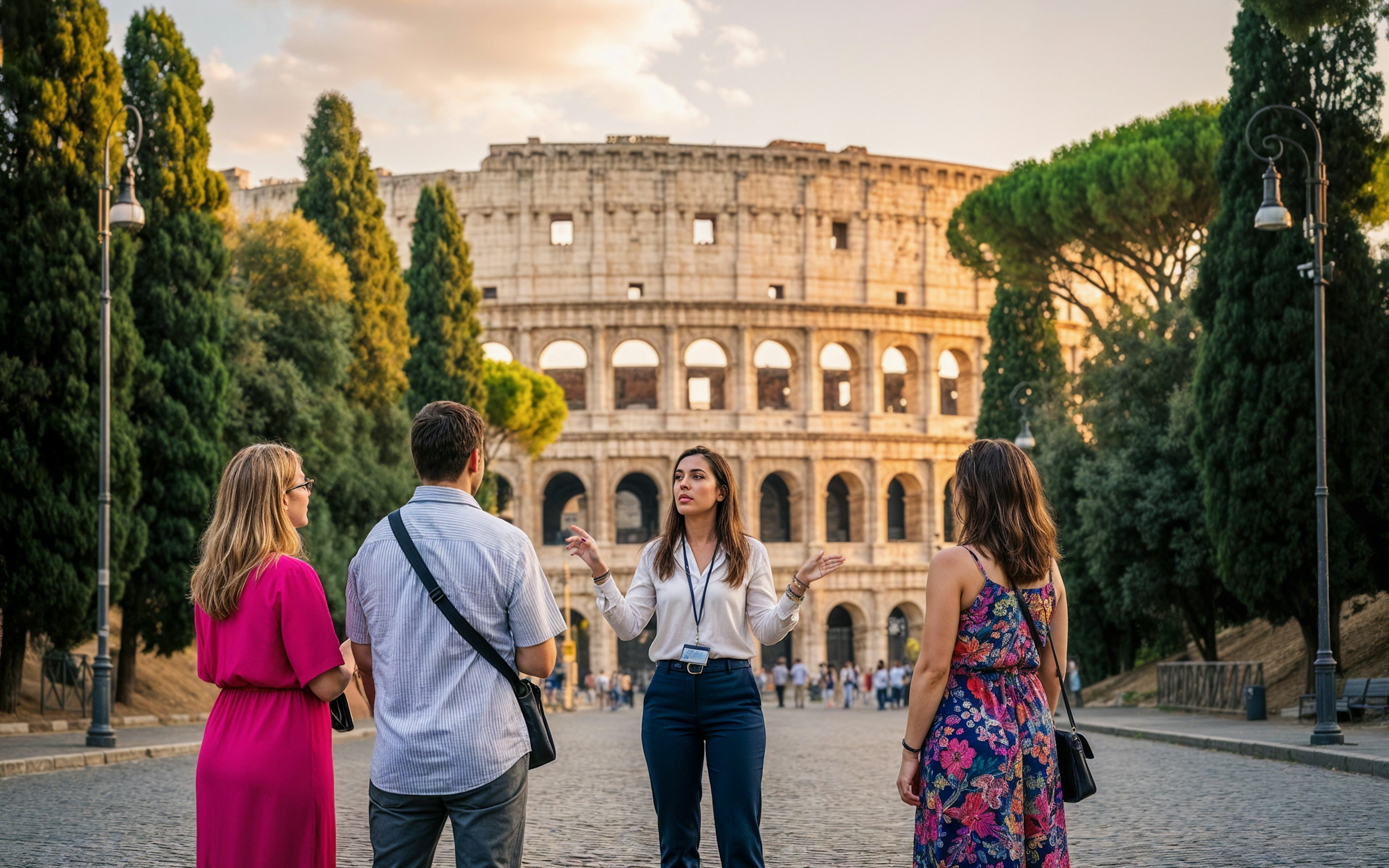
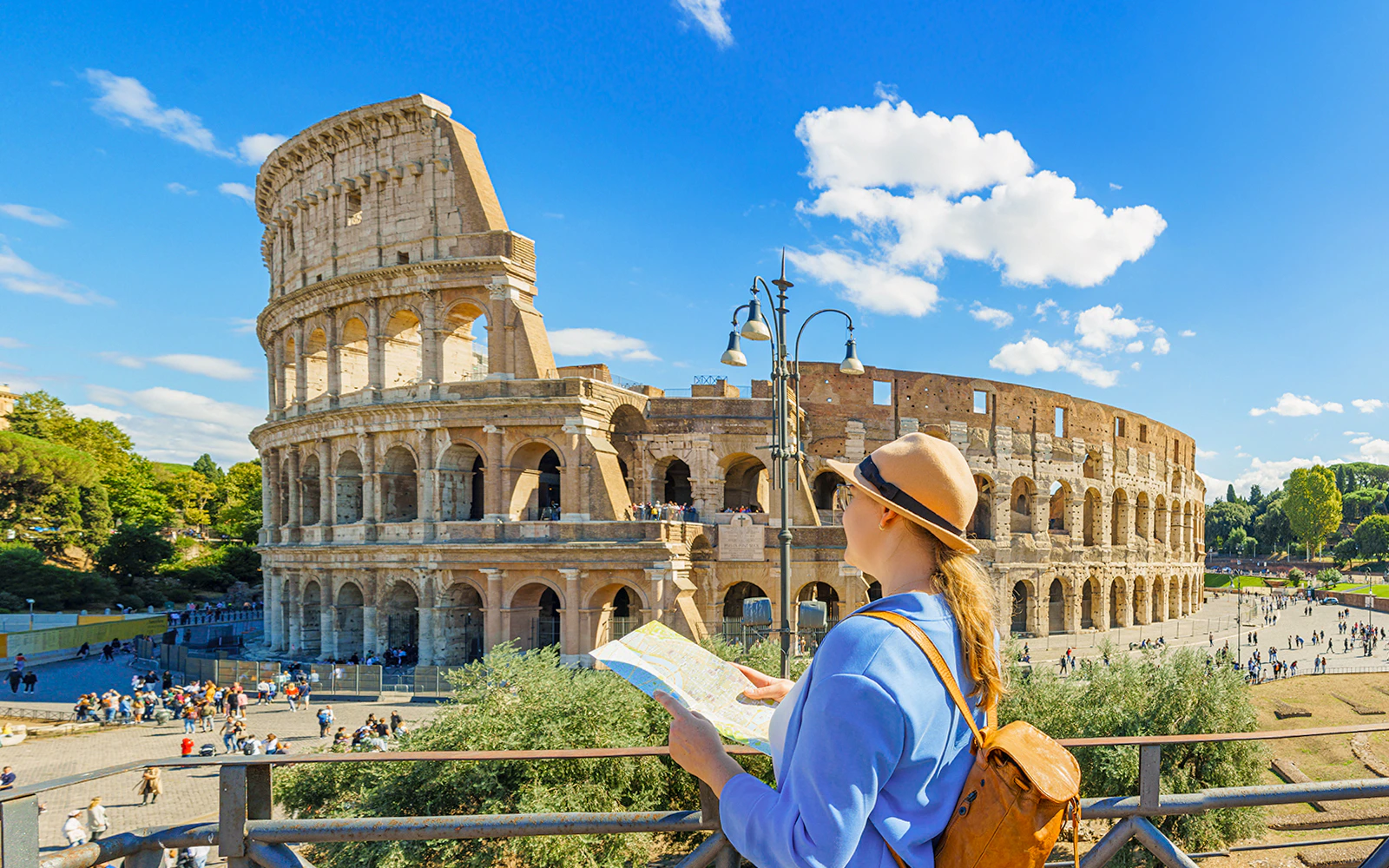
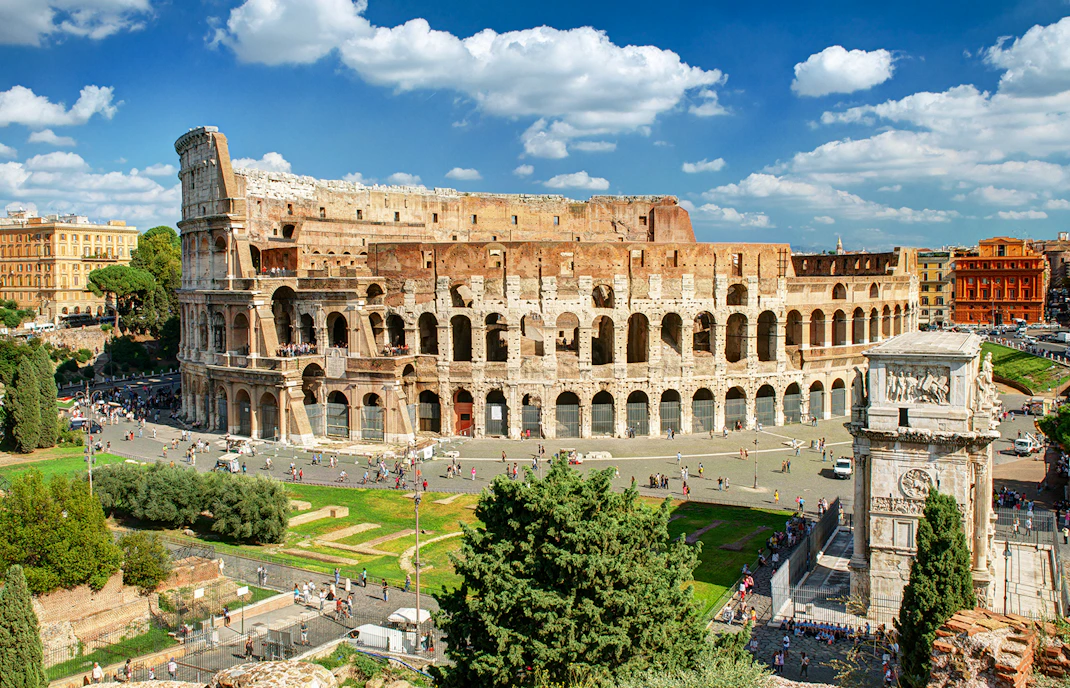
The Colosseum — the largest ancient amphitheater ever built — is at Monti's southern edge
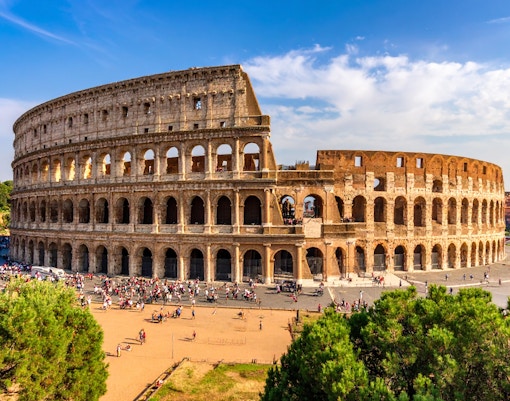
Built between 72 and 80 CE, the Colosseum was operational for over 400 years and is the most complete surviving Roman amphitheater in the world. From Monti's higher streets near Via Cavour, the upper tiers are visible over the rooftops — the building anchors the neighborhood's southern boundary and can be reached on foot in under 10 minutes from Piazza della Madonna dei Monti. The combined Colosseum, Roman Forum, and Palatine Hill site represents the largest concentration of ancient Roman architecture accessible to visitors anywhere.
Monti is Rome's oldest rione and its street layout follows ancient Roman boundaries
Designated Rione I of Rome, Monti occupies part of the ancient Subura district — one of the most densely populated neighborhoods of ancient Rome, notorious in Roman literature for its insulae (multi-story apartment blocks), street noise, and markets. Today the neighborhood retains narrow, irregular streets that follow the ancient plot boundaries, with craft workshops, independent boutiques on Via dei Serpenti and Via Urbana, and a weekend vintage market (Mercato Monti) that draws locals rather than tour groups.
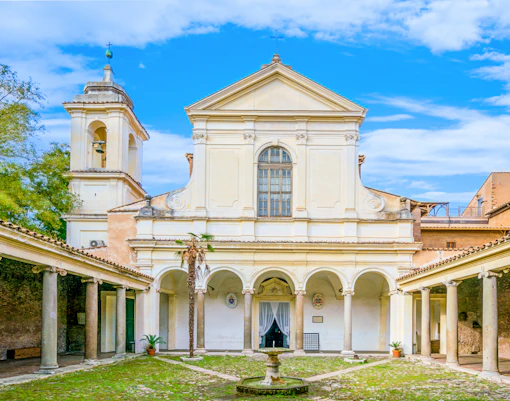
Basilica di San Clemente shows three layers of Rome's history in a single vertical excavation
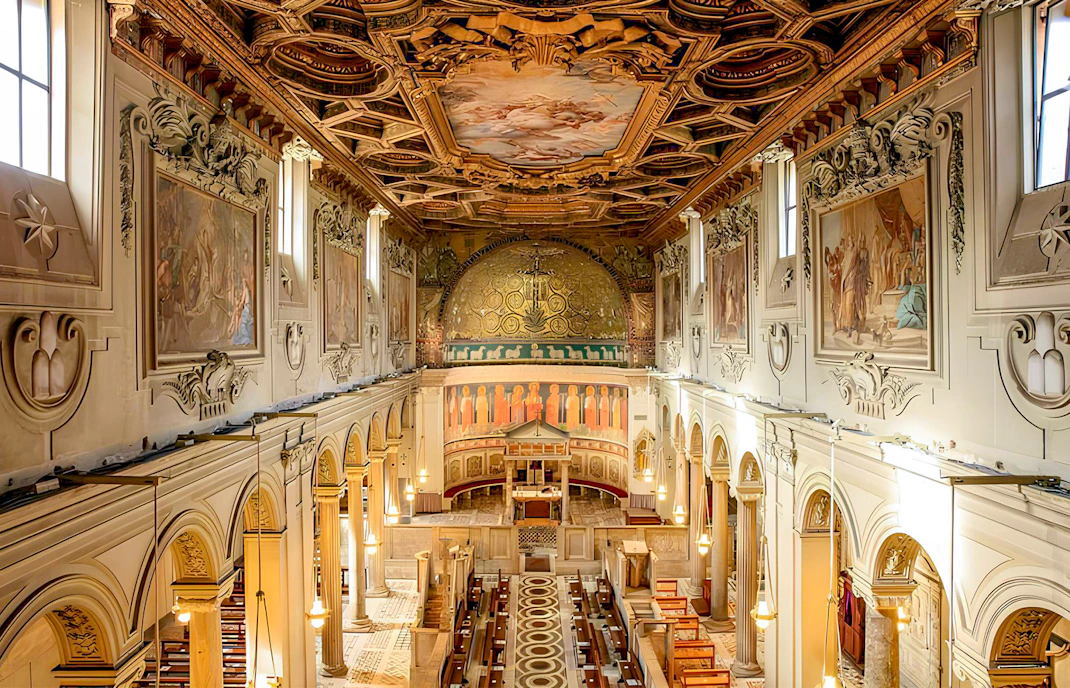
San Clemente's three-level site — a working 12th-century basilica on top, a 4th-century early Christian church in the middle, and a 1st-century Roman building and Mithraic temple at the bottom — is one of the clearest physical demonstrations of how modern Rome sits directly on top of ancient and medieval Rome. The lowest level has a running underground stream, still audible and visible through the excavated chambers. It is a 10-minute walk from the Colosseum and consistently far less crowded than the main Forum sites.
Michelangelo's Moses is in a neighborhood church and entry is free
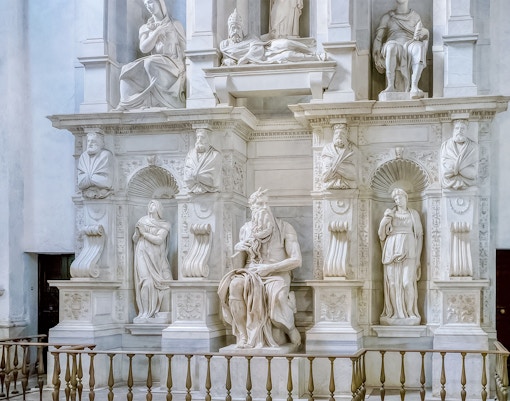
San Pietro in Vincoli on the Esquiline Hill contains one of Michelangelo's most accomplished surviving sculptures — the seated Moses, originally intended as one of 40 figures for the tomb of Pope Julius II, a commission he worked on intermittently between 1505 and 1545. Only three of the tomb figures were completed; Moses is the central and most finished. The statue sits in the church's main nave, accessible without a ticket during opening hours. The approach from Via Cavour takes less than 5 minutes uphill.
The neighborhood's commercial streets are independent of the tourist economy around the ancient sites
Via dei Serpenti and Via Urbana run through Monti's center and are lined with ceramics workshops, independent clothing boutiques, vintage shops, and wine bars whose primary customers are residents rather than tourists. The density of functioning independent businesses on these two streets distinguishes Monti from the immediate Colosseum area (which is dominated by tourist restaurants and souvenir stalls) and makes it one of the more commercially interesting inner-city neighborhoods for browsing.
Best ways to explore Monti
Monti's neighborhood core — Piazza della Madonna dei Monti, Via dei Serpenti, Via Urbana, and the climb to San Pietro in Vincoli — can be self-guided in under 90 minutes. Guided walking tours of the area typically extend south into the ancient sites, covering the Colosseum exterior, the Roman Forum, and the Arch of Constantine in a single itinerary. The neighborhood itself is best explored independently; the ancient sites benefit significantly from a guided tour to provide context.
The Colosseum, Roman Forum, and Palatine Hill are covered by a shared ticket and are geographically adjacent — most visitors do all three in a single 3–4 hour visit. The Basilica di San Clemente and the Roman Houses of the Celio Hill extend the archaeological range without requiring a long walk. Several combo products bundle the Colosseum with the Vatican Museums, the Pantheon, or the Borghese Gallery for a full-day Rome itinerary.
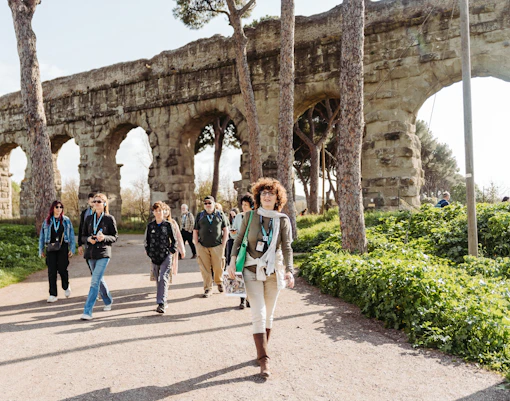
The Appian Way catacombs require a transfer (approximately 20 minutes by taxi or organized shuttle south of the city center). Several tour operators run half-day excursions combining the Capuchin Crypt with one or more catacomb sites — typically morning departures that can be combined with an afternoon Colosseum visit. The Catacombs of St. Callixtus, Domitilla, St. Sebastian, Priscilla, and St. Agnes are all accessible via organized tour.
The Colosseum is Monti's defining landmark and deserves more than a standard walk-through — guided tours unlock the underground hypogeum, the arena floor, and the individual gladiatorial history that plain entry tickets don't explain. Options include an express 1-hour tour, a small-group underground tour, a semi-private tour with gladiator's entrance access, a VIP private tour, or an evening session after daytime crowds leave.
Plan your visit
The Colosseum, Roman Forum, and Palatine Hill share a single combined ticket — the SUPER Sites Pass adds access to the Domus Augustana, the Cryptoporticus, and the Stadium of Domitian within the Palatine Hill complex that standard tickets exclude. The Mamertine Prison combo adds the ancient prison at the foot of the Capitoline Hill, 10 minutes' walk from the Forum.
Free things to do in Monti
Suggested itinerary for visiting Monti
Monti is elongated north to south — the stretch from the Colosseum at the southern edge to Santa Maria Maggiore at the northern end takes about 20 minutes on foot. The neighborhood's boutique streets run through the middle, and the major ancient sites cluster at the southern and eastern edges. Most visitors move between the ancient sites and the neighborhood in the same visit.
Tips for visiting Monti
Book Colosseum tickets at least 3–5 days ahead during April–October — walk-up tickets are almost never available at the box office during peak season. Pre-book a specific time slot via coopculture.it or Headout; the queue for same-day timed entry can exceed 2 hours.
The Colosseum underground (hypogeum) is not included in standard tickets — it requires a specific underground tour with capped group sizes. Book 5–7 days in advance in high season; these sell out faster than any other Colosseum option.
San Pietro in Vincoli is uphill from Via Cavour — the stairs from the street level take less than 3 minutes. Many visitors skip the church because they assume the approach is longer than it is; it is not.
The Roman Forum is best entered from the Arch of Titus gate (near the Colosseum) rather than the Largo Romolo e Remo gate on Via Sacra — the Arch of Titus entry follows the ancient triumphal route and gives the correct historical sequence through the site.
Avoid eating within direct sight of the Colosseum — restaurants on Piazza del Colosseo and along Via dei Fori Imperiali charge significant tourist premiums. Walk 5–7 minutes north into Monti (Via Capo d'Africa, Via Urbana) for lower prices and proper Roman food.
Basilica di Santa Prassede on Via di Santa Prassede (off Via Urbana, 5-minute walk from the neighborhood's main streets) contains a 9th-century mosaic chapel — the Cappella di San Zenone — that is one of the least-visited significant Byzantine interiors in Rome. Entry to the church is free.
The Colosseo metro stop (Line B) puts you at the Colosseum in a 3-minute walk — it is the closest major ancient site to Termini station and takes 7–8 minutes by metro from there. If your hotel is near Termini, the Colosseum is your easiest first stop.
Evening Colosseum tours (after 6pm, available on select dates) are significantly less crowded than daytime slots — the light at sunset also makes it the best time for photography of both the interior and the exterior.
Best photo spots in Monti
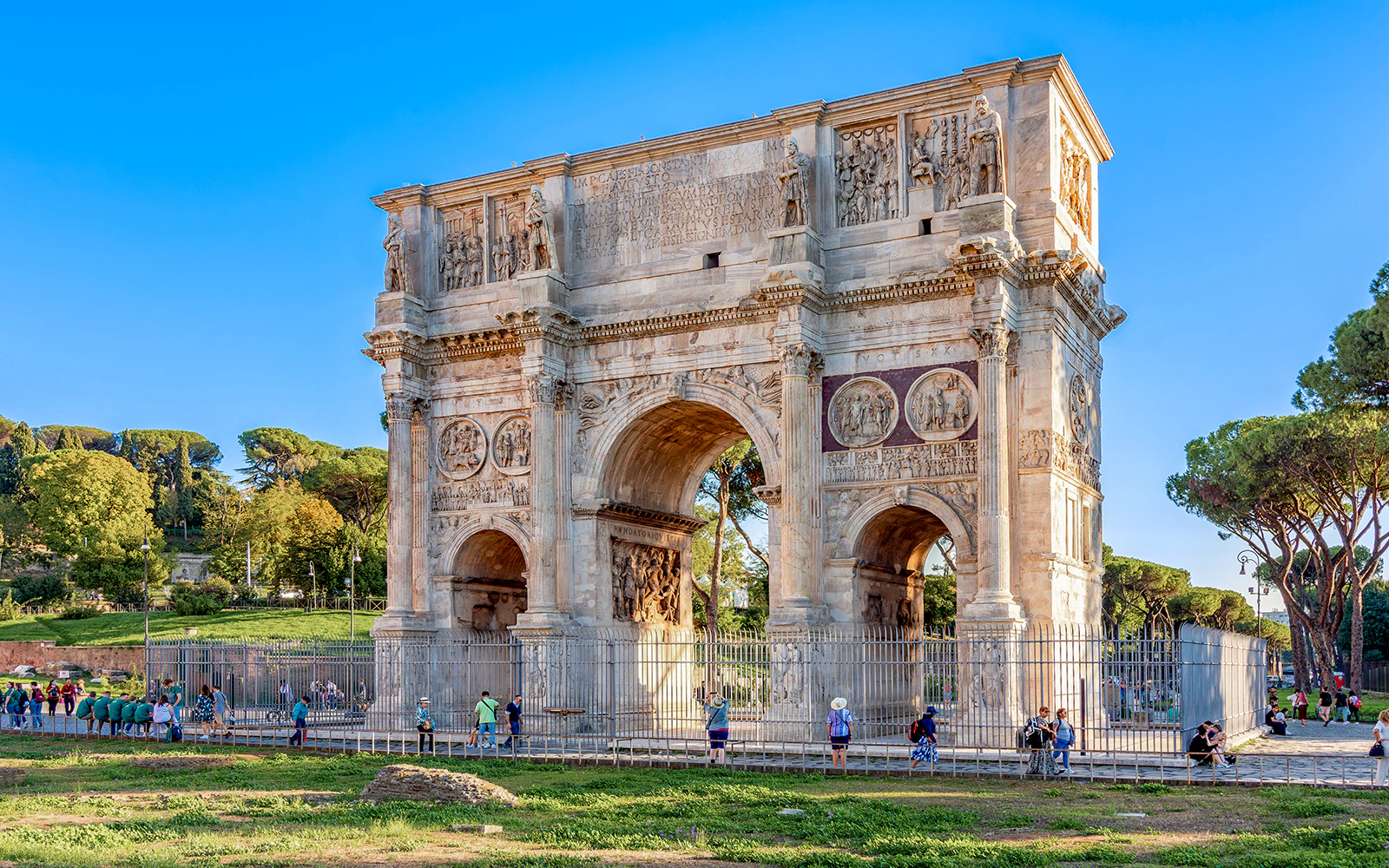
Arch of Constantine — early morning, facing the Colosseum
Stand between the Arch of Constantine and the Colosseum on Via Sacra before 8am, facing northeast — the arch fills the left foreground and the Colosseum's curved southern facade rises behind it. Best before 8am when the area is empty of pedestrians. The low morning light from the east catches the arch's relief carvings from the side.
Dining in Monti
The Roman Catacombs on the Appian Way are best visited with a guide — the kilometers of underground corridors are navigable only on organized tours, and the early Christian iconography, burial inscriptions, and catacomb structure require explanation to make sense in context. Options include individual catacomb tours at St. Callixtus, Domitilla, St. Sebastian, Priscilla, and St. Agnes, as well as combined catacomb + Capuchin Crypt tours that pair both sites in a single half-day excursion.
Should you stay in Monti?
Short answer: Yes, if central access to ancient Rome sites is your priority. Better transport links and a more local feel than staying near the Colosseum directly.
The vibe: Monti's residential streets are quiet after 11pm — the neighborhood's evening activity is centered on Piazza della Madonna dei Monti and the surrounding wine bars, which wind down earlier than the Trastevere bar scene. Early mornings are very quiet, which is practical for getting to the Colosseum on a morning time slot.
The logistics: Accommodation in Monti is a mix of boutique hotels, B&B apartments, and short-term rentals in the medieval residential buildings. Mid-range pricing — typically €80–€160 per night for a double [VERIFY current rates]. The neighborhood is within walking distance of both the Colosseum and Termini station, making it one of the more practically located places to stay in central Rome.
Who it's for: First-time Rome visitors whose itinerary is anchored in ancient Rome; travelers who want a neighborhood character rather than a hotel district; those who plan to visit the Colosseum and Forum early in the morning. Not ideal for visitors whose primary focus is the Vatican (30+ minutes by metro and foot) or Trastevere (20+ minutes walk).
Top recommendation: Book accommodation on Via dei Serpenti, Via del Boschetto, or the streets immediately surrounding Piazza della Madonna dei Monti — these are in Monti's quiet residential core rather than on the busier Via Nazionale or Via Cavour. Avoid anywhere advertised as being "next to the Colosseum" — this typically means the tourist-heavy streets on the monument's perimeter rather than the neighborhood proper.
Explore other neighbourhoods
FAQs for Monti
During peak season (April–October), book 3–7 days ahead minimum. The Colosseum operates on a timed-entry system and individual time slots, especially morning ones, sell out well in advance. Underground and arena floor tours have smaller group sizes and sell out faster — book those 5–7 days ahead or more. Walk-up tickets at the box office are almost never available during the busy months; the queue for same-day timed entry can exceed 2 hours.
The standard ticket gives timed entry to the Colosseum's interior tiers and the ground floor — you can walk the seating levels and look down at the arena, but the wooden arena floor reconstruction may or may not be accessible depending on current installation [VERIFY]. The underground hypogeum (the chambers beneath the arena) requires a specific underground tour ticket with capped group sizes. Guided tours add contextual explanation of individual bouts, gladiatorial careers, and the spectacle mechanics that plain entry does not provide.
No — the standard Colosseum ticket includes same-day entry to the Roman Forum and Palatine Hill. The SUPER Sites Pass adds access to additional zones within the Palatine Hill complex (Domus Augustana, Cryptoporticus, Stadium of Domitian) that the standard ticket excludes. Tickets to the Forum and Palatine Hill can also be purchased separately without the Colosseum if you only want those sites.
No — the main catacombs (St. Callixtus, Domitilla, St. Sebastian, Priscilla, St. Agnes) are all located on the Appian Way or in the northern suburbs of Rome, outside the city center. They require a transfer of approximately 15–30 minutes from Monti, either by taxi, organized tour shuttle, or the Archeobus tourist bus. Most visitors combine the catacombs with the Capuchin Crypt as a half-day excursion, separate from the Colosseum visit.
Yes — the seated Moses is definitively attributed to Michelangelo and was created between 1513 and 1515 as part of the tomb commission for Pope Julius II. It is one of the few large-scale marble sculptures by Michelangelo in Rome outside the Vatican. Entry to see it is free during church opening hours (typically 8am–12:30pm and 3:30–7pm [VERIFY current hours]).
The Catacombs of St. Callixtus are the largest and most historically significant — they hold the remains of several early popes and are the best-documented site. The Catacombs of Domitilla include an intact underground early Christian basilica. The Catacombs of Priscilla contain some of the earliest surviving examples of Christian fresco painting. For a first visit, St. Callixtus or Domitilla are the most comprehensive experiences; St. Sebastian is the closest to the city center on the Appian Way.
Colosseum + Roman Forum + Palatine Hill combined ticket: approximately €18–€22 [VERIFY current pricing]. Basilica di San Clemente underground access: approximately €10 [VERIFY]. San Pietro in Vincoli (Moses): free. Capuchin Crypt entry: approximately €9 [VERIFY]. Lunch on Via Urbana or Via dei Serpenti: €15–€25 per person including a carafe of wine. A full-day total (excluding the catacombs) runs approximately €50–€80 per person depending on which guided tours and meals are included.
Yes — Monti is a residential neighborhood with active evening foot traffic around Piazza della Madonna dei Monti and the surrounding bars. The main safety consideration is pickpocketing near the Colosseum tourist zone (the piazza and ticket lines), not nighttime street safety in the neighborhood itself. The streets between Via Nazionale and the Colosseum are well-lit and busy in the evenings.
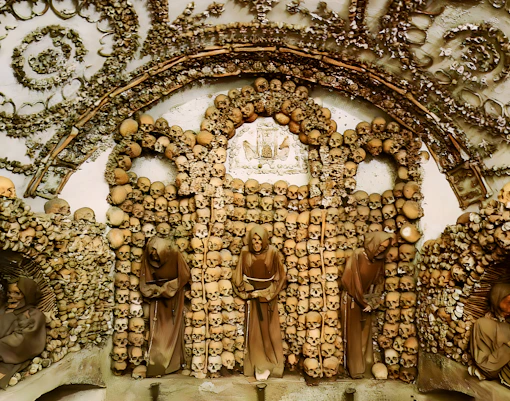
This depends on the child's age and sensitivity. The crypt's six chapels are decorated with the bones of approximately 3,700 Franciscan friars — complete robed skeletons, walls lined with vertebrae and pelvic bones, and chandeliers made from skeletal parts. Many older children find it fascinating rather than frightening, but it is not appropriate for young children or those uncomfortable with explicit reminders of death. The museum attached to the crypt contextualizes the tradition.
Yes — several combo products bundle Colosseum + Roman Forum + Palatine Hill access with Vatican Museums and St. Peter's Basilica entry. Logistically, the Colosseum and Vatican are about 30–40 minutes apart by metro (Line B to Ottaviano). Doing both in one day requires an early Colosseum start (9am entry) and an afternoon Vatican block (1–2pm entry). The Combo: Colosseum + Vatican Museums + St. Peter's Basilica Tickets covers both in a single booking.
Piazza della Madonna dei Monti
The social hub of the Monti neighborhood, built around a 16th-century fountain and overlooked by the church of the same name. The surrounding streets hold wine bars and trattorias, and the square fills with residents from around 6pm — one of the few central Rome piazzas where the evening crowd is primarily local rather than tourist.
Best for: Evening socializers, people-watchers, those wanting genuine neighborhood life
Duration: 30–45 minutes
Combine this with: Via dei Serpenti (starting from the northeast corner of the square) for Monti's main boutique shopping street — the walk takes 10–15 minutes end-to-end and passes ceramics workshops, vintage boutiques, and independent bars. San Pietro in Vincoli is 8 minutes uphill from the piazza via Via dei Serpenti.
San Pietro in Vincoli (St. Peter in Chains)
A 5th-century basilica on the Esquiline Hill containing Michelangelo's Moses statue, viewable free of charge during opening hours. The church also holds the reliquary chains said to have bound St. Peter and an intact early Christian basilica interior with ancient columns.
Best for: Art history fans, those looking for a free attraction, morning visits before the main sites open
Duration: 20–30 minutes
Combine this with: Piazza della Madonna dei Monti (8-minute walk downhill through Monti's back streets) — the descent from the Esquiline Hill through Via dei Serpenti is one of the neighborhood's most pleasant short walks, passing boutiques and a ceramics workshop. The Colosseum is 10 minutes' further walk south from the piazza.
Mercato Monti (weekends only)
A curated indoor weekend market at Hotel Palatino on Via Leonina, running Saturdays and Sundays — vendors sell vintage clothing, jewelry, ceramics, and independent design pieces. Entry is free; the market runs approximately 10am–8pm [VERIFY current hours and days].
Best for: Independent shoppers, vintage enthusiasts, design browsers
Duration: 45–60 minutes
Combine this with: A coffee on Via Urbana (2 minutes from the market location) and a walk through Monti's commercial streets — the market is near the neighborhood's center and a natural hub for a self-guided boutique circuit that loops through Via dei Serpenti and back to the piazza.
Via Urbana walk
A north-south street through the heart of Monti's artisan quarter, lined with independent coffee shops, ceramics ateliers, bookshops, and wine bars running from near Santa Maria Maggiore in the north toward Piazza della Madonna dei Monti in the south.
Best for: Café lovers, independent shoppers, slow travelers
Duration: 20–30 minutes one way
Combine this with: Basilica di Santa Prassede (off Via Urbana, 5-minute walk north toward Via di Santa Prassede) for one of Rome's best-preserved 9th-century Byzantine mosaics — the chapel of San Zenone is entirely lined with gold mosaics and entry to the church is free.
Quick bites
Alle Carrette A long-established Roman pizzeria on Via Madonna dei Monti serving thin-crust pizza by the whole round — one of Monti's most consistently local spots for a straightforward Roman-style pizza without a tourist menu. Price range: €8–€14 per pizza [VERIFY current pricing] Location note: Via Madonna dei Monti 95, near Piazza della Madonna dei Monti
Il Bocconcino A no-frills trattoria near the Colosseum serving Roman classics — cacio e pepe, rigatoni all'amatriciana, and saltimbocca — at prices substantially lower than the restaurants on Piazza del Colosseo directly. Price range: €12–€20 per main course [VERIFY] Location note: Via Ostilia 23, Celio district, 5 minutes' walk from the Colosseum
Cafés
Ai Tre Scalini A Monti institution on Via Panisperna serving coffee, wine, and small plates — the street-level seating is popular with neighborhood regulars and the wine selection is serious for a neighborhood bar. Best in the late afternoon aperitivo hour. Price range: €2–€4 (coffee), €5–€9 (wine by glass) [VERIFY] Location note: Via Panisperna 251, near the intersection with Via dei Serpenti
Caffè Urbana A daytime café on Via Urbana serving coffee, pastries, and light lunch plates — the main corridor of Monti's artisan quarter and a practical stop midway through a neighborhood walk. Price range: €1.50–€3 (coffee), €6–€12 (lunch plates) [VERIFY] Location note: Via Urbana, central Monti
Fine dining
Urbana 47 A contemporary Roman restaurant on Via Urbana 47 serving a seasonal menu with an emphasis on local ingredients — the interior doubles as a concept store for artisan food products. Dinner reservations recommended on weekends. Price range: €18–€35 per course [VERIFY] Location note: Via Urbana 47, central Monti
Acquolina A fish-focused restaurant in Monti serving creative Italian seafood dishes — one of the few options in the neighborhood that moves away from standard Roman meat and pasta cooking. [VERIFY current operation] Price range: €25–€45 per course [VERIFY] Location note: Via dei Serpenti area, Monti
Wine bars
Cavour 313 A long-running wine bar on Via Cavour near San Pietro in Vincoli, serving over 1,200 label wines alongside cold plates, cheese boards, and cured meats. A practical stop after visiting the Moses statue given its 2-minute proximity to the church. Price range: €5–€14 per glass, €8–€20 for plates [VERIFY] Location note: Via Cavour 313, near the stairs to San Pietro in Vincoli
Il Timoniere A wine bar on Via del Boschetto in the heart of Monti serving a rotating selection of Italian natural wines alongside small plates — one of the neighborhood's more serious wine-focused venues with a local regular crowd. Price range: €6–€12 per glass [VERIFY] Location note: Via del Boschetto, central Monti
Street food
Forno Monti A bakery in the Monti neighborhood selling pizza al taglio, supplì, and Roman bread — the most convenient quick-food stop before or after visiting the ancient sites, with none of the tourist premium of the Colosseum-area snack bars. Price range: €2–€6 for pizza or supplì [VERIFY] Location note: Monti neighborhood, near Piazza della Madonna dei Monti
Celio
The quiet residential hill immediately south of the Colosseum, containing the Basilica of Santi Giovanni e Paolo, the Roman Houses of the Celio Hill underground site, and Villa Celimontana park — far less visited than Monti and directly adjacent.
Trastevere
30 minutes' walk southwest of Monti across the Tiber, Rome's medieval neighborhood known for the Basilica di Santa Maria in Trastevere, family-run trattorias, and one of Rome's most active evening piazza scenes.
Aventine Hill
20 minutes' walk south, known for the Knights of Malta keyhole view of St. Peter's dome, the Rose Garden, and the Orange Garden with a panoramic terrace over the Tiber — a quieter alternative to the Palatine Hill viewpoints.
Testaccio
25 minutes south of Monti, Rome's traditional working-class neighborhood with the Testaccio Market, a high concentration of street food vendors, and the largest non-Catholic cemetery in Rome containing the graves of Keats and Shelley.
Monti sits between the Colosseum to the south and Termini station to the north, in the geographic center of Rome. The most direct metro access is Line B (Colosseo stop), which puts you at the Colosseum's doorstep — Monti's southern streets are a 3–5 minute walk uphill from the exit. From the Colosseo stop, walk north on Via Labicana or Via Capo d'Africa to enter the neighborhood center within 8 minutes.
From Termini, Line A (Repubblica or Termini stop) is a 12–15 minute walk south to Monti's northern edge near Santa Maria Maggiore. Bus routes 75, 117, and 204 serve Via Nazionale on the neighborhood's eastern edge. Tram 3 connects from Testaccio and the Aventine area.
Walking distances from Piazza della Madonna dei Monti:
Colosseum: ~10 minutes
Roman Forum (Largo Romolo e Remo entrance): ~12 minutes
Trevi Fountain: ~15 minutes
Termini station: ~15 minutes
Piazza Venezia: ~12 minutes
Basilica di San Clemente: ~12 minutes
Monti's own neighborhood streets (Via dei Serpenti, Via Urbana, Piazza della Madonna dei Monti) are pleasant year-round and least crowded on weekday mornings. The major ancient sites require more precise timing.
Early morning (8:30–10am): The Colosseum opens at 9am; arriving with an early timed ticket gets you inside before the first tour groups. The Roman Forum is quiet before 10am. San Pietro in Vincoli is accessible from 8am and is empty before 9am.
Midday (11am–2pm): Peak crowd time at the Colosseum and Roman Forum. Best to shift to Basilica di San Clemente (less crowded than the main archaeological sites), browse Via dei Serpenti, or have lunch on Via Urbana.
Late afternoon (4–6pm): Crowds thin at the Colosseum from about 4pm. The Palatine Hill catches low afternoon light that makes photography of the Forum below worthwhile. Monti's boutiques stay open until 7:30–8pm.
Evening (after 6pm): Piazza della Madonna dei Monti becomes one of Rome's most active local evening piazzas — wine bars fill from around 6:30pm and outdoor seating is busy until 11pm on weekdays, later on weekends. Evening Colosseum tours (available on select dates) run after the daytime crowds have cleared.
The essentials: 2–3 hours — covers the Colosseum interior and a walk through Monti's central streets (Piazza della Madonna dei Monti, Via dei Serpenti).
The ideal day: 6–7 hours — adds the Roman Forum and Palatine Hill, Basilica di San Clemente, San Pietro in Vincoli (Moses), lunch on Via Urbana, and afternoon time in Monti's boutique streets.
With guided tours: 4–5 hours for a full Colosseum + Roman Forum guided tour; adding the Roman Catacombs makes it a full day.
Colosseum: The main entrance and ground floor are wheelchair accessible; lifts serve multiple levels. Underground hypogeum and arena floor accessibility varies by tour type — check at booking. Audio guides and accessible routes are provided.
Roman Forum & Palatine Hill: The Forum floor is mostly accessible along main paths, but the site contains uneven ancient paving stones and sections with steps. The Palatine Hill has steep areas; an accessible route exists but covers less of the site.
Basilica di San Clemente: The upper basilica is step-free. The underground levels involve a steep narrow staircase and are not wheelchair accessible [VERIFY current status].
San Pietro in Vincoli: The church interior is accessible at ground level. The main approach via the stairs from Via Cavour is steep; an accessible alternative route exists via Piazza di San Pietro in Vincoli.
Piazza della Madonna dei Monti: Paved with Roman cobblestones (sampietrini) — manageable for most wheelchairs but uneven throughout.
Pickpockets (Colosseum entrance, Roman Forum ticket lines): High-concentration zones due to stationary tourist crowds. Keep bags closed and front-facing when queuing or in dense areas around the monument.
Ticket touts (Colosseum exterior): Unofficial sellers outside the Colosseum offer "skip-the-line" tickets at inflated prices or for invalid entry. Buy only from the official ticket office (coopculture.it) or pre-book via Headout — no legitimate ticket can be purchased from a street seller.
Scam photographers (Colosseum steps): People dressed in gladiator costumes offer photos and then demand cash payment. No obligation exists; decline before posing.
Traffic (Via dei Fori Imperiali): The wide road between the Colosseum and Piazza Venezia carries fast bus and car traffic — use marked crossings only and do not cross mid-block.
Best for: Visitors passing through Rome who want to see the Colosseum exterior and the neighborhood center Total time: 1–1.5 hours
Stop 1: Colosseum exterior (20 min) Circle the Colosseum's outer facade on Via Sacra and Via dei Fori Imperiali — the full exterior circuit takes 15–20 minutes and gives views of all four sides and the adjacent Arch of Constantine. No ticket required for the exterior. Start at the Colosseo metro exit and walk counterclockwise.
Stop 2: Piazza della Madonna dei Monti (20 min) Walk 10 minutes north uphill from the Colosseum into Monti's center and spend time at the fountain square — the piazza gives an immediate sense of the neighborhood's residential character, distinct from the monument-tourist zone immediately south.
Stop 3: Via dei Serpenti (20–30 min) Walk north along the neighborhood's main boutique street — the 400-meter stretch has independent clothing shops, ceramics studios, wine bars, and a coffee shop at the top end near Via Nazionale. A natural end point for a short visit.
Best for: Visitors with a morning or afternoon who want both the ancient sites and the neighborhood Total time: 3–4 hours
Stop 1: Colosseum (1.5 hours) Enter with a pre-booked timed ticket — a 1-hour express guided tour covers the main tiers, the arena viewing platform, and historical context efficiently. Arrive 10 minutes before your time slot; the entrance is on Via Sacra.
Stop 2: Roman Forum (45–60 min) Included on the same ticket as the Colosseum — enter through the Arch of Titus gate at the Forum's eastern end (follow signs from the Colosseum). Walk the Via Sacra westward past the Temple of Saturn and the Arch of Septimius Severus to the far end, then return.
Stop 3: San Pietro in Vincoli (20–30 min) Walk 10 minutes from the Forum's northern exit on Via Sacra uphill toward the Esquiline — the church is signposted from Via Cavour. The Moses statue is free and requires no queue.
Stop 4: Lunch on Via Urbana (45 min) Walk 8 minutes from San Pietro in Vincoli to Via Urbana and choose from the trattorias and wine bars — prices are substantially lower than anywhere near the Colosseum and the food quality is higher.
Stop 5: Piazza della Madonna dei Monti and Via dei Serpenti (30–40 min) End with the central piazza (5 minutes from Via Urbana downhill) and a walk along Via dei Serpenti. The boutiques are open until 7:30–8pm.
Best for: First-time Rome visitors who want to cover ancient Rome in depth, the catacombs, and the neighborhood in one day Total time: 7–8 hours
Stop 1: Colosseum with underground tour (2 hours) Early entry with an underground or arena floor tour — the hypogeum is only accessible on specific ticket types. Book 5–7 days in advance during peak season; group sizes are capped. Arrive by 9am.
Stop 2: Roman Forum & Palatine Hill (2–2.5 hours) Do the Forum ground-level first, walking westward from the Arch of Titus, then climb to the Palatine Hill for elevated views back over the Forum and toward the Colosseum. The combined walk takes 2+ hours if done thoroughly. Exit via the Palatine Hill northwest gate.
Stop 3: Lunch near Via Capo d'Africa (1 hour) Walk 5–7 minutes from the Forum exit to Via Capo d'Africa — restaurants here serve proper sit-down lunches without the immediate tourist pricing of the Colosseum square. The 1–2pm window is the practical lunch hour.
Stop 4: Basilica di San Clemente (45–60 min) 10 minutes' walk east of the Colosseum; entry to the underground levels requires a separate ticket (approximately €10 [VERIFY]). The lowest Roman layer with the underground stream is the most extraordinary part — allow 45 minutes to visit all three levels properly.
Stop 5: San Pietro in Vincoli — Moses (20 min) Free; allow 20 minutes to view the Moses properly. The statue is larger than most visitors expect and the full composition — the tension in the arms, the veins on the forearms — requires close inspection.
Stop 6: Mercato Monti or Via dei Serpenti (45 min) Afternoon time on the neighborhood's commercial streets — Mercato Monti (weekends) on Via Leonina, or Via dei Serpenti and Via Urbana on any day. Both routes loop back to Piazza della Madonna dei Monti.
Stop 7: Evening at Piazza della Madonna dei Monti (open-ended) Wine bars around the piazza fill from 6:30pm — outdoor seating on the piazza is active until 10–11pm. One of central Rome's most genuinely local evening gathering points, particularly on weekdays.
Things to do in Monti
Crafted by Headout, a global experiences brand offering curated tours, tickets & experiences. Discover with ease, book with peace.
The Colosseum
Built between 72 and 80 CE under emperors Vespasian and Titus, the Colosseum held between 50,000 and 80,000 spectators and hosted gladiatorial contests, animal hunts, and public executions for over 400 years — the underground hypogeum beneath the arena floor contained a network of 32 animal pens and 80 vertical lifts that raised combatants directly into the arena.
Best for: First-time Rome visitors, ancient history enthusiasts, architecture fans
Duration: 1–1.5 hours (standard entry); 2–2.5 hours with a guided tour
Combine this with: The Roman Forum and Palatine Hill, which are included on the same standard ticket and are a 5-minute walk east through the Arch of Titus — the Forum takes at least 1.5 hours to walk properly and the Palatine Hill above it gives elevated views back over the entire Forum complex. Together, the three sites form a full half-day of ancient Rome archaeology.
Explore experiences:Colosseum Express Guided Tour
Roman Forum & Palatine Hill
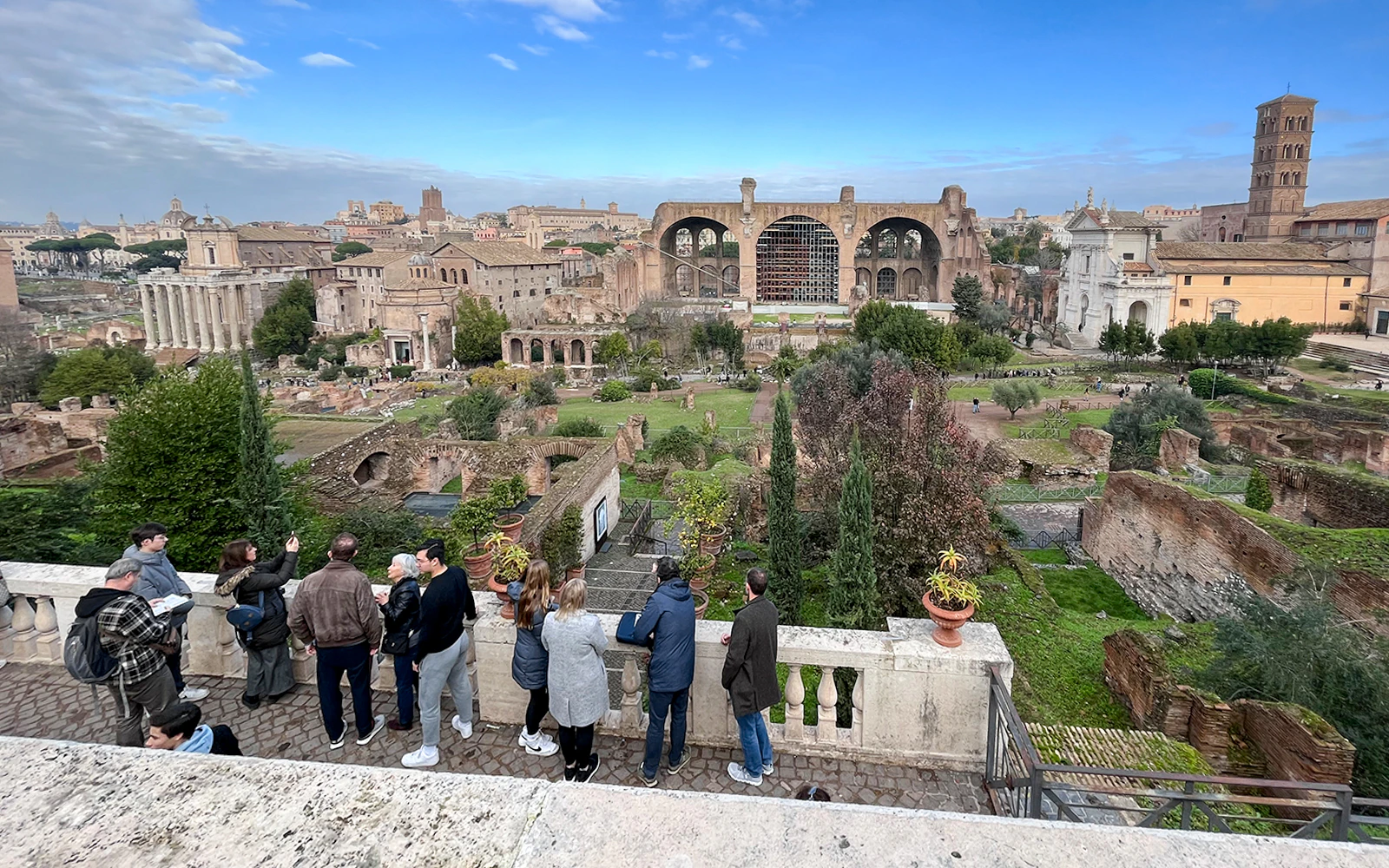
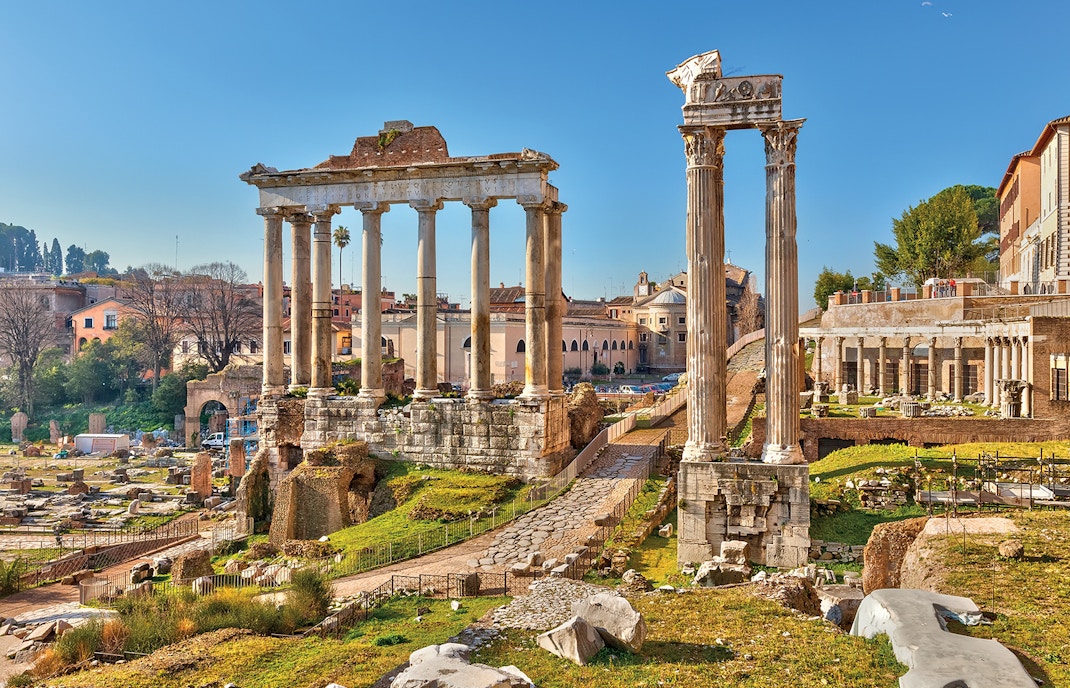
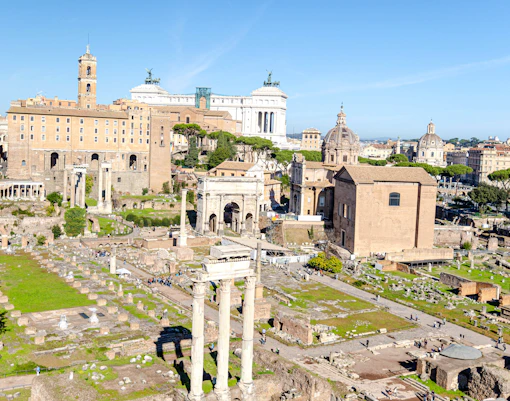
The Roman Forum was the civic, religious, and commercial center of ancient Rome for nearly a millennium — the Via Sacra runs through its core past the Temple of Saturn, the Arch of Septimius Severus, and the House of the Vestal Virgins. Palatine Hill above it holds the remains of Imperial palaces and gives a clear elevated view over the Forum below and the Colosseum beyond.
Best for: Ancient history fans, archaeology enthusiasts, photographers
Duration: 2–2.5 hours for both sites combined
Combine this with: The Colosseum, which shares the same combined ticket — enter from the Arch of Titus gate at the Forum's eastern end and walk westward through the site; the historical sequence runs from the Imperial period toward the Republic. The SUPER Sites Pass adds access to the Domus Augustana, Cryptoporticus, and Stadium of Domitian within the Palatine Hill complex, which standard tickets exclude.
Explore experiences:
Basilica di San Clemente
A 12th-century basilica built directly over a 4th-century early Christian church, itself constructed on the foundations of a 1st-century Roman apartment block and Mithraic temple — the three-level site gives a vertical cross-section through nearly 2,000 years of Roman urban history in a single building, with the lowest level containing a running underground stream from the original Roman drainage.
Best for: Archaeology enthusiasts, those wanting ancient Rome without the Colosseum crowds, history fans
Duration: 45–60 minutes
Combine this with: The Colosseum, a 10-minute walk west through the Celio district — San Clemente shows the layered underground reality of ancient Rome in a compressed space while the Colosseum shows the monumental surface; the two visits cover complementary aspects of the same period. Entry to the underground levels requires a separate ticket (approximately €10 [VERIFY]) on top of the free upper basilica.
Explore experiences:
Capuchin Crypt (Santa Maria della Concezione)
Six underground chapels beneath the church of Santa Maria della Concezione on Via Veneto contain the skeletal remains of approximately 3,700 Capuchin friars, arranged in decorative patterns on walls and ceilings — arches made of vertebrae, rosettes of pelvic bones, and complete robed skeletons standing in alcoves. The adjoining museum contextualizes the Franciscan tradition of meditating on mortality.
Best for: Those interested in religious history, unusual Rome attractions, baroque ossuary art
Duration: 30–45 minutes
Combine this with: The Roman Catacombs on the Appian Way — several tour products pair the Capuchin Crypt with Domitilla or St. Callixtus Catacombs in a single half-day excursion, connecting the baroque ossuary tradition to the earlier early Christian burial practices that preceded it. Via Veneto (2 minutes from the church) has café terrace seating for a post-visit stop.
Explore experiences:
Roman Catacombs (Appian Way)
The Appian Way south of Rome contains the largest network of early Christian underground burial sites outside the Vatican — the Catacombs of St. Callixtus, Domitilla, St. Sebastian, Priscilla, and St. Agnes span kilometers of corridors carved through volcanic tufa, holding the remains of early Christian communities from the 2nd to 5th centuries CE, including early popes and martyrs.
Best for: Early Christian history enthusiasts, those interested in Roman burial practices, travelers seeking sites outside the center
Duration: 1.5–2 hours including transfer time
Combine this with: The Capuchin Crypt — multiple combined tour products pair the Crypt with the Appian Way catacombs in a single half-day trip, tracing the full arc of Rome's underground burial tradition from the 2nd century CE to the 17th century. The Catacombs of Domitilla include one of the most complete surviving early Christian basilica spaces underground.
Explore experiences:
San Pietro in Vincoli (St. Peter in Chains)
A 5th-century basilica on the Esquiline Hill containing Michelangelo's seated marble statue of Moses (1513–1515), commissioned for the tomb of Pope Julius II and left incomplete when the project was scaled back. The statue sits in the lower right transept and is free to view; the church also holds the reliquary chains traditionally said to have bound St. Peter during his Roman imprisonment.
Best for: Art history fans, those looking for a free attraction, Michelangelo enthusiasts
Duration: 20–30 minutes
Combine this with: Piazza della Madonna dei Monti (8-minute walk downhill through Via dei Serpenti) — after seeing the Moses, the descent through Monti's main shopping streets is one of the neighborhood's most pleasant short walks. The church is on the Esquiline Hill and the steps down from Via Cavour take less than 3 minutes from the street below.