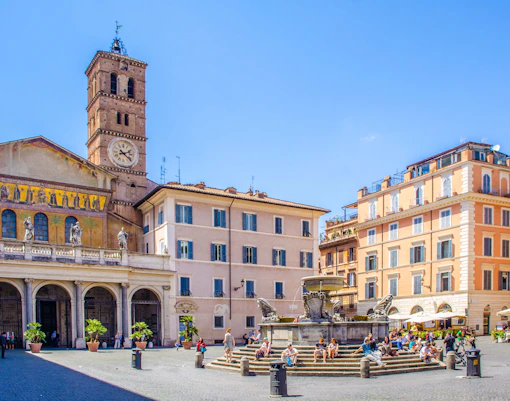
- Founded in the 4th century and rebuilt in the 12th, this basilica contains some of Rome's best-preserved Byzantine mosaic cycles covering the entire apse — the gold-ground mosaics of the Life of the Virgin are by Pietro Cavallini, dated to around 1291.
- Best for: Architecture fans, history enthusiasts, art lovers
- Duration: 30–45 minutes
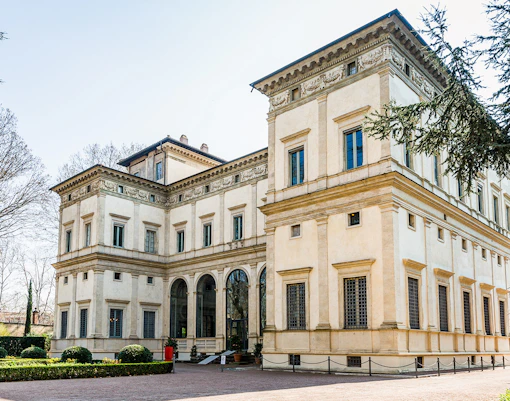
- Combine this with: Piazza di Santa Maria in Trastevere (directly outside the basilica entrance) — the square has a functioning fountain at its center and fills with locals in the late afternoon, making it a natural place to decompress after the church interior. Or pair with Villa Farnesina (10-minute walk northwest along Via della Lungara) for a full morning of Renaissance art.
- Explore experiences:
Neighborhood at a glance
- Why visit: Trastevere holds one of Rome's oldest medieval street grids, anchored by the Basilica di Santa Maria in Trastevere — a church with original 12th-century Byzantine mosaics still intact — surrounded by cobblestone alleys and family-run trattorias.
- Atmosphere: Medieval, residential, lively evenings, cobblestoned
- Top things to do: Explore Piazza di Santa Maria in Trastevere at dusk, tour Villa Farnesina's Renaissance frescoes by Raphael, walk up to Gianicolo Hill for panoramic Rome views, browse Porta Portese flea market on Sunday mornings
- Best for: Food lovers, couples, repeat Rome visitors, architecture fans
- Time needed: 3–4 hours
- Best time to visit: Late afternoon on weekdays — the piazza comes alive with locals after 6pm and the medieval streets are less crowded than at weekends
- Nearby: Campo de' Fiori, Jewish Ghetto, Piazza Navona, Pantheon, Aventine Hill, Piazza Farnese
Top things to do in Trastevere
Pro tip
Walk into Trastevere from Lungotevere dei Tebaldi rather than from Viale di Trastevere — the entry via Piazza in Piscinula leads you directly through the quieter medieval alley grid, avoiding the main commercial strip.
Why visit Trastevere
1/5
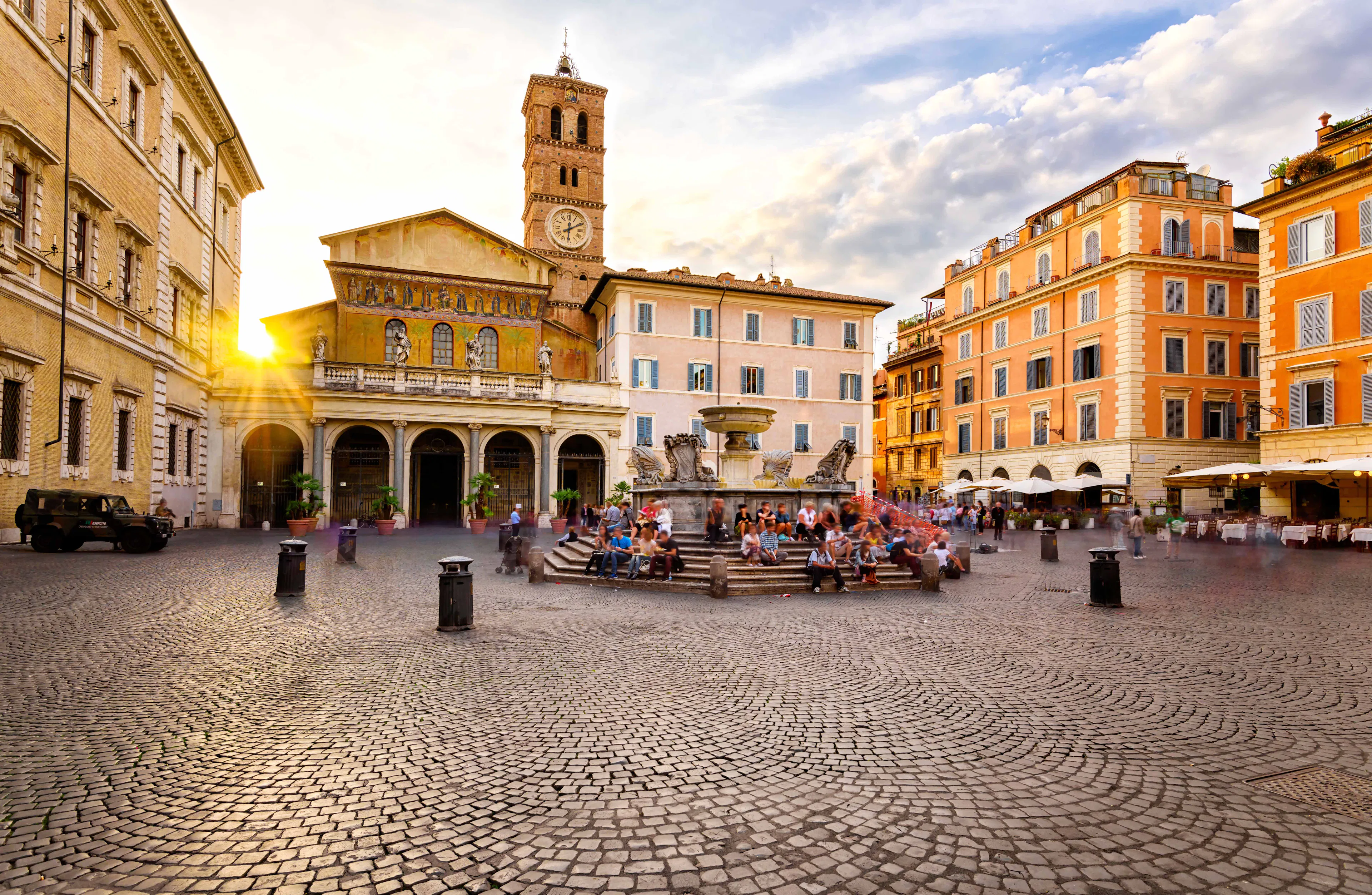
The Basilica di Santa Maria in Trastevere has stood in some form since the 3rd century
According to tradition, a spring of olive oil burst from the ground here during the reign of Augustus, and a Christian community was meeting on this site by the 3rd century. The current building dates from the 12th century and contains Byzantine mosaic cycles in the apse that have never been removed or substantially restored — the gold-ground figures of the Virgo Lactans and surrounding apostles remain as they were installed. Pietro Cavallini's Life of the Virgin mosaics, added in 1291 in the lower register, represent the most complete surviving work by one of Rome's key proto-Renaissance painters. Entry to the basilica is free.
The street grid has barely changed since the medieval period
Trastevere's network of narrow cobblestone streets follows boundaries and routes established in the medieval period, with many streets laid along earlier Roman insulae (apartment blocks). Via della Lungaretta, the main east-west artery, follows a Roman road alignment. Walking from Piazza di Santa Maria to the river along Via dei Vascellari or Via dei Salumi means passing buildings occupied since the 14th and 15th centuries — most are unmarked, requiring no queue and no ticket. The neighborhood is one of the few in Rome where the medieval street scale survives largely intact.
Villa Farnesina contains two Raphael fresco cycles in a single building
The Loggia di Psiche and the Sala di Galatea at Villa Farnesina were both painted by Raphael between 1511 and 1517 — work done while he was simultaneously painting the Vatican Stanze. The building is rarely crowded outside July and August, and the scale of the frescoes (ceiling-height panels, not cabinet-size works) can only be understood in person. Entry is approximately €6–€12 [VERIFY] and the rooms take 45 minutes to see properly.
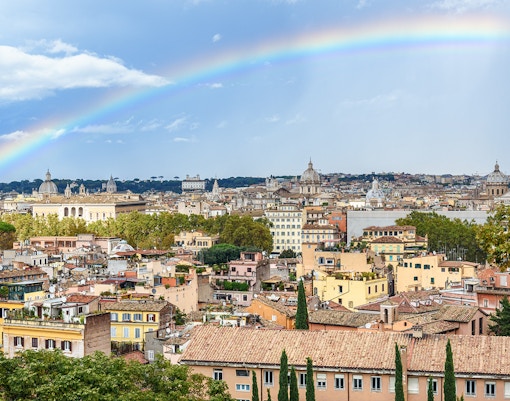
The Gianicolo offers Rome's most unobstructed city panorama and is free
The Janiculum Hill lies just outside the ancient city walls and gives an elevated view over the full arc of central Rome — from the Garibaldi Monument, you see clearly from the Tiber bends to the Alban Hills behind Frascati. The cannon fired at noon from the hill (a tradition since 1846) is audible across central Rome. The terrace is accessible on foot from Trastevere in 15 minutes via Via Garibaldi, and no ticket is required at any point on the route.
Trastevere is one of Rome's densest concentrations of working trattorias
The neighborhood retains a concentration of family-run trattorias — many occupying the same premises for 40–70 years — serving cacio e pepe, coda alla vaccinara (oxtail stew), and abbacchio (lamb). Via della Lungaretta, Vicolo del Cinque, and the streets around Piazza di Sant'Egidio have working restaurants on nearly every block. The proximity of this concentration to the food tour industry has made Trastevere one of Rome's primary food tour districts, with multiple guided eating walks operating daily.
Best ways to explore Trastevere
The most direct way to cover Trastevere is on foot, starting from Piazza di Santa Maria in Trastevere and radiating outward. A self-guided circuit of Via della Lungaretta, Via dei Vascellari, and up Via Garibaldi to the Gianicolo covers the main medieval streets in under 2 hours. Guided walking tours typically extend into adjacent areas — the Jewish Ghetto (15-minute walk via the bridges) or Campo de' Fiori (20 minutes on foot) — giving the route broader historical context.
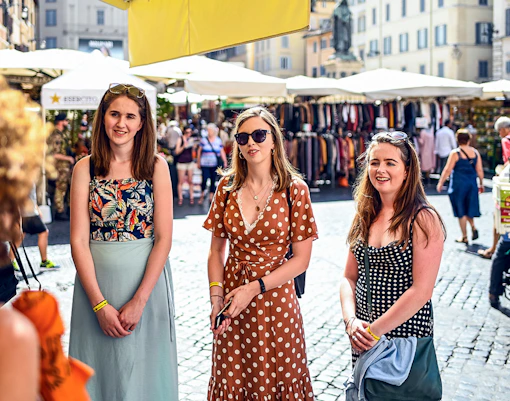
Trastevere is Rome's primary food tour neighborhood. Tours operate from the central piazza area and stop at a mix of bakeries, wine bars, and sit-down restaurants along Via della Lungaretta and surrounding streets. Evening and sunset tours are especially popular — the neighborhood's outdoor seating fills after 7pm. Options range from 2-hour street food walks to 3-hour tours that include a full sit-down Roman meal. Twilight tours, wine-tasting walks, and multi-neighborhood tours extending into the Jewish Ghetto and Campo de' Fiori are also available.
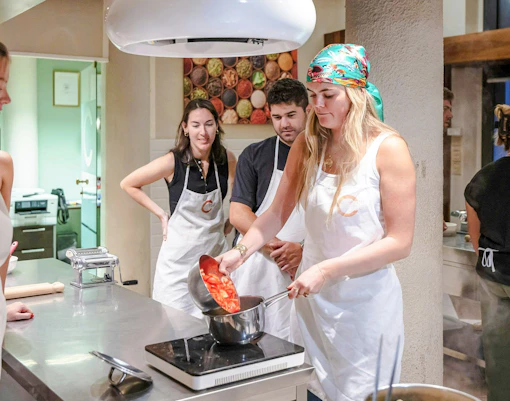
Pasta-making classes run from kitchen venues within the neighborhood, mostly concentrated within a few streets of the central piazza. Classes typically run 2.5–3 hours and cover fresh pasta technique with Roman sauces, ending with the dishes you've made. They pair naturally with a food tour — the tour shows you the food culture, the class teaches you to replicate it.
Trastevere's food culture is best explored on a guided tour — the neighborhood's working bakeries, wine bars, and family trattorias are spread through cobblestone alleys and easy to walk past without knowing what to look for. Choose from a twilight food tour through Piazza di Santa Maria in Trastevere, a wine tasting walk, a sunset food tour, a multi-neighborhood tour covering Campo de' Fiori and the Jewish Ghetto, or a 3-hour tour with a sit-down Roman meal.
Plan your visit
Trastevere occupies the west bank of the Tiber, roughly 1.5km southwest of the Pantheon. The fastest public transport approach is tram line 8 from Largo di Torre Argentina, which drops you at Piazza Sonnino (the eastern edge of the medieval quarter) in about 8 minutes. Tram 3 connects from Testaccio and the Colosseum area. From Termini, the most practical route is bus H or a direct taxi (approximately €12–€15 [VERIFY]).
Arriving on foot from the Jewish Ghetto via Ponte Garibaldi is more pleasant than using the tram, and the 12-minute walk crosses the Tiber with a view up and down the river. Stazione Roma Trastevere (served by regional FL lines) lies 10 minutes south of the medieval center — more useful for day trips than for reaching the main sights.
Walking distances from Piazza di Santa Maria in Trastevere:
- Campo de' Fiori: ~18 minutes
- Jewish Ghetto (Portico d'Ottavia): ~15 minutes
- Piazza Navona: ~22 minutes
- Aventine Hill: ~20 minutes
- Vatican Museums: ~30 minutes
The medieval center is walkable year-round, but the experience changes considerably by time of day. Weekday afternoons between September and November offer the best combination of light and manageable crowds.
- Early morning (8–10am): The streets are quiet and the Basilica di Santa Maria in Trastevere is largely empty — the best time to see the mosaics without groups. Porta Portese market (Sundays only) is also at its fullest and most navigable before 9am.
- Midday (11am–2pm): Peak tourist density on Via della Lungaretta and around Piazza di Santa Maria. Villa Farnesina is best visited at this hour on weekdays — it tends to be uncrowded when outdoor temperatures push tourists toward more central attractions.
- Late afternoon (4–6pm): The Gianicolo terrace catches the best light for photography between 4 and 5pm in autumn and winter. The neighborhood's outdoor café seating begins filling with locals from around 5pm.
- Evening (after 6pm): Trastevere's primary mode — restaurants, wine bars, and piazza life are most active between 7 and 10pm. The basilica exterior and the fountain at Piazza di Santa Maria are lit at night. Streets behind Piazza di Sant'Egidio can become loud on Friday and Saturday nights.
- The essentials: 2 hours — covers Piazza di Santa Maria in Trastevere, the basilica interior, and a walk along Via della Lungaretta toward the river.
- The ideal day: 5–6 hours — adds Villa Farnesina (45 min), a walk up Via Garibaldi to the Gianicolo terrace, lunch on Vicolo del Cinque, and time to explore the back alleys near Piazza di Sant'Egidio.
- With guided tours: 3–4 hours for a food tour covering the main eating streets plus several sit-down stops; a combined food tour and cooking class extends the visit to a full day.
- Basilica di Santa Maria in Trastevere: Ground floor and main nave are wheelchair accessible via the main entrance; there are no steps to the interior. The sacristy and crypt are not accessible. [VERIFY current ramp status at entrance]
- Villa Farnesina: Partially accessible — the main ground-floor loggia (Loggia di Psiche, Sala di Galatea) is step-free; the upper floor is not. [VERIFY lift availability]
- Piazza di Santa Maria in Trastevere: Cobblestone surface — manageable for most wheelchairs but uneven. The fountain and surrounding café seating are accessible.
- Streets (general): The medieval cobblestone (sampietrini) surfaces throughout the neighborhood are uneven and can be difficult for wheelchairs and pushchairs. Via della Lungaretta has less severe cobbling than the side streets.
- Gianicolo Hill: Accessible by car or Viale del Gianicolo — the road is step-free at the terrace viewpoint. The walking approach via Via Garibaldi involves a steep climb that is not step-free. A taxi to the terrace takes about 5 minutes from the piazza.
- Pickpockets (Piazza di Santa Maria in Trastevere, evenings): The piazza draws large crowds on weekend evenings and is a known pickpocket zone after 8pm. Keep bags zipped and front-facing when the square is busy.
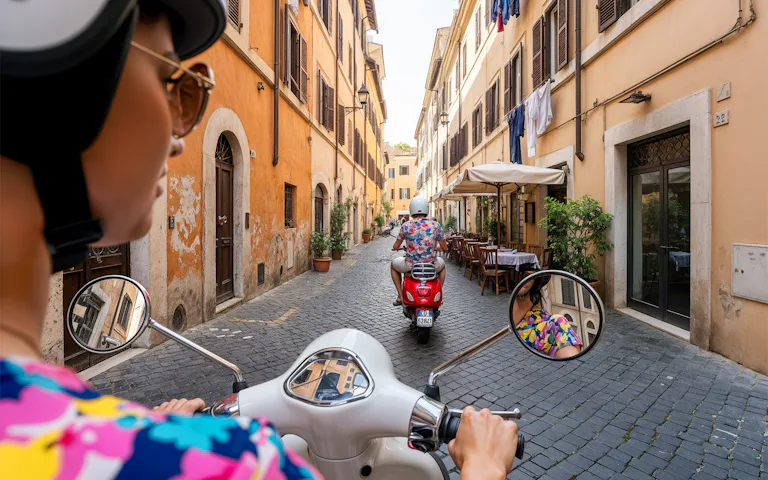
- Bag snatching (Via della Lungaretta, after dark): Moped-based bag snatching has been reported on this and adjacent streets [VERIFY current frequency]. Walk on the building side rather than the road side and avoid carrying bags on the shoulder facing the street.
- Scam vendors (near the basilica): Street vendors near the basilica entrance sell trinkets and may approach persistently — a firm "no" is sufficient; no obligation exists to engage.
- Traffic (Viale di Trastevere): The main commercial artery carries fast-moving trams and buses — use marked crossings only; pedestrian crossings are not always observed at speed.
The Roma Pass (48-hour or 72-hour) includes free or reduced entry to several Rome museums and unlimited public transport including the tram lines serving Trastevere — it covers Villa Farnesina and Palazzo Corsini [VERIFY included venues].
Free things to do in Trastevere
Suggested itinerary for visiting Trastevere
Trastevere is compact — the medieval center is walkable end-to-end in under 20 minutes, and all major sights are within a 500-meter radius of Piazza di Santa Maria in Trastevere. Most routes follow cobblestone streets with no significant hills until the Gianicolo climb.
Best for: Visitors with limited time passing through Rome who want to see the medieval neighborhood center and the basilica
Total time: 1–1.5 hours
- Stop 1: Piazza di Santa Maria in Trastevere (15–20 min)
Enter from Via della Lungaretta and take in the fountain, the medieval building facades around the square, and the mosaic-decorated basilica front. Arrive before 10am to avoid tour groups. The piazza has working cafés on its north and west sides. - Stop 2: Basilica di Santa Maria in Trastevere (30 min)
Go directly inside from the square — the apse mosaics are immediately visible on entry. Walk the full length of the nave and look at Cavallini's Life of the Virgin panels in the lower mosaic register. Entry is free; allow a full 30 minutes rather than a brief look. - Stop 3: Via della Lungaretta (15–20 min)
Walk east along the street toward Viale di Trastevere — this one street gives a compressed sense of the neighborhood's architectural character and the concentration of food and wine venues.
Best for: Visitors spending a morning or afternoon in Trastevere who want the main sights plus a proper lunch
Total time: 3–4 hours
- Stop 1: Piazza di Santa Maria in Trastevere (15 min)
Start at the square — it's the natural hub and the easiest orientation point. The café on the north side is a practical coffee stop before the basilica opens fully. - Stop 2: Basilica di Santa Maria in Trastevere (30–40 min)
The mosaics require time — walk the full nave slowly and pause at the Cavallini panels in the lower apse register. The sacristy contains additional works but may require a small donation [VERIFY]. - Stop 3: Villa Farnesina (45–60 min)
Walk north on Via della Lungara (10 minutes) to reach the Renaissance villa. The Loggia di Psiche ceiling frescoes and the Sala di Galatea are the main rooms — allow 45 minutes minimum. Open Tuesday–Sunday, typically 9am–2pm [VERIFY hours]. - Stop 4: Lunch on Vicolo del Cinque (45–60 min)
Return south from Villa Farnesina and cut through to Vicolo del Cinque — the street has the highest concentration of working trattorias in Trastevere. Ideal lunch window is 1–2:30pm before the afternoon lull. - Stop 5: Gianicolo Hill via Via Garibaldi (40–50 min)
After lunch, walk up Via Garibaldi (starts near Piazza di Sant'Egidio, 5 minutes from Vicolo del Cinque) — a 15-minute uphill walk leads to the Garibaldi Monument terrace with the full Rome panorama. The Acqua Paola fountain is 3 minutes further north.
Best for: Visitors with a full day who want to combine the medieval neighborhood, food culture, a guided tour, and the adjacent Campo de' Fiori area
Total time: 6–7 hours
- Stop 1: Porta Portese Market — Sunday only (1 hour)
Start at the flea market if visiting on Sunday — it runs dawn to 2pm. Enter from Porta Portese gate on Via Portuense, walk north through the stalls, and exit toward the medieval center via Via Lungaretta. - Stop 2: Basilica di Santa Maria in Trastevere (30–40 min)
From Piazza di Santa Maria, enter the basilica first thing — morning light enters from the nave windows and the mosaics are best seen before direct sunlight. Tour groups begin arriving from 10am. - Stop 3: Villa Farnesina (45–60 min)
Walk north on Via della Lungara to the villa — the collection is small enough to see fully in one hour without fatigue. Best visited Tuesday–Sunday before 2pm. - Stop 4: Gianicolo Hill (40–50 min)
Return to Trastevere, walk up Via Garibaldi, pause at the terrace and the Fontanone. Descend via Via Giacomo Medici back into the neighborhood center — the descent is faster and quieter than the ascent route. - Stop 5: Lunch on Via della Lungaretta or Vicolo del Cinque (1 hour)
The main food streets — several trattorias open from noon and the 1–2pm window avoids the tourist peak. Avoid tables directly facing the piazza for better pricing. - Stop 6: Pasta making class or food tour (2.5–3 hours)
Early afternoon pasta classes typically start at 3pm; evening food tours start from 5–6pm. The Rome Trastevere Pasta Making Class covers Roman pasta technique; a food tour covers 6–8 stops through the neighborhood's eating streets. The two can be combined across different days. - Stop 7: Campo de' Fiori and Jewish Ghetto (45 min)
End the day by crossing Ponte Sisto (5-minute walk from Piazza di Santa Maria) into Campo de' Fiori and the adjacent Jewish Ghetto — the Eternal Rome Food Tour covering Jewish Ghetto, Campo de' Fiori and Trastevere covers this exact route. Return to Trastevere via the same bridge for dinner.
Tips for visiting Trastevere
- Enter the neighborhood via Piazza in Piscinula rather than Viale di Trastevere — the main commercial artery is loud, bus-heavy, and bypasses the best medieval streets. Piazza in Piscinula is two minutes off the tram stop and leads directly into the quiet cobblestone alleys.
- Villa Farnesina is often skipped by visitors prioritizing the Vatican and Colosseum — go on a weekday morning and you may have the Raphael frescoes largely to yourself. Opening is typically Tuesday–Sunday, 9am to 2pm [VERIFY]; the queue rarely exceeds 10 minutes.
- The cannon on the Gianicolo fires at noon every day. If you want to watch it, be at the hilltop terrace by 11:50am; otherwise you'll hear it from anywhere in the neighborhood.
- Porta Portese market is Sunday-only and winds down significantly by 11:30am — go before 9am for the best selection of vintage goods, or after 11am if crowds bother you.
- Trastevere's restaurants are densest on Vicolo del Cinque and the alleys off it — avoid the tables directly facing Piazza di Santa Maria (tourist pricing) and walk one or two blocks away for similar food at substantially lower prices.
- Sampietrini cobblestones throughout the neighborhood are uneven and can be slippery after rain — flat-soled shoes work better than sandals with thin soles or heeled shoes on these streets.
- Public water fountains (nasoni) are scattered throughout the neighborhood — there's one on Piazza di Santa Maria and several along Via della Lungaretta. All provide safe drinking water; bring a refillable bottle.
- The neighborhood empties of day-trippers by about 6:30pm and fills with locals — sitting down for dinner between 7:30 and 8:30pm gives you the most accurate picture of how locals use the neighborhood.
Best photo spots in Trastevere
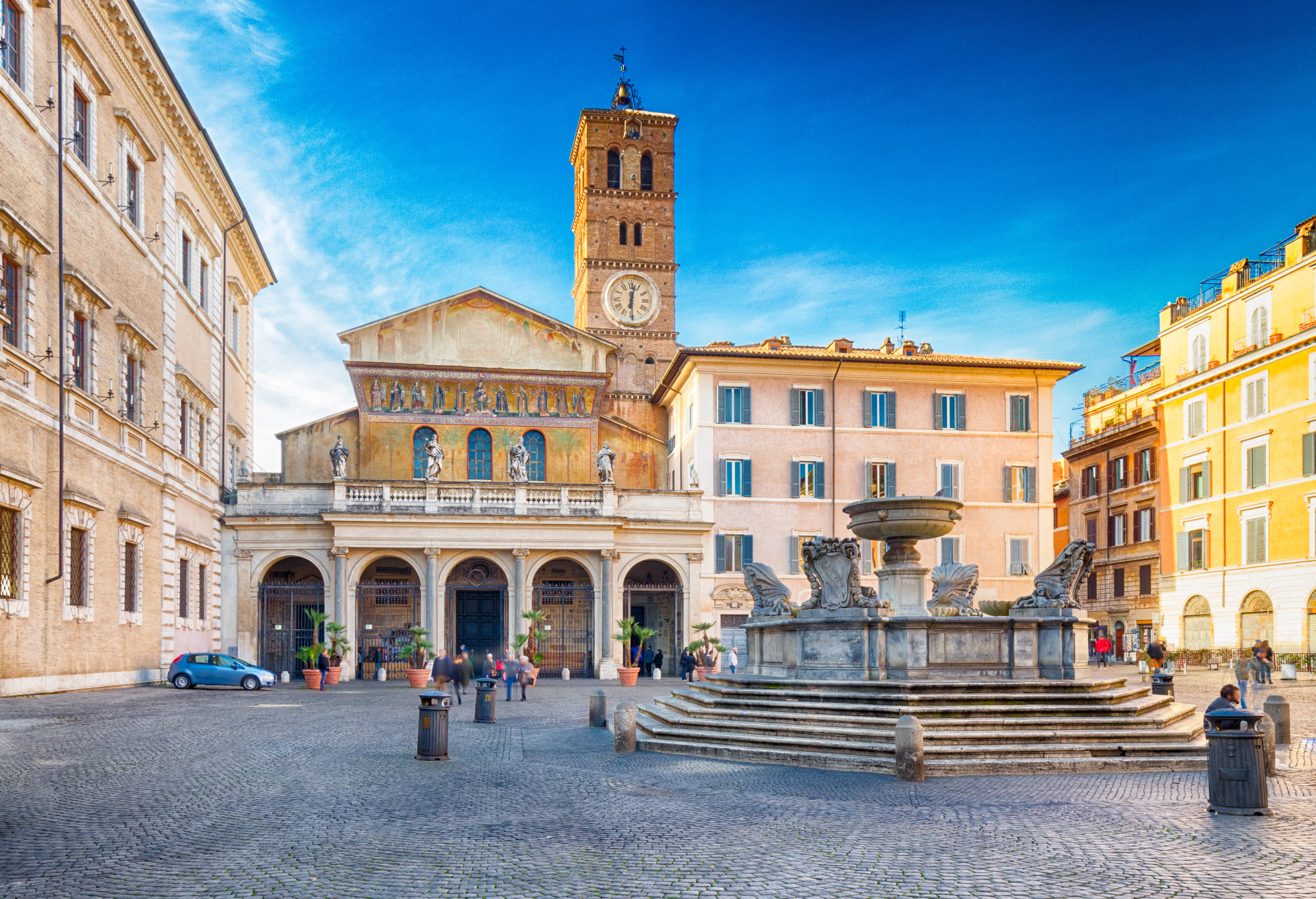
Piazza di Santa Maria in Trastevere — late afternoon, facing the basilica
Stand at the eastern edge of the piazza and face the basilica's 12th-century mosaic facade. The gold-ground mosaics catch direct light between 3 and 5pm in summer, making the facade luminous without the backlit silhouette that morning shooting produces. Include the octagonal fountain in the lower foreground for depth; the portico columns frame the upper composition.
Dining in Trastevere
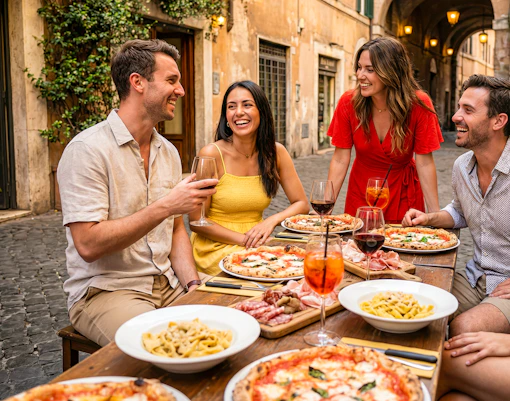
Trastevere's food culture is best understood with a guide who knows the working bakeries, wine bars, and trattorias by name — the neighborhood's best eating is off the main squares and requires knowing which alleys to turn into. Multiple food tour options run from the neighborhood daily: twilight and sunset tours, a wine tasting walk, a multi-neighborhood tour covering Campo de' Fiori and the Jewish Ghetto, and a longer version with a sit-down Roman meal.
Should you stay in Trastevere?
Short answer: Yes, if you want a central but residential Roman experience. Less convenient for quick access to the Vatican and northern Rome.
- The vibe: After 10pm, when the restaurant crowds thin, Trastevere becomes a loud bar neighborhood — Piazza di Santa Maria and Piazza di San Calisto are active until 1–2am on weekends, with significant noise from late-night bar traffic. It quiets noticeably on weekday evenings. Early mornings are very quiet by contrast.
- The logistics: Accommodation is split between small boutique hotels, B&B apartments, and short-term rentals in medieval buildings. Large chain hotels are absent from the medieval core. Room prices are mid-range — typically €90–€180 per night for a double [VERIFY current rates]. Most buildings are old and lifts are not universal — check before booking.
- Who it's for: Travelers who prioritize food and neighborhood atmosphere over proximity to the Vatican; couples; repeat Rome visitors. Not ideal for families with young children if late-night noise is a concern, or for visitors whose itinerary centers on the Vatican (30-minute walk or tram + metro connection).
- Top recommendation: Book accommodation on or immediately off Via della Lungara or Via dei Vascellari — these streets are in the medieval core but slightly removed from the noisiest bar piazzas. The northern section of the neighborhood (closer to Villa Farnesina) is quieter on late evenings.
Explore other neighbourhoods
FAQs for Trastevere
Yes, in general — the neighborhood has a high permanent resident population and significant foot traffic in the evenings. The areas around Piazza di Santa Maria and Piazza di San Calisto are busy with restaurant and bar customers until late. The main risk is petty theft (pickpocketing) in the crowded piazzas on weekend nights, not street crime. Streets south of Viale di Trastevere toward the station are quieter and less-lit at night — exercise normal urban caution after midnight.
For a self-guided visit: the basilica and piazza are free, Villa Farnesina entry is approximately €6–€12 [VERIFY current price], and lunch at a working trattoria runs €15–€25 per person including a carafe of house wine. A gelato or coffee adds €3–€5. Total for a half-day: roughly €30–€50 per person. Adding a food tour (€45–€80 per person [VERIFY]) or a pasta making class (€60–€90 [VERIFY]) takes the total to €80–€140 for a full day.
Yes — the popular evening and sunset tours fill up during peak season (April–October) and can sell out 3–7 days ahead [VERIFY current lead times]. The smaller, more specialized tours (wine tasting, Jewish Ghetto extension, sit-down meal tours) have limited group sizes and fill fastest. Book at least 48–72 hours in advance during summer.
Fully walkable within the neighborhood — the medieval center is under 1km across and all main sights are within a 10-minute walk of Piazza di Santa Maria. Getting there from other neighborhoods requires tram 8 (from Largo di Torre Argentina) or tram 3 (from Testaccio and the Colosseum), or a 15–25 minute walk across one of the Tiber bridges depending on your starting point.
The key differences are timing, route, and whether a sit-down meal is included. Twilight and sunset tours (starting 5:30–7pm) benefit from the neighborhood's evening energy. Tours extending into the Jewish Ghetto and Campo de' Fiori cover a wider area and suit first-time Rome visitors. The sit-down meal version includes a full trattoria meal rather than standing tastings — better if you want the tour to replace dinner. The Eternal Rome tour covering Jewish Ghetto, Campo de' Fiori and Trastevere is a full multi-neighborhood itinerary suited to first-time Rome visitors.
No — Porta Portese runs every Sunday only, from dawn (around 6:30am) until approximately 2pm. It is one of Rome's largest and most genuinely local markets, but there is nothing there on any other day of the week.
Trastevere-based food tours focus on traditional Roman trattoria cooking, wine bars, and street food (supplì, pizza al taglio, fresh pasta). Campo de' Fiori tours tend to focus on market culture and the historic bar scene. Testaccio is better for those specifically interested in cured meats, offal dishes (coda alla vaccinara, trippa), and Roman market culture. For a first visit, a Trastevere food tour gives the most representative overview of Roman cooking in an accessible neighborhood setting.
The neighborhood has been continuously inhabited since the Roman period — it was Regio XIV (Transtiberim) of ancient Rome. Medieval records show a substantial population through the early Christian period, and the existing street grid dates largely from the medieval rebuilding after the 6th–7th century decline. Many current residential buildings occupy plots and ground floors that have been in continuous use since the 14th–15th centuries.
Limited — the medieval center is a ZTL (Zona Traffico Limitato) zone, closed to non-resident vehicles during restricted hours (typically 10pm–6am, with expanded restrictions in summer [VERIFY current ZTL hours]). Parking near the medieval center requires garages outside the ZTL boundary. Arriving by tram or on foot is significantly more practical than driving.