Hours, directions, entrances and the best time to arrive
Plan your visit to Bioparco di Roma
Bioparco di Roma is Rome’s historic zoo, best known for pairing a Villa Borghese setting with a stronger-than-expected focus on conservation and naturalistic habitats. It covers 17 hectares, so the visit feels manageable but still involves more walking and route decisions than most families expect. The biggest difference between a rushed day and a good one is sequencing indoor houses and feeding times around the outdoor habitats. This guide covers timings, entrances, tickets, and the route that makes the day easier.
Quick overview: Bioparco di Roma at a glance
Bioparco works best when you treat it like a half-day park outing, not a quick city stop.
- When to visit: Daily from 9:30am, with seasonal closing times ranging from 5pm–7pm; weekday mornings right after opening are noticeably calmer than weekends from 11am–2pm, because school groups and local families tend to arrive later and cluster around feedings.
- Getting in: From €19 for standard entry at the gate, with online prices often starting around €14; guided group visits start around €20 per person, and booking ahead matters most for weekends, Easter, and spring holidays, while winter weekdays are usually easier to buy close to the day.
- How long to allow: 2–3 hours for most visitors, stretching to 4–5 hours if you add keeper talks, the Children’s Bioparco, lunch, and a slower family pace.
- What most people miss: The underwater viewing at the penguin area, the earlier closing rhythm of indoor houses, and the fact that the Reptile House is one of the park’s strongest exhibits.
- Is a guide worth it? Usually no for independent visitors because bilingual signage is solid, but it adds value for school groups and families who want the route and conservation context handled for them.
🎟️ Tickets for Bioparco di Roma sell out a few days in advance during Easter, spring weekends, and school holidays. Lock in your visit before the time you want is gone. See ticket options
Jump to what you need
🕒 Where and when to go
🗓️ How much time do you need?
Visit lengths, suggested routes and how to plan around your time
🎟️ Which ticket is right for you?
Compare all entry options, tours and special experiences
🗺️ Getting around
How the park is laid out and the route that makes most sense
🦒 Which animals to prioritise
Sumatran tigers, giraffes, penguins
♿ Facilities and accessibility
Restrooms, lockers, accessibility details and family services
Where and when to go
How do you get to Bioparco di Roma?
Bioparco sits inside Villa Borghese, just north of Piazza del Popolo and easy to reach from Flaminio and the tram stop outside the park edge.
Piazzale del Giardino Zoologico, 20, 00197 Rome, Italy
- Tram: Line 19 → Bioparco stop → 2-min walk → the most direct public transport drop-off.
- Metro: Flaminio (Line A) → 12–15 min walk → easiest through Villa Borghese rather than road-side traffic.
- Bus: Lines 3, 52, 53, and 926 → nearby Villa Borghese stops → shortest walk for central Rome stays.
- Taxi / rideshare: Piazzale del Giardino Zoologico → right by the main gate → easiest with strollers.
Which entrance should you use?
Bioparco uses one main entrance, but the real time-saver is separating pre-booked visitors from people still buying at the gate. Most delays come from on-the-day ticket purchases, not from security.
- Pre-booked tickets: For online and mobile-ticket holders. Expect 5–10 min waits on most weekdays and 10–20 min on weekends.
- On-the-day tickets: For visitors buying at the gate. Expect 15–30 min waits on busy weekends, Easter, and school breaks.
When is Bioparco di Roma open?
- Monday–Sunday: 9:30am opening year-round
- January–February: 9:30am–5pm
- March and October: 9:30am–6pm
- April–May and September: 9:30am–6:30pm
- June–August: 9:30am–7pm
- November–December: 9:30am–5pm
- December 25: Closed
- Last entry: 1 hour before closing
When is it busiest? Weekends, Easter, and school-holiday afternoons from 11am–2pm are the busiest, when family groups bunch around the savannah, penguins, and feeding sessions.
When should you actually go? Aim for opening time on a weekday, when outdoor animals are more active, shade is easier to find later, and the main habitats feel less bottlenecked.
How much time do you need?
| Visit type | Route | Duration | Walking distance | What you get |
|---|---|---|---|---|
Highlights only | Main gate → African Savannah → Sumatran tigers → penguins → Reptile House → exit | 1.5–2 hrs | ~1.5km | You cover the strongest headline habitats and the Reptile House, but you’ll skip slower areas like primates, birds, and the children’s zone. |
Balanced visit | Main gate → savannah → big cats → primates → penguins and seals → Reptile House → children’s area → exit | 2.5–3 hrs | ~2.5km | This is the best fit for most visitors because it adds the indoor exhibits and family stops without turning the visit into a stamina test. |
Full exploration | Main gate → full clockwise loop through savannah, big cats, primates, birds, aquatic habitats, Reptile House, children’s area, train/play break, and keeper talks → exit | 4+ hrs | ~4km | You see nearly everything and have time to wait for animal activity, but the payoff depends on pacing and paying attention to habitats that start closing before the park does. |
Which Bioparco di Roma ticket is best for you
| Ticket type | What's included | Best for | Price range |
|---|---|---|---|
Single-entry Ticket | One-day Bioparco entry + date-specific admission | A one-off visit where you want the lowest-commitment option and already know your date. | From €19 |
6-Month Open Ticket | Flexible Bioparco entry + use on any opening day within 6 months | A Rome stay with weather uncertainty or a visit you don’t want tied to one exact date. | From €20 |
Guided Group Tour | Park entry + 1.5-hour guided zoo tour | A school, family group, or educational visit where route-finding and conservation context matter more than flexibility. | From €20 |
Annual Membership | Unlimited entry for 1 year + member perks + shop discounts | Repeat visits make more sense than trying to fit everything into one long day. | From €50 |
Family Membership Packs | Unlimited family entry for 1 year + member perks | A Rome-based family planning several visits across the year instead of paying separate admission each time. | From €85 |
How do you get around Bioparco di Roma?
Getting around the park
Bioparco is best treated as a looped zoo with a few high-interest indoor stops, not a straight-line route. Most visitors can cover the headline animals in 2–3 hours, while a full visit with children or talks takes closer to half a day. The crowd-flow trap here is doubling back between the children’s zone and the savannah, which costs more time than people expect.
- African Savannah → giraffes, rhinos, elephants, and open-view habitats → budget 30–40 min.
- Big cats and Asian mammals → Sumatran tigers and other flagship species → budget 20–30 min.
- Primates and forest habitats → orangutans and ape enclosures under heavier tree cover → budget 20–30 min.
- Penguin and aquatic area → penguins, sea lions, and viewing windows → budget 20–25 min.
- Reptile House → snakes, lizards, crocodilians, and turtles in a climate-controlled building → budget 25–35 min.
- Children’s Bioparco → farm-style animal encounters and younger-kid stops → budget 20–30 min.
Suggested route: Start with the outdoor headline habitats while animals are most active, move indoors to the Reptile House when the day warms up, and leave the children’s area for later so you don’t lose your route too early.
Maps and navigation tools
- Map: Printed and digital zoo maps cover the main habitats and services → pick one up at the gate before you start.
- Signage: Bilingual species boards are good, but the route isn’t perfectly linear, so a map genuinely helps avoid backtracking.
- Trail maps: For a park this size, the zoo map matters more than phone navigation once you’re inside the exhibit loop.
💡 Pro tip: Don’t zigzag between family areas and major habitats — finish one side of the loop first, because the Reptile House and some indoor exhibits shut earlier than the main park gates.
Which animals and habitats should you prioritise?

1/6
Sumatran tiger enclosure
Species: Sumatran tiger
This is one of Bioparco’s most important conservation-focused habitats and one of the easiest to remember afterward. The lush planting makes the space feel bigger than many visitors expect, but it also means people often give up too quickly if the tiger isn’t at the glass right away. What most visitors miss is how much activity happens along the shaded back edge early and late in the day.
Where to find it: In the big-cat section, after the main savannah route.
African Savannah
Habitat type: Mixed large-mammal savannah
This is the broadest, most open-feeling part of the zoo, with giraffes, rhinos, and elephants delivering the classic Rome zoo photo stop. It’s worth slowing down here because the layered viewing points make it more than a quick look-over-the-rail habitat. Many visitors miss the better angles higher along the path, where you can see more than one species in frame.
Where to find it: One of the first major outdoor zones after entering from the main gate.
Reptile House
Exhibit type: Indoor reptile and amphibian gallery
The Reptile House is one of the strongest reasons to visit Bioparco at all, especially if the outdoor habitats feel quiet. It’s cooler, more focused, and better curated than many first-time visitors expect from a city zoo. What people rush past are the side terrariums and upper displays, where some of the rarer species sit away from the main central tanks.
Where to find it: In the indoor exhibit zone deeper into the park loop.
Cape penguin habitat
Species: African penguin
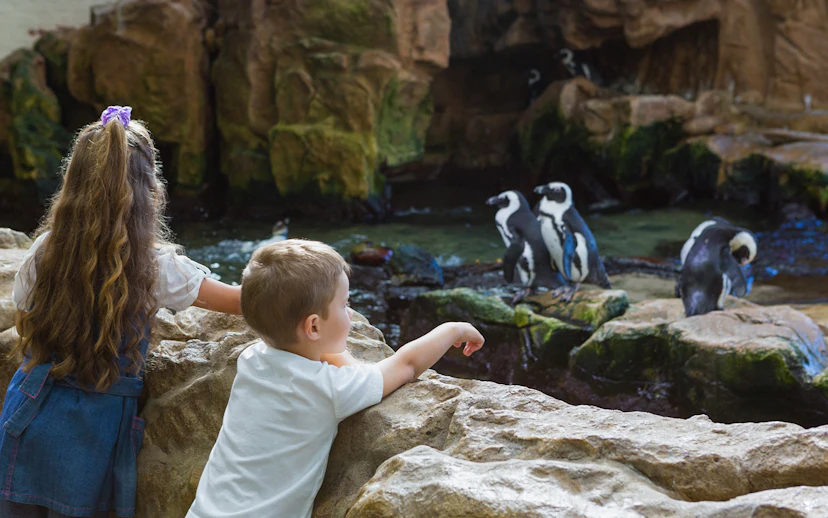
This is one of the most family-friendly stops in the park because the movement is immediate and the viewing is easy even for younger children. It’s also one of the few areas where waiting a few minutes genuinely improves the experience. Most visitors watch from the first barrier and miss the lower-angle or underwater views that make the colony feel much more dynamic.
Where to find it: In the aquatic section near the seal and sea lion habitats.
Orangutan and ape area
Species: Great apes
The primate area is quieter than the savannah, but it rewards patience more. These habitats are layered vertically, so the best moments often happen above eye level rather than right in front of the glass. Many visitors look once, assume the enclosure is empty, and move on without noticing movement in the trees, ropes, or shaded upper platforms.
Where to find it: In the central forested section between the larger outdoor habitats.
Children’s Bioparco
Exhibit type: Family activity and domestic-animal zone
This is the smartest stop if you’re visiting with younger children who need a reset after the main animal circuit. It’s less about rare species and more about keeping the day workable so the rest of the zoo still feels enjoyable. What adults often miss is that doing this too early can derail the route, because children then resist moving back into the main loop.
Where to find it: Toward the family-focused section of the park, closer to the play and train areas.
Facilities and accessibility
- 🎒 Bags: A small day bag is much easier than a bulky backpack, because you’ll carry it throughout the visit and some indoor houses feel tight with larger items.
- 🚻 Restrooms: Restrooms are available near the exit and main service areas, which makes it worth planning a stop before you loop too far into the park.
- 🍽️ Cafés: There are shaded on-site cafés and snack stops, which are useful for a mid-visit break but get noticeably busier around lunch.
- 🛍️ Gift shop: The main gift and souvenir area is near the exit, so it’s easiest to leave shopping until the end rather than carrying purchases all day.
- 🪑 Seating / rest areas: One of Bioparco’s strengths is shade, with benches, garden edges, and lawn-adjacent rest spots spread through the park.
- 🅿️ Parking: Roadside and nearby parking are more practical than expecting a large dedicated lot, so public transport is usually the less stressful option.
- ♿ Mobility: Accessibility is partial rather than seamless, because the park has hilly sections, some uneven or unpaved paths, and a few buildings that are harder to navigate with a wheelchair.
- 🧠 Cognitive and sensory needs: Weekday mornings are the easiest low-stimulation window, while the children’s zone, train area, and feeding times are usually the loudest parts of the day.
- 👨👩👧 Families and strollers: Strollers work in most of the park, but steeper paths and tighter indoor areas like the Reptile House make the route less pushchair-friendly end to end.
Bioparco is a good fit for children because the visit mixes big animals, movement, shade, and short-stop exhibits rather than one long, static route.
- 🕐 Time: 2–3 hours is realistic with young children, and the best priorities are the savannah, penguins, reptiles, and one family stop rather than every enclosure.
- 🏠 Facilities: The children’s area, cafés, shaded seating, and restrooms near service points make it easier to build in breaks without leaving the park.
- 💡 Engagement: Use keeper talks or feeding times as anchors, because children stay more focused when the route has 2–3 fixed moments to aim for.
- 🎒 Logistics: Bring snacks, sun protection, and a stroller for younger children, but pack light enough to manage indoor houses and slope changes.
- 📍 After your visit: The Villa Borghese lake area is an easy follow-up, especially if children still have energy for a short walk or boat ride.
Rules and restrictions
What you need to know before you go
- Entry is by dated ticket or valid flexible ticket, and reduced or free categories should carry the proof needed for verification at the entrance.
- Re-entry is best treated as unavailable for planning purposes, so assume one continuous visit rather than stepping out for lunch and coming back.
- Dress for a park day rather than a museum visit, because you’ll be outdoors for most of the route with some uneven paths and limited indoor shelter.
Not allowed
- 🚫 Open food near animal-viewing areas is a bad idea, because gulls and pigeons are quick to crowd around snacks and hand-held food.
- 🖐️ Climbing barriers or reaching into habitats isn’t allowed, and it matters here because many enclosures use open sightlines rather than obvious bars.
Photography
Photography is generally part of the visit, especially in the outdoor habitats and open-view sections. The main distinction is practical rather than dramatic: darker indoor spaces like the Reptile House are harder to shoot well, and flash is best avoided around enclosed animal displays. Tripods, long set-ups, and anything that blocks already narrow visitor routes will only slow you down.
Good to know
- Some headline exhibits and indoor houses start winding down before the park’s final closing time, so don’t leave reptiles, rhinos, elephants, or chimpanzees until the end.
- A late-afternoon visit can feel calmer, but it comes with the trade-off of less time for talks, indoor exhibits, and slower family stops.
Practical tips
- Book online if you can, because official advance fares can drop to around €14 instead of the €19 gate price, and the value difference is bigger than any time you’d save by showing up and deciding later.
- Arrive close to opening if animals are your priority, because Bioparco’s biggest outdoor habitats feel livelier in the cooler part of the day than they do at 1pm in summer.
- Don’t rush straight to the children’s area if you’re with younger kids — do the savannah, penguins, and one flagship indoor stop first, then use the family zone as a reward near the back half of the visit.
- Pack like you’re crossing a park, not entering a museum: a light bag, water, sunscreen, and a foldable layer matter more here than city-day accessories.
- Eat either before 12:30pm or after 2pm if you’re using the on-site cafés, because that lunch window overlaps with the busiest family stretch and slows the visit noticeably.
- Keep an eye on indoor exhibit timing, especially the Reptile House, because some of the most worthwhile stops become easy to miss if you leave them until the final hour.
- If you’re visiting in peak spring or summer, pair the zoo with the rest of Villa Borghese only after the main animal loop, not before, or you’ll arrive at Bioparco in its busiest and hottest window.
What else is worth visiting nearby?
Commonly paired: Villa Borghese Gardens
Villa Borghese Gardens
Distance: 0m — immediately outside the zoo
Why people combine them: They’re part of the same green setting, so it’s the easiest way to turn a zoo visit into a full half-day without extra transport.
Book / Learn more
Commonly paired: Galleria Borghese
Galleria Borghese
Distance: 1.5km — 18–20 min walk through the park
Why people combine them: The pairing works because both sit inside Villa Borghese, letting you split the day between a timed art visit and a looser outdoor attraction.
Book / Learn more
Also nearby
Pincian Terrace
Distance: 900m — 12-min walk
Worth knowing: It’s one of the easiest post-visit viewpoints in central Rome, especially if you want a short scenic stop before heading back toward Piazza del Popolo.
Borghese lake boats
Distance: 1km — 12–15 min walk
Worth knowing: This is a smart add-on with children, because it extends the park day without asking them to focus on another ticketed attraction.
Eat, shop and stay near Bioparco di Roma
- On-site: Bioparco’s cafés and snack bars cover the basics for a zoo day, with sandwiches, drinks, and quick family food at mid-range park prices, but they work better as a convenience break than a destination meal.
- Caffè delle Arti (12-min walk, Via Antonio Gramsci 73, Rome): Good for a calmer lunch near the museum district, especially if you want to leave the heaviest family crowds behind.
- Casina del Lago (15-min walk, Viale dell’Uccelliera 22, Rome): Worth it if you want a park-setting coffee or simple meal after the zoo rather than something rushed at the gate.
- Casina Valadier (18-min walk, Piazza Bucarest 00187, Rome): Best saved for a slower post-visit meal or drink if you’re continuing through Villa Borghese toward the Pincian side.
- Pro tip: If you want the easiest food timing, eat before entering or wait until after 2pm — the 12:30pm–2pm slot is when Bioparco’s on-site options feel most stretched.
- Bioparco gift shop: The easiest shopping stop for children’s souvenirs, plush animals, and end-of-visit purchases, right by the exit.
- Galleria Borghese bookshop: Better than the zoo shop if you want art books, design-led gifts, or something more Roman than animal-themed merchandise.
The Bioparco area works well if you want a greener, quieter base with Villa Borghese on your doorstep. It feels calmer than the historic center and suits families well, but it’s less convenient if your trip is built around walking to Rome’s headline monuments morning and night.
- Price point: This area generally skews mid-range to upscale, especially around Pincian, Parioli, and the Villa Borghese edges.
- Best for: Families, slower city breaks, and travelers who want park access and a less hectic neighborhood rhythm.
- Consider instead: Stay around Piazza del Popolo or the Spanish Steps for a better balance between Bioparco access and classic Rome sightseeing, or choose Monti / Termini if transport convenience matters more than neighborhood calm.
Frequently asked questions about visiting Bioparco di Roma
Most visits take 2–3 hours, though families with young children often stay 4–5 hours. The longer version usually includes lunch, the Children’s Bioparco, the train area, and waiting around for keeper talks or more active moments at the larger habitats.
Yes, it’s worth booking in advance for weekends, Easter, spring holidays, and warmer months. You’ll often get a better price online — sometimes from around €14 instead of the €19 gate rate — and you avoid spending your arrival time in the on-the-day purchase line.
Usually not in the way people expect. The main advantage comes from arriving with a pre-booked ticket, because waits are generally tied to buying at the gate rather than a major security bottleneck. On quieter weekdays, standard advance booking is enough for most visitors.
Arrive 10–15 minutes early for a smoother start. That gives you enough time to scan tickets, pick up a map, and get into the outdoor habitats while animals are still relatively active and before the late-morning family crowd fills the main loop.
Yes, a small backpack or day bag is the most practical choice for Bioparco. You’ll carry it throughout the visit, and the indoor houses and steeper sections are easier to handle with light gear than with bulky bags or too much extra family equipment.
Yes, photography is part of the visit in most areas. Outdoor habitats are the easiest places to shoot, while darker indoor spaces like the Reptile House are trickier and work better without flash. It’s also best to avoid anything bulky that blocks already narrow visitor routes.
Yes, and the park is set up well for groups, especially schools and educational visits. There’s also a guided group format of around 1.5 hours, which makes more sense than everyone self-navigating if you want commentary, a structured route, and fewer stop-start decisions.
Yes, it’s one of the more family-friendly attractions in Rome. The mix of large animals, shade, play-friendly pacing, and kid-focused stops means children don’t need to concentrate for long stretches, which makes it easier than many museum-heavy Rome itineraries.
Partly, but not effortlessly. The park has hilly sections, some uneven or unpaved paths, and a few tighter building layouts, so it’s better described as partially accessible than fully barrier-free. Visitors using a wheelchair should budget more time and keep expectations realistic.
Yes, there are on-site cafés and snack stops, and Villa Borghese has better sit-down options within a 10–20 minute walk. If you want convenience, eat inside the park; if you want a calmer meal, it’s usually better to wait until after the visit.
Yes, daily animal talks and feeding moments are one of the better parts of the visit. They aren’t evenly spread across the park, so checking the day’s timings when you arrive helps you plan your route around the penguins, big cats, or other headline habitats.
There isn’t a huge, stress-free dedicated parking setup that makes driving the obvious choice. Most visitors find tram, metro, bus, or taxi easier, especially because Bioparco sits inside Villa Borghese and the final approach on foot is straightforward from nearby transit stops.