

Rome Tickets
Castel St. Angelo

Sala Paolina tickets

Included with Castel St. Angelo tickets

Timings

RECOMMENDED DURATION

2 hours
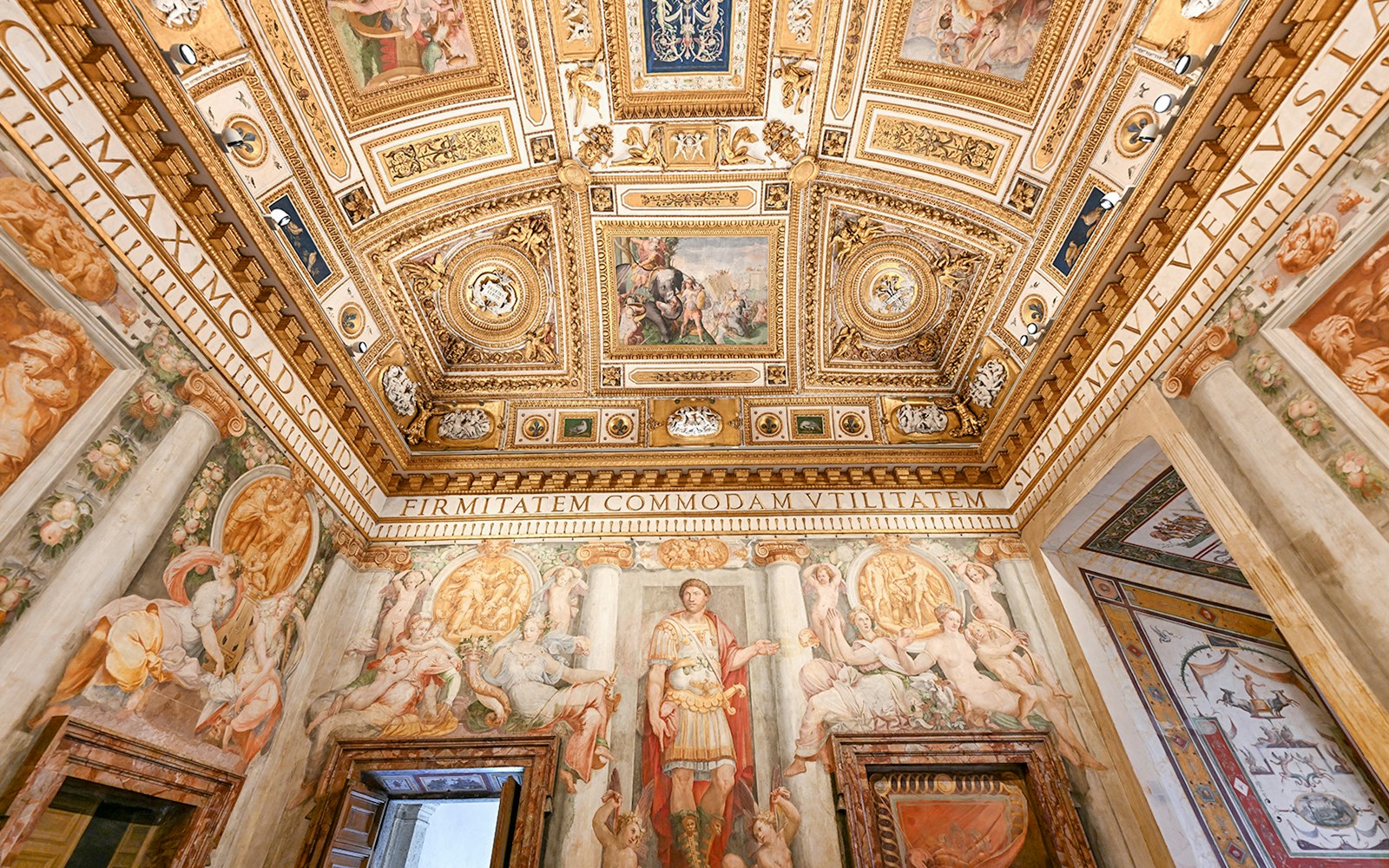
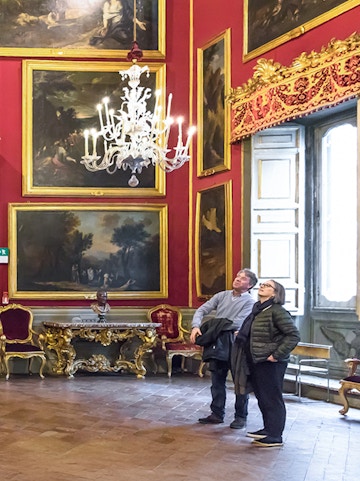
Sala Paolina inside Castel Sant’Angelo

Top things to do in Rome

Quick overview
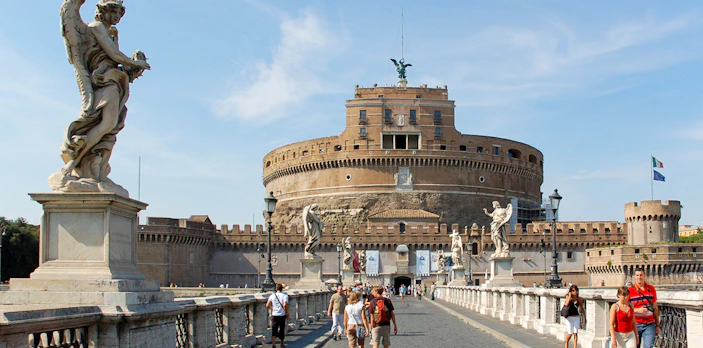
  • Access: Included in all Castel Sant’Angelo tickets
  • Separate ticket: Not required
  • When you’ll see it: Midway through the castle route, in the papal apartment level before the terrace
  • Visit duration: 10–15 minutes self-guided / 15–20 minutes with a guide
  • Best time: Weekday opening hour; the papal rooms are quieter before late-morning guided groups move upstairs
  • Restrictions: Tripods and large bags are not allowed in the castle; do not touch painted surfaces

How to access Sala Paolina?

Sala Paolina is included with all Castel Sant’Angelo tickets, and no separate ticket is needed; it is the castle’s richest Renaissance interior, created to turn a fortified refuge into a papal showpiece. You reach it partway through the main museum route, after the ancient ramps and lower levels, inside the upper papal apartments before the terrace. Choose a guided tour or an audio-supported visit if you want this room to register as more than a quick pass-through on the way up.

How to best experience Sala Paolina

Best time to visit
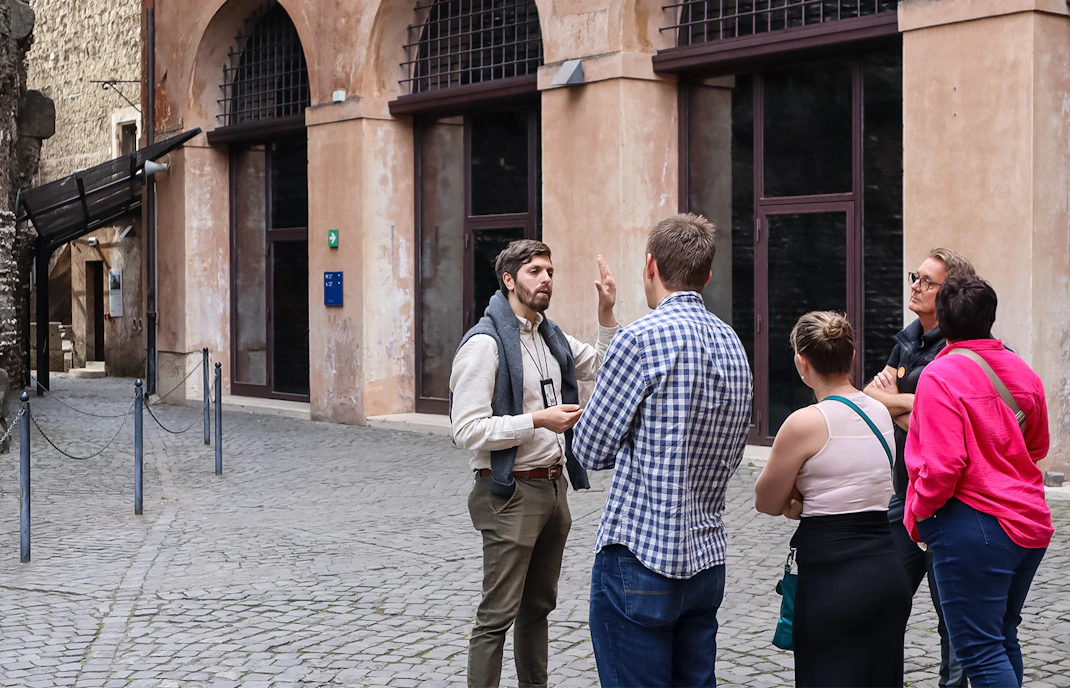
The first hour after opening on a weekday is the calmest moment to see the room. Light is even, the route is still flowing, and guided groups have not yet stacked up in the papal apartments. If you arrive closer to late morning, expect less space to step back and read the ceiling properly.

How long to spend

Plan 10–15 minutes if you’re moving independently, or 15–20 minutes with a guide. That is enough time to read the ceiling, scan the wall decoration, and notice the Farnese symbolism. If you treat it as a transition room on the way to the terrace, you’ll leave with the least interesting version of it.

Where it fits in your itinerary

You usually reach Sala Paolina after 45–60 minutes inside the castle, once the ancient funerary core gives way to the papal apartment level. That matters because most visitors arrive mentally set on the terrace. Slow down here, before the rooftop pull takes over, or the room becomes background.

Crowd patterns

The room itself rarely draws the heaviest crush in the monument; the pressure comes from guided groups flowing through the upper route, especially from about 11am to 1pm. At those times, people cluster in the center and then move on quickly. Earlier or later visits give you the breathing room needed to look up and compare the walls.

What to prioritize if time is short

If you only have a few minutes, stand near the center of the floor and read the room in this order: ceiling, Farnese coat of arms, then the decorative wall framing. That sequence makes the program legible fast. Skip lingering in circulation corridors, not in the room’s viewing center.

Common mistakes to avoid

Most visitors enter already thinking about the terrace and never reset their pace. Another common mistake is looking only at eye level; Sala Paolina makes its strongest argument above you, not straight ahead. Pause just inside the room, then move one step farther in so the ceiling and walls read together.

Best tickets to experience Sala Paolina

Ticket typeWhy choose it

Timed entry

Best if you want to pause in Sala Paolina at your own pace and still see the terrace later.

Guided tour

Best for decoding the room’s papal symbolism, decorative program, and place within the castle’s upper apartments.

Passetto di Borgo combo

Best if you want Sala Paolina within a fuller papal-power route linking refuge, ceremony, and escape.

Why it’s worth seeing

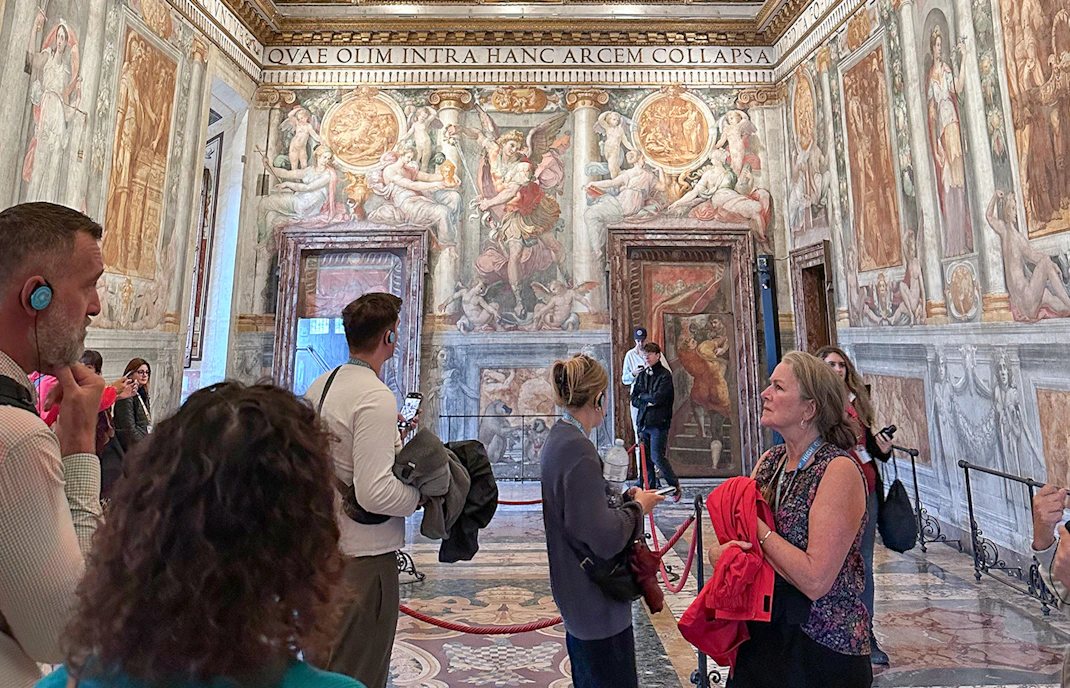
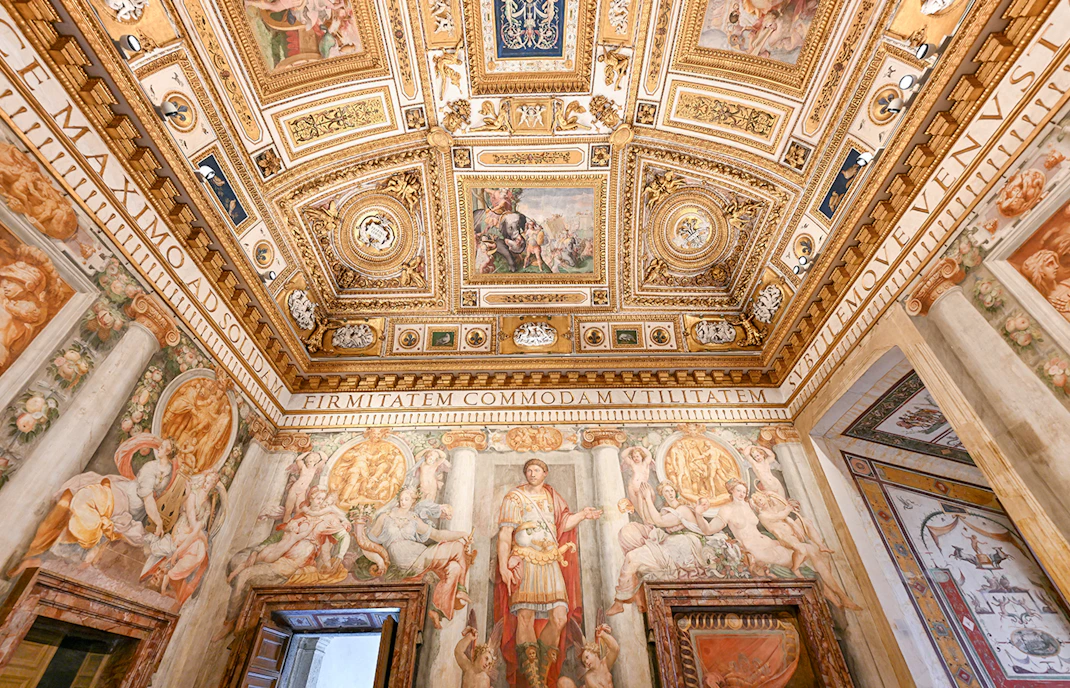
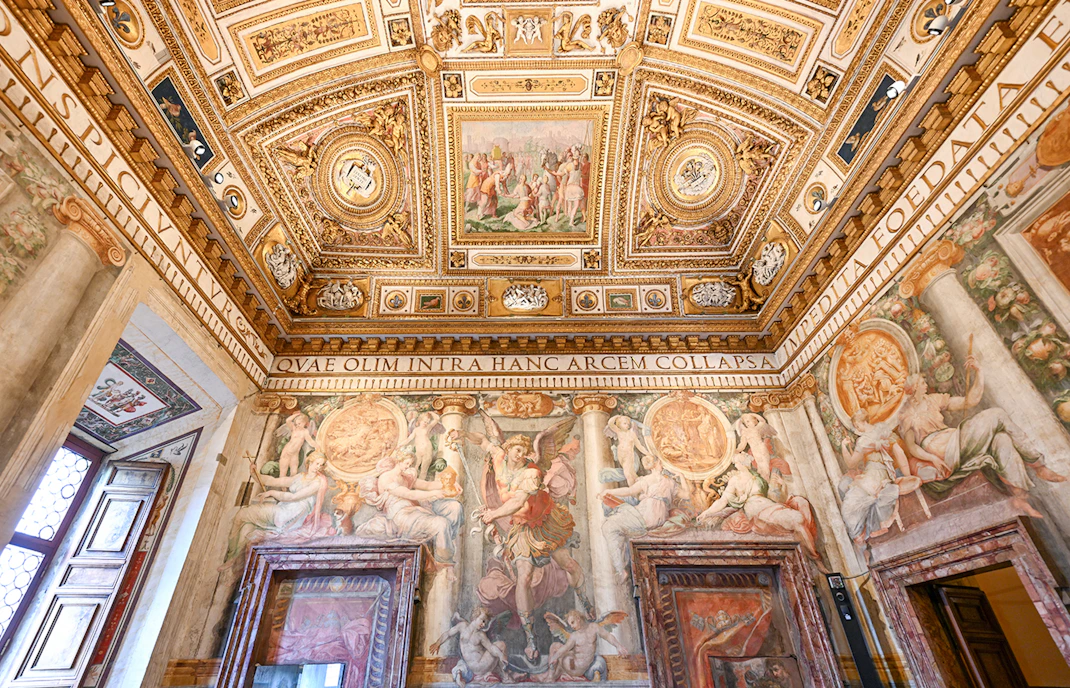
Sala Paolina is the clearest place inside Castel Sant’Angelo where the building stops feeling like a fortress and starts behaving like a papal court. Most visitors are so focused on reaching the terrace that they miss how deliberate this shift is. The room rewards a slower look: ceiling first, then heraldry, then the decorative framing that turns a defensive stronghold into a political stage.

The ceiling: find the Farnese arms

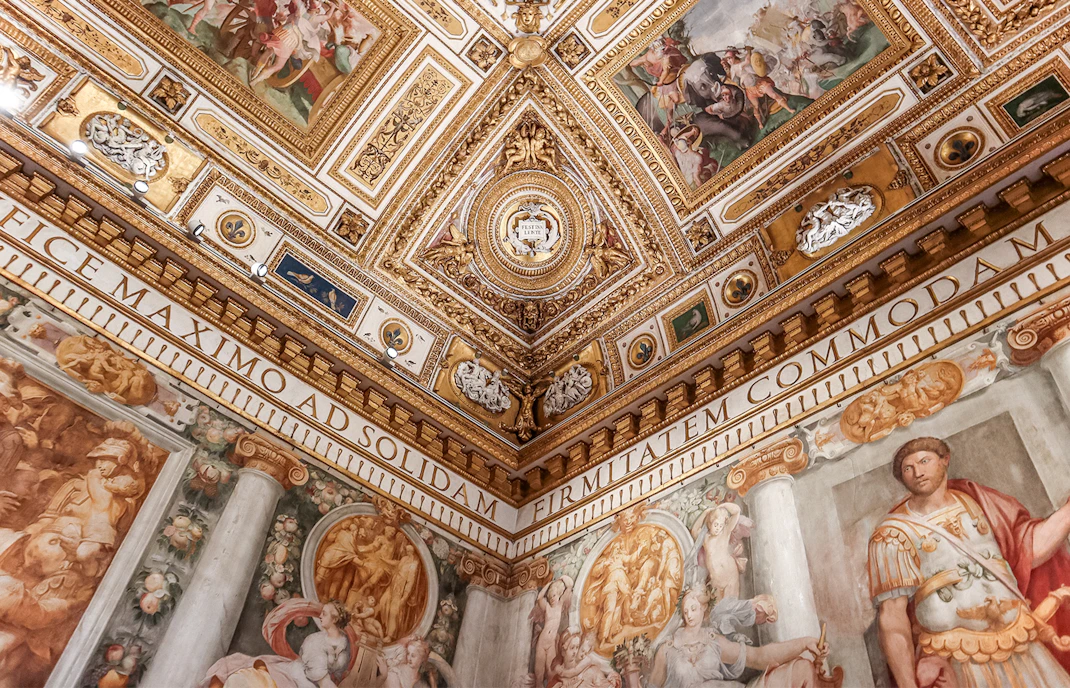
Stand near the middle of the room and look straight up before you do anything else. The central heraldry announces Pope Paul III’s presence, while the surrounding painted compartments and ornament turn the vault into a statement of authority rather than simple decoration.

The vault edges: follow the grotesques
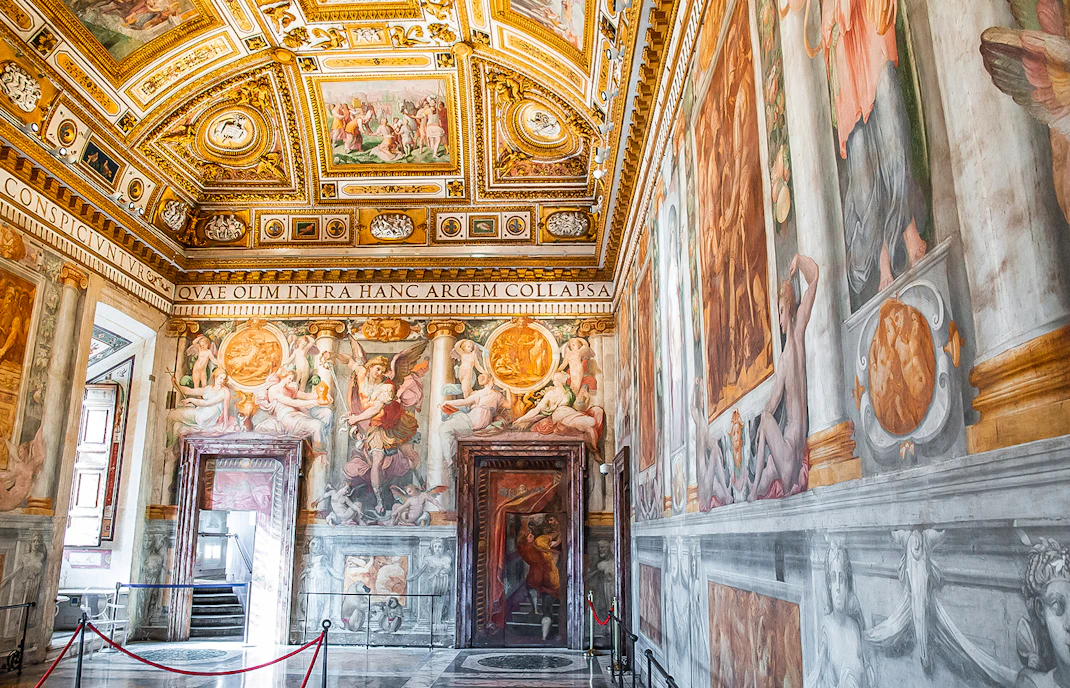
Trace the curved edges where floral scrolls, figures, and ornamental details run around the narrative fields. These are easiest to read from slightly off-center, not directly under the middle. They soften the room’s military shell and show how carefully the papal apartment was staged.

The walls: step back to read the framing

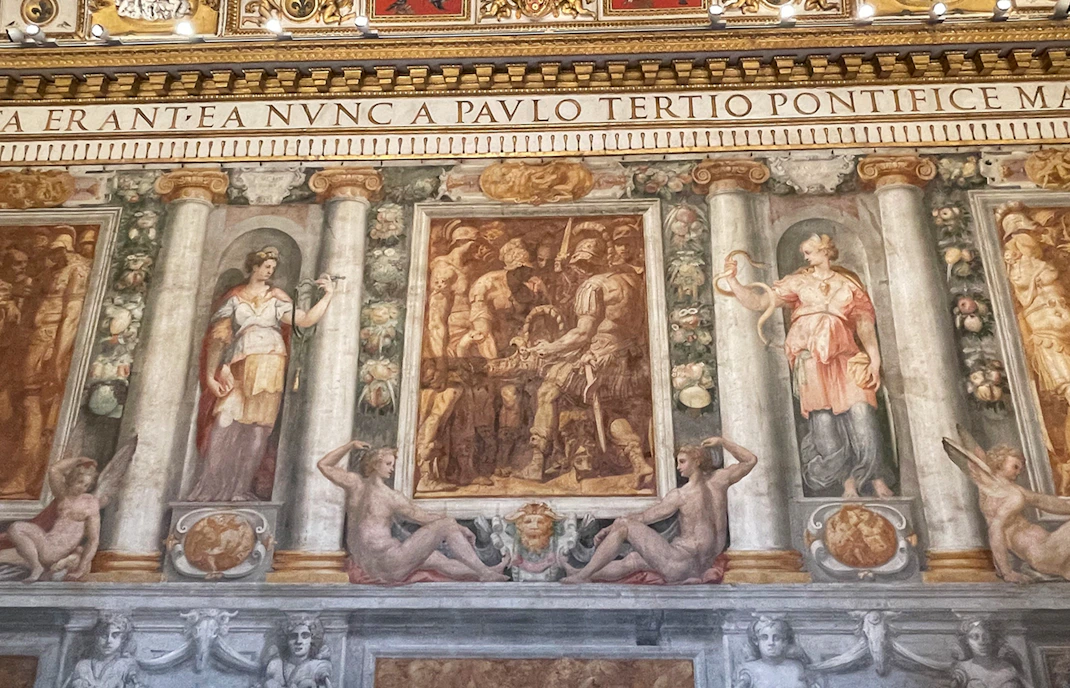
Near the doorway, pause long enough to see how the painted architecture organizes the room. The wall decoration is not background filler; it creates a ceremonial setting that makes the chamber feel more like a reception hall than a protected interior within a fortress.

Historical & cultural significance

What surprises most visitors is that Sala Paolina was created roughly 1,400 years after Hadrian’s mausoleum, when Pope Paul III reshaped part of the fortress into a ceremonial papal apartment. The room marks a clear shift from military refuge to courtly self-display inside Castel Sant’Angelo. Today it survives as one of the museum route’s most revealing interiors, preserving the moment the castle briefly functioned as a Renaissance residence.

👉 Explore the full history of Castel Sant’Angelo

Notable figures

Pope Paul III | Patron

Commissioned Sala Paolina and marked it with Farnese heraldry inside the castle’s papal apartments.

Perino del Vaga | Painter and designer

Led the decorative program that turned this fortress chamber into a polished Renaissance statement of papal image-making.

Luzio Luzi | Fresco painter

Helped execute parts of the room’s painted ornamental scheme during Paul III’s refurbishment campaign.

Know before you go

  • Open: Tuesday to Sunday, 9am–7:30pm
  • Last entry: 6:30pm
  • Closed: Mondays, December 25, and January 1
  • Free entry: First Sunday of each month, subject to heavier crowds
  • Note: Check the official museum website before visiting: Museo Nazionale di Castel Sant’Angelo
  • Address: Lungotevere Castello 50, 00193 Rome, Italy
  • Google Maps: Search ‘Castel Sant’Angelo’ for the main entrance across Ponte Sant’Angelo
  • Nearest metro: Lepanto or Ottaviano on Line A, each about a 15-minute walk
  • Nearest bus area: Piazza Pia and Ponte Vittorio Emanuele stops are the closest practical drop points
  • Route note: Sala Paolina is inside the upper papal apartments, so you cannot enter it directly without following the castle route
  • Wheelchair access: Partial; some areas of Castel Sant’Angelo remain difficult or inaccessible
  • Accessible route: Staff can direct you to an elevator-assisted route on arrival
  • Route limits: Upper stairs, sections of the historic ramp, and the terrace are not fully wheelchair accessible
  • Entry concession: Visitors with certified mobility restrictions, and one companion if needed, can request free entry at the monument
  • Audioguide option: Audio-guided entry is available with select Headout ticket options for visitors who prefer supported self-guided commentary
  • Security: All visitors must pass a mandatory security check at the entrance
  • Large bags: Large bags, suitcases, and bulky items are not allowed inside
  • Tripods: Tripods are not permitted in the monument
  • Food and drink: Not permitted inside the museum rooms
  • Conduct: Do not touch frescoes, painted surfaces, barriers, or displayed objects
  • Route type: Reaching Sala Paolina involves a historic route with ramps, stairs, and level changes
  • Standing time: Most visitors are on their feet for 60–90 minutes before or after this room
  • Difficulty: Moderate; manageable for most visitors, but not ideal if stairs are a problem
  • Alternative: Ask staff for the elevator-assisted route if you need to reduce stair use
  • Shortcut choice: You can prioritize Sala Paolina and skip the final terrace climb if energy is limited

Frequently asked questions about Sala Paolina in Castel Sant'Angelo

Yes. Entry to Sala Paolina is included with every valid Castel Sant’Angelo ticket. No separate ticket exists.

More reads