The origins of the Doria Pamphilj Gallery are tied to a remarkable union of Italian noble families. Through marriage, the Doria, Pamphilj, Landi, and Aldobrandini lineages combined their fortunes and art collections. This powerful blend created a legacy that would shape the gallery’s future, making it a treasure trove of family history and culture.
Discover Doria Pamphilj Gallery in Rome

An art gallery or an aristocratic palace?
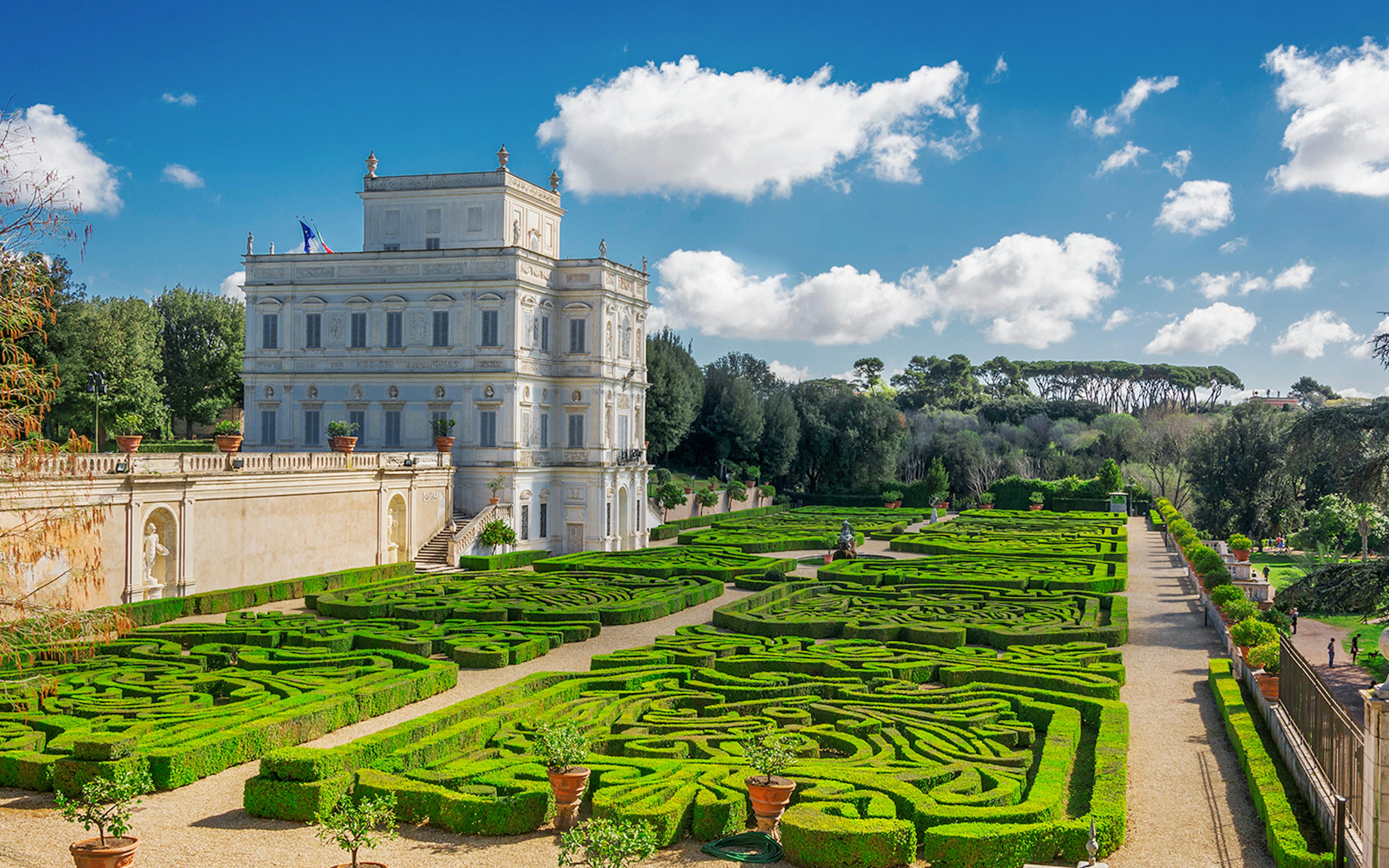
1/8
The Doria Pamphilj Gallery is part of the enormous Palazzo Doria Pamphilj. This vast estate has served as both a private residence and a treasure-filled gallery, reflecting the power and lifestyle of Italy’s most influential noble families.
Splendid palace interiors
Find lavish Baroque and Rococo interiors: gilded ceilings, chandeliers, grand staircases, and ornate salons. Every corner is filled with antique furnishings, marble statues, and masterpieces by artists like Caravaggio, Titian, and Raphael.
The private chapel
The palace’s private chapel is a serene, sacred space, complete with elaborate frescoes and religious relics. It even houses the mummified remains of the family’s saint, blending spiritual devotion with the family’s rich heritage and traditions.
The Hall of Mirrors
The Hall of Mirrors dazzles with its sparkling chandeliers, gilded stucco, and mirrored walls. Inspired by Versailles, this grand gallery was designed for celebrations, reflecting light and luxury throughout the palace’s most glamorous events.
The Velázquez Cabinet
This intimate room is dedicated to Diego Velázquez’s famed Portrait of Pope Innocent X. The painting, considered the gallery’s masterpiece, hangs beside Gian Lorenzo Bernini’s marble bust of the same pope.
The Aldobrandini Hall
This elegant space showcases treasures from the Aldobrandini family, who merged with the Pamphilj line through marriage. It blends Roman antiquities with Renaissance masterpieces and features a striking double portrait whose subjects remain a mystery.
Exquisite frescoes
Throughout the palace, ceilings and walls are adorned with exquisite frescoes by artists like Aureliano Milani and Crescenzio Onofri. These frescoes add vibrant color, mythological themes, and a sense of grandeur, enriching the gallery’s opulent interiors.
Apartments and family portraits
The private apartments are lined with generations of family portraits, each telling a story of power, marriage, and legacy. These rooms, still partly lived in today, offer a glimpse into the personal world of the Doria Pamphilj dynasty.
The story behind Doria Pamphilj Gallery
Noble lineages: The families behind the gallery
Papal power and the Pamphilj legacy
The gallery’s story took a dramatic turn when Giovanni Battista Pamphilj became Pope Innocent X in 1644. His papacy brought immense wealth and prestige to the Pamphilj family. He used his influence to amass art and commission grand works, many of which still grace the gallery’s walls. The pope’s legacy is felt throughout the palace, including his striking portrait by Diego Velázquez.
From private palace to artistic marvel
The palace that houses the gallery began as a private residence in the mid-15th century. Over centuries, it expanded with each generation, reflecting the growing influence and taste of its owners. Lavish renovations and artistic commissions transformed the palace into a living museum, filled with masterpieces by Caravaggio, Titian, and Raphael, all displayed in ornately decorated halls.
Opening doors: A gallery for all
For centuries, the Doria Pamphilj collection was a closely guarded family secret. In the early 20th century, Prince Giovanni Andrea Doria Pamphilj opened the doors to the public, sharing the family’s artistic treasures with the world. Today, the gallery remains privately owned, but you can wander its gilded halls and experience five centuries of art, history, and noble grandeur.
Who owns the Doria Pamphilj Gallery?
The Doria Pamphilj Gallery is still owned by the Doria Pamphilj family, making it one of the largest privately-owned palaces in Rome. The estate and its remarkable art collection are managed by the descendants of Princess Orietta Pogson Doria Pamphilj, notably her adopted children, Jonathan and Gesine.
Both Jonathan and Gesine continue to live in the palazzo and oversee the preservation and public sharing of its artistic treasures, ensuring the gallery remains a living piece of Rome’s noble history
Brief history of the Doria Pamphilj Gallery
- 15th century: The palace was originally built and belonged to the Della Rovere family.
- 1601: Ownership transferred to the Aldobrandini family.
- 1647: Olimpia Aldobrandini married Camillo Pamphilj, bringing the palace into the Pamphilj family.
- 1651: Giambattista Pamphilj, later Pope Innocent X, officially established the art gallery within the palace.
- 1760: The Doria Pamphilj branch inherited the palace after the Roman Pamphilj line ended. The collection was arranged based on an 18th-century manuscript detailing its layout.
- 1767: Renovations were carried out for Andrea IV Doria Pamphilj Landi’s marriage, including frescoes by Baroque artists.
- 2000-present: The gallery remains privately owned by the Doria Pamphilj family, showcasing centuries of art and history.
Inside the Doria Pamphilj Gallery
Design
The Doria Pamphilj Gallery’s design is a blend of aristocratic grandeur and artistic display, shaped by centuries of family taste.
Rococo Style
The interiors feature Rococo elegance, with ornate plasterwork, gilded wood, and painted ceilings throughout the gallery and palace.
Exhibition meets residence
The gallery was designed to function both as an exhibition space for masterpieces and as a private residence for the family.
Artistic immersion
Paintings cover the walls from floor to ceiling, following an 18th-century tradition that creates an immersive, almost overwhelming, art experience.
Layout
The gallery’s layout follows the original 18th-century arrangement, guiding you through a sequence of opulent rooms and corridors.
Sequence of rooms
You move through a series of grand halls, intimate cabinets, and lavish apartments, each dedicated to different artists or family collections.
Artistic harmony
Rooms are carefully arranged to showcase paintings alongside sculptures and antique furnishings, creating a balanced visual experience.
Family apartments
The private apartments, still partly in use, are decorated in varied styles and open onto the gallery, blending public and private spaces.
Architecture
The palace’s architecture is a testament to evolving tastes and family ambitions, with contributions from leading architects over centuries.
Historic foundations
The original core dates back to the mid-15th century, expanded by Cardinal Fazio Santoro and later the Aldobrandini and Pamphilj families.
Façades and courtyards
The striking façade on Via del Corso, designed by Gabriele Valvassori (1731–1734), features imaginative Borromini-style window frames and leads to a beautiful quadrangular courtyard.
Architectural evolution
Over 500 years, new wings, staircases, and elevations were added, resulting in a palace that is both a family home and a living museum.
Must-see artworks in the Doria Pamphilj Gallery
Portrait of Pope Innocent X
Year: 1650
Diego Velázquez's masterpiece captures Pope Innocent X with striking realism. The portrait, celebrated for its intense gaze and vivid depiction of the pontiff's personality, is found in the First Arm of the gallery. Its unflinching honesty even led the Pope to deem it "too true".
Penitent Mary Magdalene
Year: 1594–95
Caravaggio's early work depicts Mary Magdalene in a moment of profound repentance. Shown with discarded jewels that symbolize her renunciation of earthly vanities, this piece highlights Caravaggio's mastery of light and shadow to convey deep emotion. You can admire it in the Second Arm.
Rest on the Flight into Egypt
Year: 1597
Another work by Caravaggio, this idyllic painting portrays the Holy Family resting during their flight to Egypt. An angel serenades them with a violin. The artwork blends religious themes with a touch of humanity. You can admire it alongside the Penitent Mary Magdalene in the Second Arm.
Double Portrait of Andrea Navagero and Agostino Beazzano
Year: 1516
Raphael's elegant double portrait features two Venetian scholars. It exemplifies Renaissance ideals of intellect and companionship. The Third Arm's Aldobrandini Hall houses this particular piece. Its composition and subtle details make it a standout work.
Salome with the Head of John the Baptist
Year: 1607
Titian's portrayal of Salome with the head of John the Baptist is a compelling work. It displays Titian’s mastery of color and dramatic storytelling. The Third Arm's Aldobrandini Hall houses this particularly notable piece of artwork from the Gallery.
Earthly Paradise with Original Sin
Year: 1612
Created by Jan Brueghel the Elder, this oil-on-copper masterpiece depicts a lush, vibrant paradise filled with animals and Adam and Eve. The intricate details and vivid colors showcase Brueghel’s mastery of landscape and allegorical storytelling.
Landscape with the Flight into Egypt
Year: 1604
Painted by Annibale Carracci, this serene landscape portrays the Holy Family’s journey with a harmonious blend of nature and religious themes. The soft lighting and balanced composition make it a quintessential Baroque work.
The Annunciation
Year: 1445–1450
Filippo Lippi’s tempera painting captures the angel Gabriel announcing to Mary with delicate figures and vibrant colors, reflecting the refined elegance of early Renaissance art.
Portrait of Olimpia Maidalchini Pamphilj
Year: 17th century
Alessandro Algardi’s marble bust immortalizes Olimpia Maidalchini, Pope Innocent X’s sister-in-law. Known for her political influence, the sculpture exudes strength and elegance through its lifelike details.
Venus, Mars, and Cupid
Year: 1550-1560
Paris Bordone’s oil painting depicts a mythological scene of Venus and Mars with Cupid. The rich colors and sensual details highlight the artist’s Venetian style and mastery of storytelling.
Mystic Marriage of St Catherine with the Young Baptist and Other Saints
Year: 16th century
Domenico Beccafumi’s oil-on-wood painting portrays St. Catherine’s mystical marriage in a celestial ambiance, blending religious devotion with Renaissance artistry through soft tones and dynamic composition.
Deposition from the Cross
Year: 1540
Giorgio Vasari's large altarpiece depicts Christ's removal from the cross with intense emotion. The painting blends Mannerist influences and Michelangelo-inspired elements, showcasing Vasari's evolving style. Its dark background and compact composition reflect late Renaissance trends in Tuscan art.
A Battle in the Bay of Naples
Year: 1558–1562
Pieter Bruegel the Elder's vivid naval battle scene is a rare gem in Rome. This oil painting likely showcases the artist's keen eye for detail, capturing the chaos and energy of maritime warfare with his characteristic style of intricate figures and panoramic landscapes.
Hercules at the Crossroads
Year: 1605
Painted by Annibale Carracci, this canvas piece explores the mythological tale of Hercules choosing between Virtue and Vice. The work's allegorical theme and masterful composition reflect the artist's academic style and influence on Baroque art. The piece is housed in the Gallery, allowing viewers to study its intricate details and dynamic figures closely.
St. Jerome and the Angel
Year: 1620s
Jusepe de Ribera's dramatic depiction of Saint Jerome shows the saint with an angel during his penance. De Ribera vividly portrays Jerome's aging body and intense spirituality through stark lighting and realistic detail. The work is part of the gallery's collection of Baroque masterpieces.
Famous artists at the Doria Pamphilj Gallery
Caravaggio
A pioneer of Baroque art, Caravaggio revolutionized painting with his dramatic use of chiaroscuro and raw emotional realism, influencing countless artists across Europe.
Titian
Venetian Renaissance master Titian is celebrated for his bold use of color and dynamic compositions that blend mythological and religious themes with elegance.
Raphael
Known for his harmonious compositions and refined technique, Raphael epitomizes Renaissance ideals, capturing beauty and intellect in his portraits and religious works.
Bernini
Renowned sculptor Gian Lorenzo Bernini brought lifelike detail and theatricality to Baroque sculpture, creating works that exude grandeur and emotional depth.
Claude Lorrain
French painter Claude Lorrain is famed for his poetic landscapes, blending classical themes with luminous atmospheres that evoke serenity and timeless beauty.
Guercino
Baroque artist Guercino excelled in dramatic storytelling through expressive figures, dynamic compositions, and rich use of color in both religious and mythological works.
Giorgio Vasari
A Renaissance polymath, Vasari was not only a painter but also an architect and historian, best known for documenting the lives of great artists in The Lives.
Velázquez
Spanish Golden Age painter Diego Velázquez mastered portraiture with unparalleled realism, capturing psychological depth and individuality in works like Portrait of Pope Innocent X.
About Palazzo Doria Pamphilj
The Doria Pamphilj Palace, located on Via del Corso in Rome, is a stunning example of Baroque architecture and rich history. Originally built in the 15th century, it was expanded and renovated by the Doria and Pamphilj families over the centuries.
The palace houses the Doria Pamphilj Gallery, showcasing an impressive collection of art. Explore beautifully decorated rooms while experiencing the opulence of aristocratic life in Rome.
Frequently asked questions about the Doria Pamphilj Gallery
The Doria Pamphilj Gallery boasts one of the largest private art collections in Europe, featuring over 650 masterpieces by renowned artists such as Caravaggio, Raphael, Titian, and Velázquez. The collection has been preserved intact for centuries, showcasing a rich variety of styles and themes.
The collection at the Doria Pamphilj Gallery is not frequently updated, as it remains largely intact since its formation. The focus is on preserving the existing artworks rather than acquiring new pieces, maintaining its historical integrity.
While you can see a significant portion of the collection, not all artworks are on display at once due to space limitations. The gallery showcases selected pieces in a way that highlights their historical context and artistic significance.
Among the hidden gems are lesser-known works by artists like Domenico Beccafumi and Jacopo Bassano. You should also pay attention to smaller sculptures and decorative arts that add depth to the overall collection.
The gallery occasionally hosts temporary exhibitions and cultural events that focus on specific themes or artists. However, currently there are no exhibitions or events happening at the gallery.
Currently, the Doria Pamphilj Gallery does not offer extensive interactive or immersive experiences. However, audio guides are available to enhance visitor understanding of the artworks and their historical significance.


