Hours, directions, entrances and the best time to arrive
Visiting Barberini & GNAM galleries in Rome
Barberini & GNAM galleries combine two very different museum visits in Rome: a Baroque palace filled with old masters and a large modern art museum by Villa Borghese. The experience is rewarding, but it works best if you treat it as a half-day art route rather than a quick museum stop. The non-obvious part is the transfer between sites — timing that move well makes the day feel smooth instead of fragmented. This guide covers the route, openings, tickets, and what to prioritize.
Quick overview: Barberini & GNAM galleries at a glance
If you want to see both without art fatigue, plan the day around the transfer, not just the paintings.
- When to visit: Tuesday–Sunday, with Palazzo Barberini open 10am–6pm and GNAM 9am–7pm. Tuesday or Wednesday mornings are noticeably calmer than first Sundays and holiday weekends, because free-entry crowds and group visits can change the atmosphere more than usual here.
- Getting in: From €32 for standard entry if you buy one Palazzo Barberini + Galleria Corsini ticket (€15) and one GNAM ticket (€17). Priority-entry reseller tickets and guided visits cost more, but advance booking is only really useful on free Sundays, busy spring weekends, or during major temporary exhibitions.
- How long to allow: 3–4 hours suits most visitors. It pushes toward the longer end if you add Galleria Corsini, use an audioguide, or linger in GNAM’s modern rooms.
- What most people miss: Barberini’s Borromini staircase and Holbein’s portrait of Henry VIII are easy to rush past, and GNAM’s Futurist rooms reward more time than many visitors give them.
- Is a guide worth it? Yes, if you want help connecting the jump from Baroque Rome to modern Italian art; otherwise, a good audioguide at Barberini and a focused self-guided route at GNAM work well for less.
Jump to what you need
🕒 Where and when to go
🗓️ How much time do you need?
Visit lengths, suggested routes and how to plan around your time
🎟️ Which ticket is right for you?
Compare all entry options, tours and special experiences
🗺️ Getting around
How the galleries are laid out and the route that makes most sense
🖼️ What to see
La Fornarina, Judith Beheading Holofernes, and The Three Ages of Woman
♿ Facilities and accessibility
Restrooms, lockers, accessibility details and family services
Where and when to go
How do you get to Barberini & GNAM galleries?
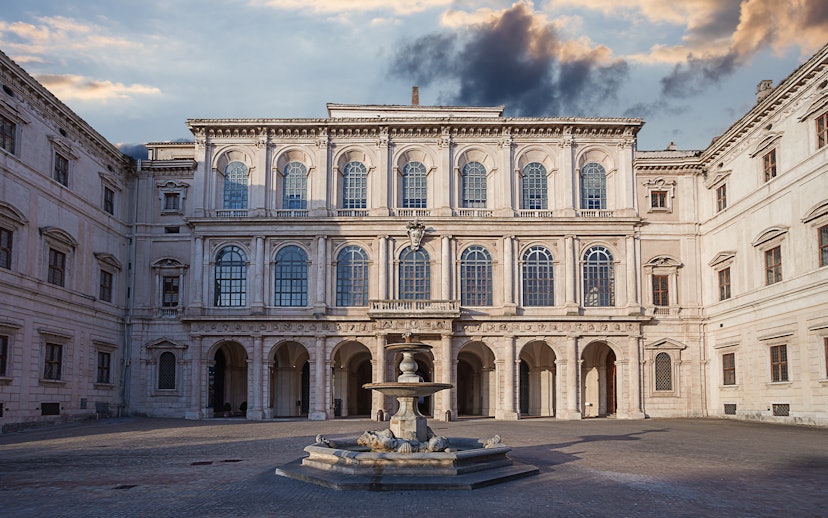
The two museums sit in central Rome — Palazzo Barberini by Piazza Barberini and GNAM at the edge of Villa Borghese — about 3km (1.9 miles) apart, so most visitors start at Barberini and transfer north later.
Palazzo Barberini: Via delle Quattro Fontane, 13, 00184 Rome, Italy
GNAM: Viale delle Belle Arti, 131, 00197 Rome, Italy
→ Open Palazzo Barberini in Google Maps
→ Open GNAM in Google Maps
- Metro: Barberini station (Line A) → 2-minute walk → best for starting at Palazzo Barberini right at opening.
- Bus: Line 61 from the Barberini area → Museo Arte Moderna/San Paolo del Brasile stop → easiest public route between the two museums.
- Taxi / rideshare: Barberini to GNAM → about 10 minutes in normal traffic → the simplest transfer if you’re short on time.
- Walk: Barberini to GNAM → about 30 minutes → scenic if you cut through Via Veneto and Villa Borghese.
Which entrance should you use?
The setup is simple: both museums use one main public entrance, and the most common mistake is overthinking ticket lanes when there usually isn’t much of a queue outside major exhibits or free-entry days.
- Palazzo Barberini main entrance: Located at Via delle Quattro Fontane, 13. Best for all visitors. Expect 0–10 minutes wait on normal weekdays.
- GNAM main entrance: Located at Viale delle Belle Arti, 131. Best for all visitors. Expect 0–10 minutes wait, with longer checks on free Sundays.
When are Barberini & GNAM galleries open?
- Palazzo Barberini, Tuesday–Sunday: 10am–6pm
- GNAM, Tuesday–Sunday: 9am–7pm
- Both museums: Closed Mondays
- Palazzo Barberini last entry: Around 5pm
- GNAM last entry: Around 6:15pm
- Holiday closure: Both close on December 25 and January 1
When is it busiest? First Sundays, spring weekends, and any period with a headline exhibition at Barberini feel busiest, with louder rooms and more guided groups.
When should you actually go? Start at Palazzo Barberini at opening, then move to GNAM after lunch — Barberini is quietest early, and GNAM’s later closing time gives you more breathing room.
How much time do you need?
| Visit type | Route | Duration | Walking distance | What you get |
|---|---|---|---|---|
Highlights only | Palazzo Barberini ceiling fresco → La Fornarina → Caravaggio room → taxi/bus to GNAM → Klimt → Canova → exit | 2–2.5 hours | ~3km | You see the headline works at both museums, but you’ll skip quieter rooms, most of GNAM’s deeper modern collection, and any stop at Corsini. |
Balanced visit | Palazzo Barberini grand salon → major old masters → Borromini staircase → transfer → GNAM 19th-century rooms → Futurism → contemporary rooms | 3.5–4 hours | ~4km | This is the sweet spot for most visitors: enough time for the famous pieces and the rooms that give each museum its personality without turning the day into a marathon. |
Full exploration | Palazzo Barberini full route → optional Galleria Corsini add-on → transfer → GNAM permanent collection + temporary exhibits → sculpture garden/café | 5+ hours | ~5km | This gives you the richest art-history arc, but it’s a long museum day and only works if you genuinely want more than the big-name works. |
Which Barberini & GNAM galleries ticket is best for you
| Ticket type | What's included | Best for | Price range |
|---|---|---|---|
Palazzo Barberini + Galleria Corsini ticket | Entry to Palazzo Barberini + entry to Galleria Corsini within 20 days | A visit centered on old masters where you want flexibility to see Barberini now and save Corsini for another day | From €15 |
GNAM entry ticket | Entry to GNAM permanent collection + regular temporary exhibitions | A separate modern-art visit where you want the freedom to move at your own pace and linger in the rooms that interest you most | From €17 |
Roma Pass 48 hours | 1 museum entry included + public transport for 48 hours | A short Rome stay where you’re also visiting other covered museums and want your transport bundled into the same decision | From €32 |
Roma Pass 72 hours | 2 museum entries included + public transport for 72 hours | A museum-heavy Rome itinerary where you want Barberini and GNAM to sit inside a broader multi-day sightseeing plan | From €52 |
How do you get around Barberini & GNAM galleries?
Museum layout and suggested route
Barberini & GNAM are not one continuous museum — they work best as two linked visits, with a short transfer between them and a clear sense of what each one does best. Barberini is easier to read as a palace route, while GNAM is broader and more chronological, so it helps to arrive with a shortlist.
- Palazzo Barberini ground floor: Courtyard, monumental staircases, and the grand salon with Pietro da Cortona’s ceiling → budget 30–40 minutes.
- Palazzo Barberini upper galleries: Raphael, Caravaggio, Holbein, and major Baroque paintings → budget 45–60 minutes.
- GNAM 19th-century rooms: Canova, Symbolism, and Klimt → budget 35–45 minutes.
- GNAM modern and contemporary rooms: Futurism, postwar Italian art, Fontana, and later works → budget 45–60 minutes.
Suggested route: Start at Barberini for the palace experience and old masters while your attention is freshest, then move to GNAM for the broader modern collection; most visitors do the reverse only to find the transfer awkward and Barberini’s best rooms squeezed late in the day.
Maps and navigation tools
- Map: Printed museum maps and desk information are the most useful option here → they help you separate the two visits before arrival.
- Signage: Barberini is fairly intuitive once you’re inside, but GNAM’s scale makes a map genuinely useful if you only have time for highlights.
- Audio guide / app: Barberini’s audioguide adds real value for the major works; GNAM is easier with a self-made shortlist unless a current app guide is available on arrival.
💡 Pro tip: Download or screenshot both museum locations before you start — the biggest navigation mistake is not getting lost inside the galleries, but wasting time deciding how to transfer between them once you leave Barberini.
Get the Barberini & GNAM galleries map / audio guide
Where are the masterpieces inside Barberini & GNAM galleries?

1/6
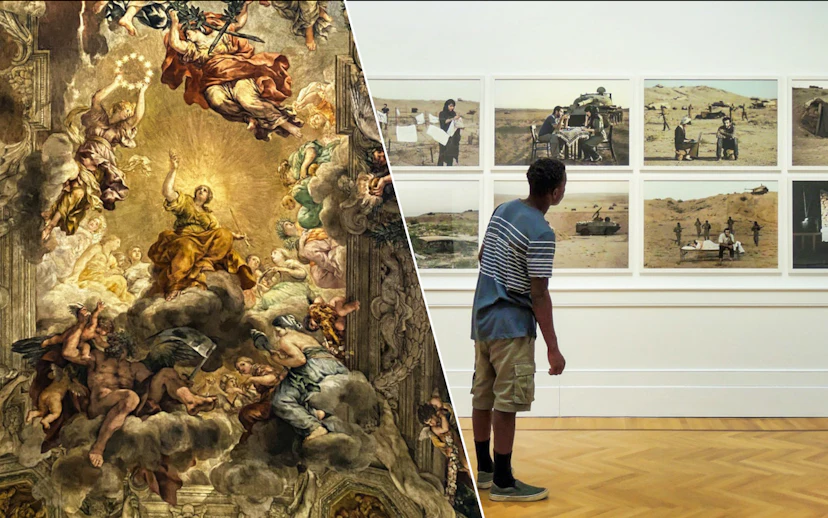
Pietro da Cortona’s ‘The Triumph of Divine Providence’
Attribute — Artist: Pietro da Cortona
This ceiling fresco is the reason many visitors remember Palazzo Barberini long after the individual paintings blur together. It turns the grand salon into a full Baroque spectacle, with clouds, allegorical figures, and the Barberini family’s power all unfolding overhead. What most people miss is that it rewards distance more than detail — don’t stand directly under it the whole time.
Where to find it: In the grand salon at Palazzo Barberini, one of the palace’s central ceremonial rooms.
‘La Fornarina’
Attribute — Artist: Raphael
Raphael’s portrait feels far more intimate than many visitors expect after the theatrical scale of the palace. The direct gaze, soft skin tones, and small details in the jewelry and drapery make it one of the quietest but richest stops in the collection. Many people rush through because it is smaller and less dramatic than the Caravaggio nearby, which is exactly why it deserves a slower look.
Where to find it: In Palazzo Barberini’s upper painting galleries, among High Renaissance works.
‘Judith Beheading Holofernes’
Attribute — Artist: Caravaggio
This is one of the most intense paintings in Rome, and it still lands with force even if you know the image already. The sharp beam of light, Judith’s controlled expression, and the frozen violence in the scene make it a textbook Caravaggio without feeling academic. Most visitors focus on Judith and miss the maidservant’s face and how much of the drama sits in that reaction.
Where to find it: In Palazzo Barberini’s Caravaggio-focused rooms in the upper galleries.
‘The Three Ages of Woman’
Attribute — Artist: Gustav Klimt
Klimt’s painting is one of GNAM’s strongest emotional anchors and one of the few works here that draws people across the room. The gold tones and decorative surfaces pull you in first, but the real payoff is the contrast between tenderness and aging across the three figures. Many visitors take the photo and move on without noticing how carefully the background patterns frame each stage of life.
Where to find it: In GNAM’s 19th- to early-20th-century galleries, prominently displayed among symbolist works.
‘Hercules and Lichas’
Attribute — Artist: Antonio Canova
This marble group has the physical drama many visitors don’t expect inside a modern art museum. Canova turns a mythological moment into something almost cinematic, and the sculpture changes completely as you move around it. The detail people often miss is that the work is not about one perfect frontal angle — the twist and tension only fully make sense in the round.
Where to find it: In one of GNAM’s large sculpture halls, where you can walk around the work.
‘Un’onda di luce’
Attribute — Artist: Giacomo Balla
If you want one work that explains why GNAM is worth the transfer, this Futurist painting does it. Balla turns light into movement, using fractured color and rhythm rather than traditional representation, and it captures Italy’s modern-art ambitions in a single canvas. Visitors often skim past it because it is less famous than Klimt, but it is one of the most distinctly Roman stops in the whole combined route.
Where to find it: In GNAM’s Futurism section within the modern galleries.
Facilities and accessibility
- 🎒 Cloakroom / lockers: Both museums require you to leave large bags at the cloakroom, which makes a small day bag the easiest option if you’re doing both visits.
- 🚻 Restrooms: Restrooms are available on-site at both museums, and GNAM’s facilities are generally easier to access because of the building’s larger layout.
- 🍽️ Café: GNAM’s Caffè delle Arti is the most useful food stop in this combo, and it works well as a planned break between the modern galleries and Villa Borghese.
- 🛍️ Gift shop / merchandise: Palazzo Barberini is a better stop for art books and classic collection catalogs if you want a souvenir tied to the visit.
- 🪑 Seating / rest areas: GNAM is the more comfortable museum for short rests because its halls are broader and the visit pace is less compressed than Barberini’s palace rooms.
- ♿ Mobility: GNAM is the easier of the two sites for wheelchair users and strollers thanks to ramps and elevators, while Barberini is mostly accessible but can become difficult if the elevator is out of service.
- 👁️ Visual impairments: Barberini’s audioguide is the strongest built-in support for visitors who benefit from spoken context, and it is worth asking the desk what accessible resources are available on the day.
- 🧠 Cognitive and sensory needs: Neither museum is known for formal quiet hours, but the first hour after opening on Tuesday–Thursday is usually the calmest window, while free Sundays and guided-group peaks feel notably louder.
- 👨👩👧 Families and strollers: GNAM is more stroller-friendly end to end, while Barberini is manageable with a stroller only if lifts are working and you’re comfortable moving through a historic building layout.
These galleries work best for school-age children and teens who can focus on a few standout works rather than every room, especially if you treat the visit as a story-led route instead of a full art survey.
- 🕐 Time: 45–60 minutes at Barberini and 60–90 minutes at GNAM is realistic with children, and the best family route is ceiling fresco → Caravaggio → transfer → Klimt → Canova.
- 🏠 Facilities: GNAM is the more family-friendly stop for breaks because it has the café, more space to move, and easier circulation for strollers.
- 💡 Engagement: Frame Barberini around dramatic stories — Judith, a palace ceiling, and the spiral staircase — then use GNAM to ask which modern work feels strangest or most surprising.
- 🎒 Logistics: Bring only a small bag, plan the restroom stop before leaving each museum, and aim for a morning start so the transfer happens before everyone is tired.
- 📍 After your visit: Villa Borghese is the best family follow-up because it lets children decompress outdoors immediately after GNAM.
Rules and restrictions
What you need to know before you go
- Entry requirement: Standard admission is straightforward, but carry ID if you’re using an under-25 reduced ticket or any other discounted category.
- Bag policy: Large backpacks and bulky bags should be checked at the cloakroom, so packing light saves time at both entrances.
- Re-entry policy: Plan each museum as one continuous visit, because leaving midway usually means repeating entry checks and breaking the flow of the day.
Not allowed
- 🚫 Food and drink: Food and open drinks are for café or outdoor break areas, not the gallery rooms.
- 🚬 Smoking and vaping: Smoking and vaping are not allowed inside the museums, so plan for a break only after you fully exit.
- 🐾 Pets: Pets are not part of a normal museum visit, while service animals should follow the museum’s access rules on arrival.
- 🖐️ Touching exhibits: Don’t touch sculptures, frames, or walls, because several rooms are historic interiors as well as gallery spaces.
Photography
Photography for personal use is generally allowed in both museums, provided you do not use flash. The main restriction is on equipment rather than casual photos: tripods and selfie sticks are not part of the normal visitor setup, and you should be especially careful in tighter palace rooms at Barberini where space is more limited.
Good to know
- Palazzo Barberini’s ticket also includes Galleria Corsini for 20 days, so you do not need to squeeze both ancient-art sites into the same morning.
- First Sundays are free, but they are also the least peaceful days to visit if you care more about viewing conditions than ticket savings.
Practical tips
- Book only a few days ahead in normal weeks, but lock in earlier if Barberini is running a major temporary exhibition or if you plan to visit on the first Sunday of the month.
- Start at Palazzo Barberini, not GNAM: Barberini opens later at 10am, but it is the better early-morning museum, and GNAM’s 7pm closing time gives you more flexibility after the transfer.
- Save your slow-looking energy for Barberini’s best rooms and GNAM’s Futurist section; the biggest mistake here is over-reading every early room and then rushing the modern galleries.
- Avoid free Sundays unless budget matters more than atmosphere, because these museums are usually pleasantly calm and that is part of what makes them worth doing.
- Bring a small bag rather than a full backpack; cloakroom stops at two different museums turn into dead time on a route that already includes a city transfer.
- Eat between sites rather than after the first museum if you’re doing both in one day; GNAM’s Caffè delle Arti is the most convenient stop, while Barberini works better as a focused morning visit without a long break in the middle.
- If you plan to walk between them, treat the transfer as part of the day and go through Via Veneto into Villa Borghese rather than using back streets — it is longer, but much more pleasant.
What else is worth visiting nearby?
Commonly paired: Borghese Gallery
Borghese Gallery
Distance: 1.2km — 15-minute walk from GNAM
Why people combine them: It makes a strong same-day art route, moving from old-master sculpture and painting at Borghese to modern and contemporary works at GNAM.
Book / Learn more
Commonly paired: Trevi Fountain
Trevi Fountain
Distance: 700m — 8-minute walk from Palazzo Barberini
Why people combine them: It is an easy pre- or post-museum stop that breaks up the day without adding another ticketed attraction or long detour.
Book / Learn more
Also nearby
Capuchin Crypt and Museum
Distance: 250m — 3-minute walk from Palazzo Barberini
Worth knowing: It is a short, unusual add-on if you want something very different from the galleries without changing neighborhoods.
Villa Borghese and Pincio Terrace
Distance: 500m — 7-minute walk from GNAM
Worth knowing: This is the best no-effort follow-up after GNAM, especially if you want fresh air and a slower end to a museum-heavy day.
Eat, shop and stay near Barberini & GNAM galleries
- On-site: Caffè delle Arti at GNAM is the most practical food stop on this route, and it is worth it as a mid-visit break rather than a destination meal.
- Gran Caffè Strega (5-minute walk from Palazzo Barberini, Piazza Barberini area): Good for coffee or a quick reset before starting the palace visit if you want to arrive right at opening.
- Gelateria Come il Latte (5-minute walk from Palazzo Barberini, Via Silvio Spaventa area): Best saved for after Barberini if you want a short sweet stop before heading north.
- Caffè delle Arti (on-site at GNAM, Viale delle Belle Arti, 131): The most useful lunch or coffee break if you’re doing both museums in one stretch and don’t want to lose time hunting for somewhere else.
- Pro tip: If you’re doing both museums on the same day, eat after Barberini or at GNAM — a long lunch before leaving the center is the easiest way to turn a smooth half-day plan into a rushed afternoon.
- Palazzo Barberini bookshop: Best for exhibition catalogs, old-master art books, and a more classic museum souvenir tied to the palace collection.
- GNAM museum shop: Better for modern-art books, design-led gifts, and a souvenir that reflects the museum’s 19th- and 20th-century focus.
If you are building a Rome trip around walkability and classic sights, Barberini is the better base. GNAM’s area is calmer and greener, but it makes more sense as a day visit than as the center of a first-time Rome stay. For most travelers, these museums are easier to visit from a central hotel than to stay beside them.
- Price point: Barberini and Via Veneto skew higher than average for central Rome, while the GNAM side feels quieter and more residential than bargain-focused.
- Best for: Short stays where you want easy access to the historic center, Metro A, and a simple morning start at Palazzo Barberini.
- Consider instead: Stay near the Spanish Steps, Trevi, or Monti if you want a better balance of walkability, food options, and access to both museums without making GNAM your only neighborhood anchor.
Frequently asked questions about visiting Barberini & GNAM galleries
Most visitors need 3–4 hours to do both museums comfortably. If you want only the highlights, you can do Barberini in about 60–90 minutes and GNAM in 60–90 minutes, but that leaves little room for the transfer, a café stop, or slower time with the works you came to see.
No, you usually do not need to book far in advance for these museums. Most visitors can buy tickets a few days ahead or even walk in, but pre-booking helps on first Sundays, spring weekends, and during major temporary exhibitions at Palazzo Barberini when demand is much less predictable.
Usually no, skip-the-line is not essential here. On normal weekdays, entry waits are often minimal, so the main benefit is convenience rather than huge time savings; it becomes more worthwhile on free-entry days or during a blockbuster exhibition when the ticket line can slow down the start of your visit.
Arrive about 10–15 minutes early if you have a pre-booked ticket. These museums are not run like Borghese Gallery with a strict two-hour slot, but arriving a little early helps with security, cloakroom use, and getting settled before you start at Barberini or GNAM.
Yes, you can bring a small bag, but large backpacks and bulky bags should be checked at the cloakroom. If you’re visiting both museums on the same day, a light day bag makes a noticeable difference because it cuts time at two separate entrances and makes the transfer between sites easier.
Yes, personal photography is generally allowed in both museums without flash. The main restrictions are on equipment: don’t use tripods or selfie sticks, and be mindful in tighter rooms at Palazzo Barberini where space is limited and staff are protective of the historic interiors.
Yes, both museums can be visited with a group, but smaller groups work better here than large ones. Palazzo Barberini’s palace rooms feel more intimate, and GNAM is easier to move through, so if you want discussion without blocking sightlines, a small guided group is usually the better format.
Yes, but it works best with a selective route rather than a full-room-by-room visit. Children usually engage more with Barberini’s dramatic ceiling and Caravaggio, then with GNAM’s large sculpture and more unusual modern works, especially if you keep the total visit to around 2–2.5 hours of museum time.
Partly, and GNAM is the easier of the two. GNAM is fully equipped with ramps and elevators, while Palazzo Barberini is mostly accessible but can become harder to manage if the elevator is out of service, so it is worth checking current conditions before you go.
Yes, food is easy to find around both stops, and GNAM has the most useful on-site option. Caffè delle Arti makes the simplest lunch or coffee break if you are doing both museums back to back, while Barberini is surrounded by central Rome cafés for a faster pre- or post-visit stop.
Yes, you can comfortably do both in one day if you allow 3–4 hours and plan the transfer properly. The smoothest version is Barberini first, a short lunch or coffee break, then GNAM; trying to squeeze in too many extra sights between them is what usually makes the day feel rushed.
No, both museums are normally closed on Monday. That catches people out because GNAM’s later hours make it feel like a flexible museum stop, but for this combo you should plan for Tuesday–Sunday only and double-check holiday closures if you are visiting around late December or early January.