Plan your visit to Rome Undergrounds
Rome Undergrounds is a collection of catacombs, crypts, buried churches, and Roman-era ruins spread across central Rome and the Appian Way. The experience is more fragmented than most visitors expect, with short descents, fixed guided slots, stairs, and transit between sites shaping the day as much as the history itself. The biggest difference between a rushed visit and a rewarding one is choosing the right mix of central sites and catacombs. This guide helps you plan timing, routes, tickets, and pacing.
Quick overview: Rome Undergrounds at a glance
If you want the underground side of Rome to feel coherent rather than scattered, decide first whether you’re doing one site, a central-city pair, or a full catacombs day.
- When to visit: Most sites run daytime hours, usually between 9am and 6pm depending on the venue, and Tuesday–Thursday from 9am–11am is noticeably calmer than Friday afternoons because narrow passages fill quickly once guided groups stack up.
- Getting in: From €10 for single-site entry at places like San Clemente, while guided combo tours usually start around €50, and advance booking matters most in spring, fall, and on days when catacomb departures are limited.
- How long to allow: 3–5 hours works for 2–3 key sites, while a fuller underground day takes 6–8 hours, with travel to and from the Appian Way usually pushing visits longer.
- What most people miss: The Mithraeum beneath San Clemente, the Crypt of the Popes in St. Callixtus, and the multimedia house remains at Palazzo Valentini are the details that give the underground story real depth.
- Is a guide worth it? Yes for the catacombs and any multi-stop day because context and logistics matter more than people expect, but for compact visits like the Capuchin Crypt or Palazzo Valentini, a good audio guide can be enough.
🎟️ Timed slots for Rome Undergrounds sites can sell out several days in advance during spring and fall. Lock in your visit before the time you want is gone. See ticket options
Jump to what you need
Where and when to go
How much time do you need?
| Visit type | Route | Duration | Walking distance | What you get |
|---|---|---|---|---|
Highlights only | Capuchin Crypt → San Clemente → exit | 2.5–3 hours | ~2km | You get Rome’s strongest contrast between bone chapel and layered church archaeology, but you skip the catacombs and the fuller burial history. |
Balanced visit | Capuchin Crypt → San Clemente → St. Callixtus or St. Sebastian → exit | 4–5 hours | ~3km | This adds a major catacomb experience and makes the day feel complete, though you will still skip smaller sites like Mamertine Prison or Palazzo Valentini. |
Full exploration | Capuchin Crypt → San Clemente → Palazzo Valentini → Appian Way catacombs → Mamertine Prison | 6–8 hours | ~5km | This gives you the richest mix of Christian, Imperial, and archaeological underground Rome, but it is a long day with stairs, transit, and little room for delays. |
Which Rome Undergrounds ticket is best for you
| Ticket type | What's included | Best for | Price range |
|---|---|---|---|
Standard hosted entry | Entry to 1 underground site | A short Rome itinerary where you want one focused underground stop without giving up half a day. | From €21 |
Skip-the-line Capuchin Crypt ticket | Timed entry + museum + crypt access + audio commentary | A compact visit where you want the most distinctive bone chapel experience without spending hours on logistics. | From €11 |
Guided catacombs and crypt combo tour | Timed entry + guide + catacomb access + Capuchin Crypt or similar stop | A first underground Rome visit where you want context, transport help, and less risk of missing fixed departures. | From €64 |
San Clemente guided tour | Basilica entry + underground levels + guide | A history-heavy visit where seeing Roman, early Christian, and medieval layers in one stop matters more than covering several sites. | From €59 |
How do you get around Rome Undergrounds?
Rome Undergrounds is best explored as 2 zones: a walkable central cluster and a separate Appian Way leg that needs bus or taxi time. The key orientation point is that San Clemente, the Capuchin Crypt, Palazzo Valentini, and Mamertine Prison fit around the center, while St. Callixtus and St. Sebastian sit far enough out that they should anchor their own time block.
What are the most significant spaces in Rome Undergrounds?

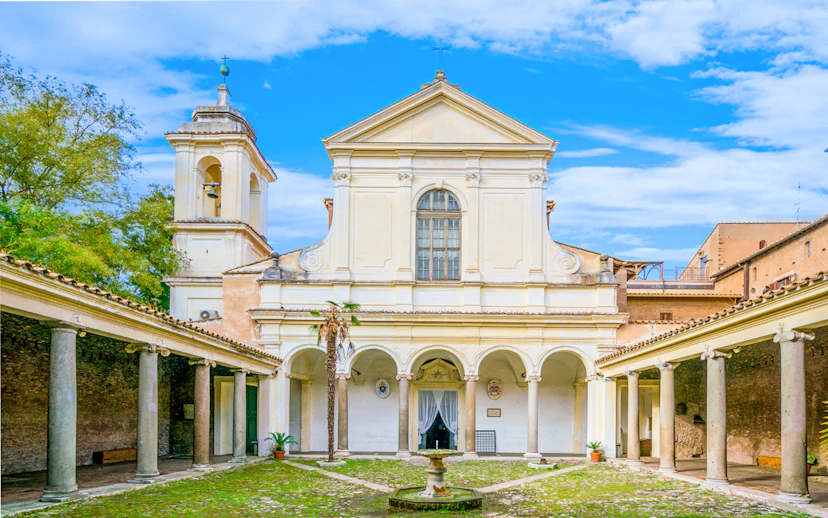
Basilica of San Clemente
Era: 12th century over 4th-century and 1st-century layers
San Clemente is the clearest way to understand how Rome built one era directly on top of another. You begin in a richly decorated medieval basilica, then descend into an earlier church, and finally into Roman rooms and a Mithraic shrine below. Most visitors focus on the church interiors and rush the final descent, but the real payoff is seeing how the lower levels completely change your sense of the site’s age.
Where to find it: Near the Colosseum, with the underground levels accessed through the basilica complex.
The Mithraeum beneath San Clemente
Type: Roman mystery-cult shrine
This small subterranean sanctuary is easy to miss because it sits at the deepest point of the San Clemente visit, after many people think the site is effectively over. It matters because it shows Rome before Christian dominance, and the atmosphere becomes noticeably quieter and more intimate the farther down you go. The carved altar and the abrupt shift from church space to Roman cult space are what make the stop memorable.
Where to find it: At the lowest accessible level beneath San Clemente, below the early basilica and Roman house rooms.
Crypt of the Popes, St. Callixtus
Era: 3rd century
This is one of the most historically important chambers in Rome’s catacombs, because it held the tombs of multiple early popes and became known as the ‘Little Vatican.’ Visitors often remember the tunnel system more than the specific chamber, but this is the point where the site stops feeling abstract and becomes tied to named people and the early Church’s hierarchy.
Where to find it: Inside the Catacombs of St. Callixtus on the Appian Way, reached only on the guided route.
Catacombs of St. Sebastian
Type: Early Christian burial site and pilgrimage stop
St. Sebastian’s catacombs matter because they connect burial history with the cult of saints and Rome’s pilgrimage tradition. The basilica above and the underground levels work best together, not as separate stops, and that combination is what many visitors underestimate. The detail most people miss is that this site preserves the older use of the term ‘catacomb,’ which gives the visit real historical weight.
Where to find it: On the Appian Way, in the catacomb complex beneath the basilica of St. Sebastian.
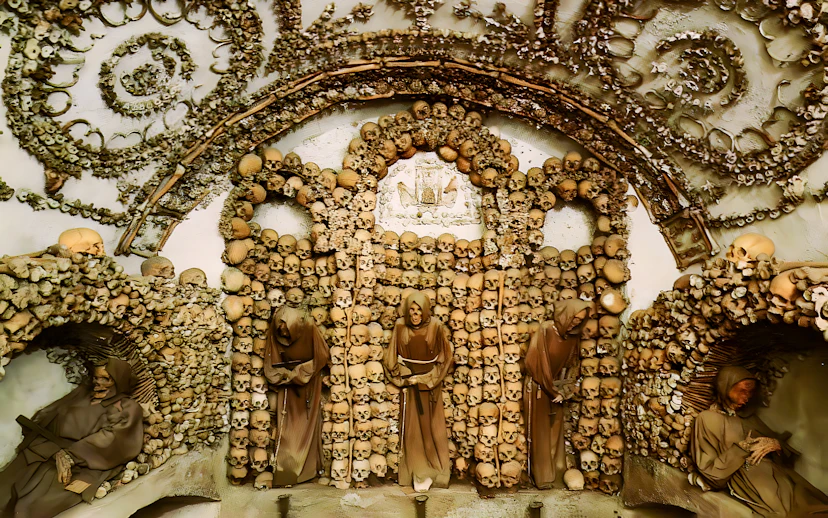
Capuchin Crypt
Type: Ossuary chapel complex
The Capuchin Crypt is short, but it leaves an outsized impression because the bone displays are arranged as devotional art rather than stored remains. What makes it worth slowing down for is the contrast between the order and craftsmanship of the chapels and the blunt reminder of mortality they were meant to deliver. Most visitors move through too quickly because the route is compact and photography is prohibited.
Where to find it: Beneath Santa Maria della Concezione on Via Veneto.
Palazzo Valentini underground domus
Era: Imperial Roman domestic remains
Palazzo Valentini gives you a different underground Rome — less devotional, more domestic, and more technologically interpreted. The multimedia reconstruction helps the ruined floors, walls, and garden layouts make sense in a way that static ruins often do not. What many visitors miss is how effective the light-and-sound format is at showing ordinary elite Roman life instead of just monumental history.
Where to find it: Under Palazzo Valentini, near Trajan’s Column and Piazza Venezia.
Facilities and accessibility
- 🎧 Audio guides and headsets: Sites like the Capuchin Crypt and Palazzo Valentini use audio or multimedia commentary, so you don’t need to rely on wall text alone.
- 🚻 Restrooms: Use facilities before your timed descent whenever you can, because catacomb and prison routes are guided, compact, and not designed for mid-visit breaks.
- 🪑 Seating / rest areas: Expect limited seating once underground, as most routes are built for circulation rather than lingering.
- 🌡️ Temperature: Underground chambers feel cooler than street level even in warmer months, so a light extra layer is more useful than people expect.
- ♿ Mobility: Accessibility is partial at best, because many sites involve steep stairs, uneven ground, narrow corridors, or descents like the Mamertine Prison staircase.
- 👁️ Visual impairments: Live guides add more value than signage in darker spaces, and access support varies site by site in religious and archaeological venues.
- 🧠 Cognitive and sensory needs: The catacombs are quieter than major Rome landmarks, but low light, enclosed passages, and the Capuchin bone displays can feel intense.
- 👨👩👧 Families and strollers: Older children usually manage these sites better than strollers do, because several routes are not pushchair-friendly from start to finish.
Rome Undergrounds works best for older children and teens who can handle darker spaces, stairs, and the quieter tone of burial sites.
- 🕐 Time: 30–60 minutes per site is realistic with children, and San Clemente or Palazzo Valentini usually holds attention better than trying too many stops in one day.
- 🏠 Facilities: Family support is stronger at compact city-center sites than at the Appian Way catacombs, where the visit is more about the guided route than on-site amenities.
- 💡 Engagement: Frame the visit as ‘layers of Rome under your feet’ at San Clemente, because that story lands better with children than dates and church history alone.
- 🎒 Logistics: Bring a light layer, water, and a small bag, and skip trying to force a stroller-heavy day through multiple underground staircases.
- 📍 After your visit: The Colosseum area and Monti are the easiest nearby zones for a relaxed meal or decompression after a darker underground stop.
Rules and restrictions
Practical tips
- Booking and arrival: Book catacombs, San Clemente underground access, and any full-day combo at least several days ahead in spring and fall, and arrive 10–15 minutes early because late arrivals often miss the group descent rather than simply joining the next slot.
- Pacing: Save your energy for the Appian Way leg, because the transfer there and back makes it the tiring part of the day even though the underground visit itself is not especially long.
- Crowd management: A Tuesday or Wednesday morning route works well here because central sites are calmer and the catacomb groups have not yet stacked into the narrowest corridors.
- What to bring or leave behind: Bring one light extra layer and wear stable shoes, because underground temperatures are cooler and surfaces can be uneven, especially in the catacombs.
- Food and drink: Eat before you head out to the Appian Way, since central Rome gives you more flexible lunch options than the catacomb stretch does.
- Route planning: Don’t treat every underground stop as equal — San Clemente and one major catacomb make a smarter pairing than trying to squeeze in 5 short descents that blur together.
- Expectations: The Capuchin Crypt is brief and intense rather than expansive, so pair it with a layered-history site like San Clemente if you want the day to feel balanced.
What else is worth visiting nearby?
Eat, shop and stay near Rome Undergrounds
- On-site: Not applicable.
- Monti: Best all-around food base for San Clemente, Mamertine Prison, and other central underground stops because you can eat well without adding extra transit.
- Via Veneto: Most useful after the Capuchin Crypt if you want a sit-down break in a more polished part of town.
- Appian Way area: Better treated as a light snack stop than a destination meal, because the catacomb leg is more about timing than lingering.
- Pro tip: Eat before the Appian Way segment and keep the central Rome meal for after, because that order protects you from missing a fixed catacomb departure.
- Capuchin Museum shop: Best for books and site-specific material rather than generic souvenirs.
- Monti boutiques: A stronger choice for design-led gifts, paper goods, and ceramics than the souvenir-heavy streets around bigger landmarks.
- Central Rome bookstores near archaeological zones: Better for history-minded visitors who want context-rich buys after Palazzo Valentini or the Forum area.
Staying ‘near Rome Undergrounds’ only makes sense if you define the area as central Rome rather than one single stop. Monti and the Colosseo side of the center work especially well because they keep San Clemente, Mamertine Prison, Palazzo Valentini, and easy transport to the Appian Way within reach. The Appian Way itself is not the best base unless your trip is unusually focused on that part of Rome.
- Price point: Central Rome near Monti and Colosseo runs from mid-range to expensive, though smaller guesthouses can still offer better value than the grand-hotel districts.
- Best for: Short trips where you want to walk to at least part of your underground itinerary and keep transit simple.
- Consider instead: Termini for better transport coverage and lower prices, or Trastevere if food and evening atmosphere matter more than walking directly to the first site.
Frequently asked questions about visiting Rome Undergrounds
Most visitors need 3–5 hours for 2–3 underground sites, while a fuller underground day takes 6–8 hours. The biggest factor is not the time spent below ground, but the transfers between central Rome and the Appian Way catacombs.
Yes, advance booking is the smart move for catacombs, San Clemente underground access, and any multi-stop guided tour. Timed descents and limited group slots mean the best morning and early-afternoon times can disappear several days ahead in spring and fall.
Yes, but mostly for combo tours or compact sites where timing matters more than raw queue length. The bigger benefit is protecting your schedule, because missing a timed descent or guided departure causes more damage to your day than standing in 15 minutes of line.
Arrive 10–15 minutes early for any Rome Underground timed slot. That buffer matters because many sites use guided departures, and once the group has gone below ground you usually cannot join midway.
Yes, but a small backpack or day bag is the safest choice. Narrow stairs, low passages, and compact crypts make large bags awkward, and a lighter load makes multi-stop underground days much easier.
Sometimes, but not everywhere. The Capuchin Crypt is the clearest no-photo site, and other underground stops may restrict flash, tripods, or selfie sticks because of low light, fragile surfaces, or the religious setting.
Yes, and many sites are designed around group entry rather than independent wandering. The catacombs especially work well with a guide because the value is in the explanation, not just the tunnels themselves.
Yes, but it works better for older children than for very young kids. San Clemente and Palazzo Valentini are usually easier family picks, while the darker mood, bone displays, and staircase-heavy routes of some crypts and catacombs can be a harder fit.
Only partially, and not reliably enough to assume step-free access. Many underground sites involve steep descents, uneven floors, or narrow corridors, so travelers with mobility needs should choose individual sites carefully rather than booking a broad underground day.
Yes, but the best food options are near the central Rome sites rather than the underground venues themselves. If your day includes the Appian Way catacombs, eating before or after that leg is usually smarter than trying to build lunch into it.
Catacombs are large underground burial networks, usually outside the old city center, while church crypts are smaller burial or devotional spaces beneath churches. In practice, catacombs feel more like guided tunnel systems, while crypts tend to be shorter, denser, and more atmospheric.
Yes, whenever your underground visit passes through an active church or religious site. Cover your shoulders and knees, because modest dress rules are enforced more often than people expect, especially at the Capuchin Crypt and basilica-based sites.