Visiting Altare della Patria: your guide
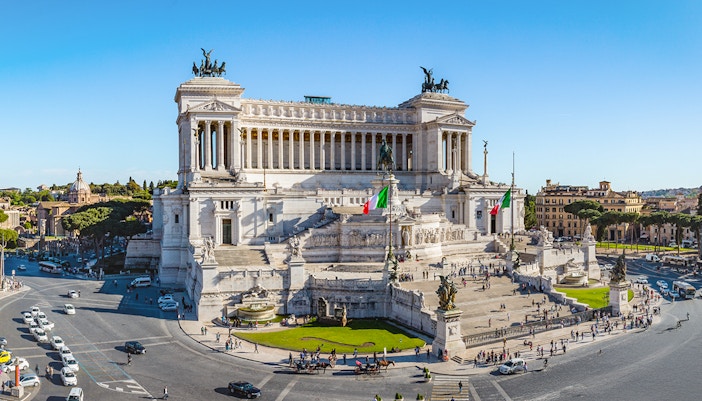
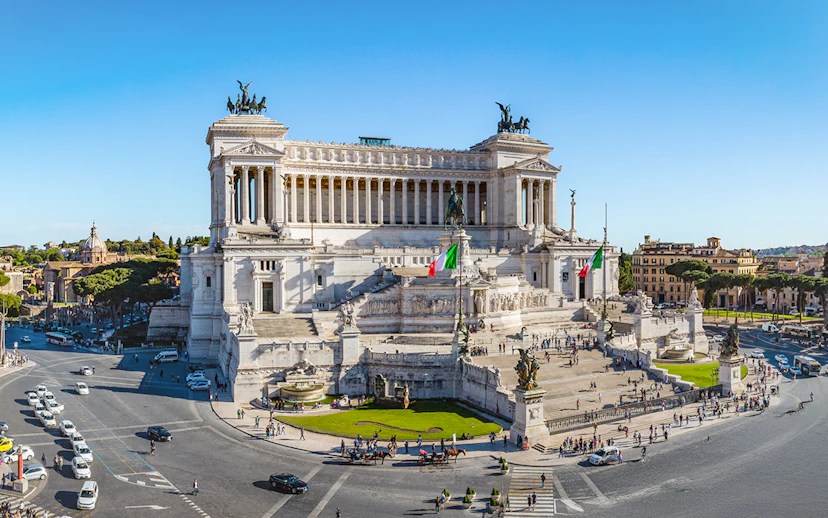
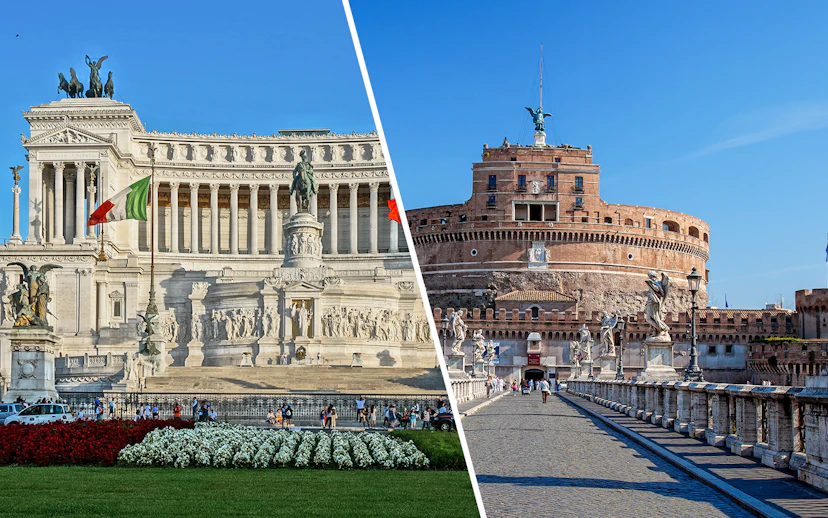
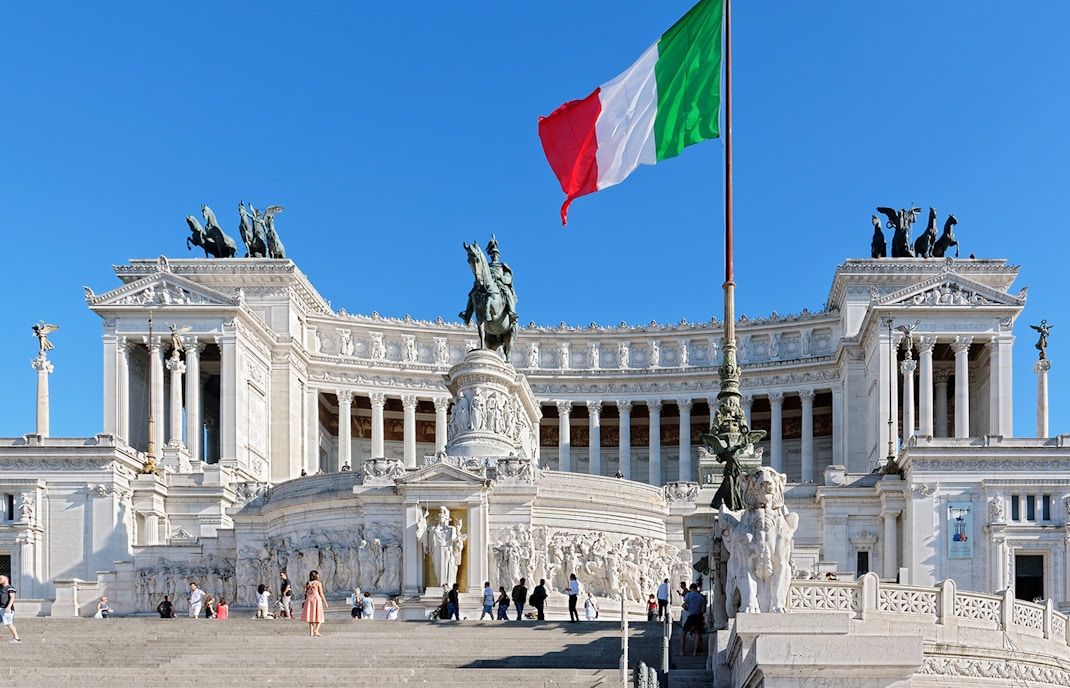
Altare della Patria is Rome’s huge white national monument, best known for its rooftop views and the Tomb of the Unknown Soldier. The visit is more layered than it first looks: a large part of the monument is free, while the highest terrace, museum spaces, and Palazzo Venezia sit behind the paid bundle. That split is what catches most people out. If you know in advance whether you want the view, the history, or both, this guide will help you time it well, choose the right route, and avoid unnecessary friction.
Quick overview
If you’re deciding whether to treat this as a quick rooftop stop or a fuller culture visit, start here.
- When to visit: Monday–Sunday, 9:30am–7:30pm, with last entry at 6:45pm; the first 60–90 minutes after opening are noticeably calmer than late morning, because Piazza Venezia traffic, tour groups, and the guard-change crowd build fast.
- Getting in: From €18 for the official combined entry, with the official themed guided visit add-on from €5 plus entry; same-day buying is often fine outside spring weekends and holiday-heavy dates, but prebooking helps if you want a smoother start or you’re visiting around ceremonies.
- How long to allow: 45–75 mins works for the free terraces plus rooftop, while 2.5–4 hrs is more realistic if you add the museum and Palazzo Venezia, especially if you don’t want to rush the Sommoportico.
- What most people miss: The Sommoportico and the Propylaea mosaics are easy to walk past because most visitors head straight for the elevator, and Palazzo Venezia often adds more value than a token museum skim.
- Is a guide worth it? Yes if you care why the monument matters, because the Risorgimento and memorial symbolism are much clearer with context; no if you mainly want the skyline, where self-guided is usually enough.
Jump to what you need
🕒 Where and when to go
🗓️ How much time do you need?
🎟️ Which ticket is right for you?
🗺️ Getting around
♿ Facilities and accessibility
Where and when to go

How do you get to Altare della Patria?
Altare della Patria sits on Piazza Venezia in the absolute center of Rome, between Via del Corso, Capitoline Hill, and the Forum side of the city.
Piazza Venezia, 00186 Rome RM, Italy
- Bus: Piazza Venezia / Ara Coeli stops → 1–3 min walk → best option if you’re already moving across the historic center.
- Metro: Colosseo (Line B) → 10–12 min walk → easiest if you’re pairing the monument with Via dei Fori Imperiali.
- Taxi / rideshare: Drop-off at Piazza Venezia → 2–4 min walk → useful if you want to avoid the bus-heavy square.
- Walk: From the Pantheon area → 10–12 min → simplest if this is part of a central Rome half-day.
Which entrance should you use?
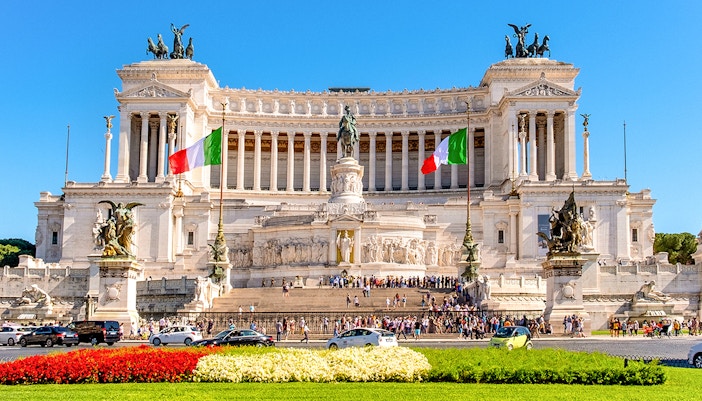
Most visitors overcomplicate this because the monument looks open from several sides, but the main visitor flow is much more structured than it seems. The easiest mistake is assuming the elevator starts at street level.
- Piazza Venezia entrance: Located on the front of the monument. Best for most visitors, free-access visits, and anyone starting with the ceremonial core. Expect 5–15 min security waits in late morning.
- Aracoeli-side accessible entrance: Located beside Santa Maria in Aracoeli. Best for wheelchair users and anyone following the lift-supported route. Expect staff-assisted entry rather than a separate fast queue.
When is Altare della Patria open?
- Monday–Sunday: 9:30am–7:30pm
- Temporary variations: State ceremonies and tribute events can affect opening windows, especially in the morning
- Last entry: 6:45pm
When is it busiest? Late morning on weekends, plus April–June and September–October, are the most crowded because this is when central Rome foot traffic, tours, and rooftop demand overlap.
When should you actually go? Go in the first hour after opening or in the last 90 minutes of the day for softer light, cooler marble, and a cleaner rooftop experience than midday.
💡 Pro tip: If you want both the hourly guard change and the rooftop without the roughest crowds, arrive between 9:30am and 10:30am — you’ll catch the ceremonial core early, and the climb feels much easier before the square heats up.
How much time do you need?
| Visit type | Route | Duration | Walking distance | What you get |
|---|---|---|---|---|
Highlights only | Piazza Venezia ascent → Tomb of the Unknown Soldier → free upper terraces → panoramic elevator → exit | 0.75–1.25 hrs | ~0.8 km | You get the ceremonial core and the best skyline payoff, but you skip most of the historical context and the palace entirely. |
Balanced visit | Piazza Venezia ascent → tomb and altar → panoramic elevator → Sommoportico → Central Museum of the Risorgimento highlights → exit | 2–2.5 hrs | ~1.2 km | This adds the monument's real story and its strongest interior spaces without turning the visit into a museum-heavy half-day. |
Full exploration | Piazza Venezia ascent → rooftop → Sommoportico → full Risorgimento visit → Palazzo Venezia and garden | 3.5–4.5 hrs | ~2 km | You cover the full bundle and get the best value from the ticket, but it's a longer, more fragmented visit and the final palace segment only lands if your energy holds. |
The free core covers the front stairs, tomb, and upper terraces. The rooftop, Sommoportico, museum, and Palazzo Venezia need the VIVE combined entry.
✨ The full route is harder without context because the monument’s free and paid zones don’t read like one visit, and the Risorgimento galleries are easy to skim past. A guided visit turns the symbolism into a story instead of a sequence of rooms. → See guided tour options
Which Altare della Patria ticket is best for you
| Ticket type | What's included | Best for | Price range |
|---|---|---|---|
Free monument access | Front monumental ascent + Tomb of the Unknown Soldier + free upper terraces + Giardino Grande at Palazzo Venezia | A central Rome stop where you want the monument and broad views without paying for the highest terrace | - |
Official VIVE combined entry | Panoramic Terrace + Sommoportico + Central Museum of the Risorgimento + Palazzo Venezia + temporary exhibitions + 7-day validity | A visit where you want the real paid experience without adding offsite redemption steps | From €18 |
Hosted prebooked entry | Combined entry + hosted redemption or assistance + app or video extras, depending on provider | A day where one checkout matters more than absolute simplicity once you reach the monument | From €24 |
Official themed guided visit add-on | Scheduled guide + monument interpretation; entry ticket purchased separately | A visit where understanding unification, memorial culture, and symbolism matters more than just taking the rooftop photo | From €23 |
Combo admission with a nearby attraction | Combined entry + second attraction such as the Pantheon or Capitoline Museums, depending on option | A packed central Rome day where you were already planning the second stop and want one bundled purchase | From €27.46 |
How do you get around Altare della Patria?
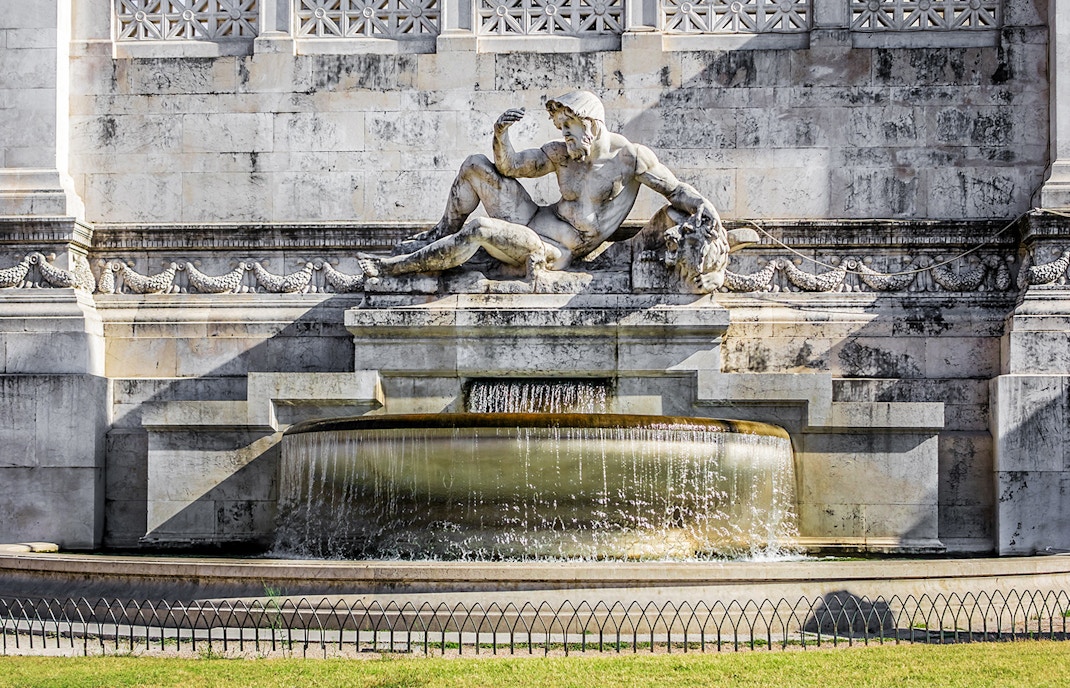
Around the monument
Altare della Patria is best explored on foot, and you can cover the view-first version in under 75 minutes or stretch the full bundle into half a day. The main focal point sits straight ahead on the Piazza Venezia axis, but the paid route branches more than first-timers expect.
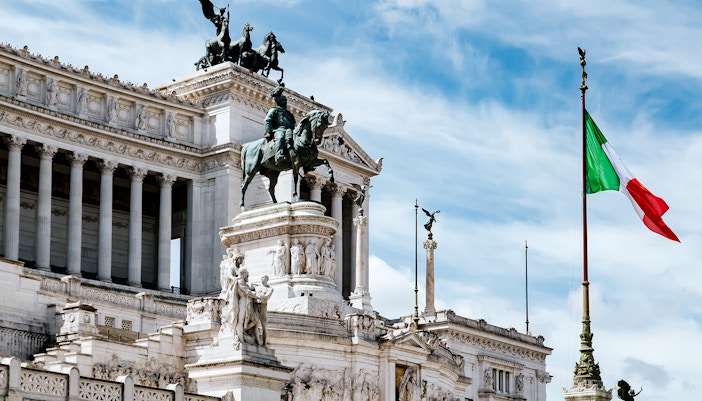
- Front ascent: Monumental stairs + bronze groups + fountains → 10–15 mins.
- Tomb and altar terrace: Guard post + eternal flame + free panoramic terraces → 15–20 mins.
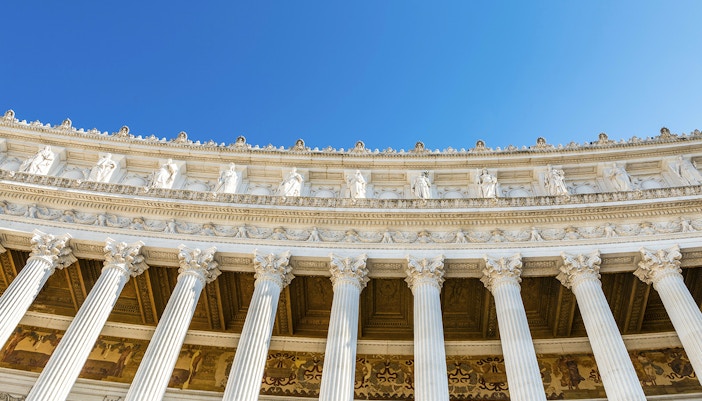
- Sommoportico: Columned upper level + regional symbolism + long city views → 10–15 mins.
- Panoramic rooftop: Highest terrace + quadrigae + skyline sweep over Ancient Rome → 15–30 mins.
- Museum and Palazzo Venezia: Risorgimento history + palace rooms + garden → 30–90 mins.
Suggested route: start from Piazza Venezia, do the tomb and free terraces first, then decide whether the rooftop payoff is enough or whether you still have the energy for the museum; save Palazzo Venezia for later the same day or another day if you want to use the 7-day validity well.

Maps and navigation tools
- Map: Use the official VIVE visitor pages before arrival to understand which parts are free and which are paid, because the site reads like one monument but works as several linked spaces.
- Signage: Wayfinding is good enough once you’re on the main route, but the elevator start still catches people out if they assume it begins from the square.
- Audio guide / app: App-based landmark ID and multimedia layers can help with orientation, but they add less value than a live guide if you care about why the monument exists.
💡 Pro tip: Don’t rush straight to the elevator queue — doing the tomb and free terraces first helps you understand the monument’s layout, and it stops the paid route from feeling like a disconnected add-on.
What can you see from Altare della Patria?
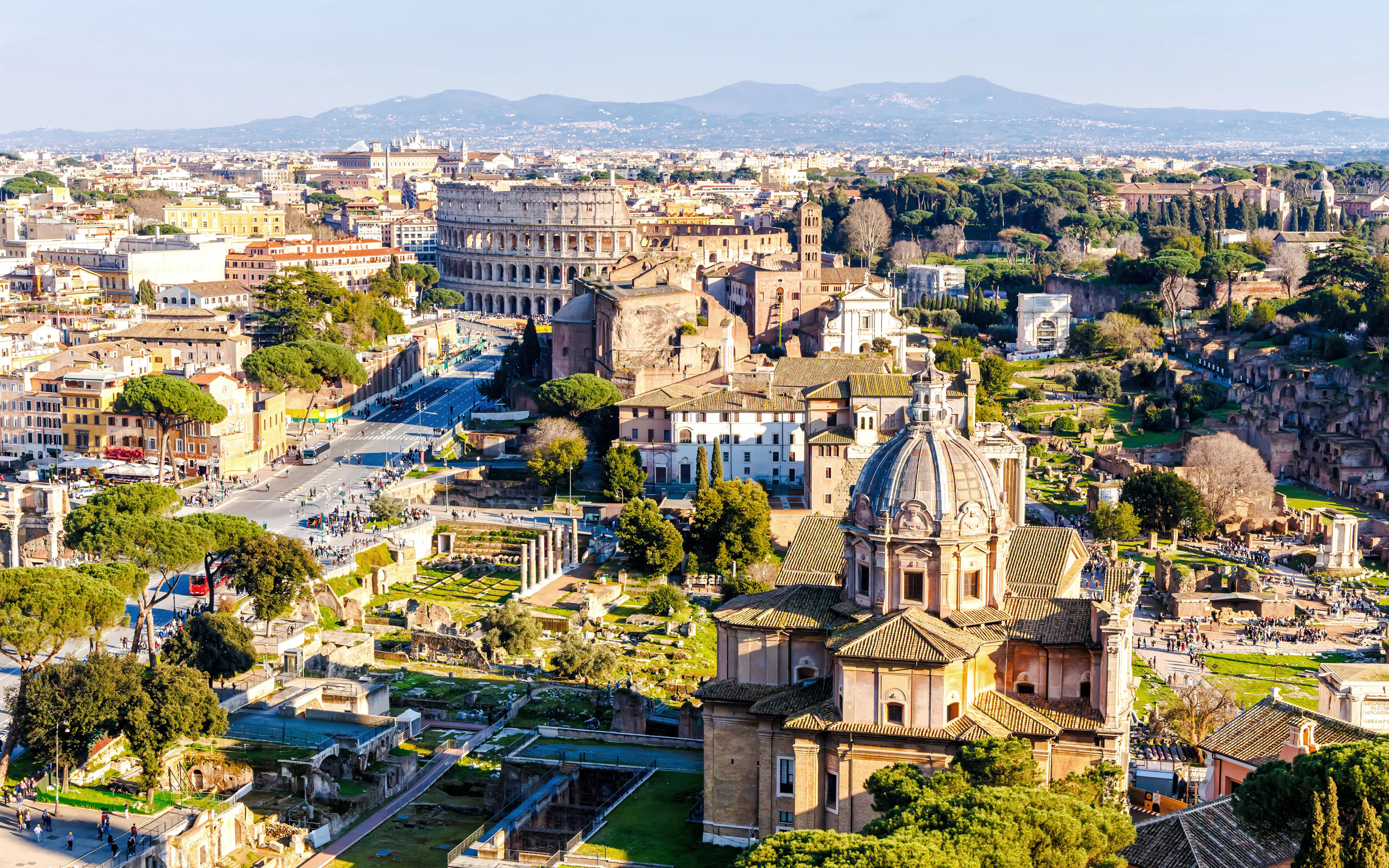
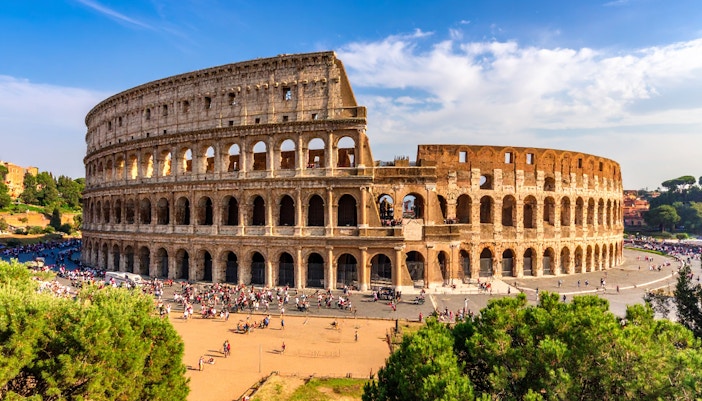
Colosseum, Roman Forum, and Palatine Hill
View type: Ancient Rome skyline axis
This is the rooftop’s strongest payoff and the reason many visitors buy the ticket in the first place. From here, you get a clean read of the archaeological core in one sweep instead of in fragments from street level. Most people take the obvious Colosseum shot, then move on too fast — linger long enough to pick out the Forum basin and Palatine ridge behind it.
Where to find it: On the panoramic rooftop, facing south-east toward Via dei Fori Imperiali.
The bronze quadrigae
View type: Monument detail at rooftop level
Up here, the monument stops reading like a distant white mass and starts showing its sculptural drama. The bronze chariots feel far larger and more animated from rooftop level than they do from the square below. Most visitors focus outward toward Rome and forget that the monument itself becomes one of the highlights once you’re beside the quadrigae.
Where to find it: On the highest terrace, along the outer edges nearest the roofline sculptures.
Capitoline Hill and Trajan’s Markets
View type: Layered civic and imperial Rome
This side of the rooftop gives you one of the clearest central-city reads of how modern Rome sits beside the ancient core. You can trace the rise toward Capitoline Hill and the dense structures around Trajan’s Markets without fighting street-level traffic or narrow sightlines. People often miss how good this angle is because they stay locked on the Colosseum side.
Where to find it: On the panoramic terrace facing north-west, toward Capitoline Hill.
Piazza Venezia and Via del Corso
View type: Modern city axis
The front-facing view is less famous, but it helps you orient yourself in present-day Rome. From up here, the square’s traffic patterns, the long pull of Via del Corso, and the monument’s civic setting all make more sense. Most visitors dismiss this side too quickly, even though it’s the best way to understand why the site feels so central and so busy.
Where to find it: On the rooftop edge directly above the front façade facing Piazza Venezia.
St Peter’s Basilica dome
View type: Distant skyline landmark
On a clear day, the dome of St Peter’s rises in the distance and gives the skyline a second focal point beyond the ancient center. It’s not a close architectural view, but it’s one of the most satisfying long-distance details from the terrace. Many people miss it because haze and midday glare flatten the western skyline more than they expect.
Where to find it: On the western side of the rooftop in clear weather, looking beyond the city roofs toward Vatican City.
The Tomb of the Unknown Soldier from above
View type: Ceremonial core in context
Seeing the tomb from above changes how the monument reads: it stops being just a staircase and turns into a national shrine with a very deliberate ceremonial axis. If you time the visit near the hourly guard change, the space feels much more active than it does in a quick pass-through. Most people photograph it only from below and miss the full geometry.
Where to find it: From the upper terraces and the paid upper levels looking back over the central altar.
💡 Don't leave without seeing: the Propylaea mosaics and the Sommoportico are easy to miss because the crowd flow pulls you straight toward the elevator, and neither is signposted as loudly as the rooftop.
Facilities and accessibility
- 🚻 Restrooms: Official restrooms are available at the entry area, along the route, and at the end of the route, which makes short or split visits much easier than the stair-heavy approach suggests.
- 🍽️ Cafeteria-restaurant: Food and drink are restricted to the on-site café area, so plan on a coffee, drink, or light snack there rather than bringing refreshments onto the terraces.
- 🪑 Seating / rest areas: The café zone near the lift approach is the easiest place to sit down before or after the rooftop, especially if the front climb has already taken more out of you than expected.
- 🩺 First aid / medical support: Staffed visitor assistance is available inside the complex, but this is still a monument first, so raise any mobility or comfort issue early at the entrance rather than waiting until the upper levels.
- ♿ Mobility: Official access includes an Aracoeli-side wheelchair lift, two panoramic lifts, courtesy wheelchairs, and a route that is about 90% accessible by lift, but the front ceremonial climb still involves many steps if you use the Piazza Venezia approach.
- 👁️ Visual impairments: Current public visitor guidance emphasizes physical access more than tactile or audio tools, so treat this as a highly visual site and plan ahead if you need specific support beyond standard entry assistance.
- 🧠 Cognitive and sensory needs: The quietest experience is usually in the first hour after opening, while late morning is the loudest because square traffic, tours, and ceremonial watchers all stack into the same central spaces.
- 👨👩👧 Families and strollers: Strollers are more manageable on the lift-supported route than on the front stair sequence, and the site works better with a simple start-stop rhythm than a long uninterrupted climb.
Altare della Patria works best for school-age children and teens who like big views, guards, and dramatic civic spaces; very young kids usually connect more with the elevator and the ceremony than with the museum interpretation.
- 🕐 Time: 45–75 mins is realistic with young children if you focus on the tomb, free terraces, and rooftop instead of trying to force the museum and palace into the same visit.
- 🏠 Facilities: Restrooms at the entry area, along the route, and at the end help a lot, and the café gives you one reliable reset point before or after the rooftop.
- 💡 Engagement: Time your visit for the hourly guard change so the tomb feels like an event and not just another photo stop on a long city walk.
- 🎒 Logistics: Bring water, sun protection, and a carrier or stroller plan, because the marble reflects heat and light and the front stair route can drain energy quickly.
- 📍 After your visit: Trajan’s Markets is a short walk away and usually works better for curious older kids than trying to squeeze Palazzo Venezia into an already tired afternoon.
Rules and restrictions
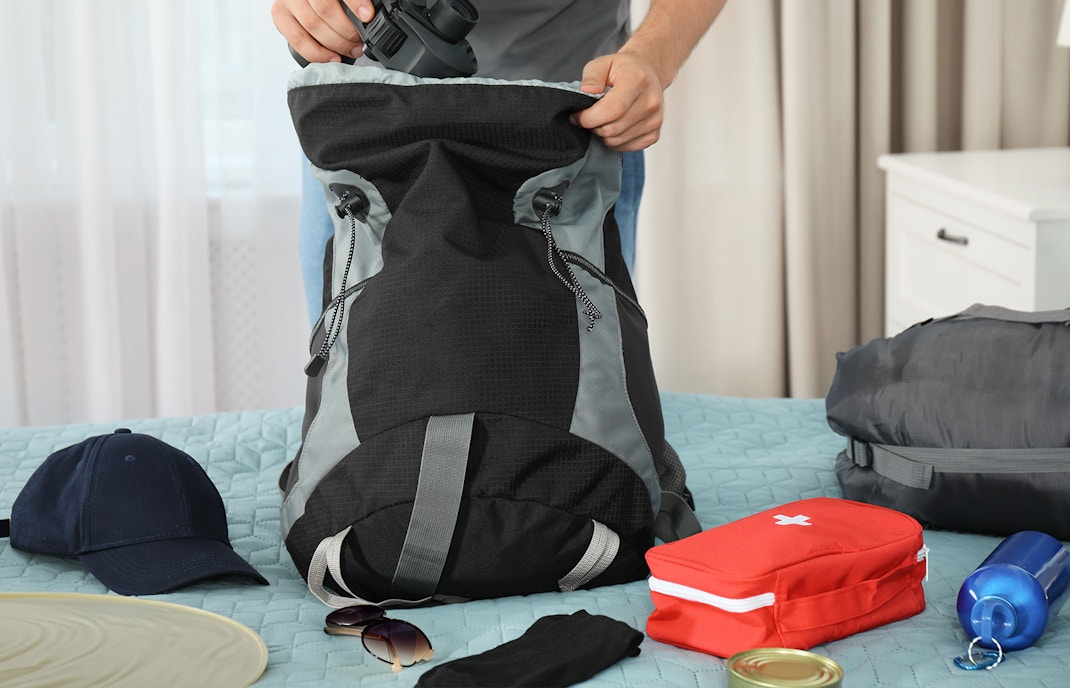
What you need to know before you go
- Entry requirement: The front monument and free terraces are free to access, but the rooftop elevator, Sommoportico, Central Museum of the Risorgimento, and Palazzo Venezia require a paid ticket.
- Bag policy: Bring a small day bag, because large bags and luggage are a poor fit for the route and can create avoidable friction before you even reach the elevator.
- Re-entry policy: The route is effectively one-way and entry and exit do not coincide, so once you leave it is much easier to move on than to restart the visit.
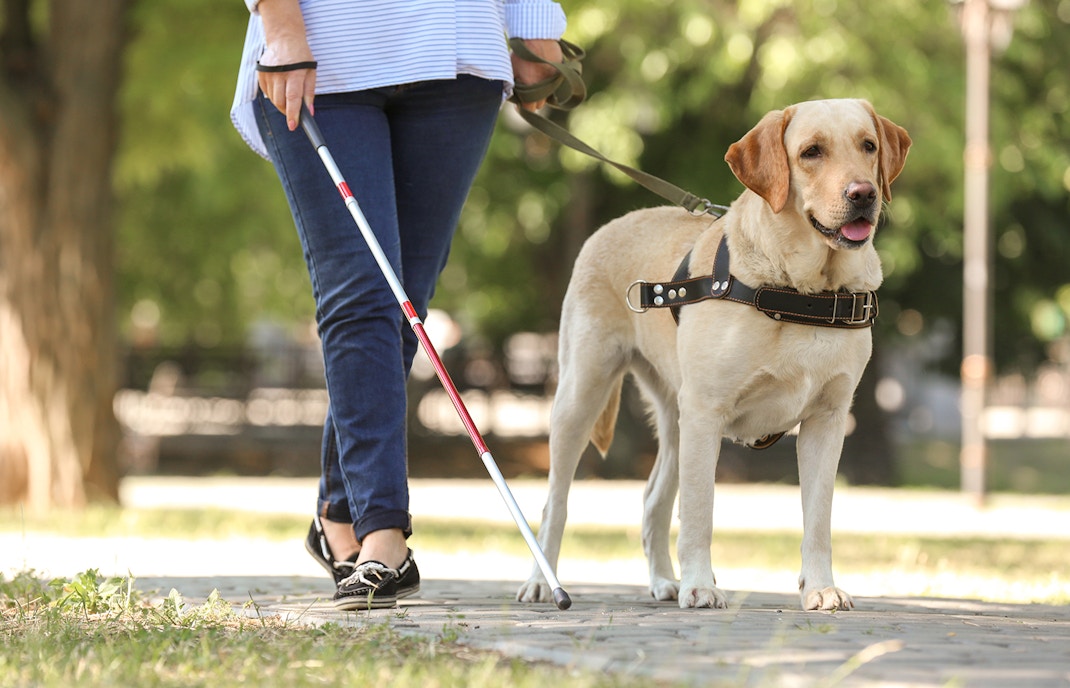
Not allowed
- 🚫 Food and drink are restricted to the cafeteria-restaurant, so don’t plan on eating on the terraces or in the museum spaces.
- 🐾 Pets aren’t allowed on the visitor route; if you’re traveling with an assistance animal, check official access guidance before you go.
- 🖐️ Don’t climb barriers, lean over terrace edges, or touch memorial elements, because this is both a monument and an active national shrine.

Photography
Photography for personal, non-commercial use is generally allowed unless signs in a specific area say otherwise, especially inside exhibition spaces. The practical divide is between open monument areas, where casual photography is part of the visit, and any signed interiors or temporary exhibitions, where rules can tighten. If you’re carrying bulky gear, pack light and expect staff scrutiny on the route.
Good to know
- State ceremonies and tribute events can close parts of the monument with little warning, even on days that otherwise look normal on the schedule.
- The hourly guard change at the Tomb of the Unknown Soldier is worth timing, but it also makes the central terrace briefly busier right on the hour.
Practical tips
- If you only want the rooftop, same-day buying is often fine; the bigger risk is booking a reseller product that still sends you to Piazza d’Aracoeli 16 for voucher pickup.
- Save your energy for the approach, not the elevator itself; the lift takes about a minute, but the stairs before it are what catch families and older visitors out.
- Late morning is the least efficient slot here, because tour groups, Piazza Venezia foot traffic, and people timing the guard change all pile into the same stretch of the visit.
- Bring a small bag, sunglasses, and water in warm weather; the exposed marble throws back heat and glare much harder than many first-time visitors expect.
- Eat either before a full bundle visit or after the rooftop if you’re doing the short version; the café is useful for a break, but it’s better as a reset than as a destination meal.
- If you bought the full ticket, don’t force Palazzo Venezia into the same tired hour; the 7-day validity is one of the best-value parts of the bundle, so use it.
What else is worth visiting nearby?
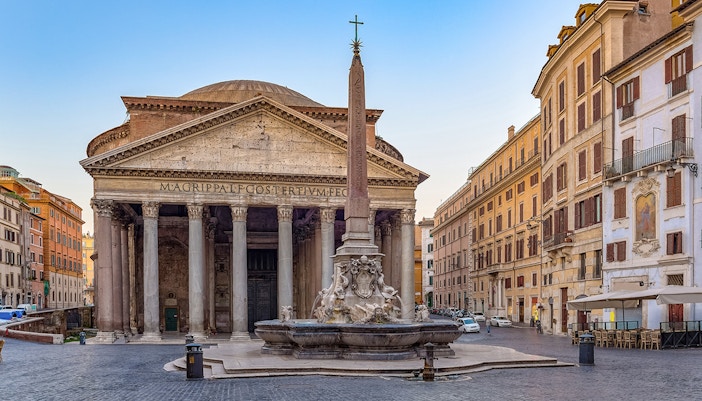
Commonly paired: Pantheon
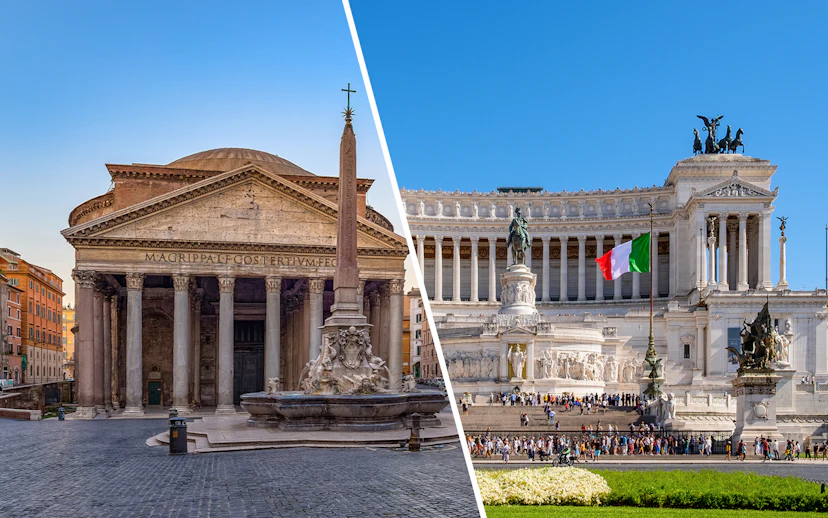
Pantheon
Distance: 850m — 11 min walk
Why people combine them: Altare della Patria gives you the skyline and civic scale, while the Pantheon gives you Rome’s most intact ancient interior, so the two make a clean same-area contrast.
✨ Altare della Patria and the Pantheon are commonly visited together because they fit neatly into one central walking loop without wasting transit time.
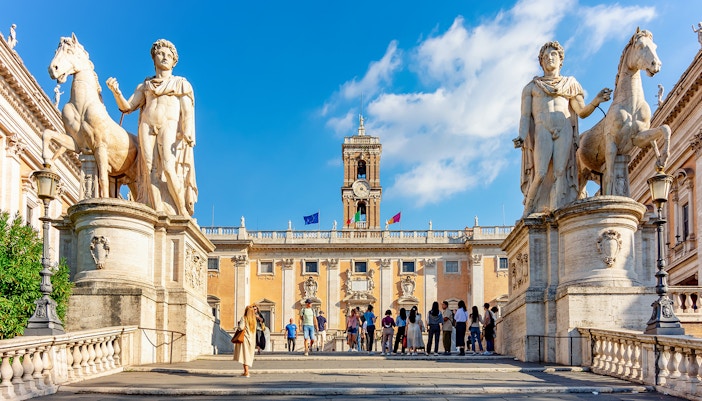
Commonly paired: Capitoline Museums
Capitoline Museums
Distance: 450m — 6 min walk
Why people combine them: The museums deepen the story of Rome just as Altare della Patria gives you the citywide view, and the short walk makes the pairing feel natural rather than forced.
Also nearby
Trajan’s Markets
Distance: 500m — 7 min walk
Worth knowing: This is one of the best nearby stops if you want a more archaeological follow-up without committing to the scale of the Forum.
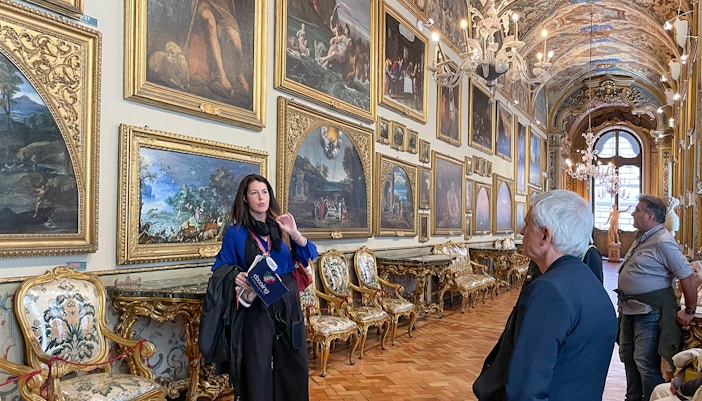
Doria Pamphilj Gallery
Distance: 400m — 5 min walk
Worth knowing: It’s an easy indoor counterpoint if you want a quieter art-heavy stop after the open terraces and traffic of Piazza Venezia.
Eat, shop and stay near Altare della Patria
- On-site: The cafeteria-restaurant near the lift approach is fine for coffee, cold drinks, and a short pause, but it’s best treated as convenience rather than a meal worth planning around.
- Sant’Eustachio Il Caffè (12-min walk, Piazza di Sant’Eustachio, 82): Coffee and pastries, and one of the easiest pre-visit or post-visit stops if you don’t want a full sit-down meal.
- Armando al Pantheon (11-min walk, Salita de’ Crescenzi, 31): Classic Roman cooking, and worth it if you’re pairing the monument with the Pantheon and want lunch that feels properly local.
- Oro Bistrot Roma (10-min walk, Via di S. Eufemia, 19): Drinks and lighter plates with a calmer setting than Piazza Venezia, which helps if you want to decompress after the rooftop.
- 💡 Pro tip: Eat before 12 noon or after the rooftop — a late lunch break is when the one-way route and the walk back into the square feel most annoying.
- Via del Corso: Rome’s most practical high-street shopping stretch starts a few minutes from Piazza Venezia, so it’s the easiest add-on for fashion, pharmacy stops, and basics.
- Rinascente Roma Tritone: A department store about a 12-minute walk away that works well if you want gifts, beauty, and one efficient shopping stop without leaving the center.
Yes for a short Rome stay, but only if you want maximum centrality and don’t mind noise, traffic, and a less neighborhood-style feel. Piazza Venezia makes walking logistics easy, yet it’s not the most charming place to base yourself once the day crowds build. For longer stays, many travelers prefer a district with better evening atmosphere.
- Price point: The area leans mid-range to upscale because of its location, with better value usually found a little farther out toward Monti.
- Best for: Short trips where walking to major central sights matters more than a quiet local feel.
- Consider instead: Monti for better restaurants and evening atmosphere, or the Pantheon / Centro Storico side if you want a more classic historic-center base without the Piazza Venezia traffic.
Frequently asked questions about visiting Altare della Patria
Most visits take 45–75 mins if you’re doing the free terraces and rooftop, while the full paid bundle usually needs 2.5–4 hrs. The difference is whether you stop at the skyline or continue into the Central Museum of the Risorgimento and Palazzo Venezia. The 7-day ticket validity helps if you don’t want to do everything in one stretch.
No, you usually don’t need to book far in advance for Altare della Patria. This is not in the same scarcity tier as the Colosseum or Borghese Gallery, and same-day visits are often easy to fit in. Prebooking helps more on spring weekends, holiday periods, or if you’re buying through a hosted product and want the paperwork sorted earlier.
Usually not, because the biggest friction here is wayfinding and voucher redemption rather than a massive box-office queue. Some prebooked products save ticket-purchase time, but they don’t remove security checks, elevator waits, or offsite pickup if that’s part of the product. If simplicity matters, official direct entry is often the cleaner choice.
Arrive 10–15 mins early if you’ve prebooked, and closer to opening if you want the calmest visit. The ticket is more flexible than Rome’s strict timed-entry attractions, so this is less about missing a slot and more about beating the late-morning buildup around Piazza Venezia, the guard-change crowd, and the pre-elevator steps.
Yes, but keep it small. A regular day bag is the easiest fit for this visit, while large luggage or bulky backpacks create avoidable hassle before you even reach the paid route. This isn’t a good luggage-first stop, especially if you’re coming straight from the airport or station.
Yes, personal non-commercial photography is generally allowed unless a specific area says otherwise. That makes the rooftop, terraces, and broad monument spaces very photo-friendly. The one thing to watch is exhibition signage inside paid interiors, where rules can be tighter than they are in the open-air sections.
Yes, but groups need to stay small and organized. Public visitor guidance limits group access over 25 people, and groups of 11–25 need advance booking and headsets. For most travelers, that means this works better as a small private group stop than as a large, loosely managed one.
Yes, especially if you treat it as a 45–75 min rooftop-and-ceremony stop rather than a full museum day. Kids usually respond best to the scale of the stairs, the hourly guard change, and the elevator. The full history bundle is much better for older children and teens than for very young visitors.
Yes, mostly — official guidance says about 90% of the route is accessible by lift. There is an Aracoeli-side wheelchair lift, two panoramic lifts, and courtesy wheelchairs on site. The main limitation is the front ceremonial staircase, which looks like the obvious entrance but is not the best route for step-free access.
Yes, there is an on-site cafeteria-restaurant, and central Rome dining is all around you once you leave the monument. The café works best for drinks and a short reset rather than a destination meal. If you want a better lunch, it’s smarter to head toward the Pantheon side or just beyond Piazza Venezia after the rooftop.
Partly — the front monument, Tomb of the Unknown Soldier, and upper free terraces are free, but the rooftop elevator and bundled interiors are paid. That split is the single most useful thing to understand before you arrive. If you only want the ceremonial core, you can see a lot without a ticket.
The best views usually come in the first hour after opening or in the last 90 mins before closing. Those windows give you softer light, less heat on the marble, and a better chance of seeing distant landmarks like St Peter’s dome clearly. Midday is still scenic, but the glare and rooftop comfort are both worse.