Is Trevi Fountain worth visiting?
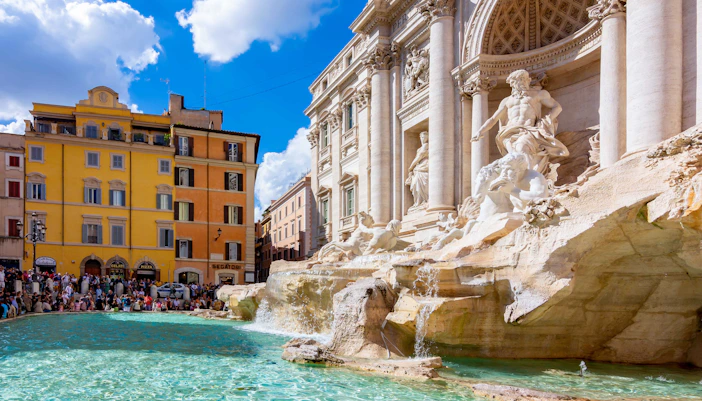
You hear the water before you see the monument, then the square opens and the whole facade seems to move at once — rock, marble, horses, spray, and people lining the basin for that one backward coin toss. Even in a crowded piazza, the fountain has real theatrical force.
It was built as the grand terminal point of the ancient Aqua Virgo aqueduct, designed to turn Rome’s water supply into a public spectacle. That’s why it feels bigger than a fountain: it was meant to stage abundance, engineering, and papal power in stone.
The emotional payoff is unusually specific. You leave feeling that Rome can turn infrastructure into myth — that something as practical as an aqueduct can end in a public ritual millions still repeat.
Skip it if dense crowds, standing-room-only viewing, and a short stop built around atmosphere rather than interiors or collections don’t appeal to you.
What to see at the Trevi Fountain?
Oceanus and the shell chariot
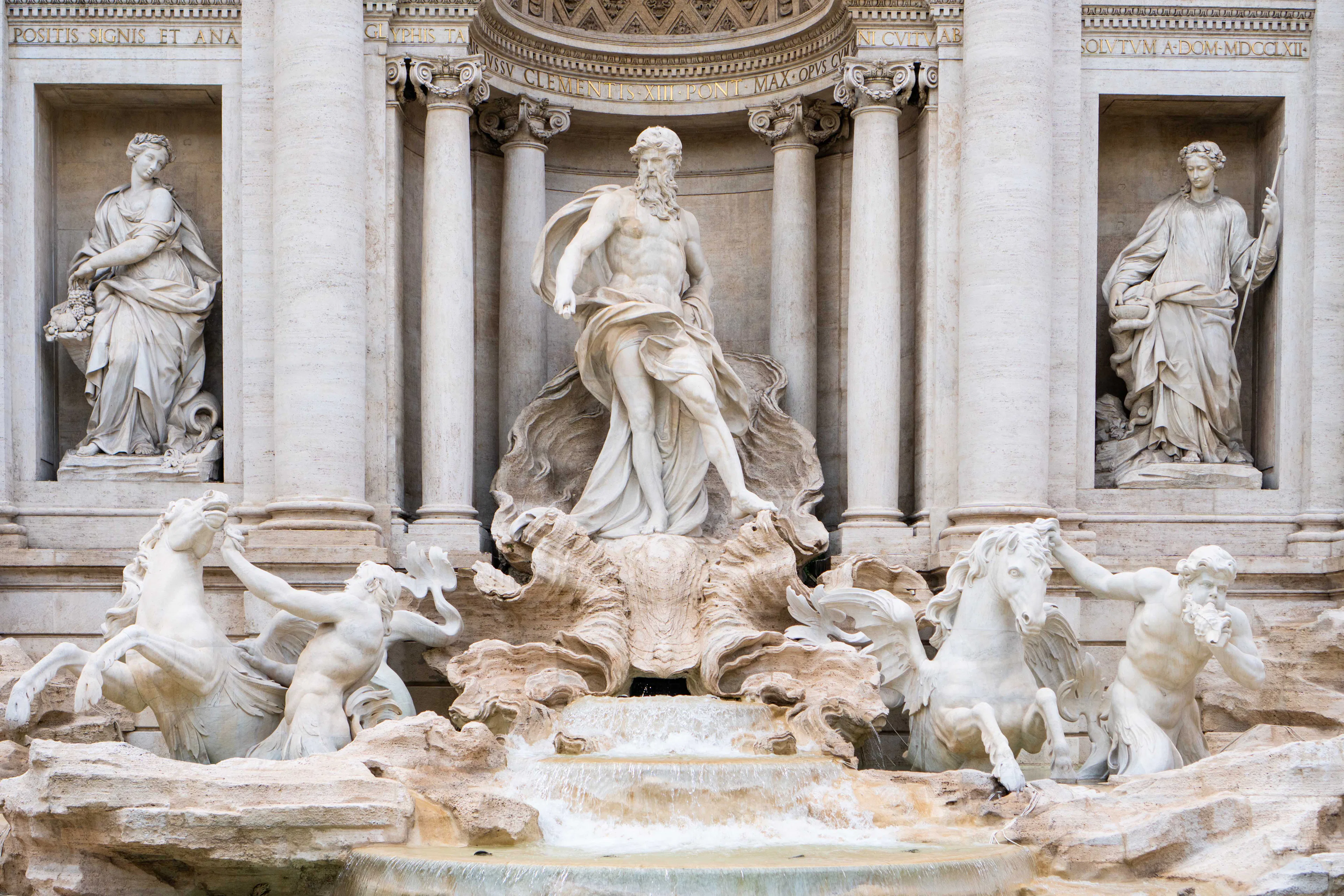
The colossal central figure commands the entire composition from beneath Palazzo Poli. Stand back first, then move closer; the scale only fully registers when you see how the statue overwhelms the square.
The seahorses and Tritons
One seahorse is calm, the other restless, a Baroque way of showing the sea’s changing moods. They’re easy to miss in the crowd, so pause at the side angles instead of only facing the center.
The allegories of Abundance and Health
These side figures give the fountain its deeper message: water as civic wealth and public well-being. They reward a slower look, especially if you want more than the standard coin-toss photo.
The basin and coin-toss point
The shallow pool is where Rome’s most repeated ritual happens. Daytime access to the lower viewing area is regulated, so early morning or late evening gives you more space to do it properly.
Palazzo Poli’s facade
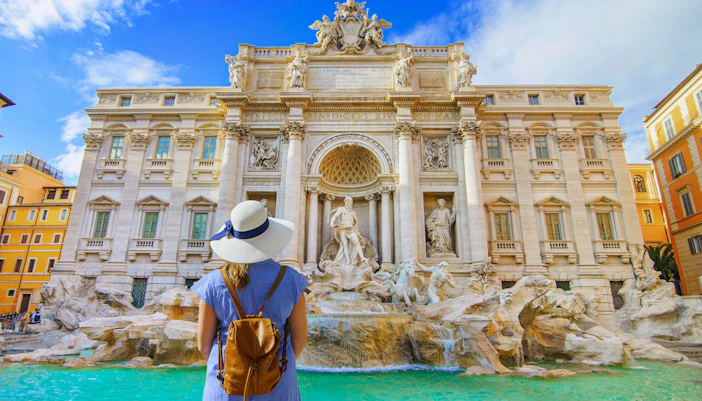
The fountain is built into a palace wall, which is why it feels like a stage set. Notice how columns, niches, and sculpture merge into one giant architectural backdrop.
Vicus Caprarius underground
A few steps away, this archaeological site reveals the ancient water system beneath the district. Access is separate and worth planning ahead; it turns a quick photo stop into a layered Roman history visit.
How to explore Trevi Fountain
How much time to spend?
Budget 20–30 minutes if you want the classic fountain view, photos, and coin toss. Give it 60–90 minutes if you’re also visiting Vicus Caprarius underground, or if you want to see the fountain once by day and again after dark.
Best visit order
Start from the upper edge of Piazza di Trevi to take in the full facade before moving down. If daytime crowd controls are active, enter via the central staircase, pause at the basin for photos and the coin toss, then exit through Via dei Crociferi. If you’re visiting the underground site, do that either first or immediately after, using the separate entrance on Vicolo del Puttarello.
Must-see highlights
Must-see: Oceanus, the seahorses and Tritons, the basin-level view, and the full Palazzo Poli backdrop. Optional: Vicus Caprarius underground and a second late-evening pass, which add 30–45 minutes and a very different mood.
Worth adding nearby
The Pantheon is about 10 minutes away on foot and gives you the strongest architectural contrast. The Spanish Steps are another easy add-on, and Piazza Navona fits well if you want a longer central Rome walk.
Guided or self-paced?
Self-paced works well if you mainly want the fountain, the ritual, and a short stop between other Rome sights. A guided visit is worth it if you want the Baroque symbolism and the aqueduct story explained clearly, especially underground. The Trevi Fountain + Subterranean Aqueducts Tour is the best fit for depth; the Trevi Fountain & Piazza Navona Guided Walking Tour suits first-time visitors who want Trevi in a wider Rome route.
Brief history of Trevi Fountain
- 19 BCE: The Aqua Virgo aqueduct begins bringing water into this part of Rome, creating the hydraulic story the fountain still depends on.
- 1732: Pope Clement XII commissions Nicola Salvi to design a monumental new fountain against Palazzo Poli.
- 1762: After Salvi’s death, Giuseppe Pannini completes the fountain, giving Rome the Baroque composition seen today.
- 19th century: Trevi becomes a standard Grand Tour stop, helping fix its place in Europe’s image of Rome.
- 1954–1960: Films including Three Coins in the Fountain and Fellini’s La Dolce Vita turn it into a modern pop-culture landmark.
- Today: Managed daytime entry helps control crowds, while coins gathered from the basin continue to support charity in Rome.
Architecture & design of Trevi Fountain
Trevi Fountain is Baroque at full volume. The palace facade doesn’t simply frame the fountain; it becomes part of it, so the whole monument reads like a carved stage with water pouring over rough artificial rock into the basin below. Look at how the architecture tightens around Oceanus in the center, then loosens into motion at the edges with Tritons, seahorses, and cascading stone. The contrast is the point: rigid columns behind, liquid movement in front. Travertine gives the surface its warm Roman color, especially in late afternoon light, while the sound and spray make the monument feel larger than the square that contains it.
Who built it?
Pope Clement XII commissioned the fountain to monumentalize Rome’s water supply and give the city a grand civic endpoint for the Aqua Virgo aqueduct. Nicola Salvi designed it, and Giuseppe Pannini completed it in 1762, turning the facade of Palazzo Poli into a public spectacle.
Where Trevi Fountain’s coins go
Trevi Fountain’s coin toss matters because it isn’t only a tourist superstition anymore; it has become part of the city’s civic life. Every day, thousands of euros land in the basin, and the money is collected for charity rather than left as decoration. That gives the ritual a distinctly Roman afterlife: a private wish becomes a public donation. It also explains why the fountain feels unusually participatory for a monument. People don’t just arrive to look at it. They arrive expecting to take part in one of Rome’s best-known shared rituals.
Frequently asked questions about Trevi Fountain
No, you don’t need a ticket for the fountain itself. Daytime access to the lower viewing area is free but regulated, while paid tours only matter if you want a guide or underground access.
Yes. You can still enjoy broad views from the upper edges of Piazza di Trevi without entering the lower area. That’s often the best move when you want photos, not the coin-toss position.
After 9pm, the supervised daytime access system ends and the area becomes easier to visit casually. It’s one of the best times to come if you want cooler air, fewer people, and night lighting.
The clearest options are the Trevi District Underground Guided Tour and the Trevi Fountain + Subterranean Aqueducts Tour. Both go beyond the square itself and add the aqueduct and Roman remains beneath the district.
Not currently. The lower regulated area is reached by stairs, and the underground site also involves stairs. The upper piazza is easier to access, so that’s the better option for a barrier-free view.
If you only have time for one add-on, choose the Pantheon for the strongest contrast between outdoor Baroque drama and indoor ancient engineering. If you want a gentler stroll, the Spanish Steps make the easier pairing.
Yes, but it’s easier when the crowd thins out early in the morning or later at night. Keep to the viewing barriers, face away from the basin, and don’t climb onto the edge.