Christian Catacombs in Rome: Location, Timings, Attractions
What are the Christian Catacombs in Rome?
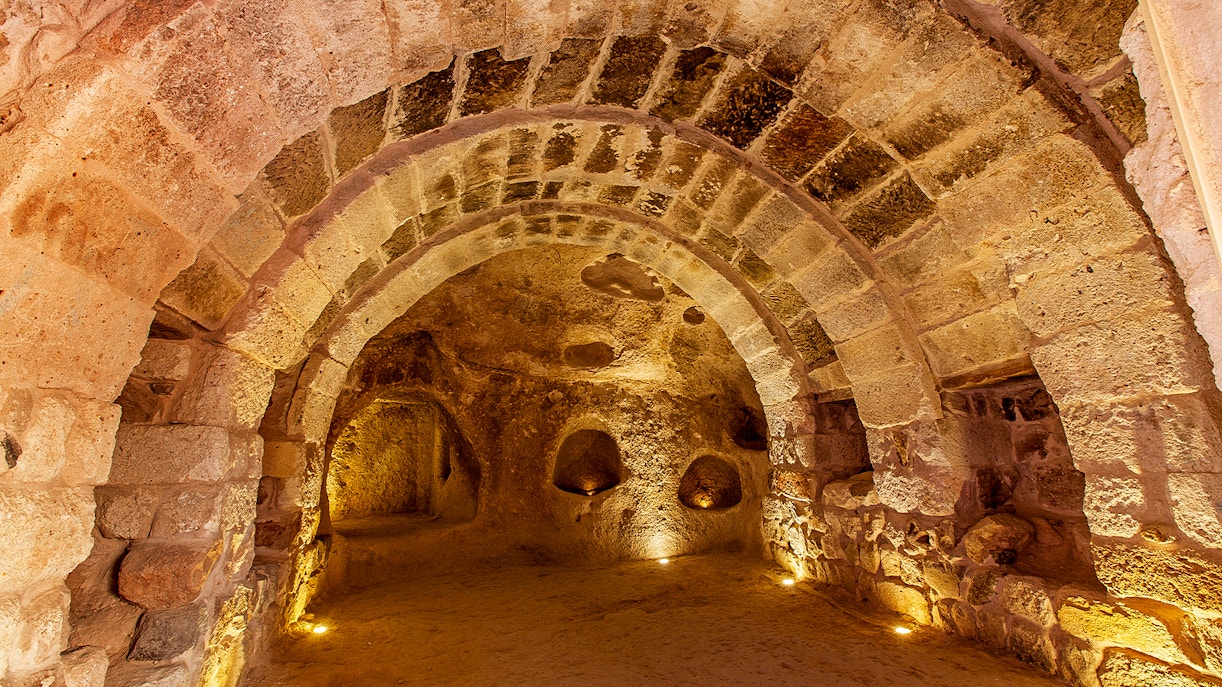
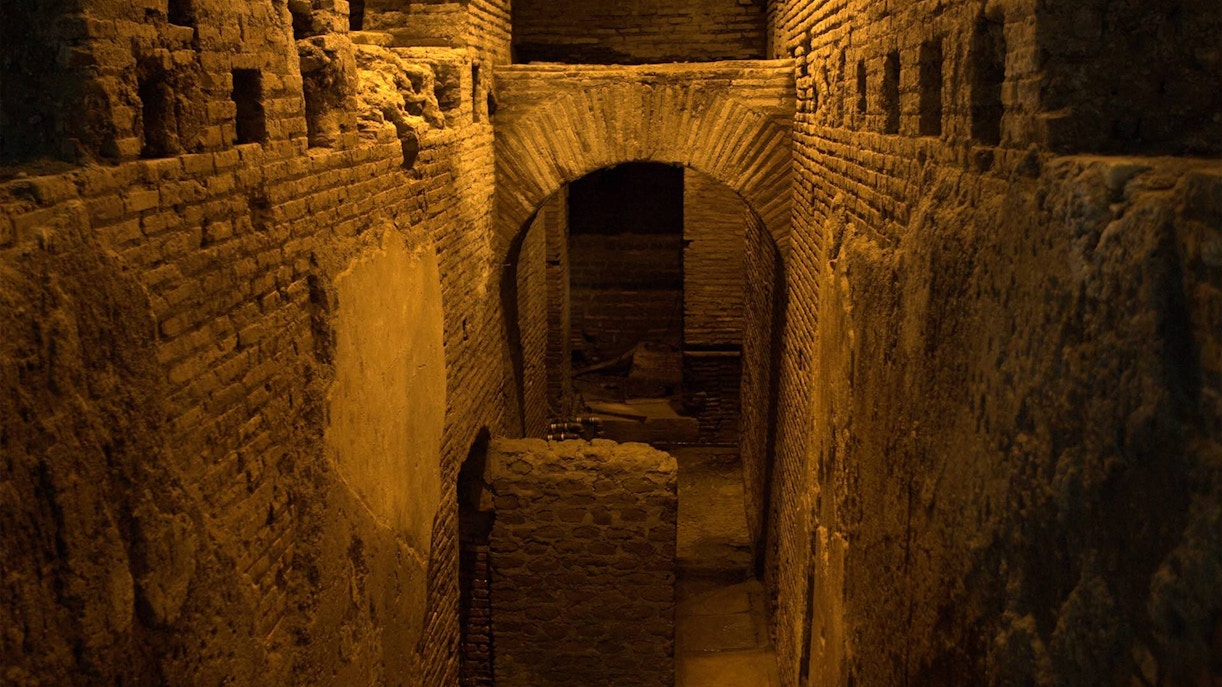
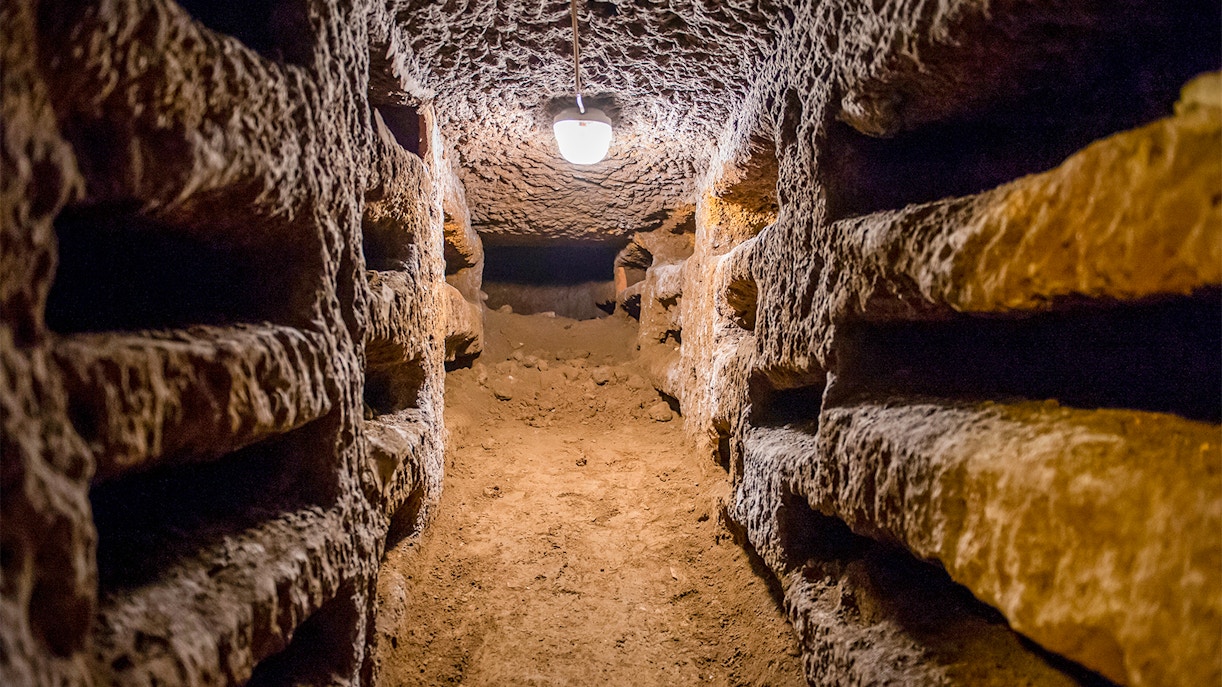
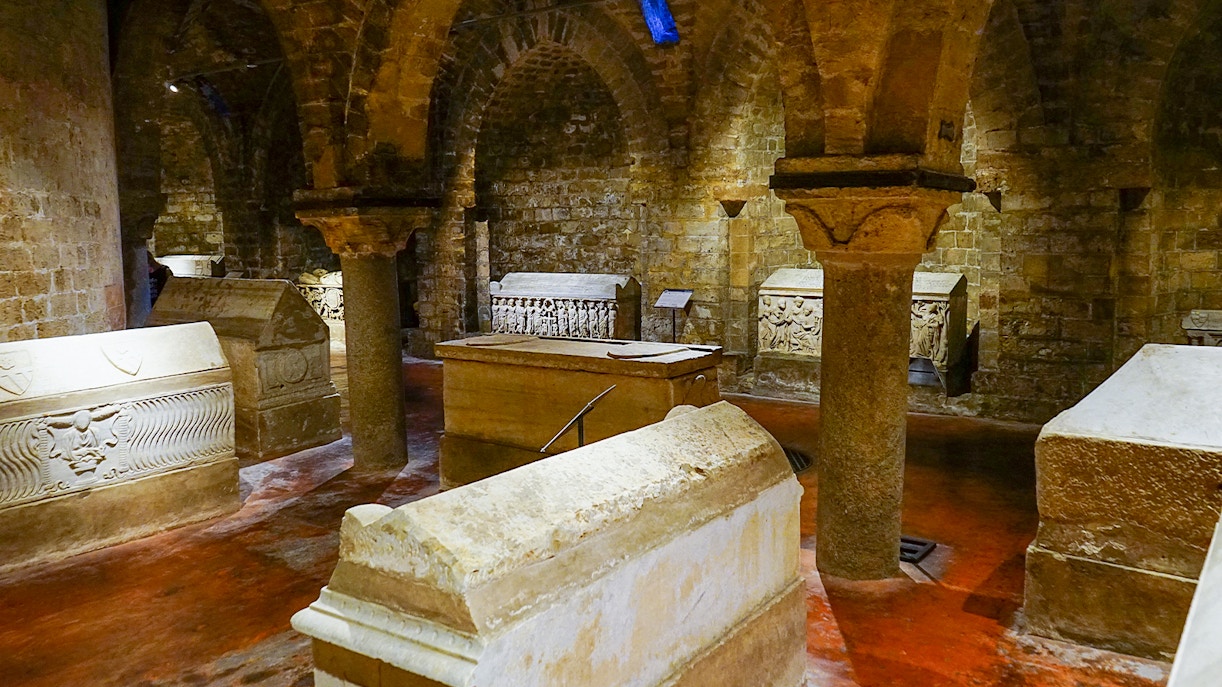
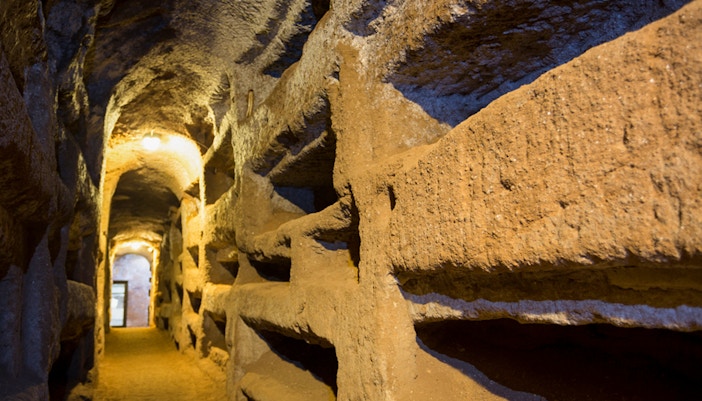
The Christian catacombs in Romeare underground burial sites used by early Christians in ancient Rome. These catacombs served as a place for burial, religious gatherings, and the veneration of saints and martyrs. The term "catacomb" comes from the Latin word catacumbas, which refers to an underground burial chamber. Around forty suchRome Christian catacombs exist to date. Out of these, some of the prominent ones open to the public are the Catacombs of San Sebastiano, Priscilla, Domitilla, Sant’Agnese, and many others.
Quick Facts on Christian Catacombs in Rome
Location: Scattered across Rome
Date of origin: 2nd Century AD
No. of Christian catacombs: Around 40 discovered to date
No. of graves: Over a million Christians were buried
Function: Burial sites for the early Christians
Why Visit the Christian Catacombs in Rome?
Connection to Early Christianity: The Christian Catacombs are underground burial sites that date back to the early days of Christianity, from the 2nd to the 5th centuries. They serve as a tangible reminder of the early Christian community and their burial practices.
Unique Underground Experience: Exploring the catacombs takes you beneath the city streets into an underground network of narrow passages, chambers, and tombs. It offers an intriguing and somewhat eerie atmosphere that transports you back in time.
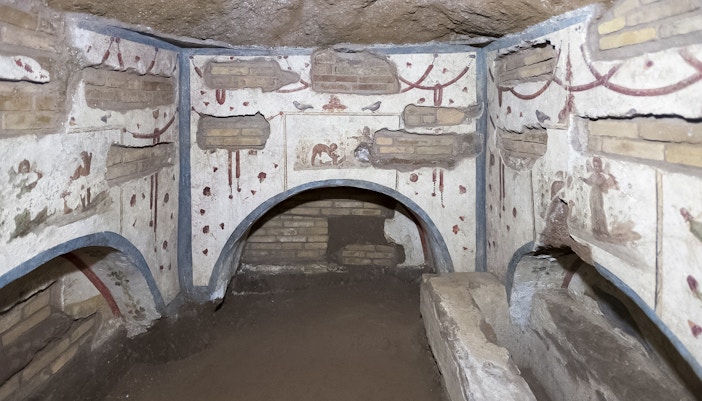
Symbolism and Iconography: The catacombs are adorned with symbolic Christian imagery, such as the Good Shepherd, the fish (ichthus), the anchor, and the peacock. These symbols carry deep religious meaning and provide insights into early Christian beliefs.
Timings: Christian catacombs in Rome have varying opening hours, but mostly, they remain open from 9 AM to 12 PM and from 2 PM to 5 PM. Some of the most popular catacombs’ timings are:
Saint Sebastian Catacombs: 10 AM - 5 PM; Closed on 1 January, December
Sant’AgneseCatacombs: Thu-Fri 9 AM- 12 PM and 3 PM - 6 PM; Sat-Sun, 9 AM- 12 PM and 3 PM to 7 PM; Closed on 1 January, Easter, Christmas, the morning of religious holidays
Best Time to Visit: The best time to visit the ancient Rome catacombs is from April to June (peak season) and between October and March (low season). Try to reach the catacombs during the early morning to avoid the rush and explore the burial sites at your own pace.
The Christian catacombs in Romeare scattered throughout the city of Rome and its surrounding areas. Here is a list of some of the most visited catacombs:
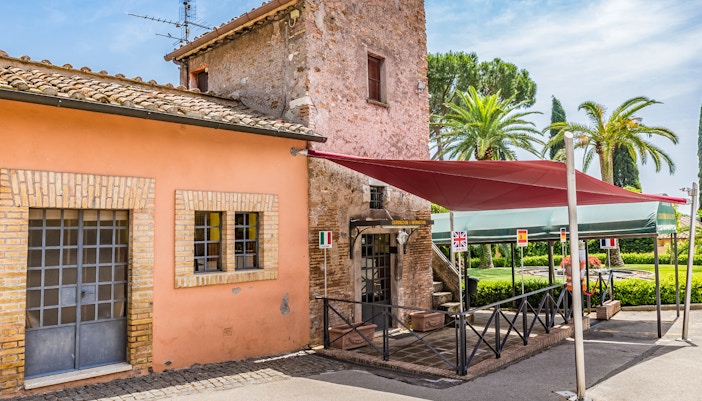
Saint Sebastian Catacombs: Via Appia Antica, 136, 00179 Roma RM [Find on Map]
Callixtus Catacombs: Via Appia Antica, 110/126, 00179 Roma RM [Find on Map]
Sant’AgneseCatacombs: Via Nomentana, 349, 00162 Roma RM [Find on Map]
DomitillaCatacombs: Via delle Sette Chiese, 282, 00147 Roma RM [Find on Map]
PriscillaCatacombs: Via Salaria, 430, 00199 Roma RM [Find on Map]
Which Christian Catacombs in Rome Should You Visit?
The Christian Catacombs of Romeare close to sixty, out of which the most prominent ones are mentioned below. Not all catacombs are open to the public. These are some of the most visited Roman catacombs of the early Christians.
San Sebastiano Catacombs
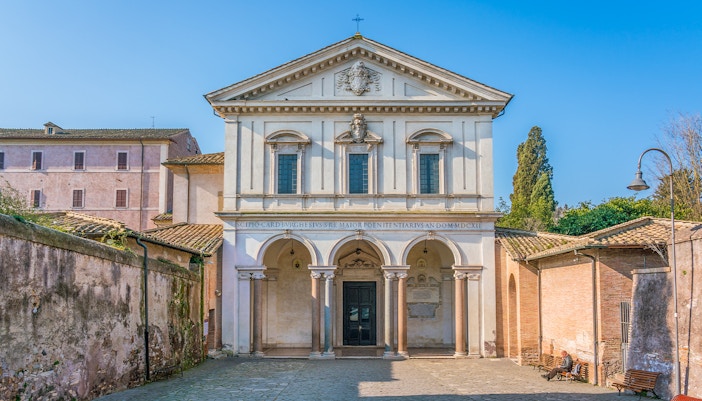
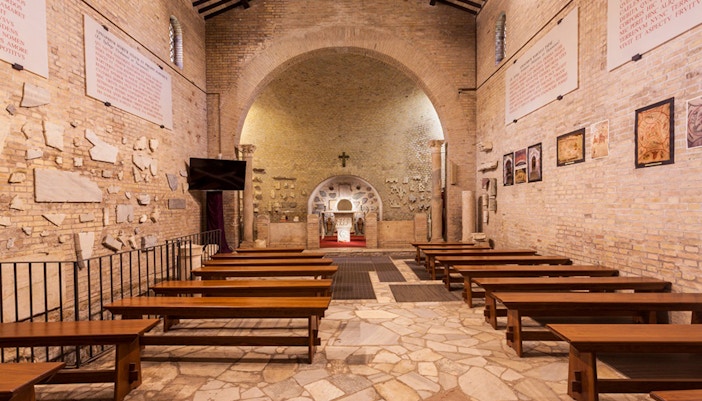
San Sebastiano Catacombs (Via Appia Antica, 136) was originally a pozzolan mine, then a pagan burial ground before being used by Christians. Visitors can see frescoes, stucco work, and epigraphs on the second level, three perfectly preserved mausoleums, and walls plastered with invocations to Peter and Paul. A visit to San Sebastiano Catacombs offers a unique insight into the history of Christianity and the ancient Roman civilization.
Domitilla Catacombs
With 17 kilometers (Via delle Sette Chiese, 280) of underground caves on four levels, the Catacombs of Domitilla is the best-preserved section and offers a glimpse into the Christian community in Imperial Rome and Catholicism between the 2nd and 9th centuries. Visitors can see private tombs linked by an extensive network of galleries depicting scenes from the Old and New Testaments.
Priscilla Catacombs
Priscilla Catacombs (Via Salaria, 430) is one of the most important archaeological sites in Rome, dating back to the 2nd century AD. They are known for their early Christian frescoes and inscriptions, including the oldest-known image of the Virgin Mary. Located on the Via Salaria across from the Villa Ada, Priscilla Catacombs are now under the upkeep of Benedictine Nuns of Priscilla.
San Callixtus Catacombs
Catacombs Rome St. Callixtusare the largest and most visited catacombs, known for containing the tombs of popes, martyrs, and hundreds of thousands of early Christians. Visitors can explore the Crypt of the Nine Popes and the Crypt of St. Cecilia, which feature stunning mosaics and frescoes. A guided tour is recommended to fully appreciate the historical and religious significance of this ancient Christian burial site.
Sant’Agnese Catacombs
Visit the catacombs of Saint Agnes (Via Nomentana, 349) to get a glimpse into the persecutions of early Christians and the reverence they held for their martyrs, as well as an understanding of the history of the catacomb complex. The site also features the well-preserved ancient Christian Basilica of Sant'Agnese and the Mausoleum of Santa Costanza, which are important examples of late-ancient architecture and art.
Praetextatus Catacombs
The Praetextatus Catacombshouses artwork depicting stories from the Old and New Testaments, like the allegorical take of old men disguised as lambs and wolves. The catacombs also contain examples of early Christian art, including gold glass medallions and frescoes. The most notable is the rare fresco of Christ crowned with thorns and the painting of Susanna, from the 4th Century.
How to Get to the Christian Catacombs in Rome?
Reserve a tour: Booking a guided tour with round-trip transfers is the easiest way to visit the Rome Christian catacombs on the Via Appia.
Public Bus: Board buses from 218 and 716 to Domitilla, and 118 and 218 lines to San Sebastian & San Callixtus. From central Rome, take the 66 bus to Primoli followed by the 337 bus to reach Sant’Agnese Catacombs. Hop on the 92 bus from Cernaia in Rome to reach the Priscilla catacombs.
History of the Christian Catacombs in Rome
During the 2nd and 3rd Centuries in Rome, the catacombs served as exclusive sanctuaries for Christians before the era of Constantine. These underground networks, inspired by Jewish traditions, provided a unique haven for believers. The favorable geological conditions, characterized by the presence of tufa, a volcanic rock, facilitated the construction and excavation of these catacombs.
In Rome, the catacombs fulfilled a vital role as final resting places for Christians who bravely clung to their faith amidst the oppressive rule of Emperor Nero. These steadfast individuals, known as martyrs, endured unimaginable suffering—torture, mutilation, imprisonment, immolation, and even death—for their unwavering beliefs. The ruthless persecution of Christians under Nero occurred in the year 64 AD. Subsequently, significant reforms were introduced in Christianity during the reign of Constantine, leading to a shift in the direction of persecuting pagans.
Christian Catacombs in Rome Today
Today, the Christian catacombs in Rome stand as treasure troves to the rich history and enduring faith of early Christians. These underground networks, once places of refuge and burial, now serve as captivating archaeological sites and significant reminders of the past. Visitors can explore the labyrinthine tunnels and marvel at the intricate frescoes and inscriptions that adorn the walls. These catacombs provide a glimpse into the lives and struggles of the early Christian community, offering a profound connection to the roots of their faith.
Frequently Asked Questions About the Christian Catacombs in Rome
Some of the well-known Christian catacombs in Rome are the Catacombs of Priscilla, the Catacombs of S. Agnese, the Catacombs of Domitilla, the Catacombs of S. Sebastiano, the Catacombs of Callixtus, and the Catacombs of Praetextatus.
The Christian catacombs are over 2000 years old, dating back to the 2nd Century.
The Christian catacombs were built primarily as underground burial sites and places of worship for the early Christian community. Later on, the catacombs played a significant role in preserving early Christian art and symbols. These artworks served as a visual representation of Christian beliefs and provided solace and inspiration to the underground Christian community.
You can find the buried remains of eminent personalities in the Rome Christian catacombs such as Pope Marcellinus, and Pope Marcellus I among others.
You can book Rome Catacomb Tour online and save the hassle of last-minute booking. Additionally, you can leverage the expertise of an experienced guide and also, enjoy round-trip transfers on selected tickets.
Currently, some of the most visited are the Catacombs of San Sebastiano, Domitilla, Priscilla, San Callixtus, Sant’Agnese, and Praetextatus.
Although the opening hours vary from one catacomb to the other, the usual timings are between 9 AM to 12 PM and 2 PM to 5 PM.
You can visit multiple Christian catacombs in a day if they are in the close vicinity. Keep in mind that exploring catacombs take time, hence, plan ahead of the travel times between the sites to get ample time to explore.
Yes, you can click pictures inside the catacombs. Keep in mind, not all sections of the catacombs are properly lit, so you fight face a struggle to capture clear images.
Visitors are recommended to dress modestly with shoulders and knees covered, considering the sacred nature of the catacombs. Some catacombs may have a particular dress code, so it is recommended to check before you visit.
Unfortunately, most catacombs have little to no access for people with disability due to the underground nature and rough terrain. However, if you plan to visit, check the accessibility information.