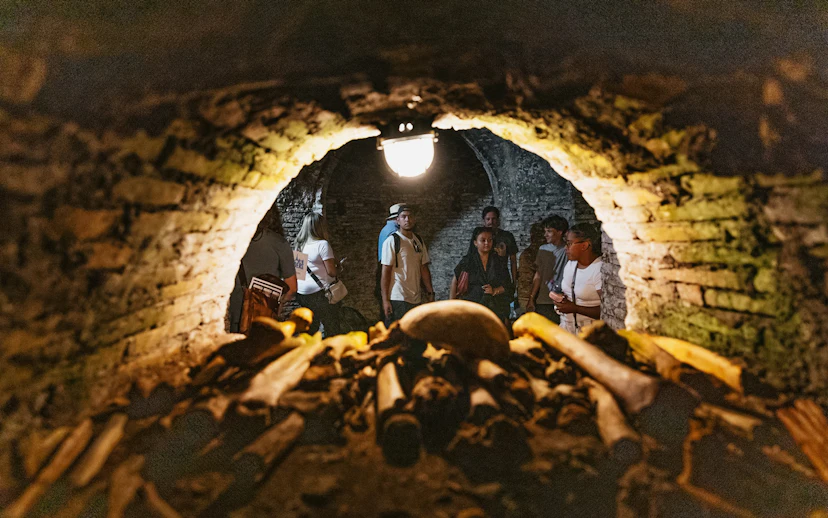
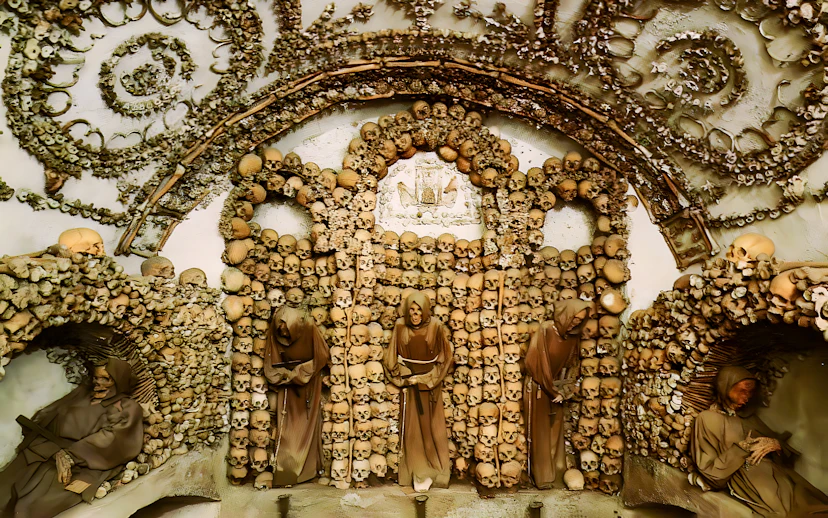
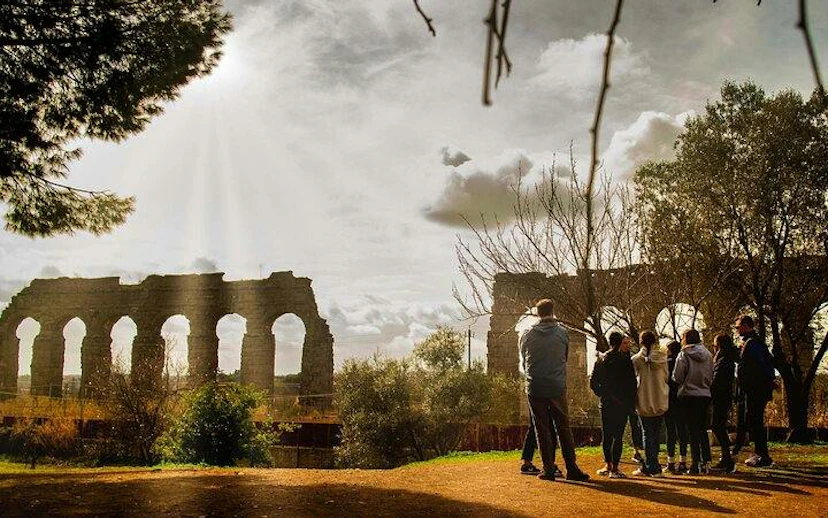
- Guided visits only: You cannot explore any of the five public Roman catacombs independently. All visits are conducted with an official guide.
- Short, guided routes: A typical visit lasts 30–45 minutes and covers only a small section of the much larger underground network.
- Groups depart at set times: Popular catacombs generally run guided visits at regular intervals, so check the available tour times when booking.
- No single catacomb ticket: There is no central ticket office or website covering all five sites. Each catacomb is managed separately and has its own tickets, opening hours, prices and closure dates.
- Check before you go: Schedules can change for maintenance, religious events or other operational reasons. Check the relevant official website before travelling.
- Different locations: The five catacombs are spread across Rome, so don't assume they can all be visited from the same starting point or on the same route.
Christian Catacombs of Rome
Rome's Christian catacombs are underground cemeteries dug into the soft volcanic rock (tufa) beneath the city between the 2nd and 5th centuries AD. They were not hideouts. Roman law forbade burial inside the city walls for everyone, pagan or Christian, so Christian communities bought or were given land along the consular roads — the Appia, the Salaria, the Nomentana — and tunneled downward instead of outward, because underground space was cheaper than surface land and tufa cuts easily but hardens on contact with air.
Around 60 of these complexes are known today; five are open for regular guided visits, and a couple more can be booked by written request.
Visiting the Christain Catacombs: how it actually works
#
Why they went underground and it wasn't simply to hide
The popular story is that Christians dug catacombs to escape Roman persecution and worship in secret. The reality is more complicated. Underground burial was already familiar in the Roman world, and Christians adapted existing funerary practices to create large communal cemeteries. Land outside Rome was also more available, while the city's burial laws gave formally established burial grounds a protected legal status.
Persecution did sometimes turn these cemeteries into places of refuge and worship. In 257 AD, Emperor Valerian specifically prohibited Christians from holding assemblies in cemeteries and entering their underground burial places. The order shows that Christian cemeteries were known to authorities. They were not simply secret spaces hidden beneath the city.
The catacombs were therefore primarily cemeteries, expanded over generations as Christian communities grew. Their underground form reflected a mix of geology, available land, Roman burial customs and the community's desire to bury its dead together.
A working timeline
Late 2nd to early 3rd century
Rome's Christian catacombs begin developing on a larger scale. Existing hypogea, quarries and burial areas were expanded into interconnected underground cemeteries.
199 to 217 AD
Pope Zephyrinus entrusts the deacon Callixtus with the cemetery on the Appian Way. Callixtus later becomes pope, and the cemetery eventually bears his name.
3rd century
Catacomb networks expand substantially, with multiple levels of galleries, burial chambers, painted cubicula and loculi serving growing Christian communities.
257 to 258 AD
Valerian's persecution specifically prohibits Christians from assembling in cemeteries. Pope Sixtus II is captured and executed at the Catacomb of San Callixtus in 258.
313 AD onward
The Edict of Milan brings a major change in the legal position of Christianity. Above-ground Christian cemeteries and basilicas become increasingly important, while underground burial continues for several generations.
4th to 5th centuries
Burial patterns gradually shift toward cemeteries and basilicas above ground. The catacombs increasingly become places of martyr veneration and pilgrimage rather than the main destination for new burials.
8th century
Lombard attacks damage suburban sanctuaries, and popes begin transferring martyr relics from the vulnerable catacombs to churches within Rome. Pope Paul I undertakes major relic translations in the 750s and 760s.
1578
A landslide during excavation work exposes an underground Christian cemetery, reigniting scholarly interest in Rome's forgotten catacombs. The site was initially misidentified, illustrating how little reliable knowledge remained about the ancient network.
1593 to 1632
Antonio Bosio systematically explores Rome's underground cemeteries. His Roma Sotterranea, published posthumously in 1632, becomes a landmark work in catacomb studies.
1849 onward
Giovanni Battista de Rossi pioneers the scientific study of Christian archaeology. His research at San Callixtus, combining archaeological evidence with ancient written sources, helps identify the historic Crypt of the Popes. The work lays the foundations for modern catacomb archaeology.
The major Roman catacombs open to the public
The Christian Catacombs of Romeare close to sixty, out of which the most prominent ones are mentioned below. Not all catacombs are open to the public. These are some of the most visited Roman catacombs of the early Christians.
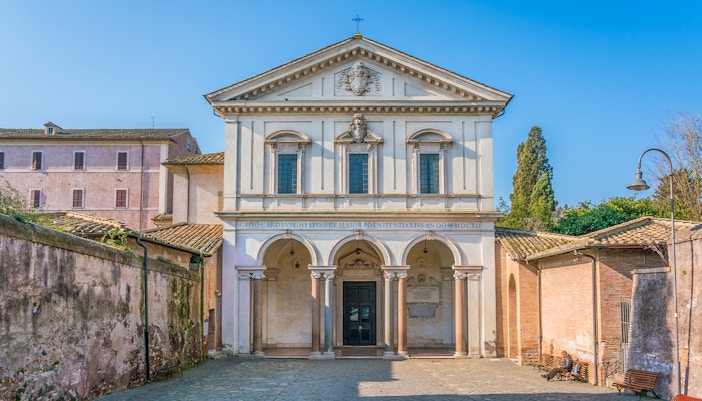
San Sebastiano Catacombs
San Sebastiano Catacombs (Via Appia Antica, 136) was originally a pozzolan mine, then a pagan burial ground before being used by Christians. Visitors can see frescoes, stucco work, and epigraphs on the second level, three perfectly preserved mausoleums, and walls plastered with invocations to Peter and Paul. A visit to San Sebastiano Catacombs offers a unique insight into the history of Christianity and the ancient Roman civilization.

Domitilla Catacombs
With 17 kilometers (Via delle Sette Chiese, 280) of underground caves on four levels, the Catacombs of Domitilla is the best-preserved section and offers a glimpse into the Christian community in Imperial Rome and Catholicism between the 2nd and 9th centuries. Visitors can see private tombs linked by an extensive network of galleries depicting scenes from the Old and New Testaments.
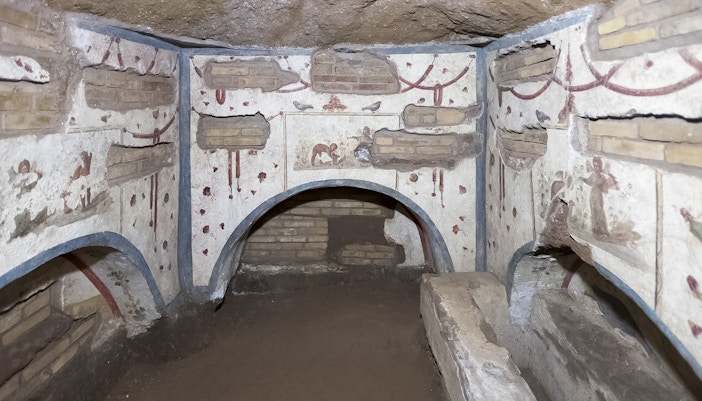
Priscilla Catacombs
Priscilla Catacombs (Via Salaria, 430) is one of the most important archaeological sites in Rome, dating back to the 2nd century AD. They are known for their early Christian frescoes and inscriptions, including the oldest-known image of the Virgin Mary. Located on the Via Salaria across from the Villa Ada, Priscilla Catacombs are now under the upkeep of Benedictine Nuns of Priscilla.
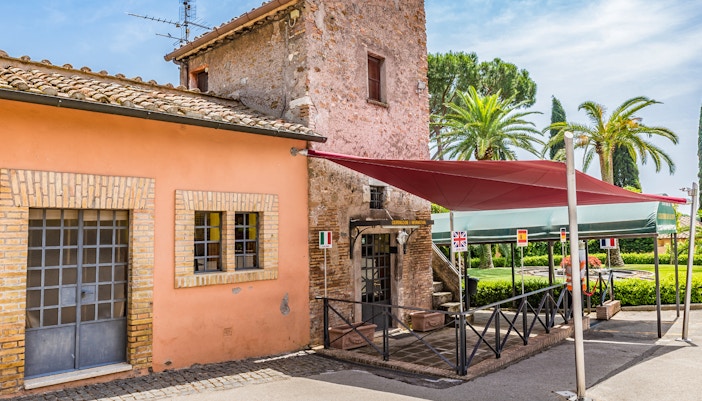
San Callixtus Catacombs
Catacombs Rome St. Callixtusare the largest and most visited catacombs, known for containing the tombs of popes, martyrs, and hundreds of thousands of early Christians. Visitors can explore the Crypt of the Nine Popes and the Crypt of St. Cecilia, which feature stunning mosaics and frescoes. A guided tour is recommended to fully appreciate the historical and religious significance of this ancient Christian burial site.
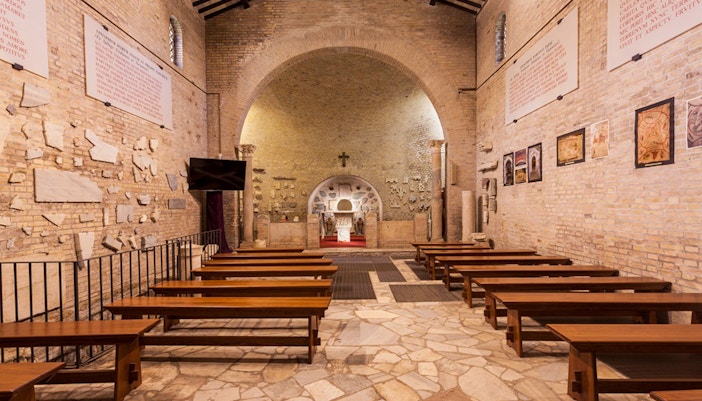
Sant’Agnese Catacombs
Visit the catacombs of Saint Agnes (Via Nomentana, 349) to get a glimpse into the persecutions of early Christians and the reverence they held for their martyrs, as well as an understanding of the history of the catacomb complex. The site also features the well-preserved ancient Christian Basilica of Sant'Agnese and the Mausoleum of Santa Costanza, which are important examples of late-ancient architecture and art.
History of the Christian Catacombs in Rome
During the 2nd and 3rd Centuries in Rome, the catacombs served as exclusive sanctuaries for Christians before the era of Constantine. These underground networks, inspired by Jewish traditions, provided a unique haven for believers. The favorable geological conditions, characterized by the presence of tufa, a volcanic rock, facilitated the construction and excavation of these catacombs.
In Rome, the catacombs fulfilled a vital role as final resting places for Christians who bravely clung to their faith amidst the oppressive rule of Emperor Nero. These steadfast individuals, known as martyrs, endured unimaginable suffering—torture, mutilation, imprisonment, immolation, and even death—for their unwavering beliefs. The ruthless persecution of Christians under Nero occurred in the year 64 AD. Subsequently, significant reforms were introduced in Christianity during the reign of Constantine, leading to a shift in the direction of persecuting pagans.
Christian Catacombs in Rome Today
Today, the Christian catacombs in Rome stand as treasure troves to the rich history and enduring faith of early Christians. These underground networks, once places of refuge and burial, now serve as captivating archaeological sites and significant reminders of the past. Visitors can explore the labyrinthine tunnels and marvel at the intricate frescoes and inscriptions that adorn the walls. These catacombs provide a glimpse into the lives and struggles of the early Christian community, offering a profound connection to the roots of their faith.
Frequently Asked Questions About the Christian Catacombs in Rome
Some of the well-known Christian catacombs in Rome are the Catacombs of Priscilla, the Catacombs of S. Agnese, the Catacombs of Domitilla, the Catacombs of S. Sebastiano, the Catacombs of Callixtus, and the Catacombs of Praetextatus.
The Christian catacombs are over 2000 years old, dating back to the 2nd Century.
The Christian catacombs were built primarily as underground burial sites and places of worship for the early Christian community. Later on, the catacombs played a significant role in preserving early Christian art and symbols. These artworks served as a visual representation of Christian beliefs and provided solace and inspiration to the underground Christian community.
You can find the buried remains of eminent personalities in the Rome Christian catacombs such as Pope Marcellinus, and Pope Marcellus I among others.
You can book Rome Catacomb Tour online and save the hassle of last-minute booking. Additionally, you can leverage the expertise of an experienced guide and also, enjoy round-trip transfers on selected tickets.
Currently, some of the most visited are the Catacombs of San Sebastiano, Domitilla, Priscilla, San Callixtus, Sant’Agnese, and Praetextatus.
Although the opening hours vary from one catacomb to the other, the usual timings are between 9 AM to 12 PM and 2 PM to 5 PM.
You can visit multiple Christian catacombs in a day if they are in the close vicinity. Keep in mind that exploring catacombs take time, hence, plan ahead of the travel times between the sites to get ample time to explore.
Yes, you can click pictures inside the catacombs. Keep in mind, not all sections of the catacombs are properly lit, so you fight face a struggle to capture clear images.
Visitors are recommended to dress modestly with shoulders and knees covered, considering the sacred nature of the catacombs. Some catacombs may have a particular dress code, so it is recommended to check before you visit.
Unfortunately, most catacombs have little to no access for people with disability due to the underground nature and rough terrain. However, if you plan to visit, check the accessibility information.