
From happy customers

Loved by 47 million+
Trustpilot rating: 4.5 out of 5
Christina Victoria Hiromoto
US

Christina

United States
Jan 2026

review-image
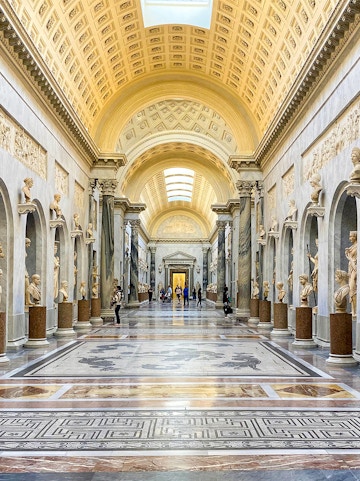
#I've been to the Vatican Museums before, and both times have really been a great experience. The first time I had a 4:30pm booking on a weekday and the crowds were very little. There was still a line outside the museums we had to wait in, and another line inside to scan our passes. This time we booked with Headout for 8:30am on a tuesday morning. It felt much easier as we were escorted as a group through the lines by simply scanning our tickets. It was also not too crowded during that time! We personally wanted to have an entire morning and Headout had tickets left (The Vatican website did not) for those times. It was nice because we were not rushing at all. Definitely avoid the lunch hours to beat the crowds! Also they have a cafe/food area--lifesaver!
Jordi Chaparro Gonzalez
JP

Jordi

Japan
Jan 2026

review-image

review-image

review-image

+2 more

Here's a professional reviewer. This is my third visit to the Vatican, and I'm really delighted. There were hardly any lines, the staff was super friendly, and everything was much better organized than I remembered. If I could add anything, it would be a couple more signs to guide people when leaving the museum, which would be great. Also, the prices weren't too bad in the cafeteria. I highly recommend a visit, but I did go during the off-season.
Darinda Dragon
US

Darinda

United States
Jan 2026

review-image
Our tour guide was FABULOUS! Isabella Was 12* on a scale of 10 star! She really cares to educate! she deserves a raise😁 Your company cut through Hours of the line to take us straight in to the museum-no waiting in line!!!
Susan Margaret Fizio
GB

Susan

United Kingdom
Jan 2026

review-image
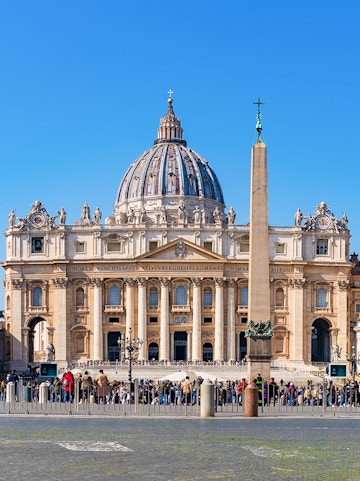
The overall experience was so informative, emotional & a must do on anyone's trip to Rome. The art work was amazing, the museum was exciting, The Sistine Chapel was out of this word as was St Peter's Bassilica
Fucci Mauro

Fucci

Jan 2026

review-image
It was a good experience, it was easy to make reservations, and the convenient queue skipping saves you long waits to get in to visit the desired places...
Arianna Bartezaghi

Arianna

Dec 2025

review-image

review-image

review-image

+2 more

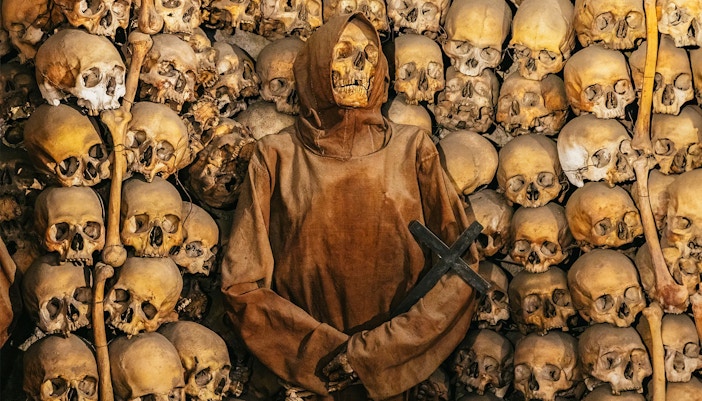
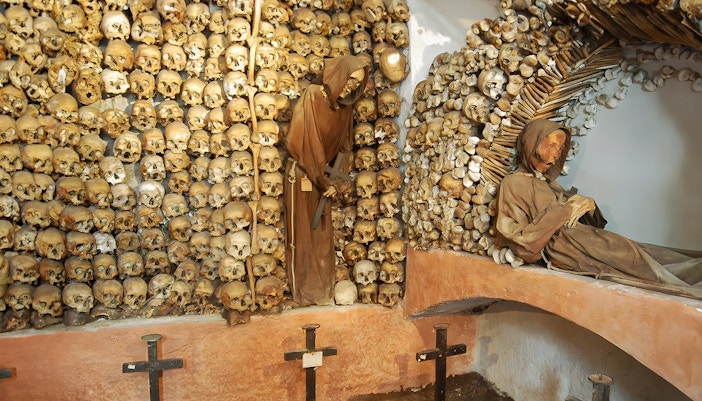
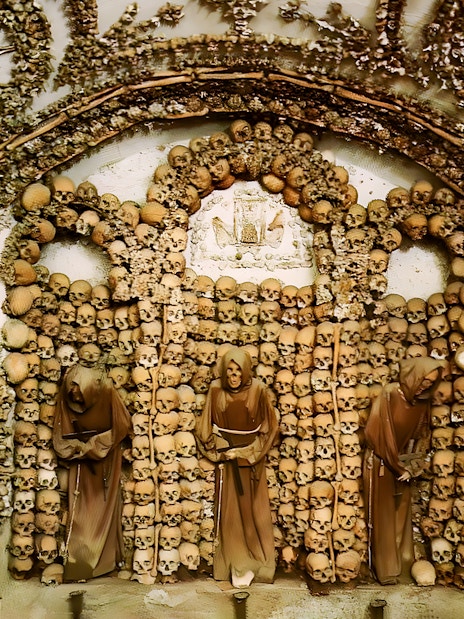
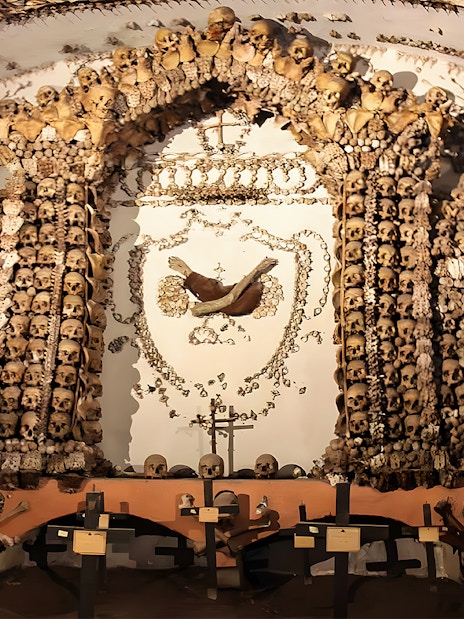
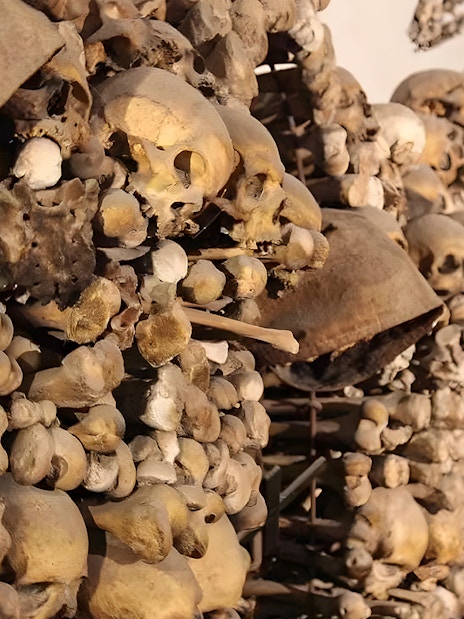
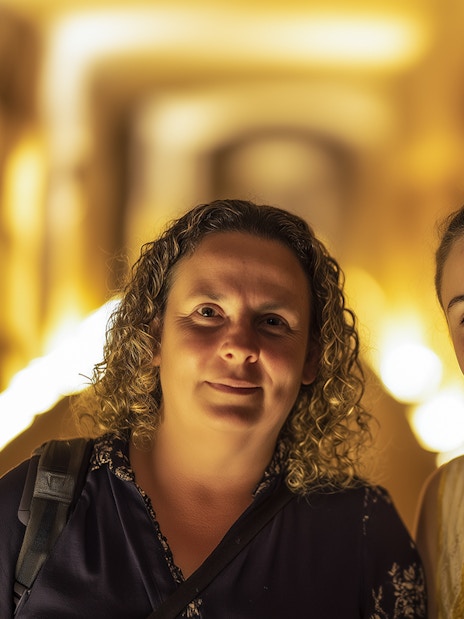
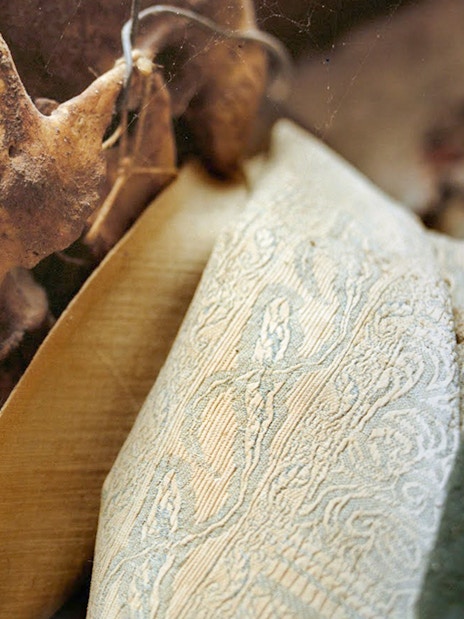
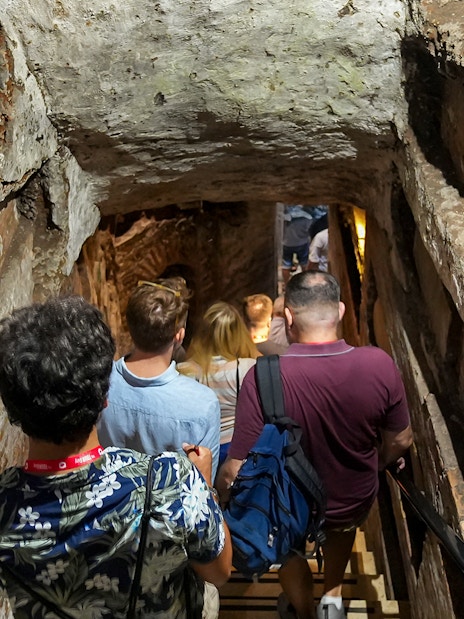
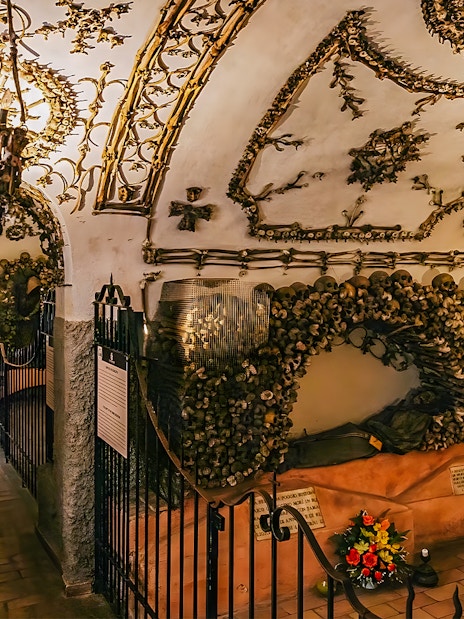
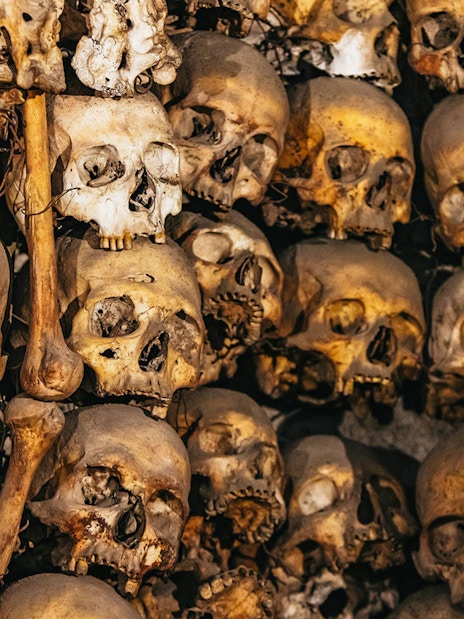
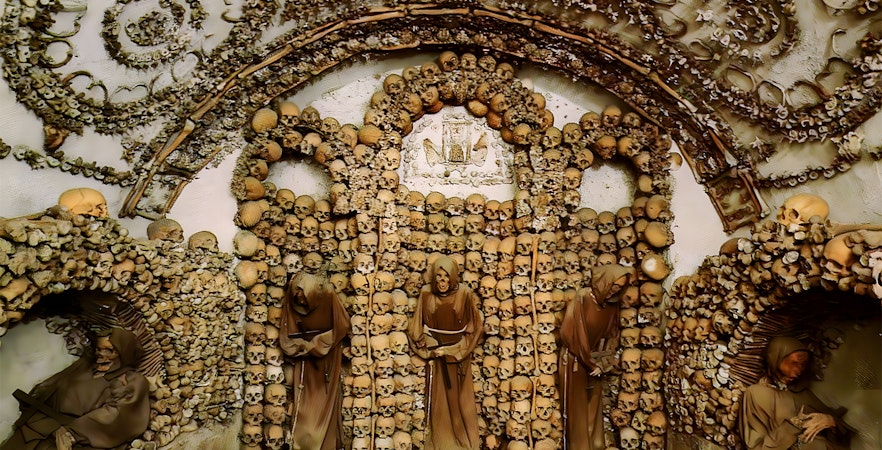
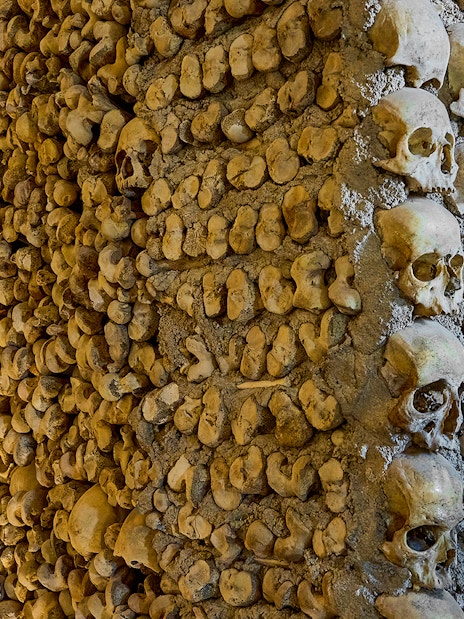
The museum is interesting where it explains who the Capuchin friars were, what they were dedicated to, with descriptions of the most important friars in history. The crypts on the other hand are the real highlight, beautiful mosaics of bones with the smallest pieces of ns body covering all the ceiling arches, chosen with real accuracy. The crypts on the other hand fascinating and scenic also studied in great detail especially in the central parts each with a different theme. I personally had a good time and did not feel the weight of lost souls, probably each of them found peace.
Carmen Olivas Lara
CR

Carmen

Costa Rica
Dec 2025

review-image

review-image
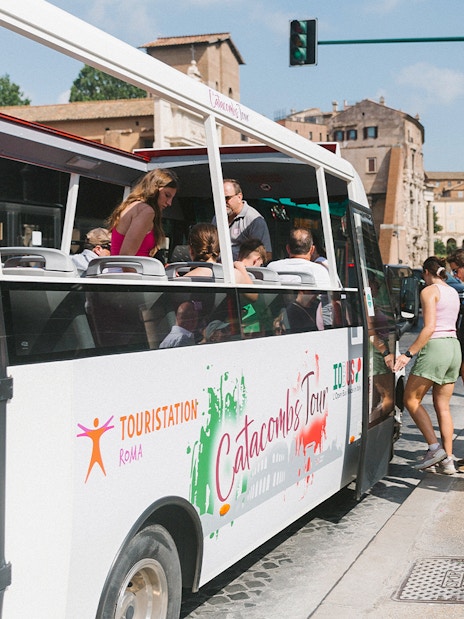
It was excellent especially the girl from the office that validates the tours who ran with me to get on time to the bus that makes the tour of the Vatican gardens, because I arrived late because there was a lot of traffic in Rome and also the rain. I am happy and grateful.
Michelle Paola Chavez
CH

Michelle

Switzerland
Nov 2025

review-image

review-image

review-image
Making a tegalo to mom 80 years old ,November all ok,the day fantastic together the tours both in bus and museums. Muchas gracias Thank you very much Merci beaucoup


San Nicola in Carcere: Layers of history beneath a sacred basilica

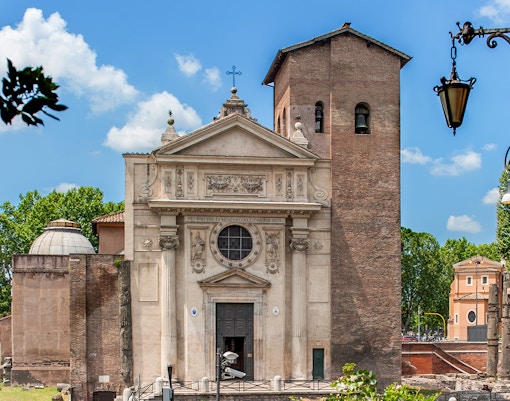
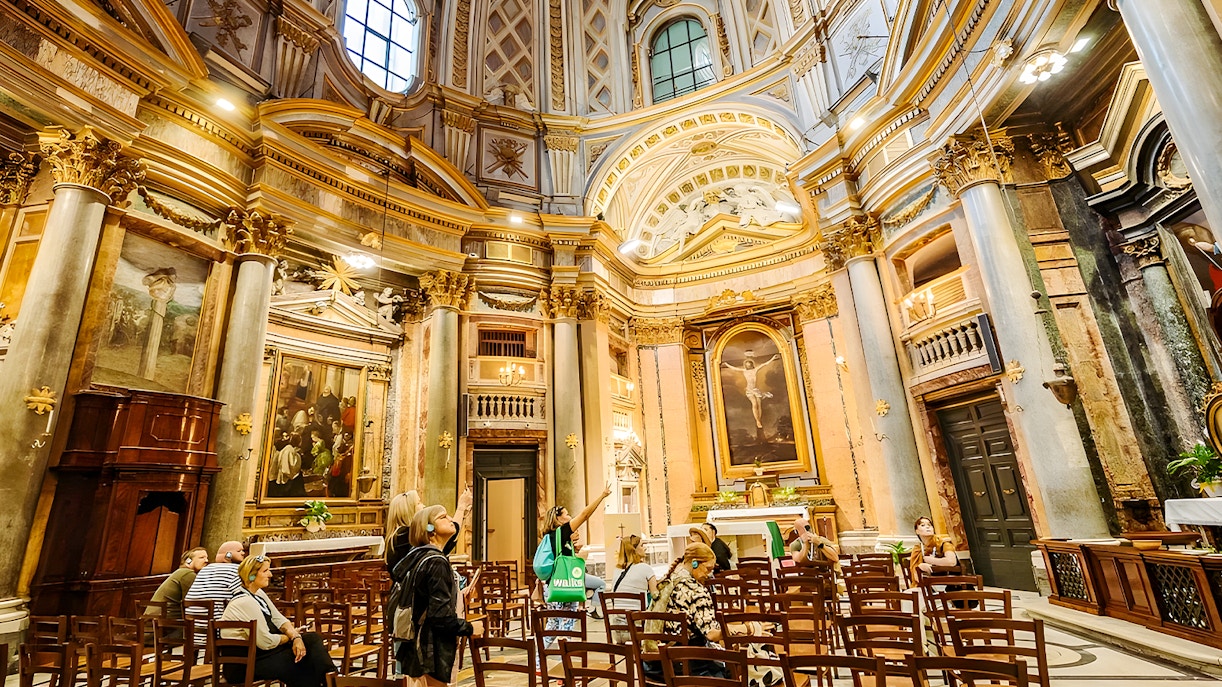
San Nicola in Carcere is an off-beat landmark with an unassuming exterior, also a treasure trove of art and history. It was constructed in and from the ruins of Forum Holitorium—an ancient vegetable market once home to Roman temples and a Byzantine jail! The architecture features spolia (repurposed stones) from these original sites, while the altar leads to a unique crypt. Read on to learn more!

San Nicola Basilica | Quick facts

People at Basilica of San Nicola
  • Historical significance: Built over the ruins of three Roman temples (3rd–2nd centuries BCE) near the Forum Olitorium, it reflects a rich history tied to ancient Rome and a tradition of a medieval prison on the site.
  • Art and architecture: Features a three-nave layout with 14 columns from ancient temples, rebuilt in the 16th century by Giacomo Della Porta and restored in the 19th century. Inside are notable works by Guercino and Antonio Romano.
  • Current use: Serves as a minor basilica and local place of worship, particularly for communities from Puglia and Lucania, while drawing visitors interested in its history and architecture.
  • Accessibility: Lacks wheelchair accessibility, posing challenges for visitors with mobility issues.
  • Key features: Highlights include the incorporation of ancient temple remains, Renaissance frescoes, a unique façade blending medieval and Renaissance elements, and an underground area showcasing Rome's layered history.

Why visit San Nicola in Carcere?

Layered history, literally

Going back centuries, you see structures from the Roman era to the Renaissance, from remnants of ancient temples to revamped façades.

Architectural details

The blend of architectural styles and the ancient columns tell a captivating story, while the crypt beneath reveals ancient Roman structures and artifacts.

Fascinating underground

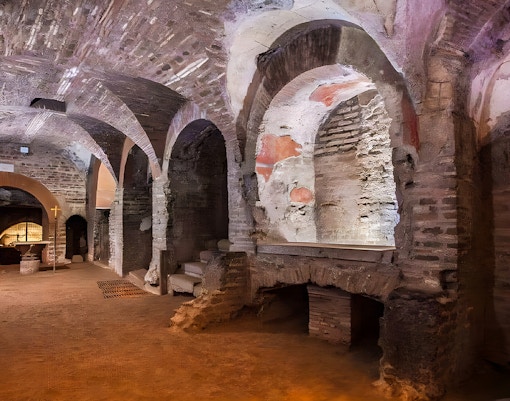
While the Basilica is tiny, the treasures beneath are worth a visit. Combining a guided tour with other catacombs and crypts gives you a different perspective of Rome’s complex underground!

Spiritual reflection

With numerous little side chapels and divine artwork, this peaceful Basilica offers a respite from the usual throng inside Rome’s churches.

What to see at San Nicola in Carcere?

Spolia from Roman temples

Spolia from Roman temples

Three columns from the Temple of Juno Sospita are integrated into both the 10th-century and 1599 front façades. The columns of the Temple of Janus, dedicated by Gaius Duilius after his triumph at the Battle of Mylae in 260 BC, are visible within the northern wall. On the southern wall, six columns from the Temple of Spes stand proudly.

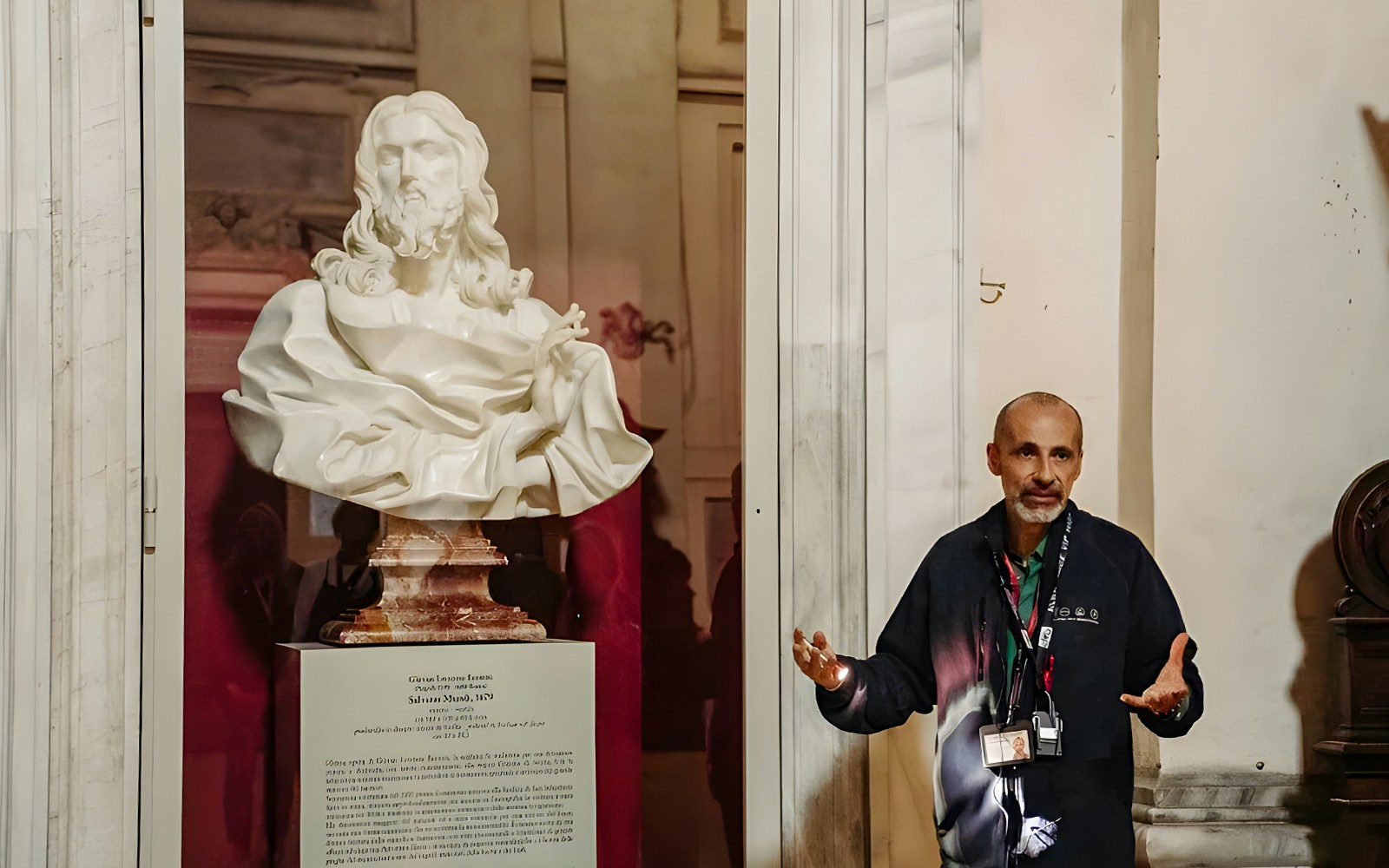
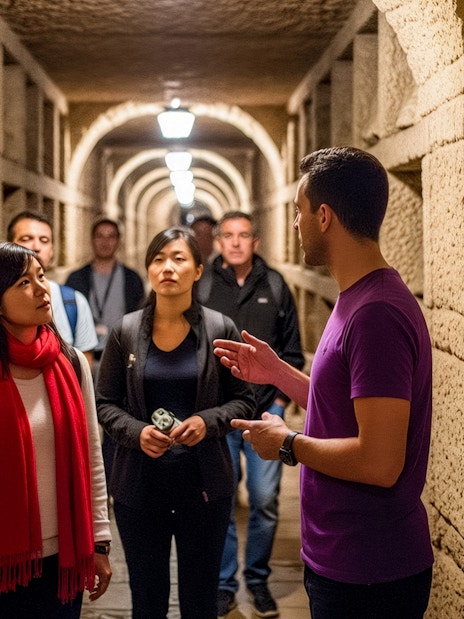
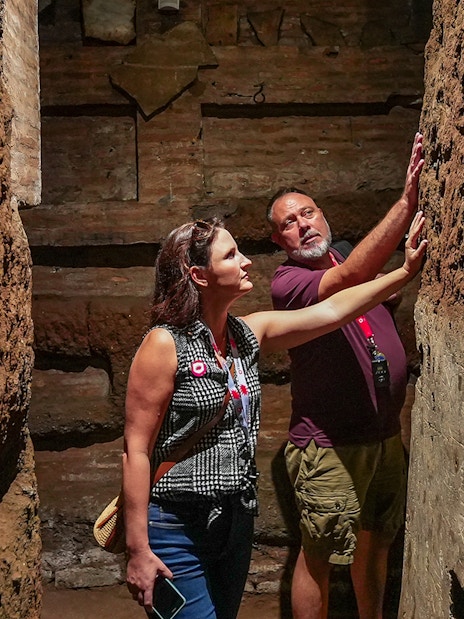
Tourists at Basilica of San Nicola before Roman Catacombs and Capuchin Crypts tour, Rome.
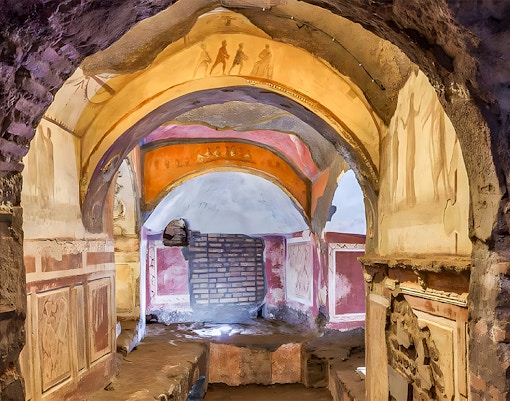
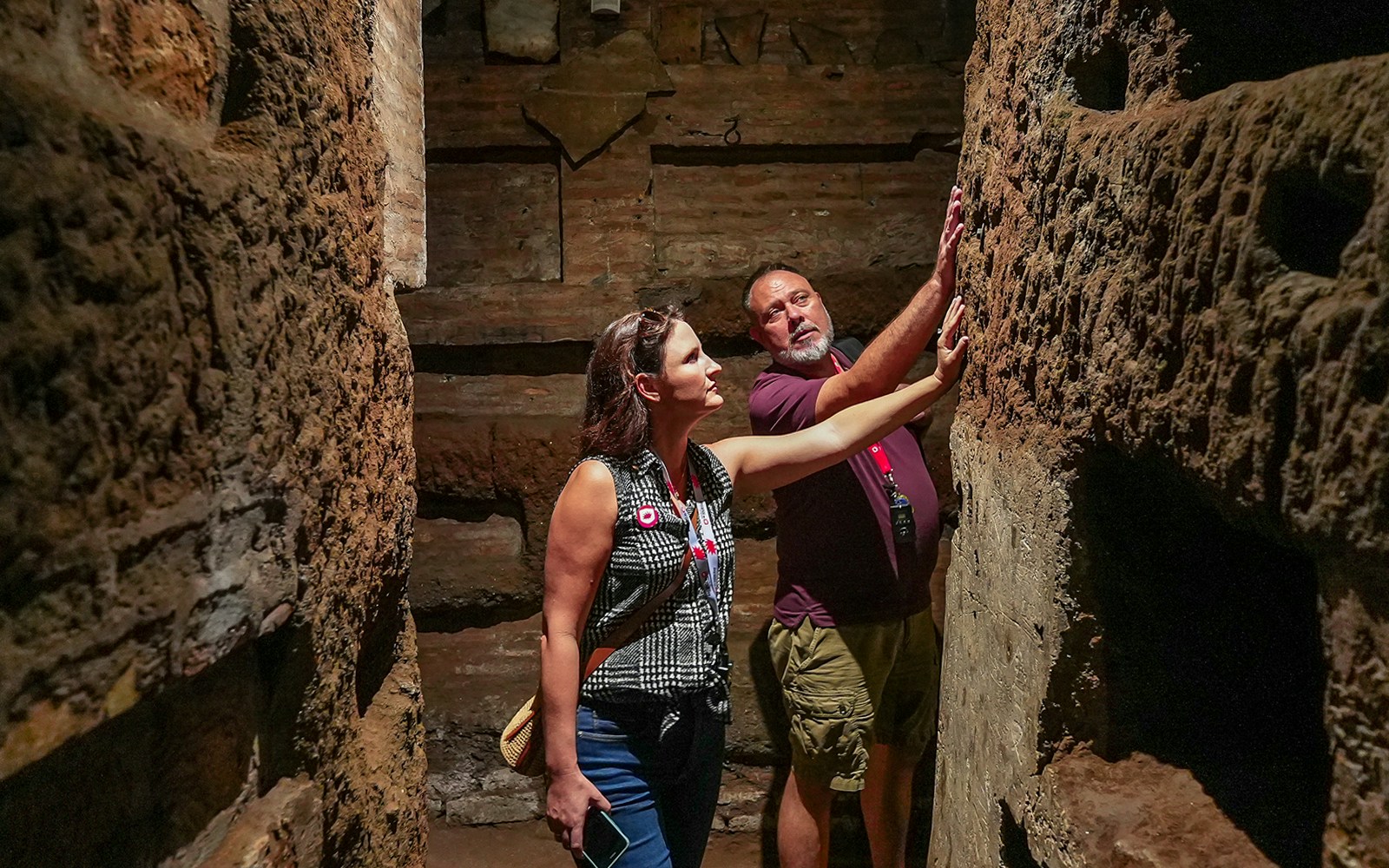
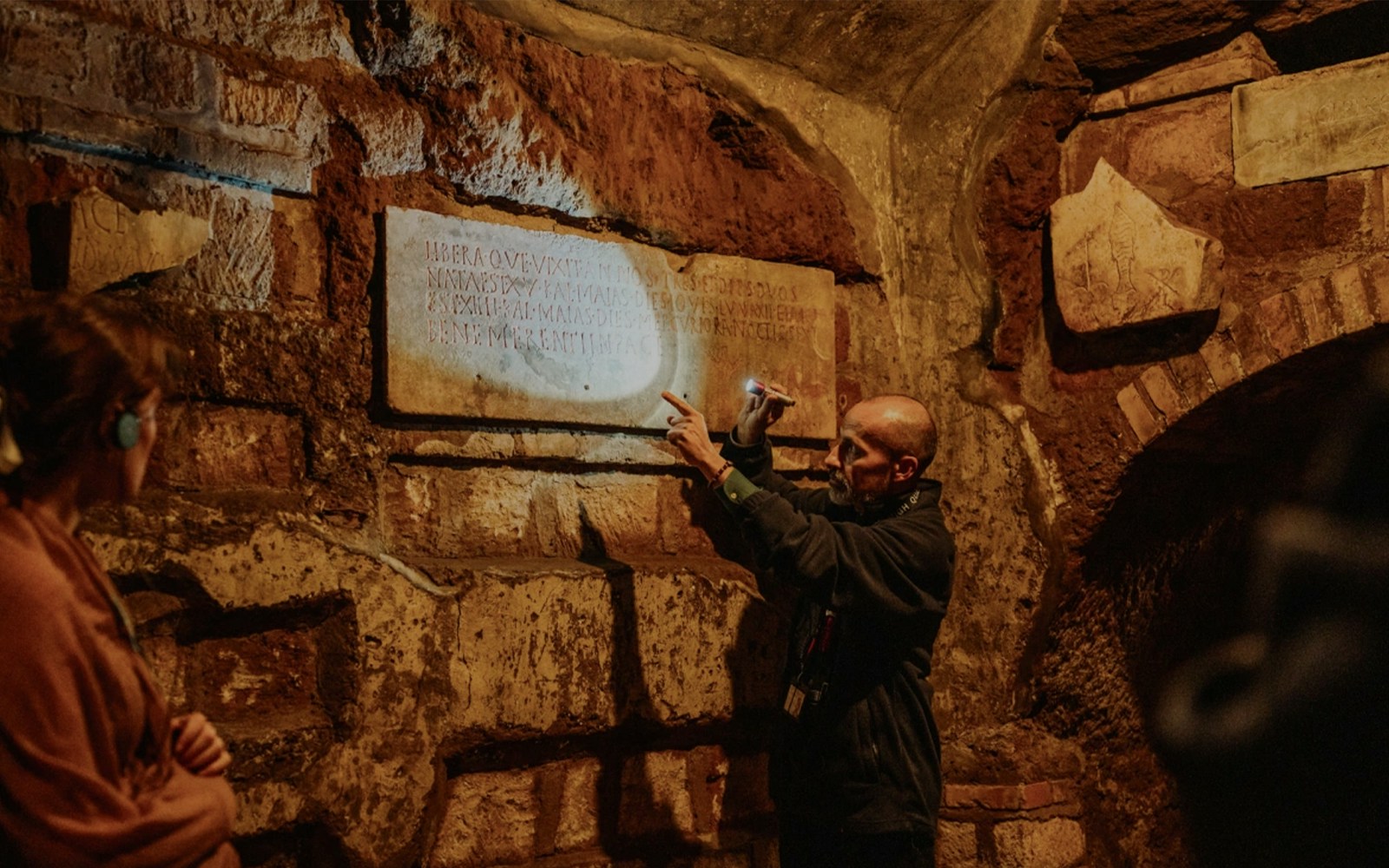
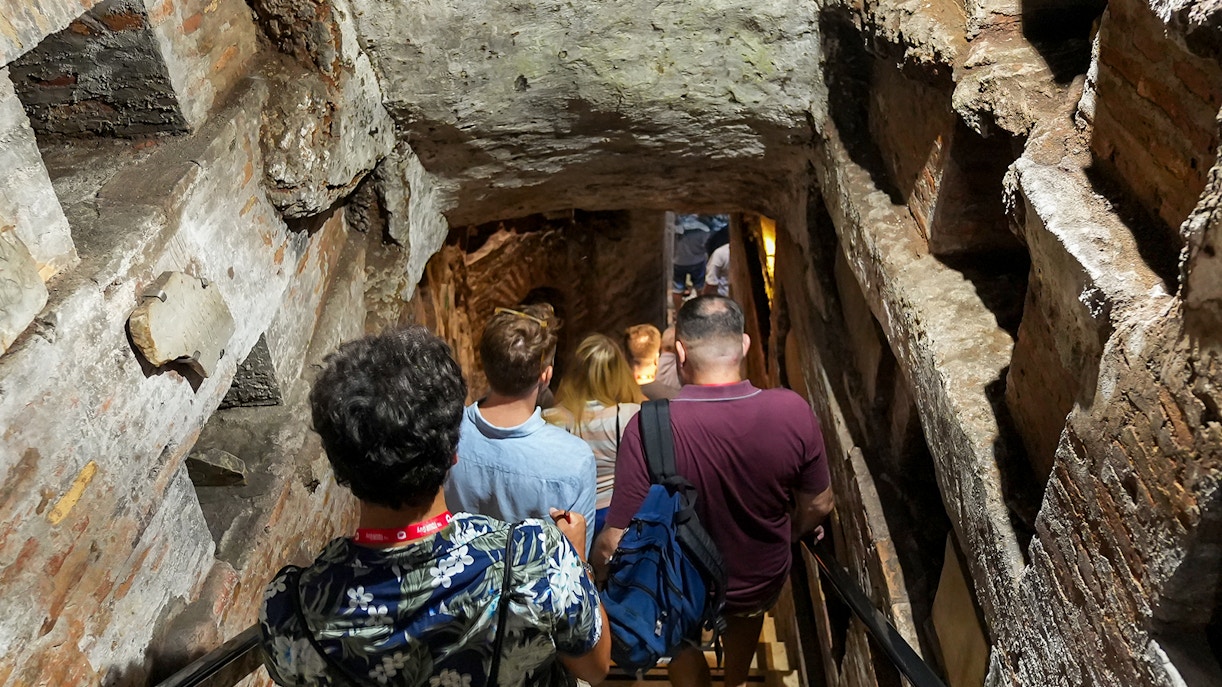
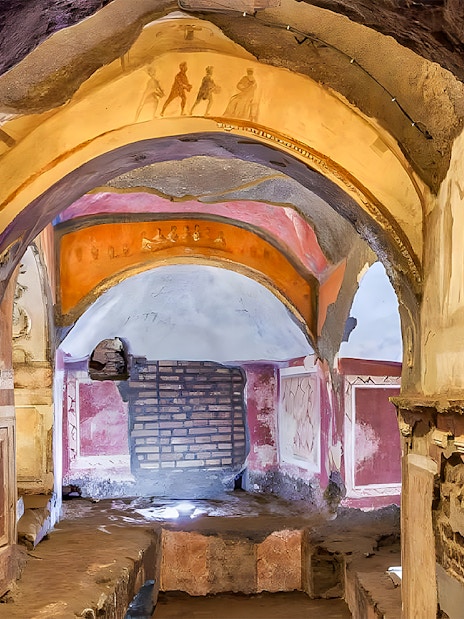
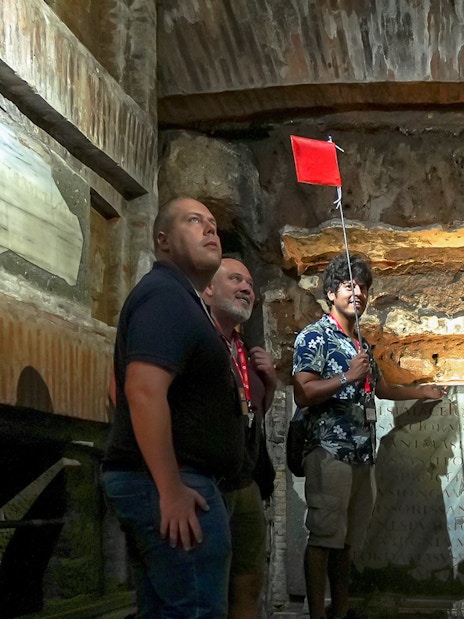
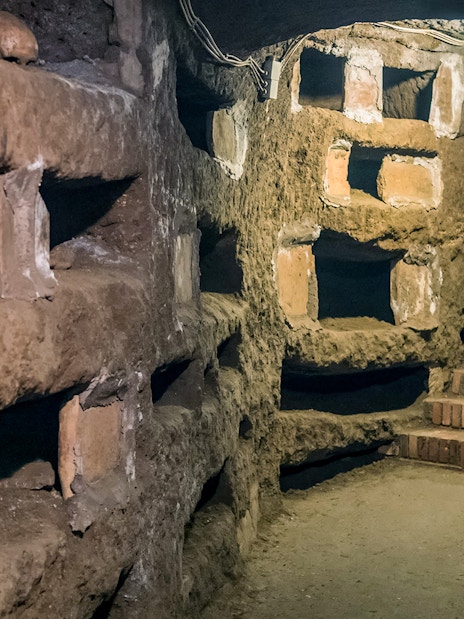
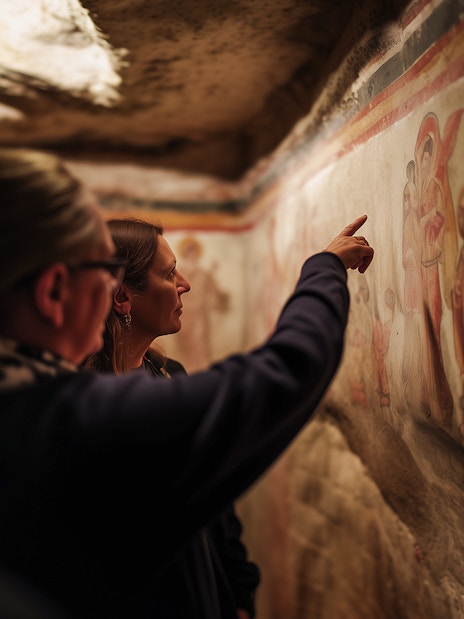
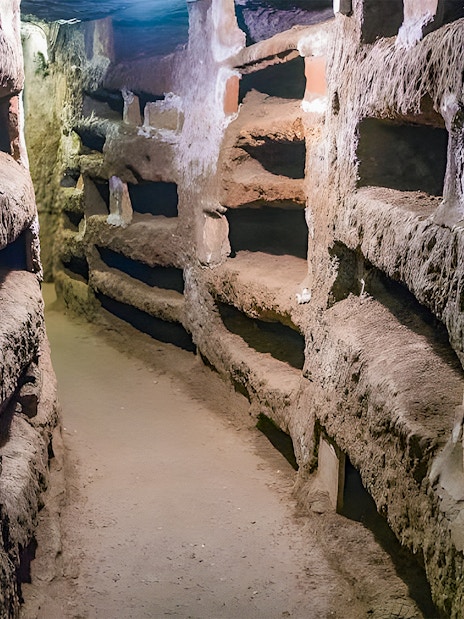
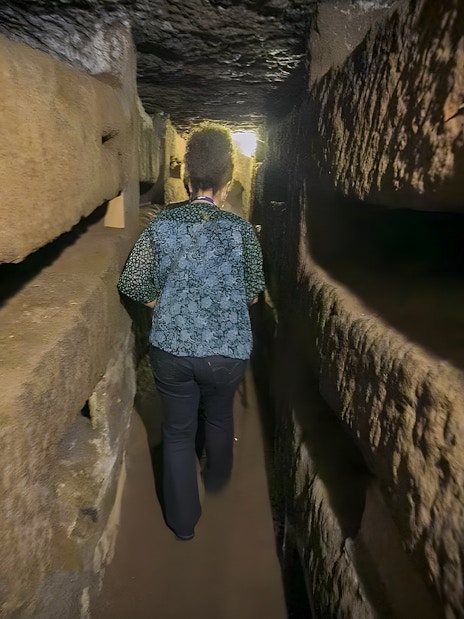
Tourists exploring Roman Catacombs with ancient frescoes and stone walls in Rome, Italy.
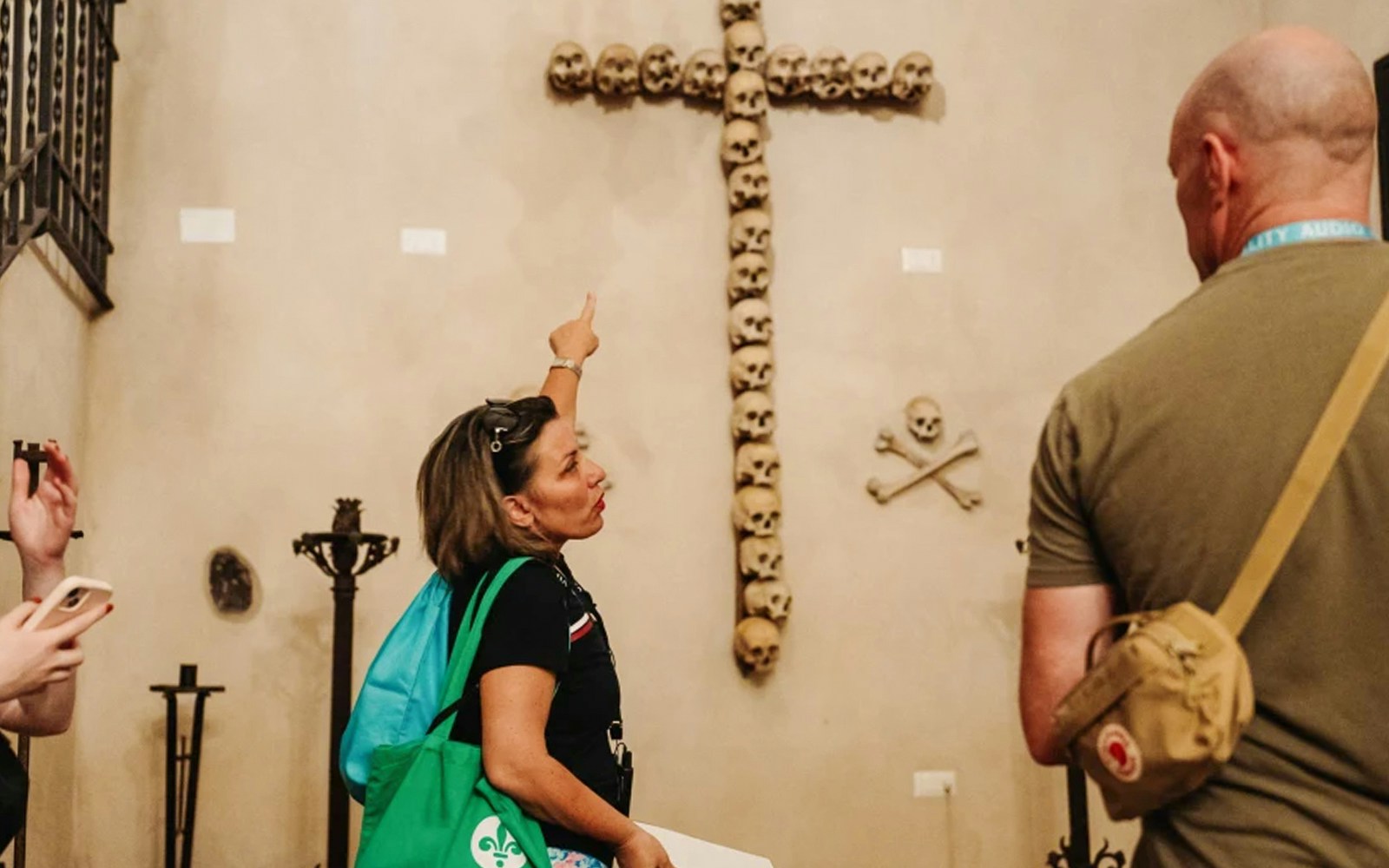
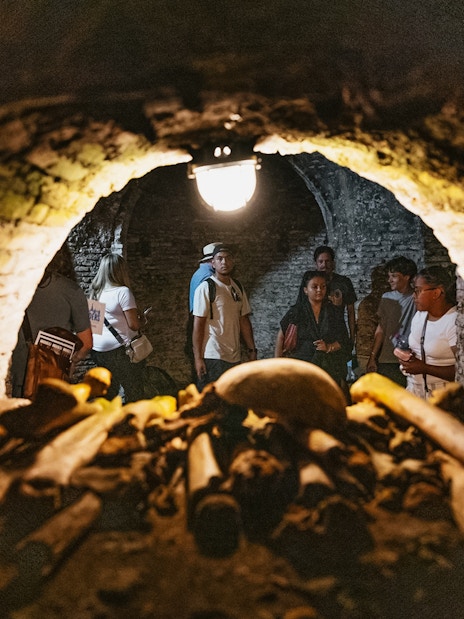
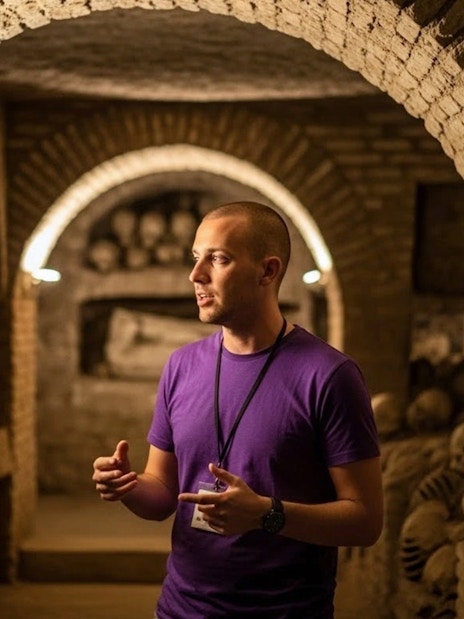
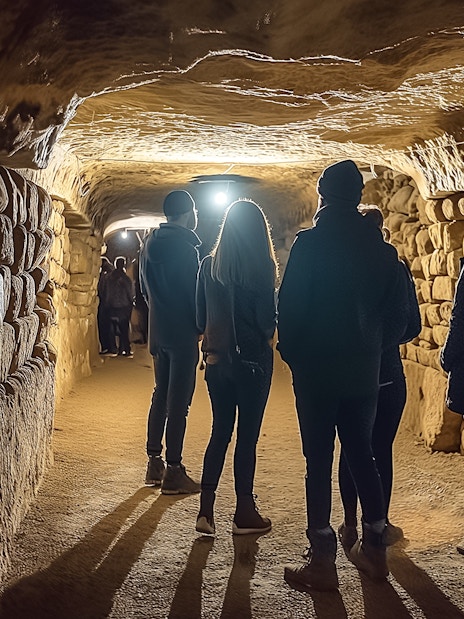
Visitors with guide exploring Capuchin Crypt in Rome, Italy.
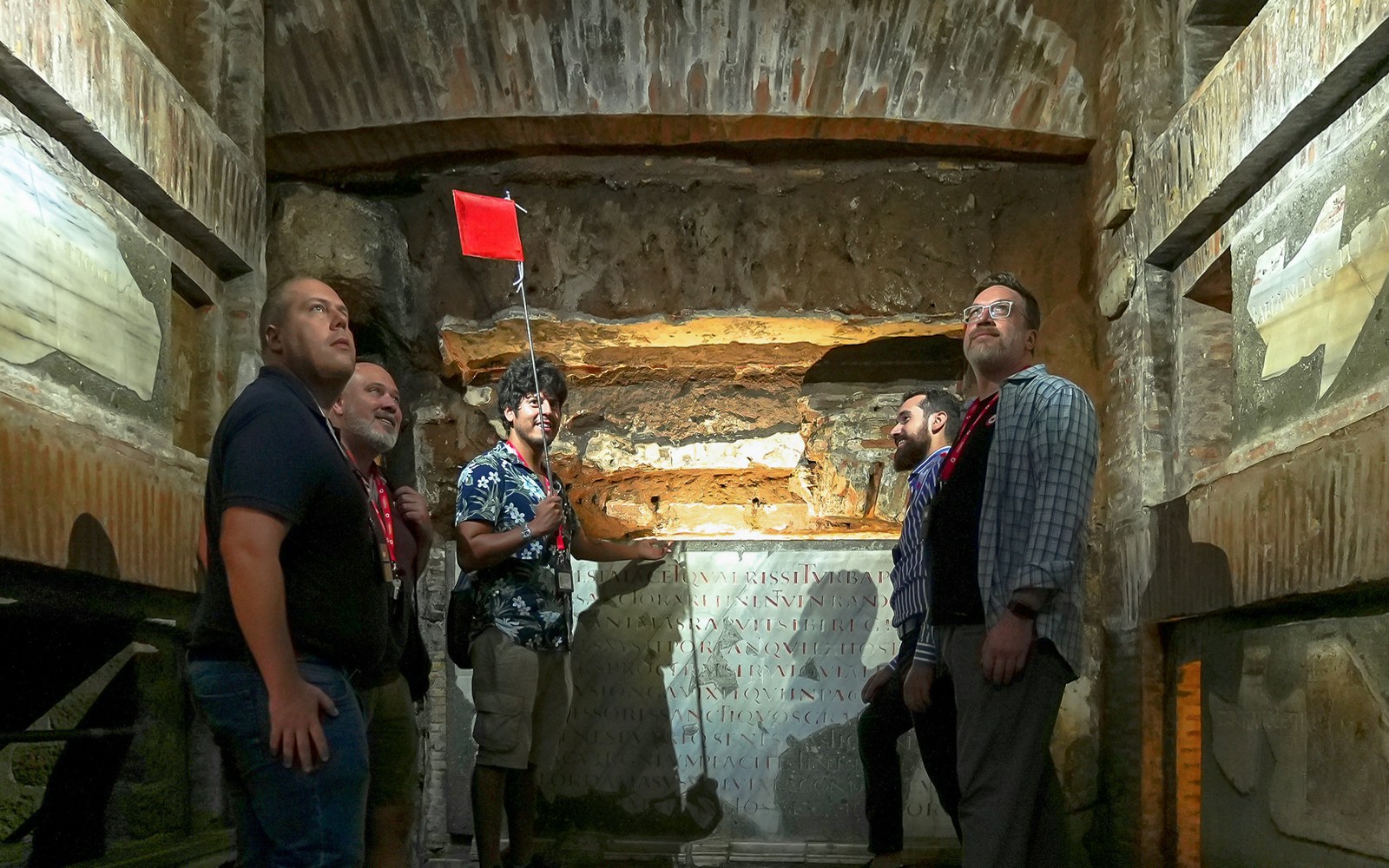
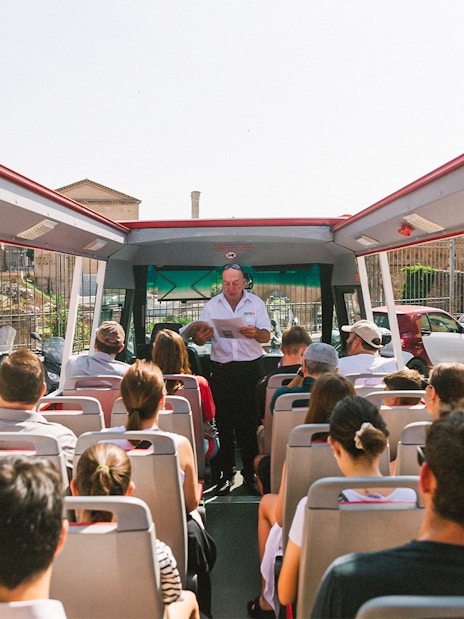
Visitors with guide exploring  San Nicola in Rome, Italy.

Plan your visit to San Nicola in Carcere

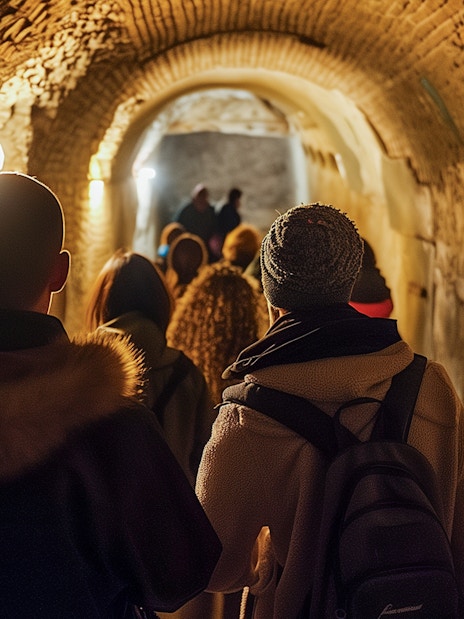
Visitors with guide entering Capuchin Crypt in Rome's historic catacombs.
  • Daily: 10am to 5pm
  • Mass: Weekdays at 7:30am, 8am, and 6pm; Sundays and Solemnities at 12pm.

Best time to visit

Early morning or mid-afternoon are ideal for a quieter experience, as the basilica tends to be less crowded during these times.

Complete schedule of Roman Catacombs

Address: Via del Teatro di Marcello, 46, 00186 Roma RM, Italy

Getting there:

  • By metro: The closest metro stations are Colosseo and Circo Massimo. From these stations, you can take bus #160 to reach the basilica.
  • By bus: You can also take buses 23 or 870 from Piazza delle Rovere (at the bottom of the Gianicolo hill) to the stop near Tiber Island. Cross the bridge at Tiber Island and continue south along the opposite side of the Tiber for one block. Cross the Lungotevere and take Via del Foro Olitorio to the church, which is on the left
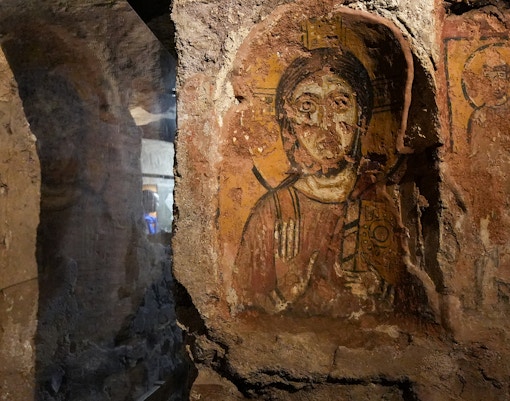
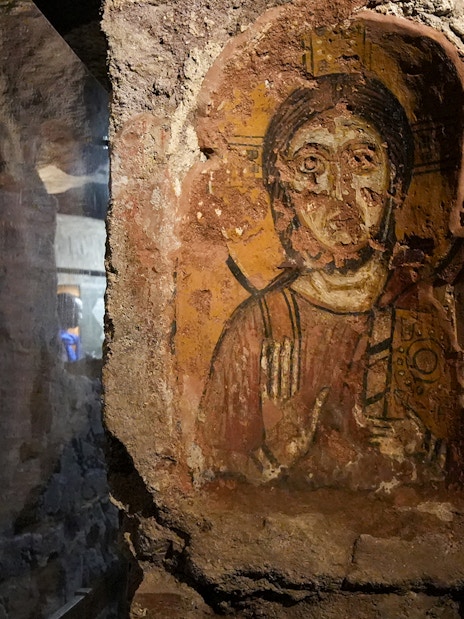
Frescoes on stone walls at Capuchin Crypt, Rome, depicting historical religious scenes.
  • The basilica is built over three ancient Roman temples. Spot the original columns from temples dedicated to Juno, Janus, and Spes, still visible in the church’s walls and facade.
  • Don’t miss the underground chambers, where you can see remnants of the ancient temples. The stairs near the presbytery lead to this hidden archaeological site.
  • If you’re visiting independently, set aside at least one hour to explore the entire basilica and its underground.
  • Join a guided tour for deeper historical insights and ensures you don’t miss hidden details like inscriptions from the old Roman marketplace beneath the church.
  • Located near the Jewish Ghetto and Trastevere, the basilica is a great starting point for exploring Rome’s historic districts. Grab a bite at a local trattoria after your visit!
Plan you visit

Timeline of Basilica di San Nicola in Carcere

Ancient Rome (3rd–2nd Century BCE)

  • Roman Temples Built: Three temples dedicated to Juno Sospita, Janus, and Spes were constructed in the Forum Holitorium, an ancient vegetable market.
  • Incorporation into the Cityscape: The temples became part of Rome’s religious and commercial hub.

6th Century CE

  • First Church Established: A Christian church was built over the ruins of the temples, reusing their columns and foundations.

Medieval Period (11th–13th Century)

  • Pierleoni Family Influence: The church, known as San Nicola Petrus Leonis, was associated with the influential Pierleoni family, who also transformed the nearby Theatre of Marcellus into a fortress.
  • Reconsecration (1128): The church was officially reconsecrated, marking a period of religious and architectural significance.
  • Restoration (1280): Structural improvements were made to the church.

Renaissance & Baroque Periods (16th Century)

  • Major Restoration (1599): Giacomo della Porta redesigned the church’s facade, giving it its present appearance.

20th Century (1930s)

  • Urban Renewal: The Fascist-era city planners cleared surrounding buildings to highlight the church and the Theatre of Marcellus, revealing more of its ancient foundations.

Present day

  • The church remains an important historical and religious site, blending ancient Roman and medieval Christian heritage. You can explore its underground ruins, giving a rare glimpse into Rome’s layered past.

Know more abut rich history of Roman Catacombs

Frequently asked questions about San Nicola in Carcere

Yes, photography is allowed. The lavish detailing of the interiors make for splendid shots!

More reads

Appian Way

Book Now

Christian Catacombs

Book Now