- Opening date: Originally built in 27 BC, rebuilt in 126 AD.
- Architect: The original architect is believed to be Apollodorus of Damascus, but the rebuilding in 126 AD is often attributed to Emperor Hadrian.
- Architectural style: Roman, specifically Roman Doric.
- Latin name: "Oculus" means "eye" in Latin.
- Function: It is the main source of natural light within the Pantheon. It also acts as a sundial, casting light patterns inside.
- Special phenomena: During equinoxes, it creates stunning interior displays.
The Pantheon Rome oculus | Where stories and stars align
What is the Pantheon Rome Oculus?
The Pantheon Oculus, a 25-foot-wide circular opening at the top of the dome, is the sole source of natural light inside the ancient Roman temple. It also serves as a sundial, casting changing beams of sunlight onto the interior floor during the day. During the spring and fall equinoxes, a particularly bright light spectacle occurs, captivating visitors.
Quick Facts about the Pantheon Rome Oculus
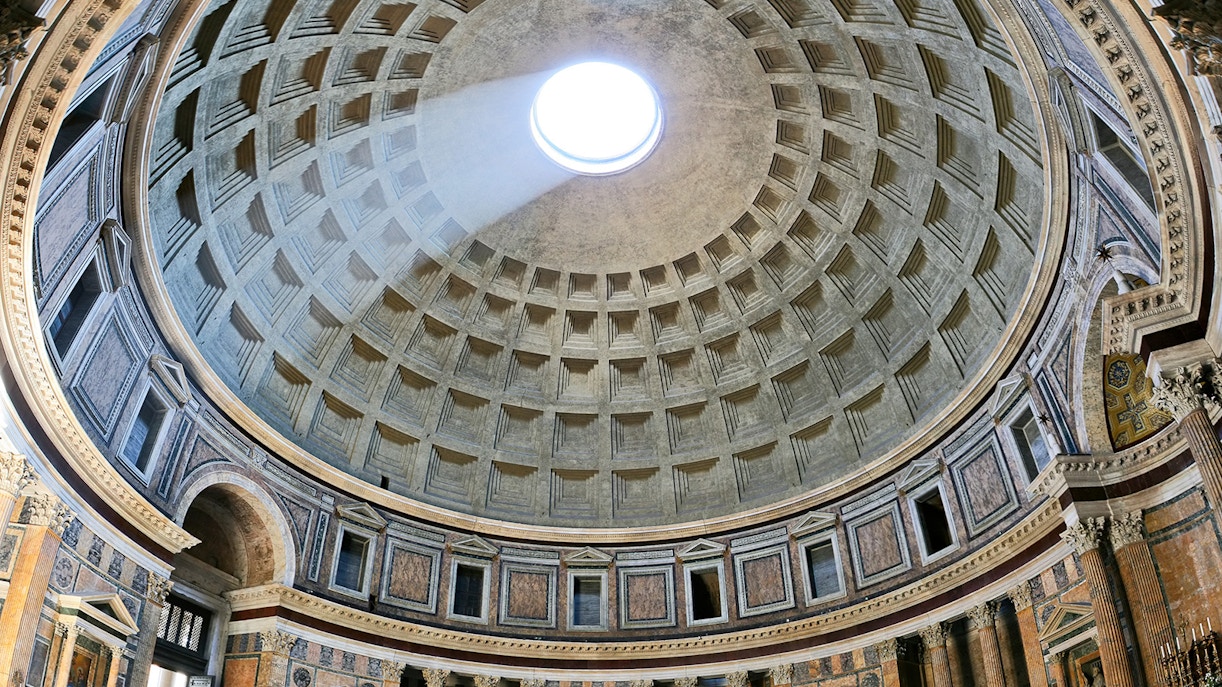
Architectural highlights of the Rome Pantheon oculus
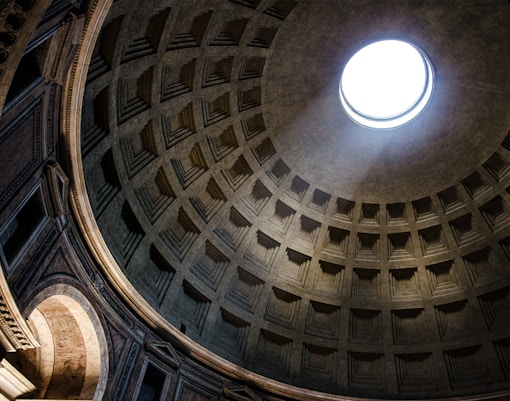
Circular opening
The Oculus is a perfectly circular aperture at the top of the dome. Its shape allows for an even distribution of stress and weight across the dome, ensuring stability and durability.
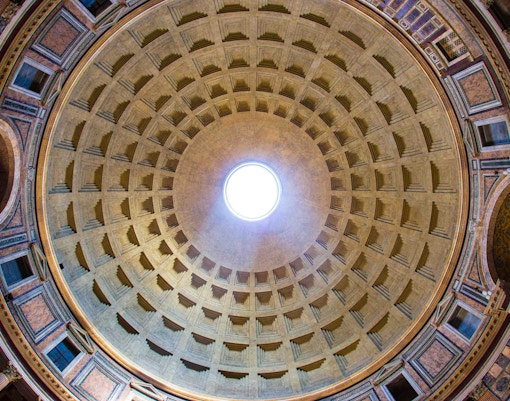
Harmonious proportions
The diameter of close to 9 meters (29 feet) was precisely chosen to create a visually harmonious space on the dome.
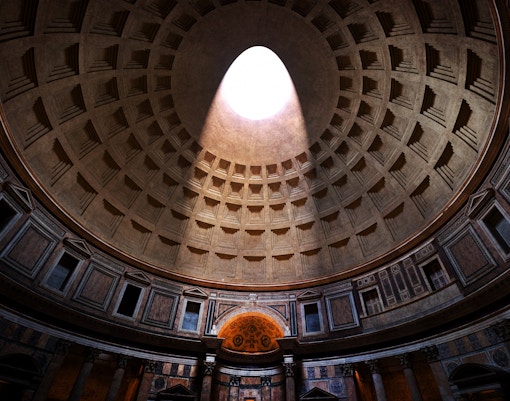
Ingenious engineering
The use of concrete, the stepped "cassettes" or coffers around the opening, and the gradually thinning dome towards the top are all examples of the ingenious engineering that went into creating the oculus.
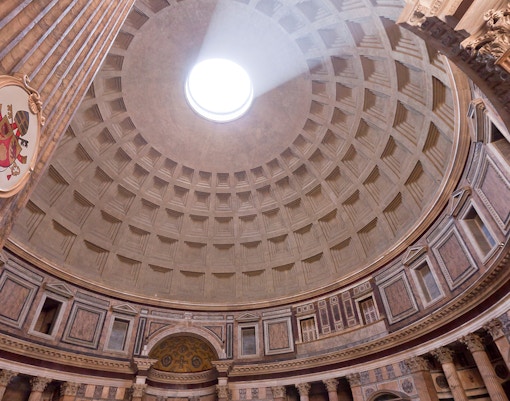
Practical design
The Pantheon's oculus serves a dual purpose. It prevents rainwater accumulation while also transforming into a sundial, marking time with sunlight across the Pantheon's interior.
Who designed the Pantheon Rome oculus?
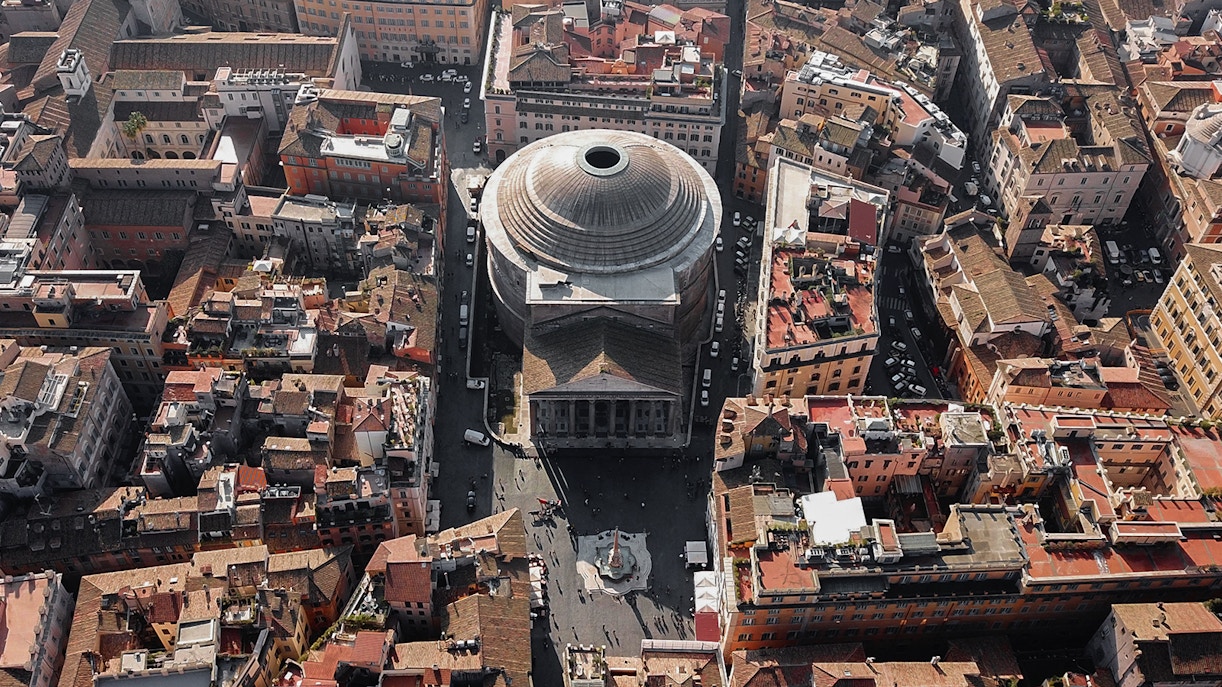
Around 120 A.D., Emperor Hadrian initiated the construction of the Pantheon, drawing inspiration from Greek temples and classical architecture. The mastermind behind the Pantheon's oculus is believed to be the brilliant Roman architect Apollodorus of Damascus.
Notably distinct, the Pantheon surpassed previous Roman structures with its exceptional intricacy. Hadrian envisioned a grand design comprising three main elements: a stately portico, a circular domed rotunda or vault with a cupola and a seamless connection harmonizing these components.
Structure of the Pantheon Rome oculus
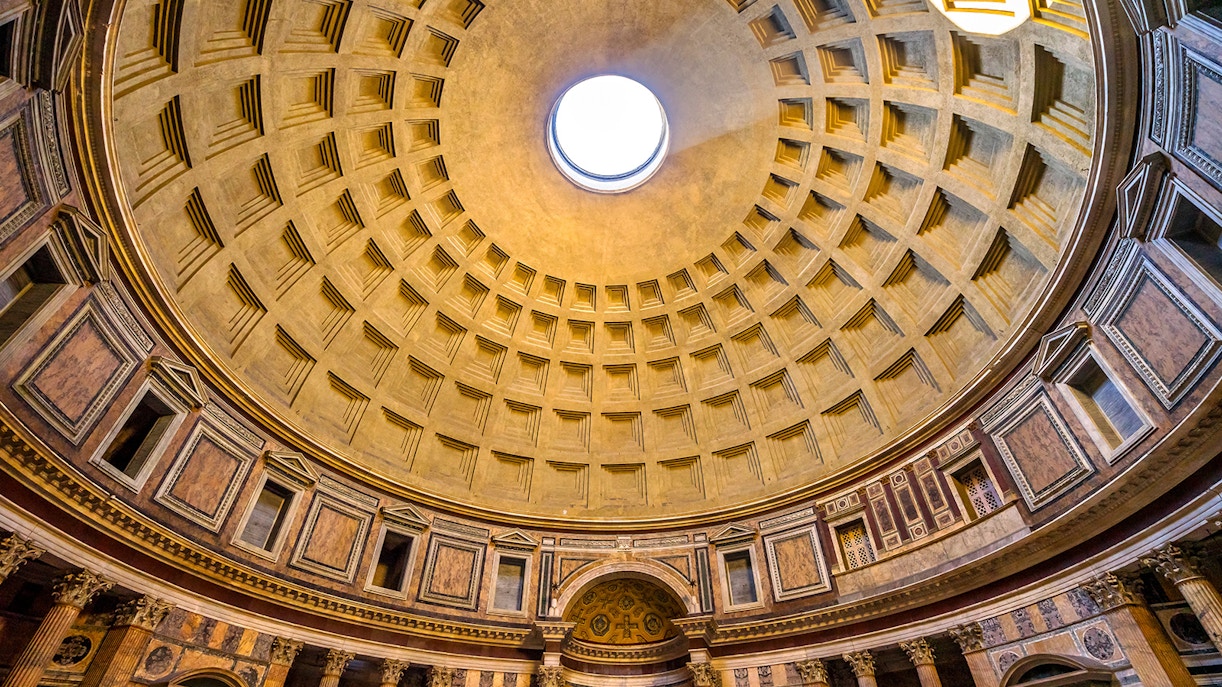
The Oculus is positioned exactly in the center of the dome with a diameter of 9 m, acting both as a source of light and a gateway to contact heaven.
To ensure stability and support for such a massive structure, the dome's edges are composed of heavy stone blocks making them approximately seven meters thick. Near the oculus, the dome is remarkably thin at only 1.2 meters of thickness. Hadrian and Apollodorus' ingenious construction involved using pumice for construction near the oculus instead of the heavier stones used lower down.
The Rome Pantheon oculus and the changing seasons
One fascinating aspect of the Oculus is its relationship with the changing seasons. The angle of the sunlight entering via the Oculus shifts throughout the year, forming mesmerizing patterns on the Pantheon's interiors. This natural phenomenon adds an element of dynamism to the space, continually enchanting visitors. What starts as a small beam on the floor gradually grows in size as the day progresses, casting a spotlight on the floor, columns, etc.
From the brilliant illumination during summer to the subtle warmth of autumn, this architectural marvel offers a unique spectacle year-round. Standing in the oculus' spotlight is also what fosters a divine connection between heaven and earth.
Frequently asked questions about the Pantheon Rome oculus
The hole on top of the Pantheon dome is the oculus, a large circular opening. In Latin, the word 'oculus' means 'eye', and here, it is taken to mean a celestial eye looking down from the heavens.
The Oculus has both functional and symbolic purposes. Functionally, it allows light to enter the Pantheon, creating a unique play of light and shadow within the interior. It also acts as a ventilation system, allowing air to circulate inside the building. Symbolically, in the case of the Rome Pantheon, the oculus has divine associations. It is believed to act as a portal to heaven.
The oculus is an opening that's not covered by any transparent material, including glass. It is exposed to the outside atmosphere, allowing air and sunlight to pool into the Pantheon. This also means that rainwater enters the Pantheon via its oculus, but the drainage system below ensures that there is no flooding.
The inclusion of the Oculus was a remarkable architectural achievement by the Romans. It not only allowed natural light to illuminate the interior of Rome Pantheon but also demonstrated their advanced engineering skills and understanding of structural stability.
The sunlight that enters through the Oculus has symbolic and atmospheric significance. It creates a connection between the heavens and the interior of the Pantheon, adding to its spiritual and awe-inspiring ambiance.
Yes, when standing in the interior of the Pantheon, visitors can see the sky through the Oculus. The opening provides an unobstructed view of the elements, creating a direct connection with the celestial realm.
Throughout the year, the position of the sun changes, resulting in various lighting effects inside the Pantheon. Visitors may witness dramatic beams of light, shafts of sunlight, or ethereal illuminations depending on the time of day and season. On the day of the Pentecost, about 50 days after Easter, rose petals are showered through the oculus shaft on to the crowd below.
Photography is allowed inside the Pantheon, including capturing images of the Oculus. However, the use of flash or tripods may be restricted to avoid disrupting other visitors or damaging the structure.
The Oculus of the Pantheon in Rome looks particularly captivating under specific weather conditions. The best weather to enhance the beauty of the Oculus is on a sunny day. When the sun is shining, and there are clear skies, the natural light streams through the circular opening, creating a mesmerizing and radiant effect inside the Pantheon.