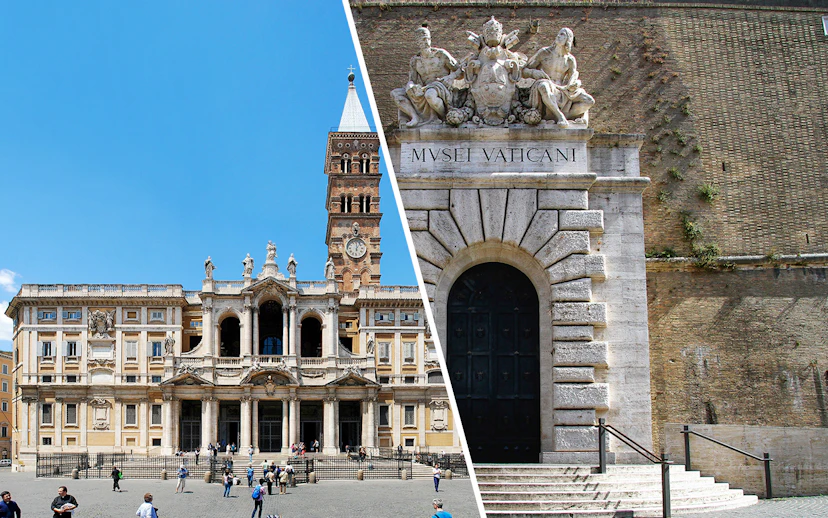
Rome Tickets

Visiting Santa Maria Maggiore Basilica in Rome

Santa Maria Maggiore Basilica is Rome’s oldest Marian basilica, best known for its 5th-century mosaics, the Holy Crib relic, and now the tomb of Pope Francis. A quick look at the free nave can take under an hour, but the visit gets much richer once you factor in the chapels, upper museum areas, or underground excavations. The main mistake is assuming a paid ticket skips every line — it doesn’t skip security. This guide helps you time your visit, choose the right access, and avoid the usual friction points.

Quick overview: Santa Maria Maggiore Basilica at a glance

Start here if you want the short version before you choose a ticket or time slot.

  • When to visit: Monday–Sunday, with the basilica typically open from early morning to early evening; weekday 8am–10am is noticeably calmer than late morning, because pilgrim groups and Pope Francis tomb visitors build through the day.
  • Getting in: General entry to the basilica floor is free. Paid options cover the audio guide, guided tours, terraces, museum areas, or the underground route, and those should be booked ahead around Easter, August 5, and Jubilee-heavy periods.
  • How long to allow: 45–60 minutes works for the free basilica floor, while 1.5–2.5 hours is more realistic if you add the museum, terraces, or underground areas.
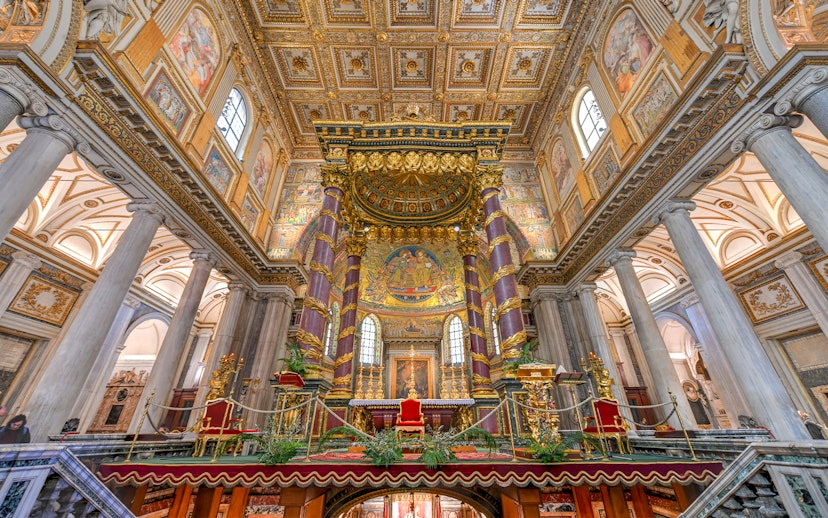
  • What most people miss: Bernini’s floor tomb, the upper Loggia mosaics, and how much better the nave mosaics read if you stop in the center instead of rushing to the Holy Crib first.
  • Is a guide worth it? Yes for the underground and upper areas, where signage is weak and the context matters; for the nave alone, a good audio guide does most of the job for less.

🎟️ Guided tour slots for Santa Maria Maggiore Basilica sell out several days in advance during Easter, August, and Jubilee peaks. Lock in your visit before the time you want is gone. See ticket options

Jump to what you need

Where and when to go

How much time do you need?

Visit typeRouteDurationWalking distanceWhat you get

Highlights only

Entrance → Nave → Apse mosaics → Main chapels → Exit

30–45 mins

~0.5 km

See the basilica's highlights, including its mosaics, chapels, and devotional spaces. Ideal if you're combining the visit with other Rome attractions.

Balanced visit

Highlights route + Sistine Chapel + Pauline Chapel + tombs and relics

60–90 mins

~0.8 km

Adds the basilica's most significant papal and devotional spaces, providing a fuller understanding of its role in Catholic history and Marian worship.

Full exploration

Complete basilica + museum areas + archaeological site (where accessible) + time for reflection

2+ hrs

~1 km

The most comprehensive visit, covering the basilica, museum areas, and archaeological remains. Ideal for history, architecture, and religion enthusiasts.

Which Santa Maria Maggiore Basilica ticket is best for you

Ticket typeWhat's includedBest forPrice range

Santa Maria Maggiore Basilica Entry Tickets

Basilica access + audio guide in 5 languages + Liberian Museum access or 360° panoramic terraces or guided tour, depending on option

A self-paced visit where you want more than the free nave, but don’t want to commit to a fixed group tour

From €9

Santa Maria Maggiore Basilica Guided Tour

1-hour guided tour + skip-the-line entry + art and history expert guide + terraces, depending on option

A first visit where you want the mosaics, papal history, and chapel symbolism explained clearly without decoding the layout yourself

From €18

Santa Maria Maggiore Basilica Underground Guided Tour

Basilica access + guided tour of the underground archaeological area + English or Italian-speaking guide

A deeper visit where the Roman layers under the church matter more than rooftop views or a broad overview

From €18

Combo (Save 23%): Santa Maria Maggiore + Vatican Museum Entry Tickets

Santa Maria Maggiore access + audio guide or guided tour, depending on option + Vatican Museums and Sistine Chapel skip-the-line entry

A Rome plan where you want one booking for a quieter Marian basilica and the city’s busiest museum complex

From €47

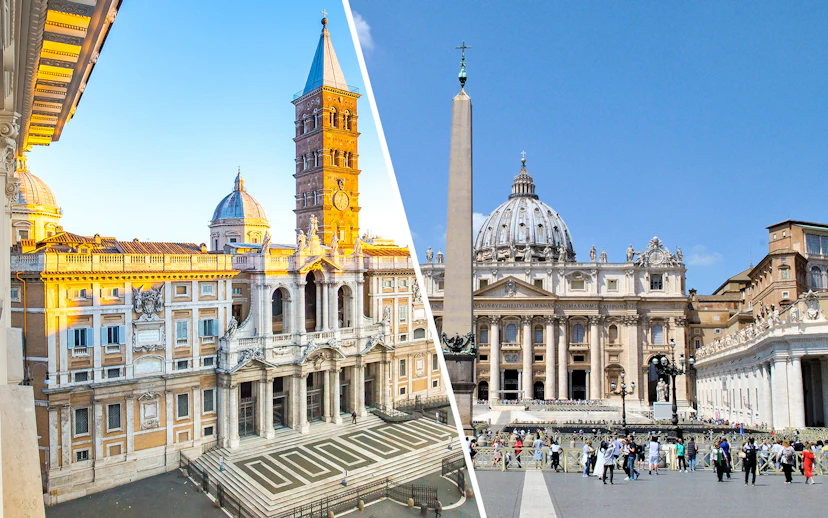
Combo (Save 5%): Santa Maria Maggiore + St.Peter's Basilica Entry Tickets

Santa Maria Maggiore access + St. Peter’s Basilica and Papal Tombs + digital audio guide + digital guidebook

A faith-focused itinerary where you want two major basilicas in one purchase and prefer a self-guided format

From €16

How do you get around Santa Maria Maggiore Basilica?

What are the most significant spaces in Santa Maria Maggiore Basilica?

Holy Crib at Santa Maria Maggiore Basilica
1/7

Holy Crib

Attribute — Relic: 7th-century reliquary linked to the manger of Bethlehem

The Holy Crib is the spiritual heart of Santa Maria Maggiore and one of its most visited sites after the tomb of Pope Francis. Crowds build quickly during prayer hours, so try to pause and view the reliquary itself rather than simply passing through with the queue.

Where to find it: Beneath the main altar in the Confessio area, below the central nave axis.

Pope Francis’s tomb

Attribute — Era: Modern papal burial site, added in 2025

Pope Francis's tomb has made Santa Maria Maggiore a major pilgrimage destination. Its simple design, marked by a plain inscription and a single white rose, reflects the humility he championed throughout his papacy. Despite its understated appearance, it is one of the basilica's most significant spaces.

Where to find it: In the side aisle, between the Pauline Chapel and the Sforza Chapel.

Salus Populi Romani

Attribute — Icon: Venerated Marian image in the Pauline Chapel

This Byzantine icon is one of Rome's most important Marian images and a focal point of devotion within the basilica. Many visitors pass through quickly, but spending a few extra minutes here helps explain why generations of pilgrims, including Pope Francis, returned to pray before it.

Where to find it: Inside the Pauline Chapel off the right side of the basilica.

Nave mosaics

Attribute — Era: 5th-century Paleochristian mosaics

These 5th-century mosaics are among the oldest Christian mosaics in Rome and one of Santa Maria Maggiore's greatest treasures. Many visitors overlook them while heading toward the altar, but the best views are from the center of the nave, where you can appreciate the scale and storytelling of the scenes.

Where to find it: High along both sides of the central nave, above the colonnades.

Loggia mosaics

Attribute — Era: 13th-century facade mosaics

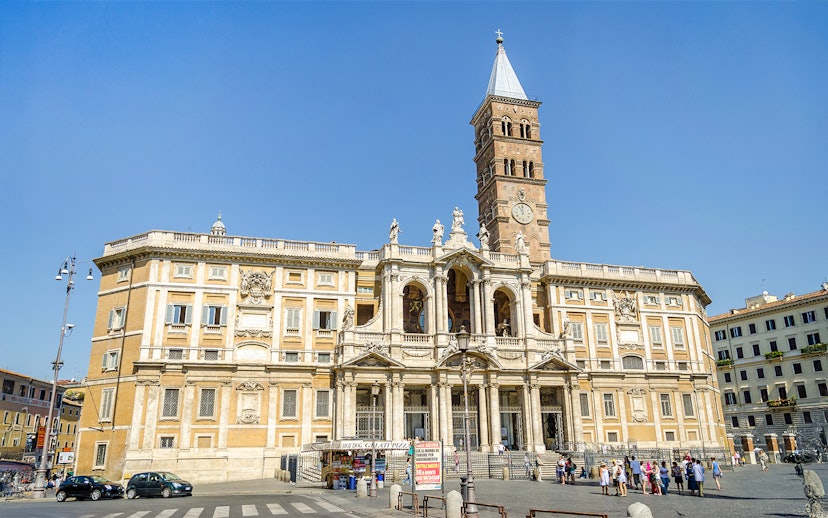
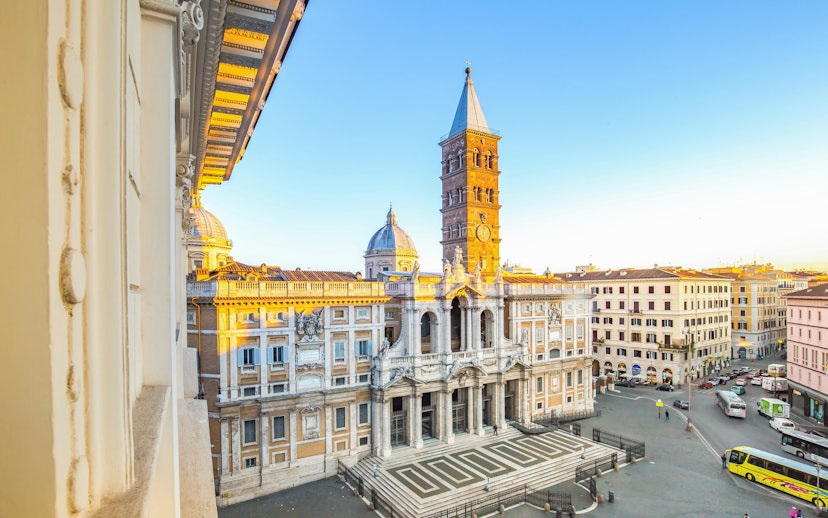
The Loggia offers a closer look at mosaics that are difficult to appreciate from the piazza below, making it one of the most worthwhile upgrades at the basilica. Look for the depiction of the "Miracle of the Snow," the legend behind Santa Maria Maggiore's founding and its annual August 5 celebration.

Where to find it: In the Loggia of Blessings, accessed through the museum and upper-area route.

Bernini’s staircase and tomb

Attribute — Artist: Gian Lorenzo Bernini

Bernini's presence can be felt in both the basilica and its upper levels. Look for his elegant spiral staircase on the paid route, then seek out his remarkably simple floor tomb inside the church. Together, they offer a striking contrast between the grandeur of Baroque design and the humility of his final resting place.

Where to find it: The staircase sits on the museum route; Bernini’s tomb lies on the basilica floor underfoot.

Underground archaeological area

Attribute — Era: 1st-century Roman remains

The archaeological area reveals the Roman foundations beneath Santa Maria Maggiore, adding an extra layer of history beyond the basilica's chapels and relics. Quieter and less visited than the church above, it offers a fascinating glimpse into the site's earlier past and helps place the basilica within the broader story of Rome.

Where to find it: Below the basilica on the timed underground guided tour route.

Most visitors never get eye-level with the Loggia mosaics

The upper mosaics are easy to miss because they’re almost unreadable from the square below, and the signage for paid routes is weaker than most visitors expect. If you care about medieval art, don’t stop at the free nave alone.

Facilities and accessibility

  • 🎫 Reception desk: Check-in for paid museum, terrace, and guided options happens at the portico, so arrive there first if you’re not doing the free basilica floor only.
  • 🚻 Restrooms: Bathrooms are near the museum entrance, and they’re easiest to use before or after a ticketed route rather than mid-visit.
  • 🪑 Seating / rest areas: The nave and chapel areas offer places to sit, which helps if you want a slower devotional visit instead of a quick walkthrough.
  • 💧 Water fountains: Public fountains are available in the square outside, which is more useful than looking for drinking points once you’re inside.
  • Prayer space: This is a functioning basilica, so the main floor doubles as both visitor route and active place of worship throughout the day.
  • Mobility: The ground floor is accessible by ramp, and there is lift access for the Liberian Museum, but the rooftop terrace and underground areas involve stairs and uneven surfaces.
  • 👁️ Visual impairments: Registered service animals are allowed, and the clearest added support for independent visitors is the optional audio guide rather than tactile interpretation.
  • 🧠 Cognitive and sensory needs: The calmest window is early on a weekday morning, while the Holy Crib area and the side aisle around Pope Francis’s tomb are usually the busiest and loudest points.
  • 👨‍👩‍👧 Families and strollers: The main basilica floor is manageable with a stroller, but the upper areas and underground route are not pushchair-friendly end to end.

Santa Maria Maggiore works best for older children who can engage with stories, ritual, and art, though a short visit can still work with younger kids if you keep the route focused.

  • 🕐 Time: 30–45 minutes is realistic with young children if you focus on the nave, Pope Francis’s tomb, and one chapel rather than every devotional stop.
  • 🏠 Facilities: Seating on the main floor and nearby restrooms help, but there isn’t a family-activity setup here in the way a museum would offer.
  • 💡 Engagement: Use the ‘Miracle of the Snow’ story and the Holy Crib as your anchor, because those are the easiest parts of the basilica for children to picture.
  • 🎒 Logistics: Bring only a small bag, cover shoulders and knees before you arrive, and aim for the first hour of the day when the side aisles are easier to move through.
  • 📍 After your visit: The short walk back toward Termini makes it easy to pair the basilica with a snack stop or a more open-air break before the next church or museum.

Rules and restrictions

Practical tips

  • Booking and arrival: Arrive at least 15 minutes before any guided, terrace, or underground slot, because late arrivals can miss the timed part even though the free basilica floor stays open.
  • Pacing: Do the center of the nave first, then the Pauline Chapel and Pope Francis’s tomb, and leave the Holy Crib until after you’ve taken in the mosaics; most visitors reverse that order and end up rushing the art.
  • Crowd management: Weekday 8am–9:30am is the sweet spot here, because you beat both the late-morning pilgrim build-up and the Vatican spillover that reaches the basilica later in the day.
  • What to bring or leave behind: Bring only a small day bag, because security is strict on oversized luggage and there is no dependable storage once you reach the piazza.
  • Dress smartly: Pack a light scarf or layer even in summer, since enforcement can look relaxed one day and strict the next, and getting turned away means losing time in the same security queue again.
  • If you’re paying, pay for the right part: The biggest upgrade is not ‘entry’ but access to what’s normally hidden — the Loggia, terraces, museum areas, or underground route — because the free floor already covers the main devotional spaces.
  • Food and drink: Eat before you enter if you have a timed paid route, because food and drinks are not allowed in the museum areas and the fastest good-value options are back toward Termini, not inside the basilica complex.
  • Seasonal timing: August 5 is visually special because of the Miracle of the Snow celebration, but it is a bad day to wing it — expect heat in the security tent, heavier crowds, and a more devotional than contemplative atmosphere.

What else is worth visiting nearby?

Eat, shop and stay near Santa Maria Maggiore Basilica

  • On-site: There isn’t a proper on-site café to rely on, and food and drinks are not allowed in the museum areas, so this is better treated as a before-or-after meal stop.
  • Mercato Centrale Roma (8-minute walk, Via Giovanni Giolitti 36): Multiple counters and quick turnover make it the easiest flexible stop if you’re coming from or returning to Termini.
  • Panella (7-minute walk, Via Merulana 54): A polished bakery-café that works well for breakfast or a light lunch before an early basilica slot.
  • Trattoria Monti (10-minute walk, Via di San Vito 13a): A better sit-down choice if you want lunch or dinner that feels like a destination rather than station-area convenience.
  • 💡 Pro tip: Eat before underground or guided slots rather than after security — once you’re done inside, the best quick options are back toward Termini and fill fast at standard lunch hours.

This is a practical base more than a romantic one. Staying near Santa Maria Maggiore works well if you want a short walk from Roma Termini, easy airport-train logistics, and a fast start on an early church visit. It is less ideal if your priority is evening atmosphere or a classic old-center neighborhood feel.

  • Price point: The area skews mid-range and functional, with some value stays around Termini and better-quality boutique options as you edge toward Monti.
  • Best for: Short Rome stays, train-heavy itineraries, and travelers who want to reach the basilica on foot before the crowds build.
  • Consider instead: Monti suits longer stays if you want better restaurants and a more atmospheric base, while Prati works better if St. Peter’s Basilica and the Vatican side of Rome matter more to your itinerary.

Frequently asked questions about visiting Santa Maria Maggiore Basilica

Most visits take 45–60 minutes on the free basilica floor, and 1.5–2.5 hours if you add the museum, terraces, or underground route. The difference is less about walking distance and more about whether you stop for the chapels, mosaics, Pope Francis’s tomb, and any timed paid areas.

More reads