Bernini was only 23 when he completed The Rape of Proserpina in 1622. It already shows the technical confidence that would make him Rome's defining Baroque sculptor.
Witness The Rape of Proserpina by Bernini in Rome – A Baroque Masterpiece
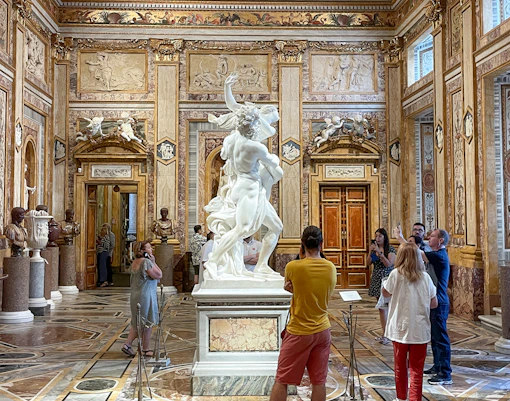
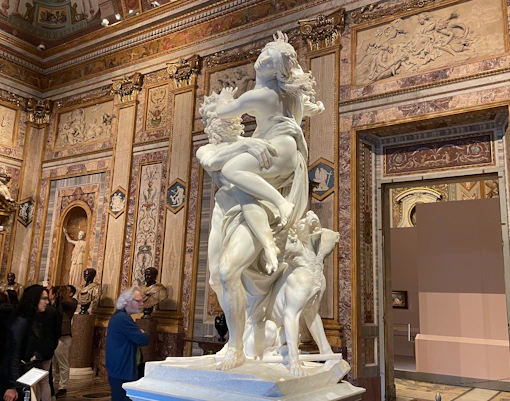
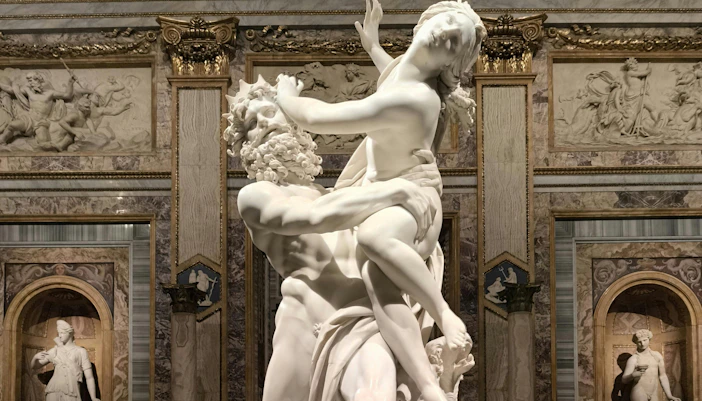
Carved by Gian Lorenzo Bernini in 1621–22, The Rape of Proserpina turns Ovid's myth into a violent burst of motion: Pluto lunges, Proserpina twists away, and marble seems to yield like skin beneath his grip. At roughly 255cm (8.4 ft) tall, the sculpture is one of the defining statements of Roman Baroque art. Seeing it in person lets you follow Bernini's theatrical storytelling at full scale, especially with timed entry or a guided gallery visit.
Where is it located?
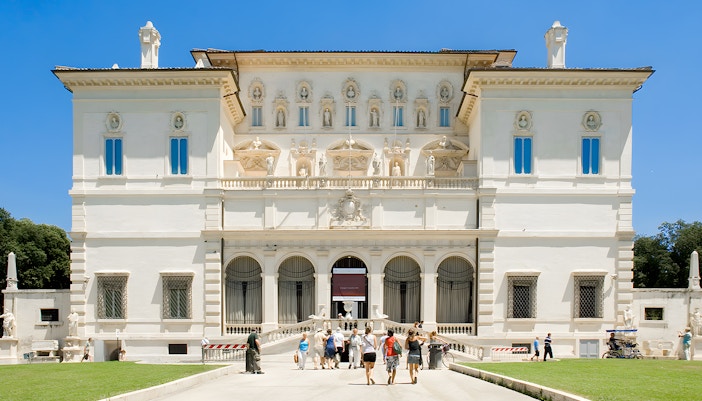
You'll find it on the ground floor of the Borghese Gallery in Rome, in the opening sculpture galleries devoted to Bernini's major marbles.
Tickets
Viewing is included with a standard Borghese Gallery ticket; no separate pass is required. If you use a city pass that includes the gallery, you still need a timed Borghese reservation.
Where should you stand first?
Begin a few steps back at a three-quarter angle rather than directly in front. This lets you take in the full diagonal sweep of Pluto's lift, Proserpina's recoil, and the way Bernini drives the scene upward instead of presenting it as a static block.
Why should you circle the sculpture slowly?
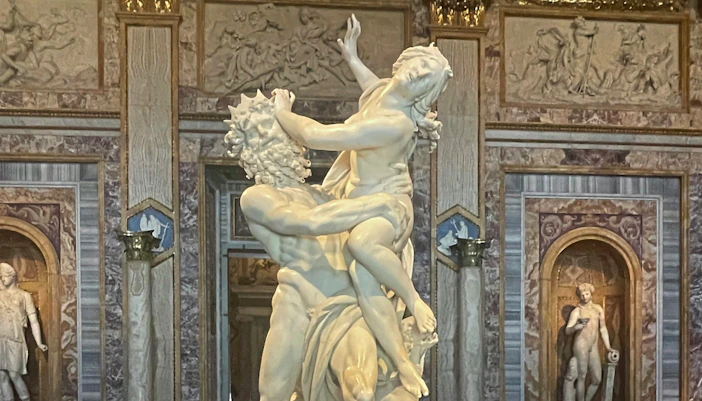
This work is built for movement. From one side, Pluto appears dominant; from another, Proserpina's resistance and twisting torso take over; from the rear, the composition tightens into a powerful spiral. A full circuit reveals how Bernini controls narrative through viewpoint.
What details reward a closer look?
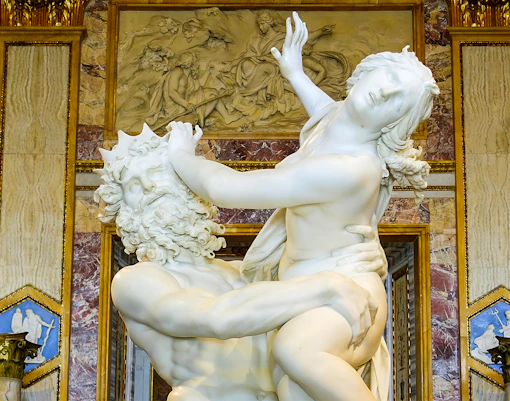
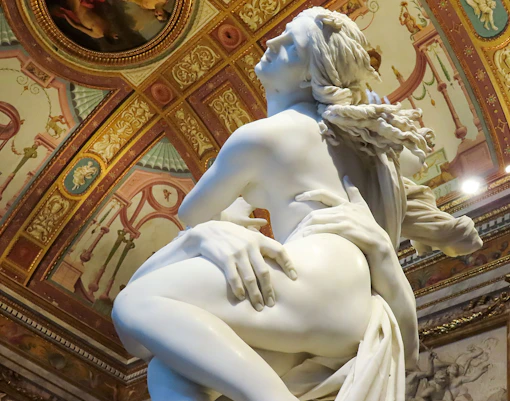
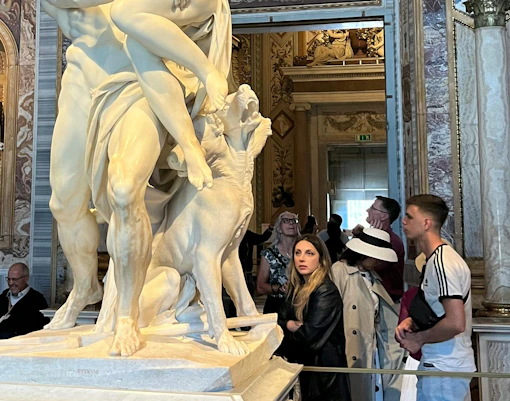
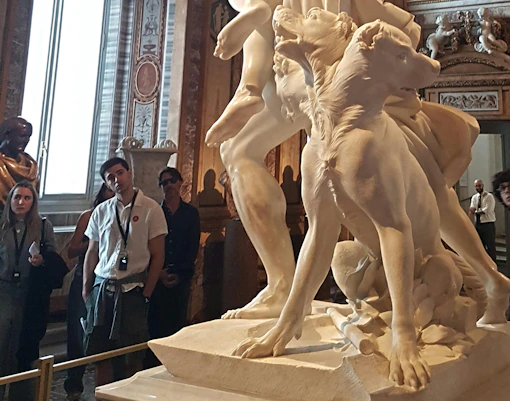
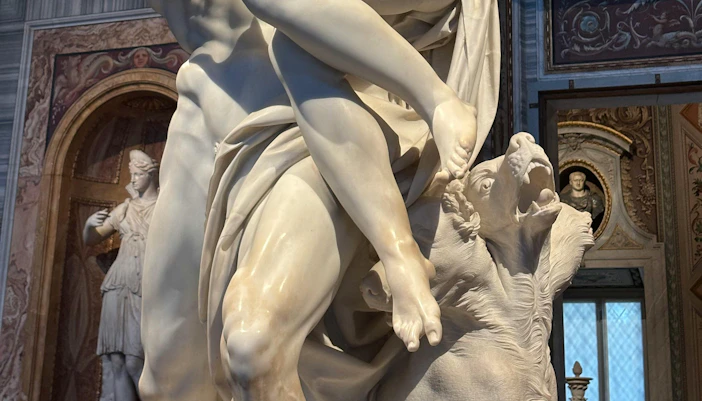
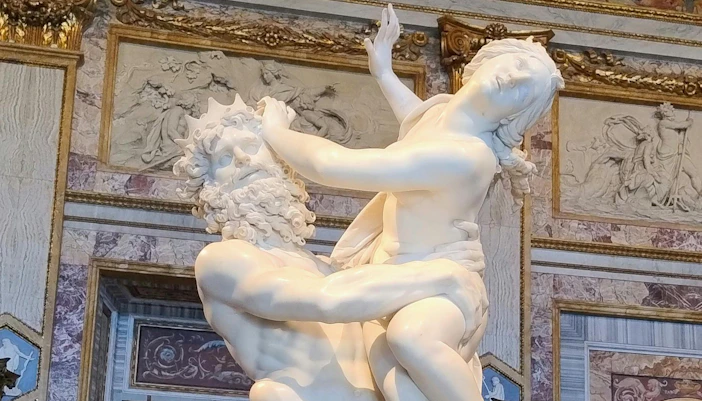
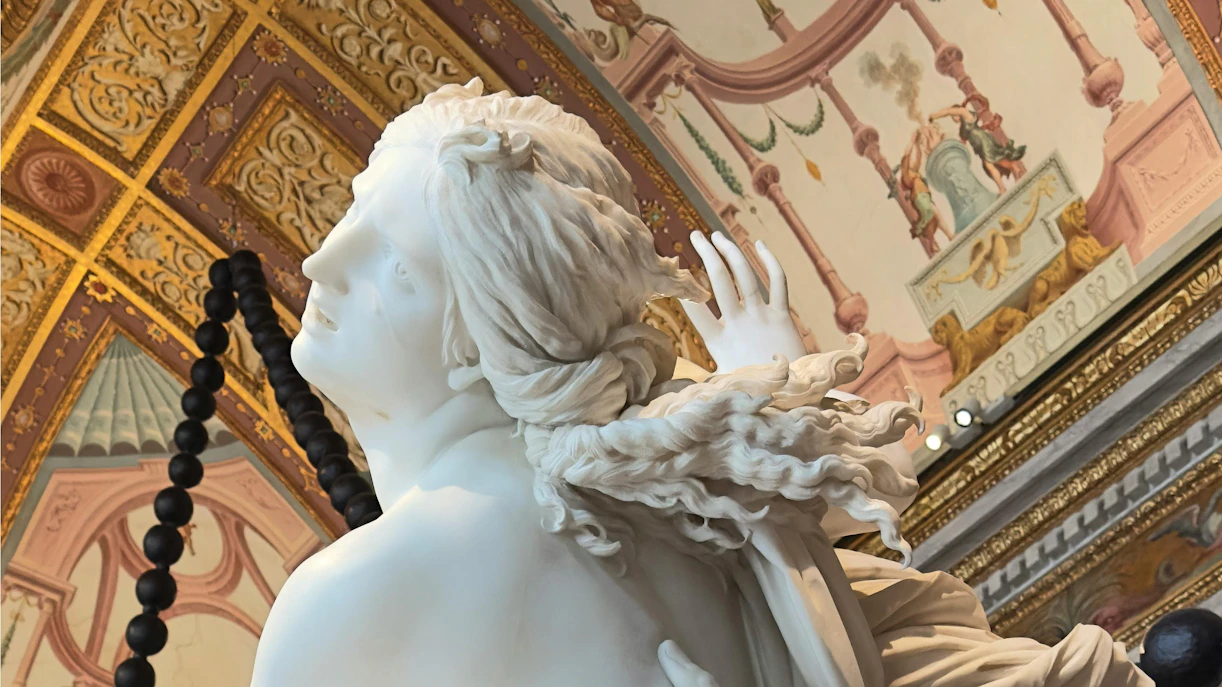
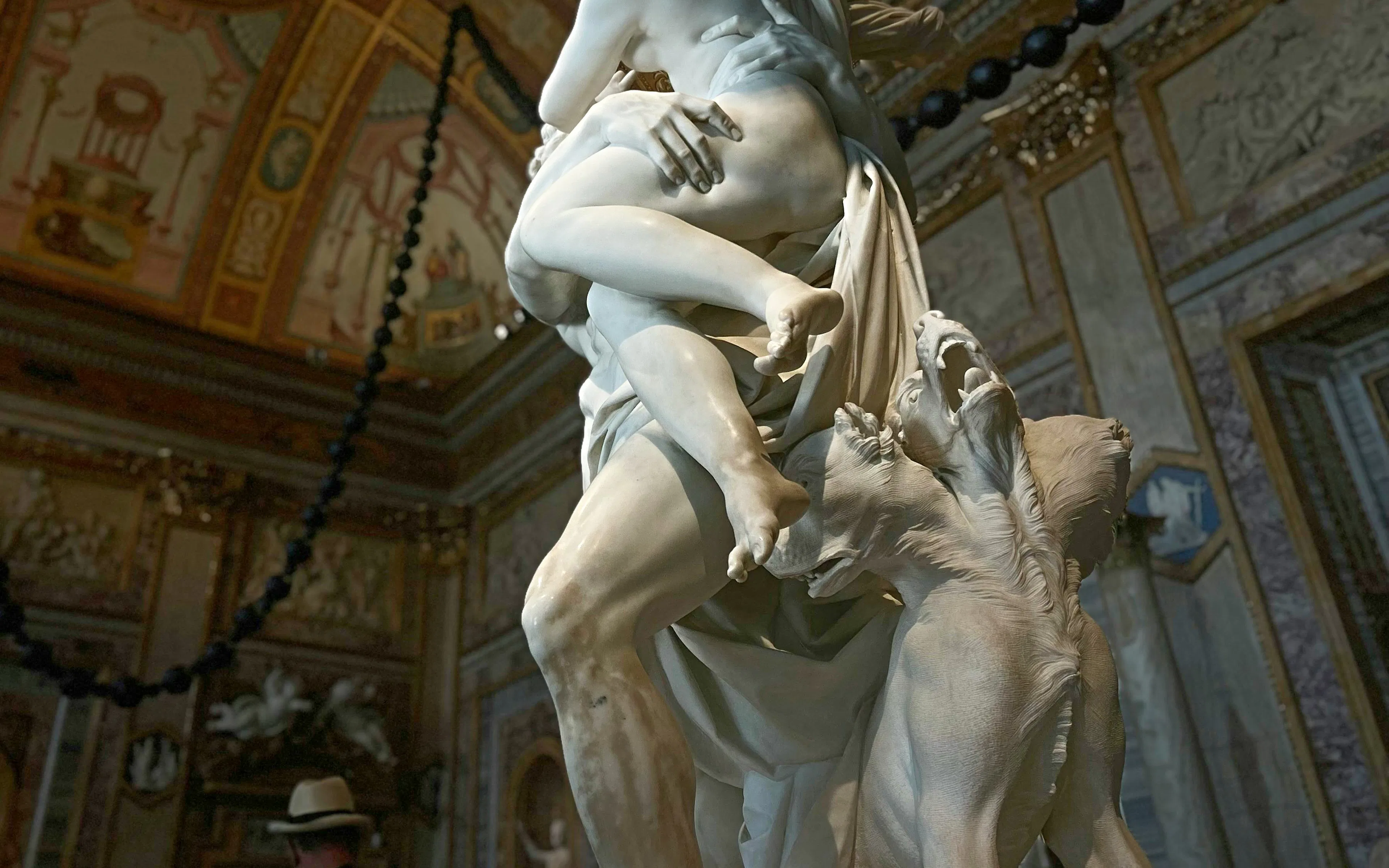
Focus on Pluto's hands pressing into Proserpina's thigh and waist, the tears on her face, and the sharply carved hair and drapery. Then drop your gaze to Cerberus at the base, whose snarling heads intensify the underworld setting while structurally anchoring the marble group.
When should you see it during your Borghese route?
Many visitors rush first to Apollo and Daphne, which can briefly congest the Bernini rooms. If your slot begins on the ground floor, pause first at The Rape of Proserpina before the flow builds, or return once the initial cluster has moved onward.
Can you photograph it effectively?
Yes; non-flash photography is permitted. The room is compact, so step back for a three-quarter view rather than trying to frame it head-on; that angle captures the lift, torsion, and Cerberus in a single shot without flattening the sculpture.
How much time should you set aside?
Give the sculpture at least 10–15 minutes on its own. If you want to compare it properly with nearby Bernini works such as David and Apollo and Daphne, reserve 25–30 minutes of your two-hour gallery slot for this cluster.
Did you know?
A 23-year-old achievement
A commission from a powerful collector
The sculpture was commissioned by Cardinal Scipione Borghese, Bernini's most important early patron. Borghese used major art commissions to shape both his collection and his political prestige.
A sculpture that left and returned
Not long after it was finished, Scipione Borghese gave the work to Cardinal Ludovico Ludovisi. It returned to the Borghese collection only in 1908.
A myth with a moral caption
Maffeo Barberini, later Pope Urban VIII, wrote a moralizing couplet for the sculpture. It reframed the pagan subject for 17th-century viewers as a warning about fleeting pleasure.
Cerberus does double duty
The three-headed dog at the base is Pluto's mythic guardian of the underworld. It also helps stabilize the composition structurally, supporting the explosive upward movement of the figures.
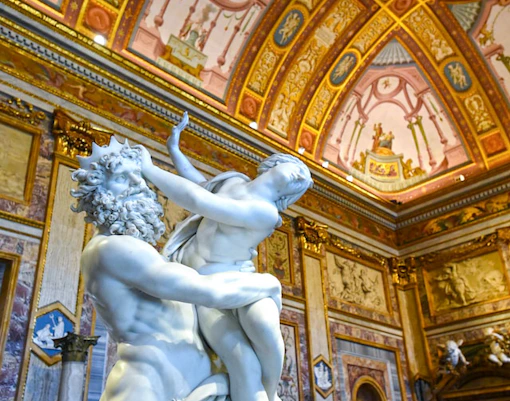
Emotion carved into marble
Bernini gave Proserpina visible tears, turning a mythological subject into an immediate emotional encounter. That blend of drama and psychology is central to Baroque sculpture.
A work meant to be walked around
This is not a sculpture with a single 'correct' front. As you move around it, the balance of power shifts between pursuit, resistance, and capture.
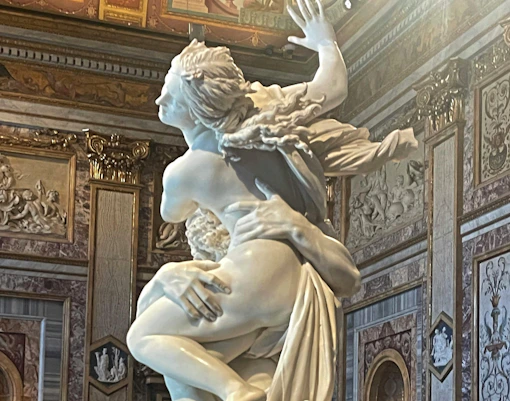
An early key to Bernini's later style
Before Ecstasy of Saint Teresa and his great Roman church commissions, Bernini was already turning sculpture into theater. The Rape of Proserpina is one of the clearest early proofs of that approach.
Story behind The Rape of Proserpina
How did the commission begin?
In 1621, Cardinal Scipione Borghese commissioned the young Bernini to create a large mythological marble for his villa in Rome. Scipione wanted works that demonstrated both classical learning and modern virtuosity. Bernini answered with a subject from Ovid's Metamorphoses that allowed him to test movement, emotion, and flesh-like surfaces in stone.
Why did Bernini choose the moment of abduction?
Rather than showing the aftermath, Bernini captured the most unstable instant of the story — Pluto seizing Proserpina as she struggles to break free. That choice is crucial to the sculpture's force. Baroque art thrives on climax, and Bernini turns myth into an event that feels as if it is still unfolding.
How did Bernini shape the drama in marble?
He organized the figures in a rising spiral, with twisting torsos, flung drapery, and sharply contrasted textures. Pluto's muscular control, Proserpina's resistance, and Cerberus at the base all work together to pull the eye around the group. The result is less like a posed monument and more like a frozen scene from a play.
Why did the sculpture leave the villa?
Soon after completion, Scipione Borghese presented the sculpture to Cardinal Ludovico Ludovisi, likely as a strategic gift tied to papal politics. The work spent centuries away from the Borghese setting for which it had been made. Its return in the early 20th century restored one of Bernini's essential early masterpieces to the gallery most closely associated with his rise.
Why does the work still matter today?
The Rape of Proserpina remains one of the clearest statements of what Baroque sculpture can do: persuade the eye, intensify emotion, and activate the viewer's movement in space. It also helps explain Bernini's development across the Borghese collection. Seen alongside David and Apollo and Daphne, it marks a turning point in European sculpture.
Who created The Rape of Proserpina?
Gian Lorenzo Bernini (1598–1680) was an Italian sculptor, architect, and stage designer who defined the Roman Baroque more completely than any of his contemporaries. In The Rape of Proserpina, he fused classical myth with startling physical immediacy, using twisting movement, polished surfaces, and sharply observed anatomy to make stone register as flesh, hair, tears, and tension. The sculpture belongs to Bernini's astonishing early run for Cardinal Scipione Borghese, which also includes Apollo and Daphne and David; together, these works show how quickly he moved beyond Renaissance balance toward drama, emotion, and viewer participation. Later projects such as the Ecstasy of Saint Teresa, the colonnade of St. Peter's Square, and major papal tombs expanded the same vision onto the scale of church and city. Bernini's lasting significance lies in his ability to turn sculpture into theater without sacrificing technical precision. That achievement reshaped European sculpture for generations.
What makes The Rape of Proserpina a masterpiece? See for yourself
1/6
Why does the composition feel as if it is still moving?
Bernini builds the entire group on a diagonal surge upward, with Pluto striding forward as Proserpina twists back and away. Nothing settles into symmetry. When you stand before it, the instability is the point: the sculpture feels caught in the middle of an irreversible action.
How does Bernini make marble behave like flesh?
The most famous passage is Pluto's grip sinking into Proserpina's thigh and waist. Bernini contrasts that softness with taut muscle, rough curls, and crisp drapery, proving that one block of marble can suggest radically different surfaces without losing structural clarity.
Why is Proserpina's face so affecting?
Bernini does not treat her as a decorative mythological figure. Her open mouth, knitted brow, and carved tears register fear and resistance, giving the scene emotional specificity rather than generalized drama. That psychological intensity is a major reason the work still feels immediate.
Why is Cerberus more than a mythological detail?
The three-headed dog identifies Pluto's realm instantly, so the narrative reads even before you know the full story. At the same time, Cerberus grounds the sculpture physically, helping support the complex lift of the figures above. Meaning and engineering are fused into one element.
How does Bernini control the viewer's experience?
This is sculpture in the round, but Bernini still guides what you see first and what you discover later. One angle privileges physical force, another reveals Proserpina's anguish, and another clarifies the spiral structure. The work rewards movement, which turns viewing into participation.
Why does this sculpture define the Baroque?
Baroque art seeks movement, theatricality, and emotional persuasion, and The Rape of Proserpina delivers all three with extraordinary control. Bernini transforms a classical subject into a living encounter rather than an antique quotation. That fusion of technical brilliance and staged intensity is what makes the work foundational to the Roman Baroque.
Frequently asked questions about The Rape of Proserpina
It's included with Borghese Gallery admission. Reserve a timed entry slot in advance because gallery capacity is limited and each visit is capped at two hours.
Yes. The Borghese Gallery Small-Group Guided Tour includes skip-the-line entry, and several combo products include escorted or priority Borghese access.
The first gallery slot of the day is usually calmest. Within your visit, see it before or after the crowd gathers around Apollo and Daphne.
Yes. Non-flash photography is permitted, but flash and touching the sculpture are prohibited.
Plan 10–15 minutes for the sculpture itself, or 25–30 minutes if you're comparing it with the nearby Bernini marbles.
Standard Borghese Gallery entry tickets are wheelchair accessible. The Borghese Gallery Small-Group Guided Tour is not wheelchair accessible.
Yes. Explain it as a myth about abduction, resistance, and emotion, and focus on movement, faces, and textures rather than sensational details.
See Apollo and Daphne, David, and Aeneas, Anchises, and Ascanius to track Bernini's early development inside the same gallery visit.